Honeywell STIW400 wireless temperature and discrete input transmitter: what it does
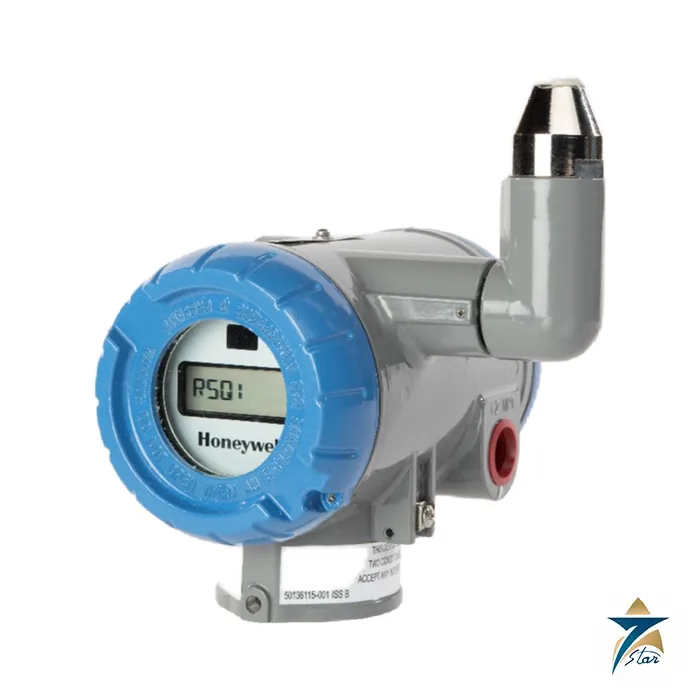
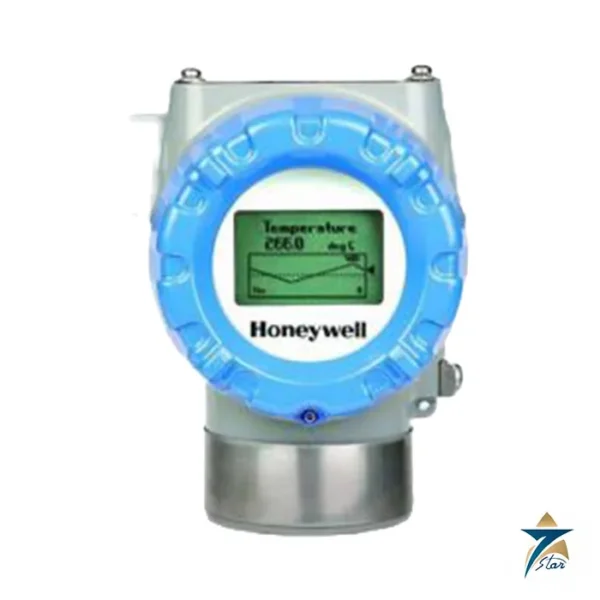
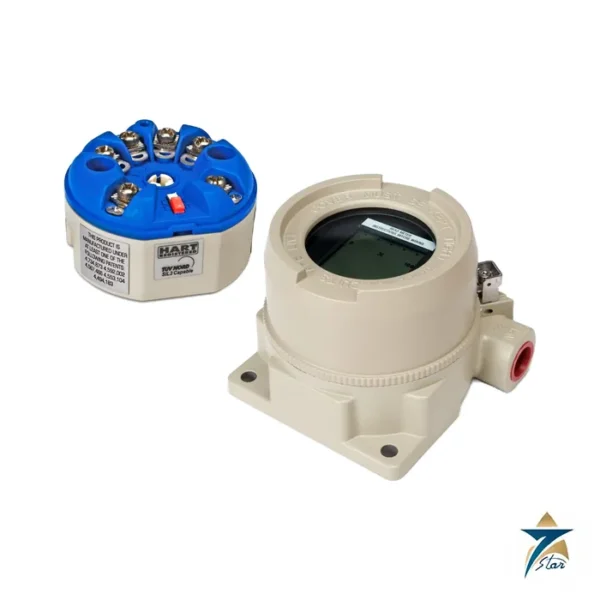
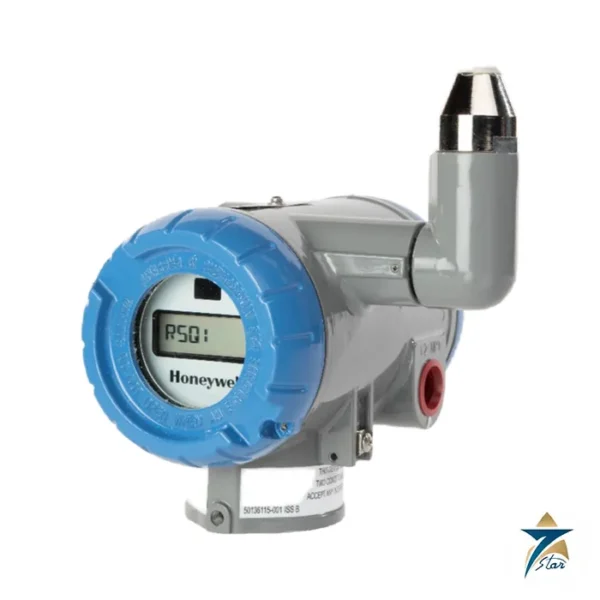
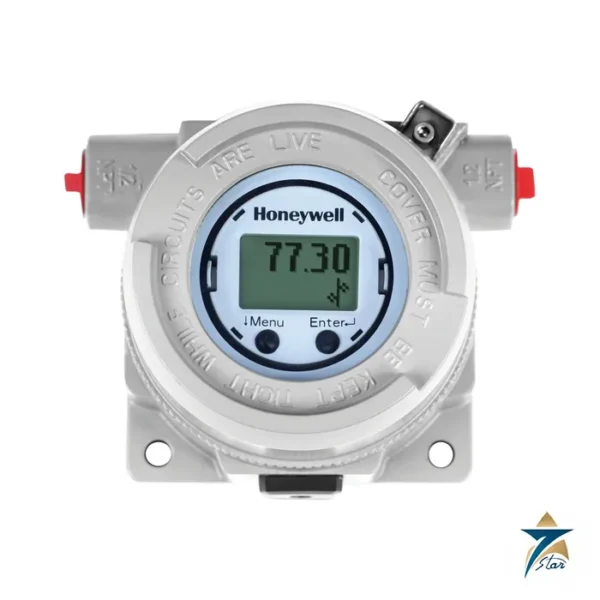
The STIW400 is a multi-channel wireless transmitter from the Honeywell SmartLine Wireless family. It reads thermocouples, millivolt signals, RTDs, resistance and dry-contact discrete inputs and sends the values over an ISA100.11a-ready 2.4 GHz radio network. Compared with a single-channel head-mounted temperature transmitter, the STIW400 can serve up to four thermocouple inputs, up to two RTD inputs or up to four discrete or two-wire resistance inputs from one battery-powered housing. That makes it efficient on equipment such as furnaces, heat exchangers, bearings, pipelines and storage tanks, where a cluster of temperature points would otherwise need four cables and four junction boxes. Seven Star LLC supplies the STIW400 in Oman and the GCC as an independent supplier in Muscat.
The datasheet describes the STIW400 as a temperature DI transmitter, so it covers both analogue sensor inputs and simple on/off status contacts in the same unit.
STIW400 technical specifications
| Parameter |
Specification |
| Manufacturer / part number |
Honeywell / STIW400 (SmartLine Wireless Temperature DI Transmitter) |
| Inputs |
Up to 4 channels thermocouple or mV; up to 2 channels RTD or 3-wire resistance; up to 4 channels discrete input or 2-wire resistance |
| Accuracy |
±0.10 % of range for T/C and mV; ±0.20 % of range for RTD, 2/3-wire resistance and DI threshold setting |
| Temperature effect |
±0.01 % of full scale per °C |
| Stability |
±0.10 % of URL per year |
| Cold junction accuracy |
±0.5 °C |
| Common mode / normal mode rejection |
120 dB / 40 dB at 50 or 60 Hz |
| Maximum lead wire resistance |
50 ohms per leg for all analogue input types |
| Wireless |
2.4 GHz ISM, DSSS, IEEE 802.15.4, 250 kbps; ISA100 Wireless ready |
| Publish rate |
1, 5, 10 or 30 seconds, or 1, 15, 30 or 60 minutes |
| Power |
Two 3.6 V lithium thionyl chloride D cells or 24 VDC option (16 to 28 VDC) |
| Ambient temperature |
–40 to 85 °C (LCD readable –20 to 70 °C) |
| Housing / weight |
NEMA 4X, IP66/IP67; about 4.1 kg (9 lb); stainless steel housing adds about 3.6 kg |
Reference conditions are 25 °C and 10 to 55 % relative humidity. A field calibration is available for applications needing higher accuracy.
Input types and ranges supported by the STIW400
| Input |
Range |
| Pt100, Pt200, Pt500 RTD |
–184 to +649 °C (–300 to +1,200 °F) |
| Type B thermocouple |
–18 to +1,816 °C |
| Type E thermocouple |
–270 to +1,000 °C |
| Type J thermocouple |
–18 to +871 °C |
| Type N thermocouple |
–18 to +1,300 °C |
| Type R and Type S thermocouple |
–18 to +1,704 °C |
| Type T thermocouple |
–184 to +371 °C |
| Millivolt |
0 to 10, 0 to 50 or 0 to 100 mV |
| 2 and 3-wire resistance |
0 to 100, 200, 500 or 1,000 ohm |
| Discrete input |
Dry contact, ON up to 200 ohm, OFF at least 300 ohm (user configurable) |
Type K is supported but its range line is left to the datasheet. Other ranges are copied from the datasheet table; the usable range of an installed sensor is also limited by the sensor itself, so verify the thermocouple or RTD element rating separately.
Channel combinations and wiring rules
Any combination of sensor types is allowed, but the terminal layout restricts how many channels remain available. Selecting an RTD or 3-wire resistance input on channel 1 makes the input terminals of channel 2 unavailable, and selecting one on channel 3 does the same for channel 4. In practice this means a transmitter can carry two RTDs and no thermocouples, or one RTD plus two thermocouple or discrete channels, or four thermocouple channels. Plan the point list before ordering so that the channel mix matches the sensor types on the job.
Discrete inputs are voltage-free floating contacts. The ON and OFF resistance thresholds are configurable, and the datasheet notes that the resistance must include all field wiring. With long runs through hot, humid cable trenches, check insulation and wiring resistance against those limits.
How the STIW400 sends data and how it fits with Honeywell wireless infrastructure
Each channel is sampled by the transmitter, linearised for the selected sensor and published as a process variable, together with the cold junction temperature for monitoring. The update rate is set from the OneWireless user interface, and slower rates extend battery life. The device joins a OneWireless network, where a Wireless Device Manager acts as gateway and Field Device Access Points act as access points or routers. It works alongside other SmartLine Wireless models such as the STGW800 for gauge pressure, the STDW800 for differential pressure, and the STUW750 universal I/O transmitter, which adds high-level 4-20 mA inputs for analogue instruments.
Selecting an STIW400: points to check
- Sensor count and mix. List every thermocouple, RTD and contact with its tag, then map them to channels using the rules above.
- Range and accuracy. Thermocouple and mV channels are ±0.10 % of range, RTD and resistance channels ±0.20 %. Choose a narrow span where possible.
- Lead resistance. The limit is 50 ohms per leg.
- Update rate. Temperature changes slowly on large masses, so 30-second to 1-minute publishing is usually adequate and preserves the battery.
- Antenna and mounting. Choose the integral 4 dBi antenna or a remote antenna with surge arrester where the unit is inside a structure.
- Housing and approvals. Stainless steel housing for coastal or washdown areas; check the hazardous location approvals in the model selection guide.
Installing and commissioning the STIW400
- Mount the housing on a 2 inch pipe or wall, with the antenna vertical and the conduit entries facing downward to shed water.
- Terminate sensors on TB1 and TB2 following the connection diagrams; use compensating cable for thermocouples and keep leads clear of power cables.
- Provision the transmitter on the network using the infrared interface or over the air.
- Configure channel types, ranges and thresholds from the OneWireless interface, using the device descriptor file for the STIW400.
- Record the battery installation date and plan replacement from the update rate you selected.
Typical STIW400 applications in Oman and the GCC
Gulf plants use multi-point wireless temperature units for skin temperature on furnaces and heater tubes, bearing and winding temperatures on rotating equipment, tank heating coil monitoring, and temporary trials during commissioning. A discrete channel can carry a limit switch or door contact for equipment status. Because the unit reduces cable and cable-tray work, it also suits brownfield additions in congested units. In summer, a shaded or reflective cover helps keep the housing within its ambient rating, and sealed conduit entries limit the dust and moisture that desert and coastal sites bring.
Information to send with an STIW400 RFQ
- Number and type of sensors: thermocouple types, RTD class and wiring, resistance ranges, contacts.
- Range for each channel and the update rate required.
- Housing material, bracket type, hazardous-area classification and approval scheme.
- OneWireless release, antenna option and destination country.
- Battery or 24 VDC supply, tag text and quantity.
Documents and quotation for the STIW400
A datasheet for the STIW400 is attached on this page, including the input types, channel combinations and approvals.
Send the model and your sensor list to Seven Star LLC and we will confirm availability and lead time for the quotation.
Other Models in the Honeywell Smartline Wireless Range
Seven Star LLC supplies models from the Honeywell Smartline Wireless range in Oman and the GCC. Compare the related models below and request a quote for the one that matches your application.




















Reviews
There are no reviews yet.