
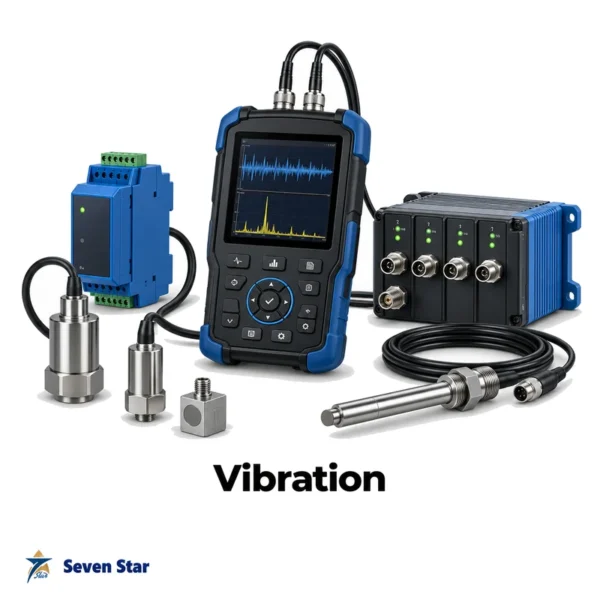
- Vibration Monitoring
- PLC & I/O Cards
- Industrial Communications
- Automation Accessories
- Controllers & Data Acquisition
- AC Drives
- Isolator & Barrier
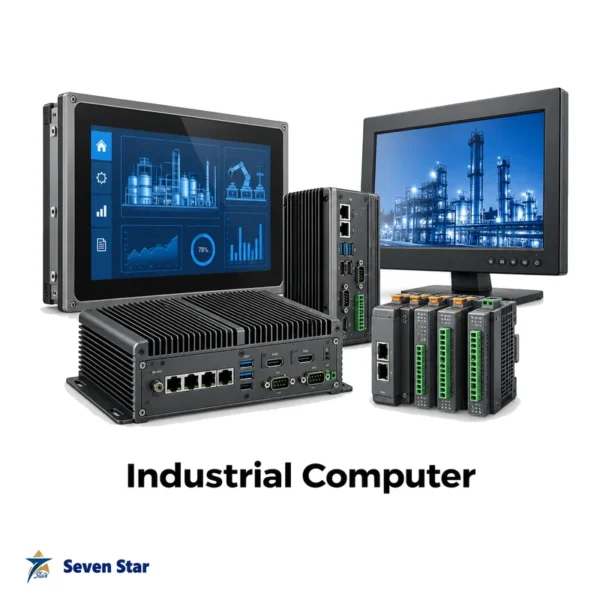
- Industrial Computers
- Encoders
- Safety Switches & Guard Locking
- Automation Software
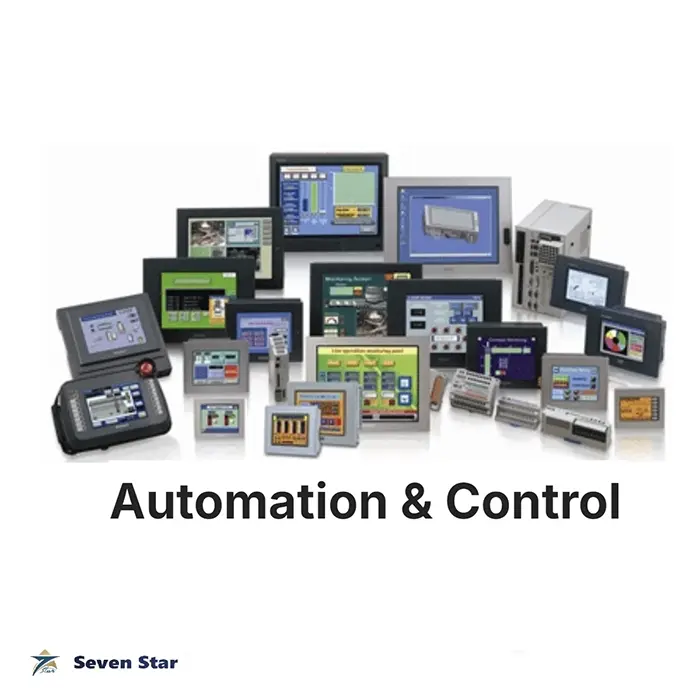
- HMI Displays
- Motor Soft Starters
- Servo Drives
- CCTV & Security
- Robotics
- Pneumatic Cylinders
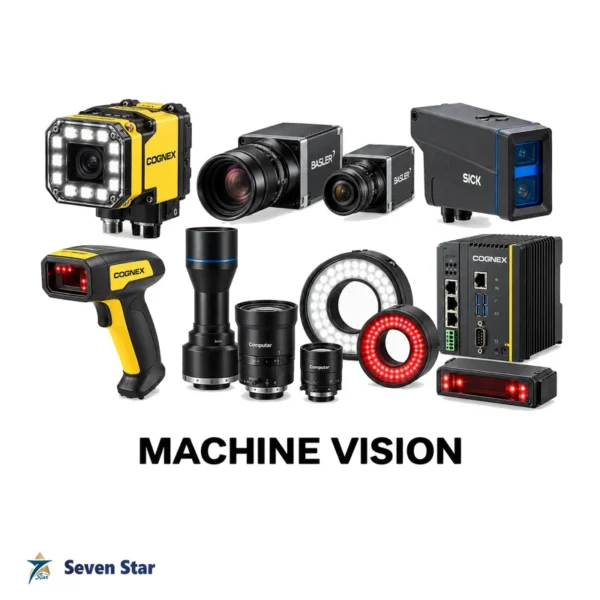
- Machine Vision




Category guide
About Automation & Control
Automation and control equipment at Seven Star LLC covers the hardware between the field instrument and the operator screen: PLC and DCS modules, safety controllers, drives, industrial networks, machinery protection systems and hazardous-area interface devices. The category lists items from Siemens, Schneider Electric, ABB, Allen-Bradley, HIMA and Yokogawa, with vibration monitoring from Bently Nevada, Brüel & Kjær and Shinkawa. Seven Star is an independent supplier based in Muscat and is the agency for Winsonic industrial networking and display products in Oman and the GCC.
Sub-categories in Automation & Control
The main sub-categories fall into five working groups.
- Logic and loop control: PLC & I/O Cards, Controllers & Data Acquisition and Automation Software hold CPUs, safety PLCs, remote I/O, single-loop controllers, recorders and engineering licenses.
- Motors and motion: AC Drives and Motor Soft Starters control speed and starting current, Encoders give position feedback, and Robotics covers articulated arms.
- Networks and operator interface: Industrial Communications, Industrial Computers, HMI Displays, Machine Vision and CCTV & Security cover switches, routers, panel PCs, operator panels, code readers and Ex cameras.
- Machinery protection: Vibration Monitoring holds proximity probes, accelerometers, monitor racks and balancing equipment.
- Field interface: Isolator & Barrier and Automation Accessories hold intrinsic safety isolators, surge protection, Ex control stations, beacons, safety relays and backup batteries.
Replacement modules for running control systems
Most inquiries in this category are for a single card or module in a system that has been running for years: a SIMATIC ET 200SP input module, a Bently Nevada 3500 relay module, a Foxboro field control processor. In that situation the order code alone is often not enough. Hardware revision, firmware version and, for safety systems, the certified version of the module decide if the replacement will be accepted by the existing rack and engineering software. We check the part number and configuration against the manufacturer documentation before quoting, and where a module has been discontinued we propose the manufacturer’s successor and point out what changes in wiring or software.
What to send with an automation inquiry
Send the complete order code from the nameplate, the hardware and firmware revision if shown, the quantity, and the system the part goes into. For drives and soft starters add motor power, supply voltage and load type. For hazardous-area devices add the zone and the required protection type. The manufacturer’s datasheet and the certificates the manufacturer issues, such as the declaration of conformity or the Ex certificate, are provided on request.
What to include in your inquiry
These details let us quote the right item the first time.
- Full part number or order code
- Hardware and firmware revision, when replacing a part
- Control system or PLC family it must work with
- New installation or replacement of an obsolete part
- Quantity and required delivery date
Missing some of them? Send what you have. A nameplate photo or an old part number is enough to start.
Top brands in Automation & Control
All brands →





Most viewed in Automation & Control

Guides and articles
All articles →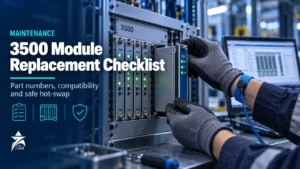 Bently Nevada 3500 Module Replacement Checklist: Part Numbers, Compatibility, Configuration and Safe Hot-Swap Practice
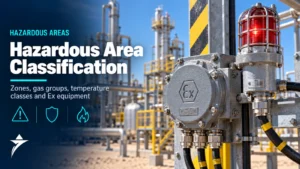 Hazardous Area Classification Explained: Zones, Gas Groups, Temperature Classes and Choosing Ex Equipment
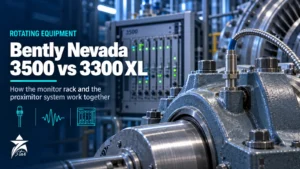 Bently Nevada 3500 vs 3300 XL: How the Monitor Rack and the Proximitor Transducer System Work Together