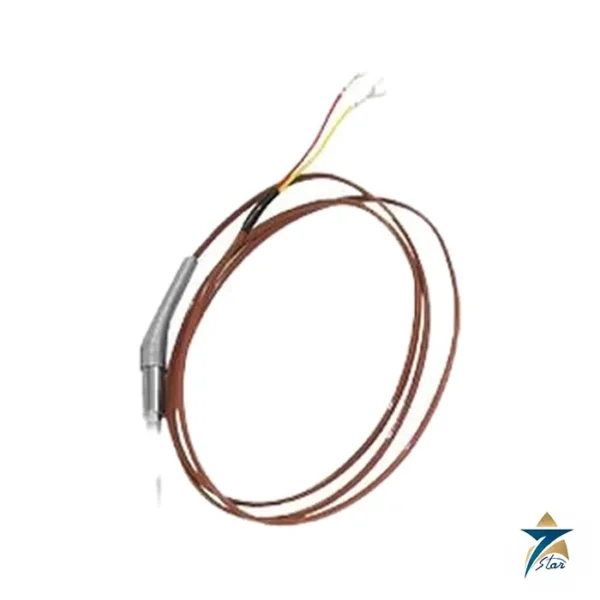
WIKA TF37 threaded temperature probe with connection lead
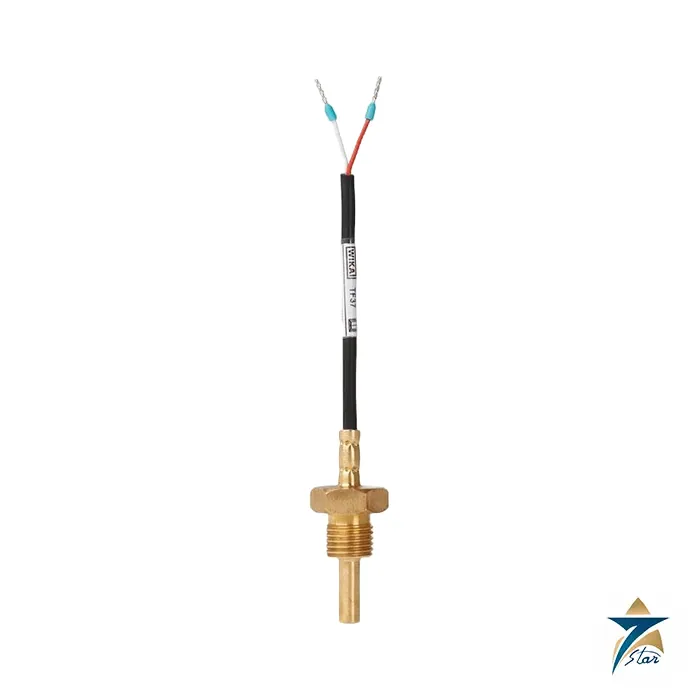
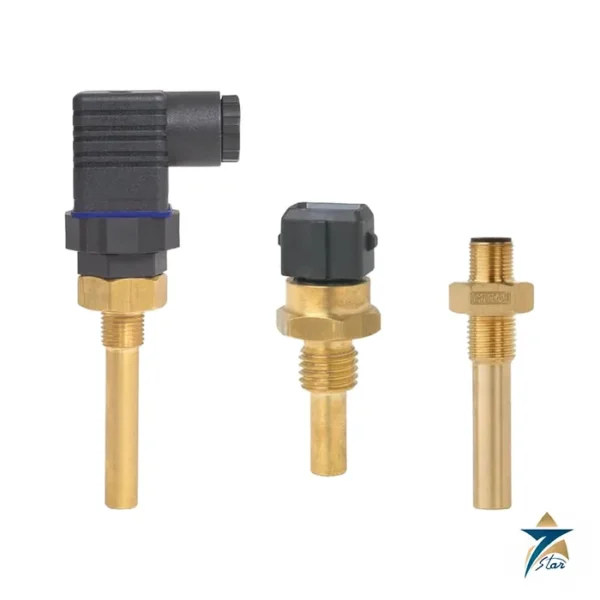
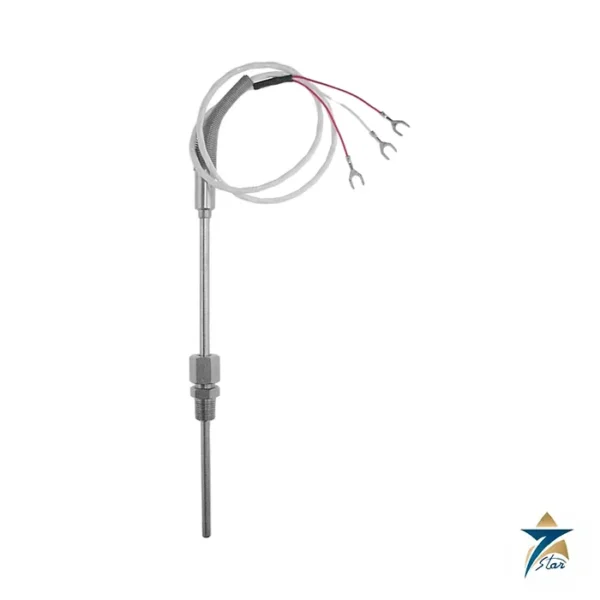
The WIKA TF37 is a vibration-resistant screw-in temperature probe with a cable instead of an integral plug. The cable decouples the measuring point from the electrical connection, which is needed where the medium is too hot for a connector, where vibration is strong, or where the control unit sits some distance away. A brass or stainless steel thermowell protects the sensing element from the medium, and a fixed mounting thread allows quick installation. WIKA gives a measuring range of -50 … +260 °C [-58 … +500 °F]. Seven Star LLC supplies the TF37 in Oman and the GCC as an independent supplier in Muscat.
TF37 technical specifications
| Parameter |
Specification |
| Manufacturer / part number |
WIKA / TF37 (data sheet TE 67.12) |
| Type |
Threaded temperature probe with connection lead |
| Measuring range |
-50 … +260 °C [-58 … +500 °F] with Pt100 or Pt1000; limited by cable material |
| Platinum elements |
Pt1000 and Pt100, class F 0.3 per IEC/EN 60751 |
| NTC elements |
10 kΩ, 5 kΩ, 2.5 kΩ, 2.252 kΩ; -30 … +130 °C |
| Connection method |
2-wire |
| Thermowell diameter |
4 mm [0.16 in]; further diameters on request |
| Mounting thread |
G¼ B or 7/16-20 UNF SAE O-ring boss (FPM/FKM); others on request |
| Insertion length |
25 mm standard; up to 250 mm [9.84 in] maximum on request |
| Wetted material |
Brass or stainless steel |
| Connection |
Stripped wires; customer-specific connectors on request |
| Response time t0.5 |
Brass about 2.2 s; stainless steel about 2.5 s (6 mm) |
| Reference conditions |
Ambient 15 … 25 °C, 50 … 70 % r.h., condensation permissible, any mounting position |
Cable insulation sets the real limit
| Lead insulation |
Range |
Ingress protection at the transition |
| PVC |
-20 … +105 °C |
IP65 |
| Silicone |
-50 … +200 °C |
IP66 / IP67 |
| PTFE |
-50 … +260 °C |
IP65 |
The probe element can handle the full range in the datasheet, but the insulation of the cable cuts it back. Only the PTFE lead supports the 260 °C top end; with silicone the limit is 200 °C and with PVC it is 105 °C. The transition from thermowell to cable is dust-tight and waterproof as shown, with silicone giving the best sealing rating.
Lead resistance and element choice
In a 2-wire circuit the resistance of the leads is added to the measurement. With a guideline of 0.162 Ω/m for 0.22 mm² copper, a Pt100 shifts about 0.42 °C per metre while a Pt1000 shifts only about 0.042 °C per metre. For a cable of several metres, the Pt1000 is therefore the better choice unless the controller needs a Pt100 input. NTC elements deliver a strong signal change in a narrow range and are common in HVAC and machine controls, but they are not standardised, so use the element the controller expects.
Related WIKA probes
The datasheet refers to the TF35 for a design with a directly mounted plug, and to the TFT35, a threaded thermometer. Use the TF37 when the cable is required and the TF35 when the machine harness already has a plug. The TF44 is the strap-on alternative when the pipe cannot be opened.
Installation guidance
- Choose the cable insulation for the hottest zone along its route, not just the thermowell
- Route the lead away from hot surfaces and moving parts and secure it close to the probe
- Seal the thread correctly for the medium and pressure; do not over-tighten
- Terminate stripped wires with ferrules and suitable connectors, and protect the termination from moisture
- Check the loop resistance on commissioning to confirm the wiring and element type
Applications in Oman and the GCC
The datasheet lists compressors and pumps, mobile working machines, refrigeration technology and HVAC. Hot gas lines on compressors, engine oil and exhaust-adjacent cooling circuits, hydraulic tanks on rigs and cranes, and chilled-water and heating loops in buildings are typical sites. High ambient temperatures in the Gulf make silicone or PTFE lead the safer option for engine rooms and hot machinery.
TF37 selection checklist
- Element type and resistance, and whether platinum or NTC
- Thread type and size, thermowell material and insertion length
- Cable insulation, length and termination
- Medium temperature, pressure and vibration
- Controller input and wiring
Practical points when specifying the TF37
With a cable-type probe the order has more variables than with a plug-in probe, so write them down in one list: thermowell material, mounting thread, insertion length (25 mm standard, longer on request up to 250 mm), element, cable insulation, cable length and the end termination. The datasheet states that customer-specific versions are possible, which is useful for OEM machines that need a special connector or cable.
The thermowell prevents the element from touching the medium, which is why the TF37 can be installed directly in the process through its fixed thread. The transition from thermowell to lead is sealed to IP65 or IP66/IP67 depending on the insulation material, and the sensor is described as highly vibration-resistant. Combined, these properties make it a sensible choice on engines, gearboxes and compressors, where the cable can be tied back to a cooler position and the connector sits away from heat and vibration.
Information to send with an RFQ
Send the thread, element, cable length and insulation, process temperature, pressure and quantity. For OEM projects the maker offers customer-specific versions, so include a drawing.
Site conditions in Oman for the TF37
Field instruments in Oman are exposed to strong sun, high ambient temperature, wind-blown dust and, on coastal plants, salt in the air. When you specify the TF37, check the ambient and process temperature limits, the enclosure rating and the wetted and housing materials against the actual installation point, and consider sunshades for transmitters mounted in direct sunlight. Cable entries should be sealed with suitable glands so that dust and moisture cannot enter the housing.
Calibration and verification planning matters as much as selection. Record the range, configuration and tag data of each TF37 at commissioning, define a check interval that suits the criticality of the loop, and keep the certificates with the plant documentation so that audits and shutdown work can proceed without delay.
Documents and quotation
The WIKA data sheet TE 67.12 for the TF37 is attached on this page. Send us the specification and quantity for a quotation from Muscat as an independent supplier.
Other Models in the Wika Tf3x Range
Seven Star LLC supplies models from the Wika Tf3x range in Oman and the GCC. Compare the related models below and request a quote for the one that matches your application.



















Reviews
There are no reviews yet.