
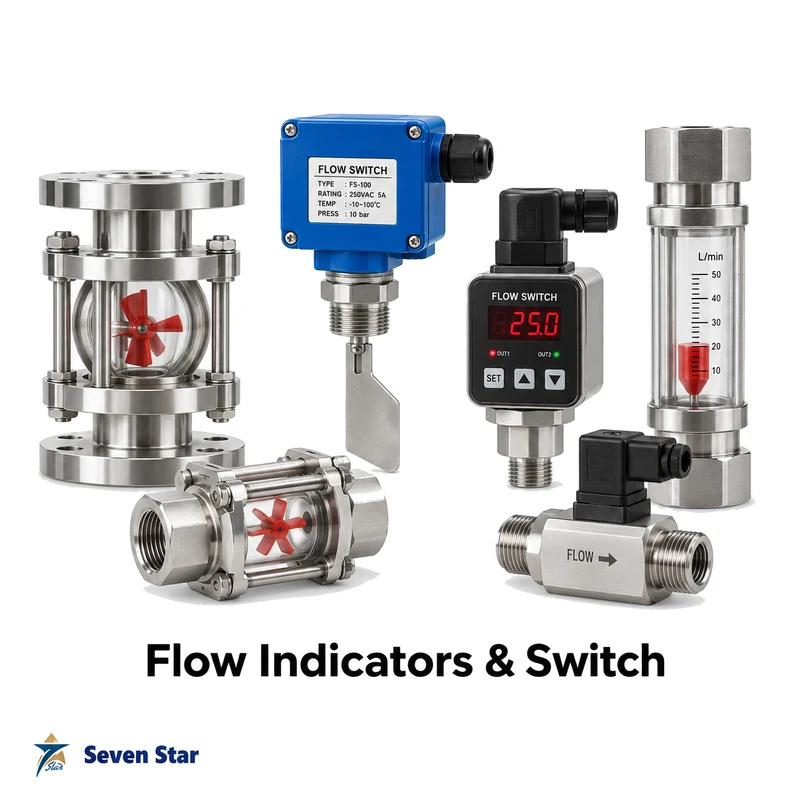
Flow Indicators & Switch
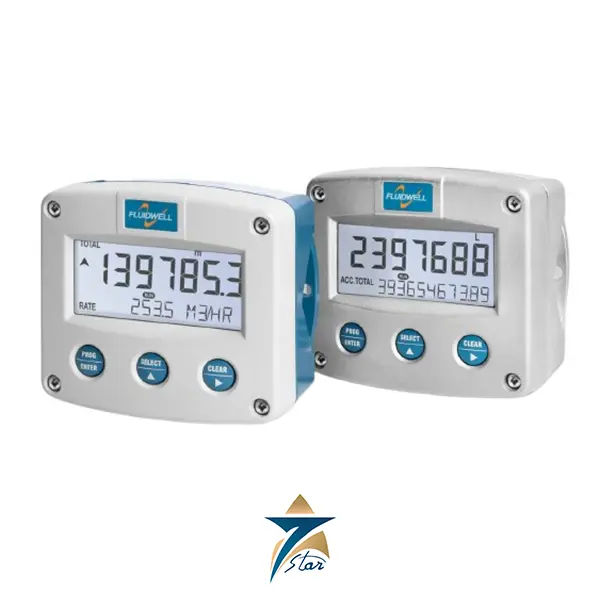
Sometimes an operator just needs a fast, reliable confirmation that flow is present in a line, and Seven Star LLC supplies flow indicators and switches for exactly this purpose across facilities in Oman and the GCC. Our Flow Indicators & Switch range includes Kawaki sight flow indicators, Dwyer Flotect paddle-type flow switches, and Fluidwell field-mount flow computers.
Sight flow indicators give operators an immediate visual confirmation that liquid or gas is flowing through a line, which is invaluable on drain lines, sample points, and gravity-fed systems where a blockage could otherwise go unnoticed. Paddle-type flow switches like the Dwyer Flotect trigger a high or low flow alarm setpoint, protecting pumps from dry-running and alerting operators to a blocked filter or failed valve, while Fluidwell’s field-mount computers add local totalizing and display capability directly at the process line.
Seven Star LLC supplies plant operators and maintenance teams across Oman with genuine, low-maintenance flow indication and switching hardware, along with guidance on selecting the correct connection size and setpoint for a given line.


Request a Quote for Flow Indicators & Switch
- Genuine OEM products
- Supply across Oman & the GCC
- Formal quotation from our sales team
Free, no-obligation quotation · takes about 1 minute
Other enquiries: [email protected] · WhatsApp