Ultrasonic bolt tension measurement instruments

Bolt Tension

Bolt tension instruments are specialized ultrasonic measurement devices designed to evaluate bolt elongation, applied load, axial stress, and percentage strain with high precision. This category includes handheld and bench-top bolt tension systems engineered for critical fastening applications where accuracy and structural integrity are essential.

These instruments are widely used in power generation facilities, petrochemical plants, heavy machinery assembly, wind turbines, pressure vessels, pipelines, marine structures, and industrial bolted joints. Bolt tension systems provide reliable verification of bolt loading, support preventive maintenance, ensure compliance with safety standards, and maintain long-term structural performance in demanding environments.
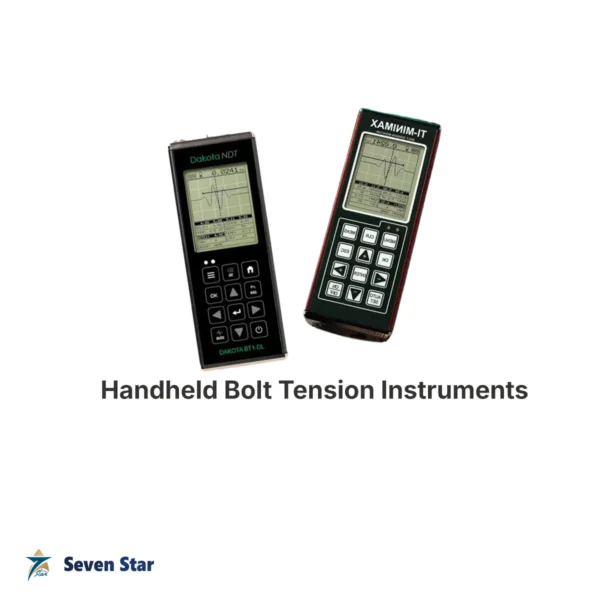
Portable ultrasonic bolt tension instruments

Handheld Bolt Tension Instruments

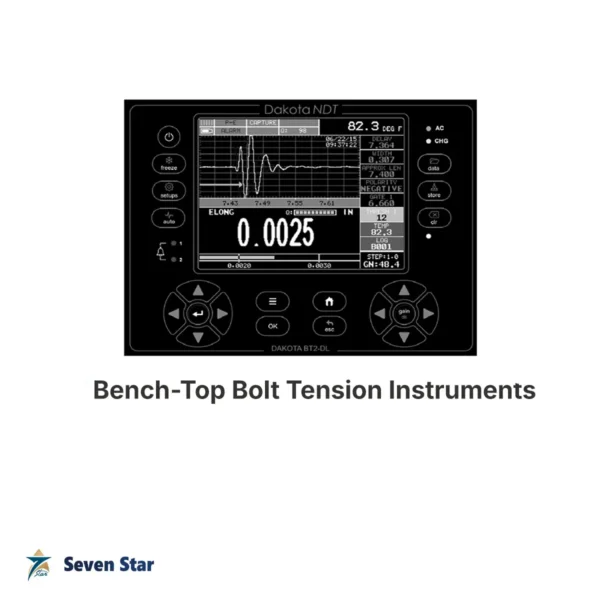
Bench-top ultrasonic bolt tension measurement instruments

Bench-Top Bolt Tension Instruments

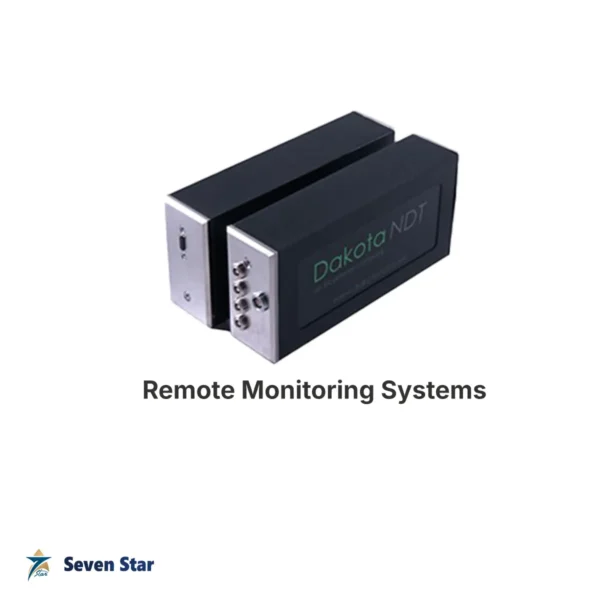
Remote ultrasonic bolt monitoring systems

Remote Monitoring Systems

Frequently Asked Questions

Why is controlling bolt tension, rather than applied torque, the critical parameter for ensuring the integrity of industrial flanged joints?
Torque control is highly unreliable due to unpredictable frictional variations at the thread and nut face interfaces, which can consume up to 90% of the applied energy, leaving the actual clamping force unknown. Direct measurement or application of bolt tension—the true axial stretch of the fastener—is the only definitive method to ensure the gasket is sufficiently compressed to prevent catastrophic leaks under severe pressure and thermal cycling.
What are the operational principles of hydraulic bolt tensioners used in assembling critical heavy-duty bolted connections?
Hydraulic bolt tensioners thread directly onto the stud protrusion above the nut and utilize extreme hydraulic pressure to physically pull and stretch the bolt to a precise, pre-calculated axial load. While the stud is temporarily elongated, the nut is easily run down hand-tight against the joint face; upon releasing the hydraulic pressure, the stud contracts, locking the exact required clamping force securely into the joint.
How does ultrasonic bolt measurement technology provide highly accurate, non-destructive verification of residual bolt tension?
Ultrasonic measurement systems transmit a high-frequency acoustic pulse longitudinally through the fastener and precisely calculate the time-of-flight for the echo to return from the opposite end. As the bolt is tensioned, the physical elongation and the stress-induced reduction in acoustic velocity increase the transit time; the microprocessor translates this minute time shift into highly accurate, real-time measurements of the actual applied clamping force.
What engineering factors cause relaxation in bolted joints post-assembly, and how can they be mitigated?
Bolted joint relaxation is primarily driven by gasket creep, localized embedment of surface asperities on the flange faces, and differential thermal expansion between the bolt and the flange material during startup. Mitigation strategies require implementing multi-pass cross-pattern tightening procedures, specifying high-recovery gaskets, and frequently utilizing Belleville spring washers to maintain dynamic tension during severe thermal transients.
In subsea applications, what are the advantages of utilizing multi-stud tensioning systems over sequential single-bolt tensioning?
Multi-stud tensioning systems employ a manifold ring that simultaneously pressurizes multiple tensioner heads attached to 50% or 100% of the flange bolts, applying a perfectly uniform and simultaneous clamping load. This simultaneous actuation eliminates elastic interactions (cross-talk) between bolts, drastically reduces subsea installation time for divers or ROVs, and guarantees absolute gasket parallelism to prevent catastrophic high-pressure leaks.