WIKA TC10-A thermocouple measuring insert
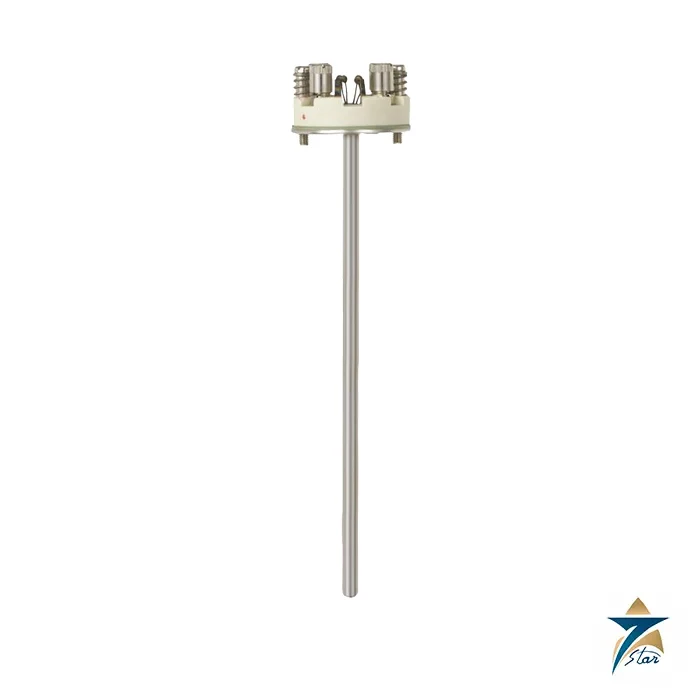
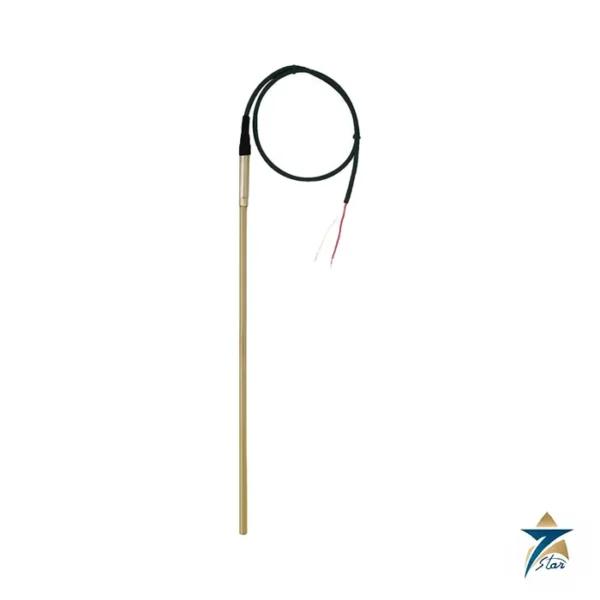
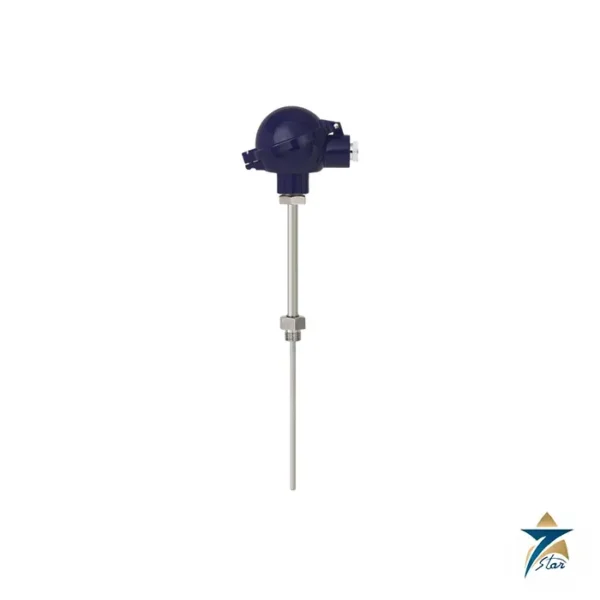
The WIKA TC10-A is a replaceable thermocouple measuring insert. It is not a complete thermometer: it is the sensing core that goes into a connection head, neck tube and thermowell, and it is also the part you stock as a service spare when a TC10-B, TC10-C, TC10-F or TC81 thermocouple needs a new element. It is built from bendable mineral-insulated sheathed cable with the thermocouple junction at the tip, and WIKA gives sensor ranges from -40 … +1,200 °C [-40 … +2,192 °F]. Seven Star LLC supplies the TC10-A in Oman and the GCC as an independent supplier in Muscat.
What a TC10-A insert is and when to order one
The insert is made to DIN 43735 for installation in a protective fitting. Operation without a thermowell is only recommended in certain applications. Each insert comes with pressure springs, so the tip is forced down onto the thermowell bottom, which gives good heat transfer and quick response. Three order situations are typical: replacing a failed insert in an existing thermometer, adding a spare to a shutdown kit, and building a new thermometer from separate parts. The datasheet notes that customer-specific versions exist, such as other lengths (including intermediate lengths), a mounted sleeve to suit a thermowell bore, no terminal block, or a version with transmitter.
TC10-A technical specifications
| Parameter |
Specification |
| Manufacturer / part number |
WIKA / TC10-A (data sheet TE 65.01) |
| Type |
Thermocouple measuring insert, spring-loaded, per DIN 43735 |
| Sensor types |
K, J, E, N and T per IEC 60584-1 or ASTM E230, single or dual |
| Junction |
Ungrounded (standard) |
| Measuring range |
-40 … +1,200 °C [-40 … +2,192 °F], limited by type, diameter and thermowell |
| Type K range |
Class 2: -40 … +1,200 °C; Class 1: -40 … +1,000 °C; ASTM special / standard: 0 … 1,260 °C |
| Type J range |
Class 1 and 2: -40 … +750 °C; ASTM: 0 … 760 °C |
| Type E range |
Class 2: -40 … +900 °C; Class 1: -40 … +800 °C; ASTM: 0 … 870 °C |
| Type N range |
Class 2: -40 … +1,200 °C; Class 1: -40 … +1,000 °C; ASTM: 0 … 1,260 °C |
| Type T range |
-40 … +350 °C; ASTM: 0 … 370 °C |
| Construction |
Vibration-resistant mineral-insulated sheathed cable (MI cable) |
| Long inserts |
From 1,100 mm length delivered wound in a ring; straight only on explicit request |
| Transmitters |
T16 and T32 (4 … 20 mA, HART as applicable), galvanically isolated |
| Transmitter protection |
Keep the transmitter below 85 °C |
| Functional safety |
SIL 2 with TUV-certified T32.1S in selected combinations |
Understanding the tolerance table
The tolerance classes are valid only inside the temperature ranges the standard assigns to them. For a type K sensor, for example, class 1 holds from -40 to +1,000 °C and class 2 up to +1,200 °C. The tolerance values assume a cold junction at 0 °C. The real operating limit is lower when the sheath diameter is small or the thermowell material, not the thermocouple, sets the maximum. A quoted insert therefore needs the thermocouple type, class, wire arrangement and sheath diameter written down, not only the range.
Fitting a TC10-A into a thermometer
The insert length (dimension l5) and diameter must match the thermowell. Standard diameters follow DIN, and a mounted sleeve can be fitted so the insert fills a larger bore. When a transmitter is mounted on the insert, it replaces the terminal block and is attached to the terminal plate, which is why a prepared version without a terminal block exists. The polarity of the instrument decides the correlation of colours, so check the positive pole against the thermocouple standard of your country.
Explosion protection and approvals
The datasheet carries ATEX, IECEx and other national approval options, but with an important restriction: a TC10-A insert is not permitted in hazardous areas without a suitable protective fitting. Depending on the version, the insert can be used in different ignition protection types when built into a TC10-B, TC10-C, TC10-F or TC81 thermocouple. For dust areas, a matching protective fitting is needed. Always state the full thermometer, head and zone in the enquiry.
Handling, storage and replacement
- Store the insert straight or in its ring without sharp kinks, and keep the tip protected
- Do not bend the first section of the tip and respect the minimum bending radius of the MI cable
- Use a new spring washer or pressure spring if the old one has lost tension
- After replacement, verify the loop with a dry-block or simulator and check polarity at the transmitter
- Keep spare inserts in the exact diameter, length and type used in the plant, because the terminals and springs differ
Applications in Oman and the GCC
Because the insert is a spare part for thermocouples in heaters, furnaces, boilers, turbines and exhaust or flue lines, it is stocked by many plants in the region. Fired heaters at refineries, gas-turbine exhaust, boiler and steam lines in power stations, and kilns and ovens in fabrication yards see high temperatures and vibration, where a replaceable, spring-loaded insert shortens a shutdown. Hot, sandy conditions also encourage regular inspection of the head and terminals.
TC10-A selection checklist
- Thermocouple type (K, J, E, N or T) and class
- Single or dual thermocouple, ungrounded junction
- Insert length l5 and diameter
- Terminal block, prepared for transmitter, or with transmitter (T16, T32)
- Sleeve for the thermowell bore, if needed
- Parent thermometer type and zone if used in a hazardous area
Information to send with an RFQ
If you are replacing an insert, send the parent thermometer type, the existing insert length and diameter, the thermocouple type and the quantity. A nameplate photo is the quickest way to confirm a match.
Documents and quotation
The WIKA data sheet TE 65.01 for the TC10-A is attached on this page. Send us the specification and quantity for a quotation from Muscat as an independent supplier.























Reviews
There are no reviews yet.