WIKA TR50 surface resistance thermometer for pipes and flat surfaces
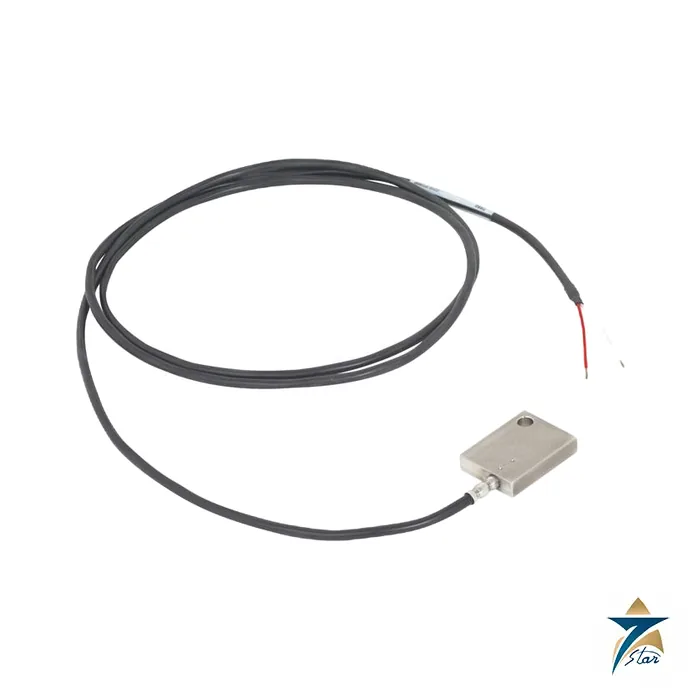
The WIKA TR50 measures temperature on the outside of a pipe, vessel wall or flat component, so no thermowell and no process opening are needed. The Pt100 probe sits in a contact block that is screwed or welded to a flat surface, or is held on a pipe with a tightening strap, and it is connected through a cable made of PVC, silicone or PTFE. WIKA lists sensor ranges up to 250 °C [482 °F], with an option up to 600 °C [1,112 °F]. Seven Star LLC supplies the TR50 in Oman and the GCC as an independent supplier in Muscat.
How the TR50 is built
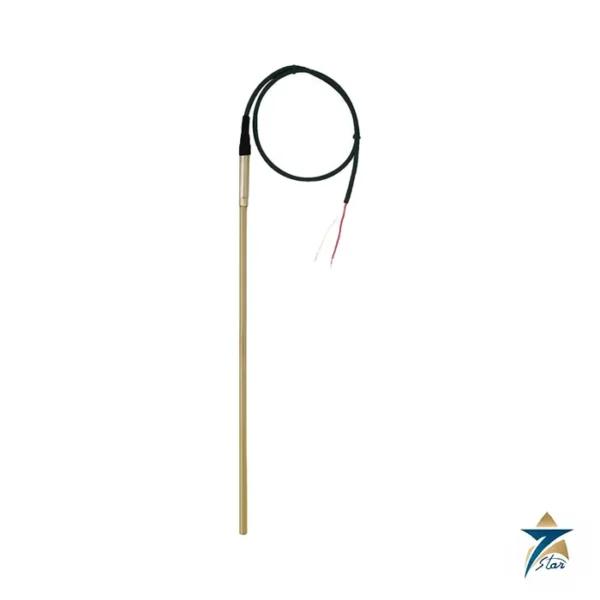
For flat surfaces, the probe is inside a metal contact block (30 x 40 x 8 mm with a 6.5 mm bore in the example listed) that can be screwed or welded on. For pipes, the sensor is secured with a tightening strap, and a weld-on stainless steel sheet is another listed option. The probe itself is metallic stainless steel with a selectable length. It may be a rigid tubular design, which must not be bent, or a sheathed (MI cable) design whose flexible part can be bent to three times its diameter; in both cases the first 60 mm of the tip must not be bent. A transition sleeve joins the metal probe to the connection cable and, depending on diameter, is 45 or 60 mm long.
TR50 technical specifications
| Parameter |
Specification |
| Manufacturer / part number |
WIKA / TR50 (data sheet TE 60.50) |
| Type |
Surface resistance thermometer |
| Sensor |
Pt100, single or dual; measuring current 0.1 … 1.0 mA |
| Sensor range |
Up to 250 °C [482 °F]; option 600 °C [1,112 °F] |
| Accuracy classes |
Class B, A and AA per IEC 60751 (A and AA not with 2-wire) |
| Class B range, thin-film |
-50 … +500 °C or -50 … +250 °C depending on design |
| Class A range, thin-film |
-30 … +300 °C; wire-wound -100 … +450 °C |
| Fastening |
Screw-on or weld-on contact block, tightening strap, or weld-on sheet |
| Probe material |
Stainless steel, length selectable |
| Cable insulation |
PVC, silicone, PTFE or glass fibre |
| Cable limits |
PVC -20 … +100 °C; silicone -50 … +200 °C; PTFE -50 … +250 °C; fibreglass -50 … +400 °C |
| Potting at transition |
-40 … +150 °C, option 250 °C |
| Wire cross-section |
Approx. 0.22 mm² standard |
| Ingress protection |
Standard up to IP65; special versions up to IP67 |
| Connectors (option) |
Lemosa -55 … +250 °C; Binder or Amphenol -40 … +85 °C |
Why the cable matters as much as the sensor
The datasheet makes a point many users overlook: the limit of a surface thermometer is the weakest part of the connection line, not the sensor tip. A tubular TR50 has an insulated supply line inside the probe, so it can only be used to the temperature of that line. A sheathed type tolerates more heat at the probe, but the cable transition, the connection cable and any connector still have their own limits. Choose silicone for up to 200 °C, PTFE for up to 250 °C and fibreglass for higher temperatures. Glass-fibre leads cannot be combined with an explosion-protected design.
Accuracy and wiring
Class A and AA are not allowed with 2-wire, since cable resistance would cancel the accuracy gain. For a surface sensor on a long cable the datasheet recommends a 3- or 4-wire connection. On the surface, accuracy also depends on contact: the sensor reads the wall temperature, which is lower than the fluid temperature when the pipe is insulated badly or the fluid is flowing slowly, so insulate the point over the sensor and use thermal paste where the specification permits.
Explosion-protected options
Ex versions are offered: ATEX and IECEx Ex ia for zones 0, 1, 20, 21 and 22, Ex nA for zone 2 and Ex tc for zone 22, with US-style Class I Division 2 listing in the IECEx column and other country options such as EAC, INMETRO, KCs and PESO. The cable inductance and capacitance (1 µH/m and 200 pF/m) are printed on the product label and must be included in the intrinsic-safety calculation. The special low-temperature version (-60 … +120 °C) is only available with selected approvals.
Mounting recommendations
- Clean the pipe or plate down to bare metal and keep the contact area flat
- Weld on the sheet or block only with procedures suitable for the vessel material
- Tighten the strap evenly and cover the sensor with insulation to reduce air cooling
- Support the cable and keep the transition sleeve unbent and clear of the process heat
- Choose a cable sheath for the hottest point along the line, not the sensor tip
Where the TR50 is used in Oman and the GCC
Typical jobs include pipe-wall temperature checks on steam tracing, condensate and hot-oil lines, vessel skin monitoring on heaters and reactors, bearing housings, and temporary or retrofit measurement points where a pipe cannot be opened. In the Gulf, hot sun on exposed pipework means the sensor must be insulated or shaded to measure the process rather than the ambient, and dust-laden air makes sealed cable ends worthwhile.
Related WIKA models
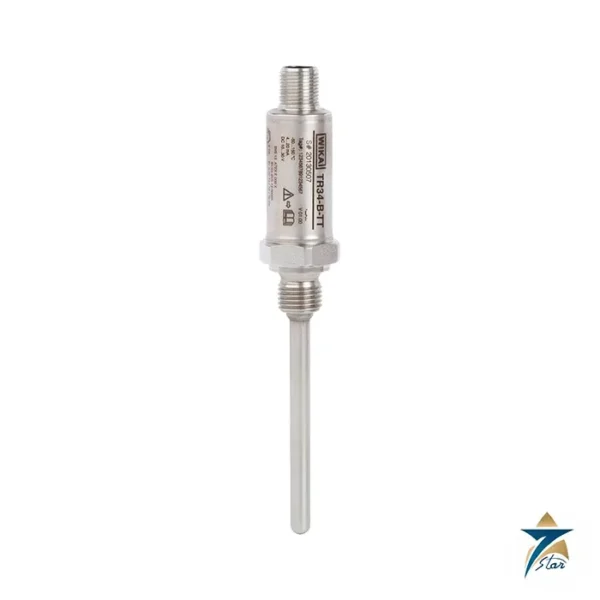
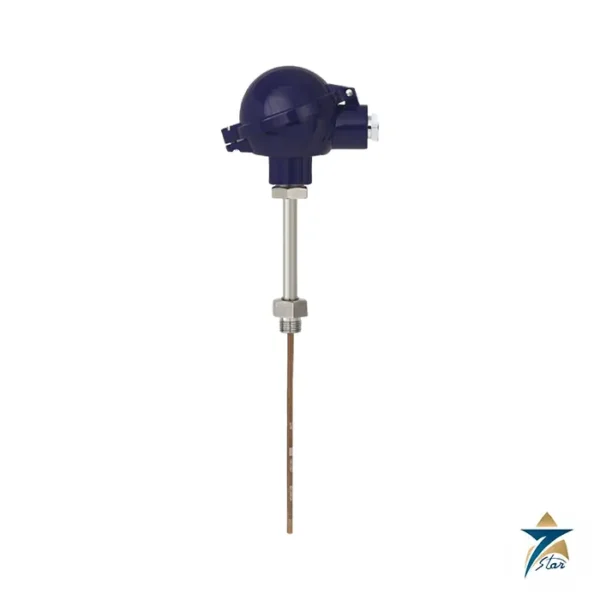
The TC50 surface thermocouple is the thermocouple version for higher ranges, while the TR40 cable resistance thermometer is intended for bores and probe insertion rather than surfaces. For permanent installations that need a medium-wetted measurement, the TR10 series with thermowell is the usual alternative.
TR50 ordering checklist
- Fastening: contact block (screw or weld), tightening strap or weld-on sheet
- Pipe diameter or flat-surface dimension
- Probe type (tubular or sheathed), diameter and length
- Sensor class, single or dual, wire count and range up to 250 or 600 °C
- Cable sheath, length, screen, connector or field case
- Hazardous-area marking and ambient temperature
Information to send with an RFQ
Send the surface material and shape, maximum surface temperature, ambient temperature, cable length and termination, quantity and approvals.
Documents and quotation
The WIKA data sheet TE 60.50 for the TR50 is attached on this page. Send us the configuration and quantity for a quotation from Muscat as an independent supplier.

























Reviews
There are no reviews yet.