- Vibration Monitoring
- Industrial Communications
- PLC & I/O Cards
- Automation Accessories
- Controllers & Data Acquisition
- AC Drives
- Industrial Computers
- Encoders
- Isolator & Barrier
- Safety Switches & Guard Locking
- Automation Software
- HMI Displays
- Motor Soft Starters
- Servo Drives
- CCTV & Security
- Robotics
- Pneumatic Cylinders
- Machine Vision


Category guide
About Liquid Analytics
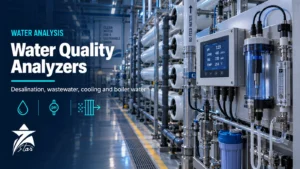
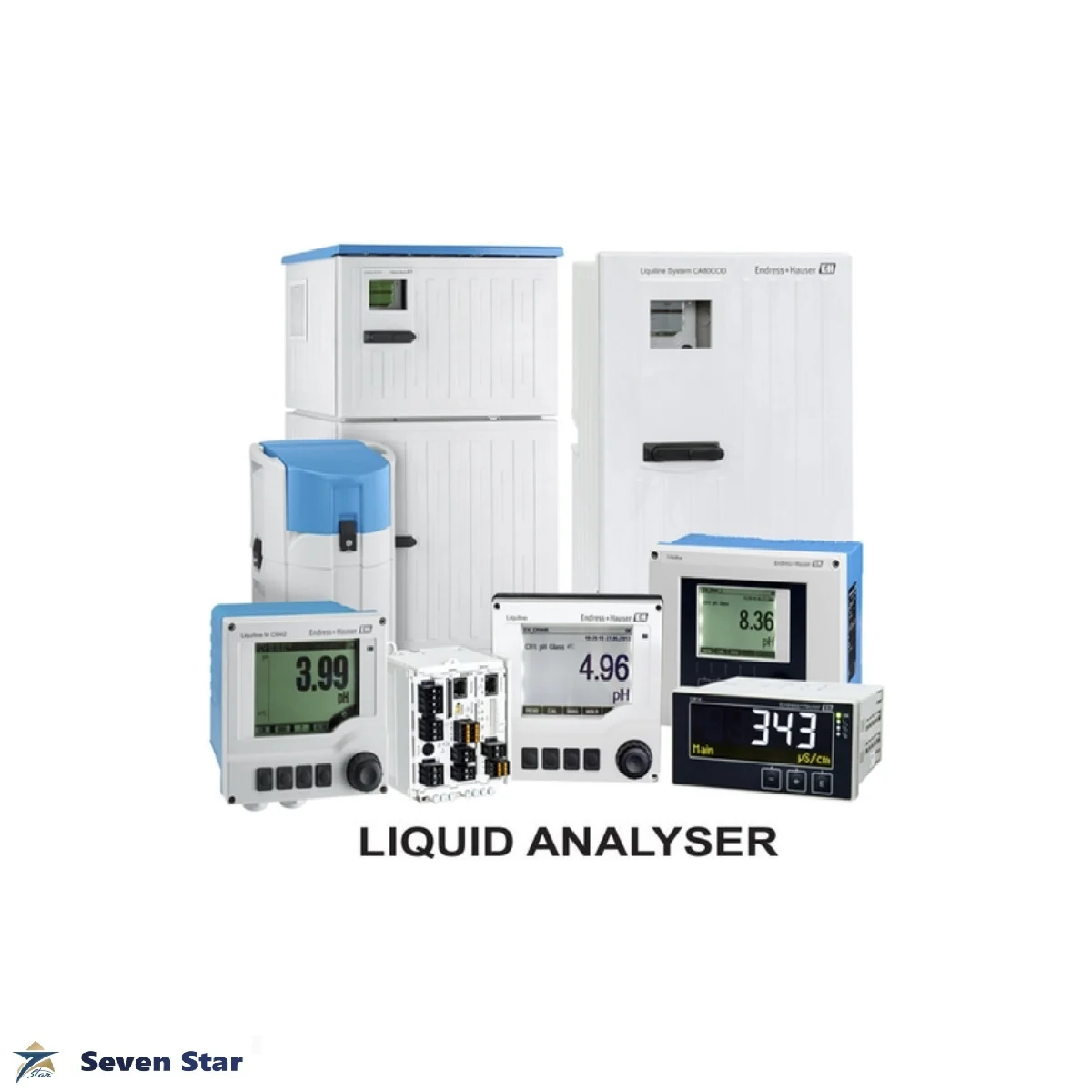
Liquid Analytics groups the instruments used to measure the chemistry of water and process liquids: sensors, transmitters, online liquid analyzers, laboratory instruments and the reagents and spares they consume. ABB makes up the largest share of the listings, followed by Hach, LAR Process Analysers, Endress+Hauser, Sitelab and JUMO. Seven Star LLC supplies these liquid analysis products from Muscat to utilities, refineries and process plants in Oman and the GCC.
Three sub-categories of liquid analysis equipment
Liquid Analysis Sensors holds the measuring elements that sit in the liquid: pH and ORP electrodes, contacting and toroidal conductivity cells, dissolved oxygen and free chlorine sensors, in insertion, immersion, flow-through and hot-tap retractable styles.
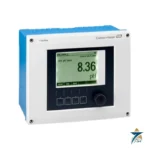
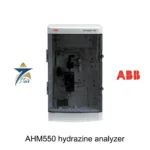
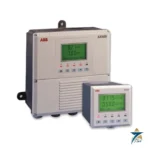
Liquid Analytical Systems covers the transmitters and complete analyzers: single and multi-parameter transmitters, online analyzers for silica, sodium, hydrazine, fluoride and total organic carbon, turbidity and oil-in-water monitors from Galvanic, titrators and process analyzers from Metrohm, and UV fluorescence analyzers from Sitelab for petroleum hydrocarbons.
Liquid Analytical Accessories contains what these instruments use up or wear out: reagents and reagent sets, pH buffer solutions, test ampoules from CHEMetrics, hollow cathode lamps from AMETEK, and pump, reactor and UV lamp spares for TOC analyzers from LAR Process Analysers.
Where liquid analyzers are used
In power and desalination plants the water and steam cycle is watched with conductivity, pH, dissolved oxygen, silica, sodium and oxygen scavenger measurements, because small amounts of contamination damage boilers and turbines. Water and wastewater plants rely on pH, chlorine, dissolved oxygen, turbidity and organic load. Oil and gas sites measure oil in produced water before discharge or reinjection, and refineries check salt in crude and effluent quality. Rosemount and Forbes Marshall instruments are listed for several of these duties.
What to send for a liquid analyzer quotation
Name the parameter and range, the liquid and its temperature, pressure and solids content, the mounting style, the signal output and any area classification. For spares and reagents the manufacturer part number and the analyzer model are enough. We check the configuration against the manufacturer documentation and suggest the manufacturer’s successor when a model is obsolete.
What to include in your inquiry
These details let us quote the right item the first time.
- Parameter (pH, conductivity, dissolved oxygen, chlorine, turbidity)
- Measuring range
- Process pressure and temperature
- Installation: inline, immersion or flow-through
- Transmitter model the sensor must work with
- Cable length
Missing some of them? Send what you have. A nameplate photo or an old part number is enough to start.