Honeywell STGW800 SmartLine wireless gauge pressure transmitter: what the model code covers
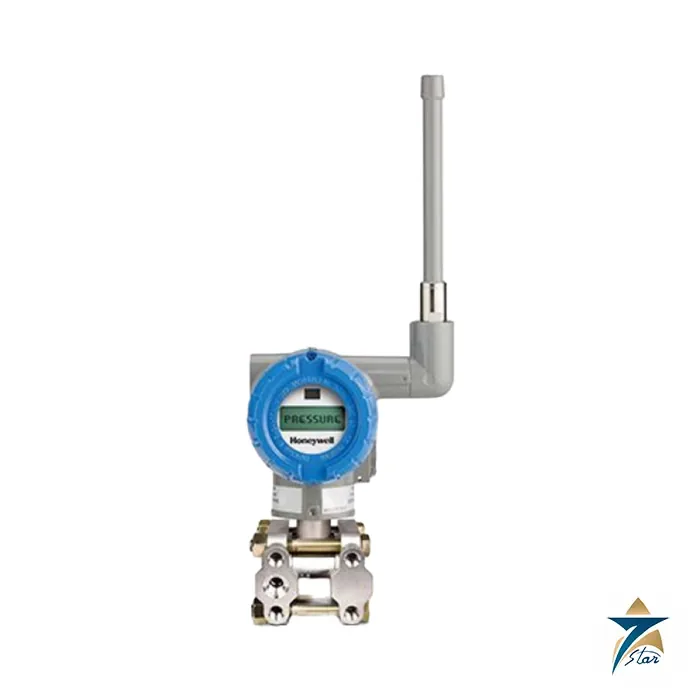
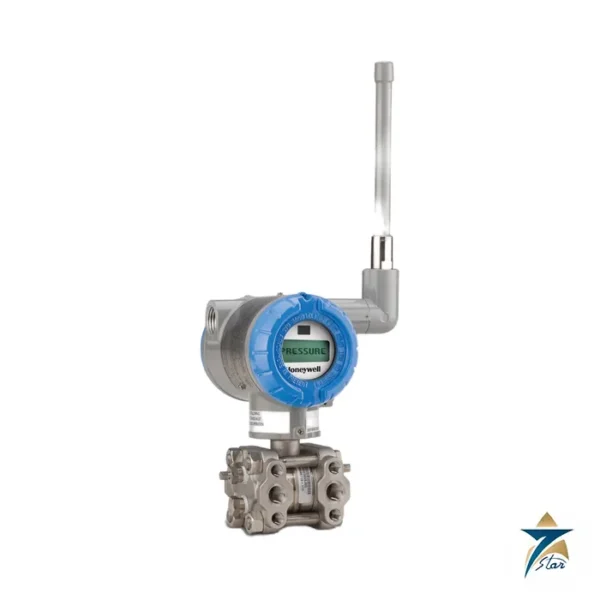
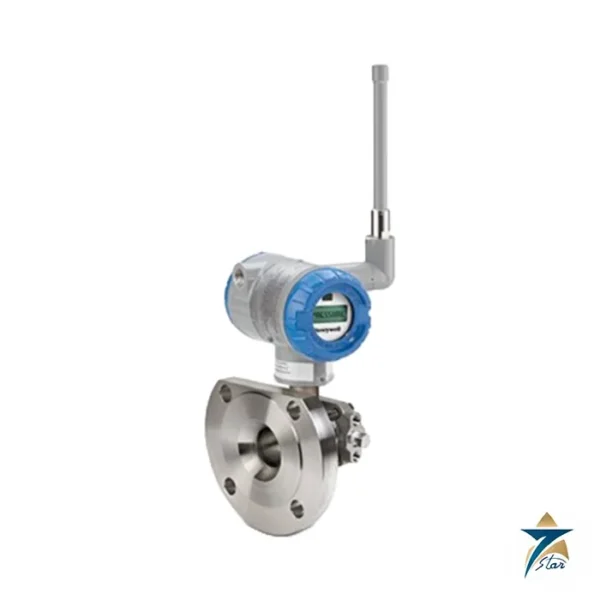
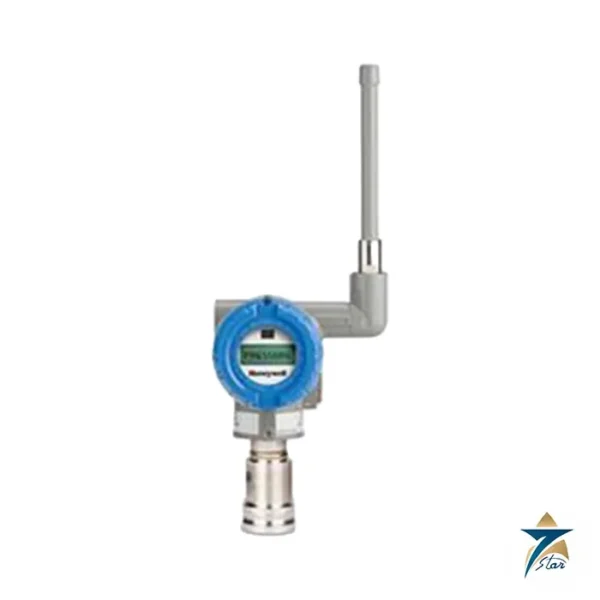
The STGW800 is the gauge-pressure member of the Honeywell SmartLine Wireless family. It measures pressure with the same piezoresistive meter body used in the wired ST 800 and ST 700 range, but replaces the signal cable with an ISA100.11a-ready radio and a battery pack. That makes the STGW800 a practical choice where trenching or cable tray would cost more than the instrument itself, or where a measurement point is simply too remote to wire. Seven Star LLC supplies the STGW800 in Oman and the GCC as an independent supplier in Muscat, and this page explains how to read the model code before you request a quotation.
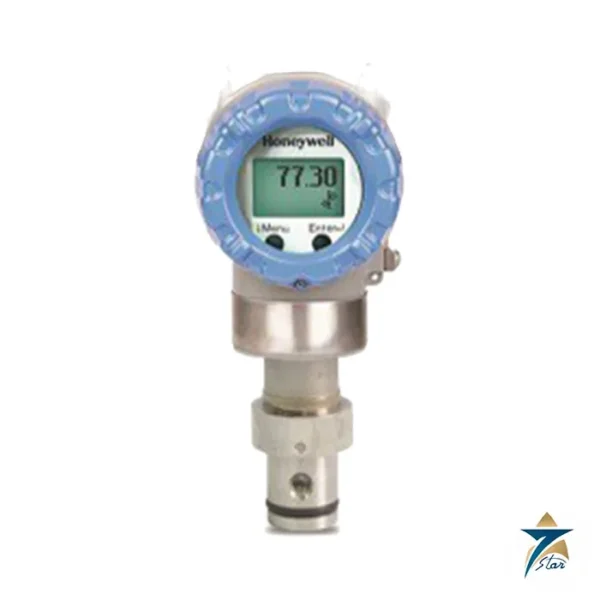
The datasheet groups four models under the STGW800 name. Two are dual-head designs and two are in-line designs, each offered in a 500 psi and a 3,000 psi range:
| Model |
Body style |
Upper range limit |
Span limit |
| STGW840 |
Dual-head gauge |
0 to 500 psi (0 to 35 bar) |
Minimum span 5 psi (0.35 bar) |
| STGW870 |
Dual-head gauge |
0 to 3,000 psi (0 to 210 bar) |
Minimum span 30 psi (2.1 bar) |
| STGW84L |
In-line gauge |
0 to 500 psi (0 to 35 bar) |
Minimum span 5 psi (0.35 bar) |
| STGW87L |
In-line gauge |
0 to 3,000 psi (0 to 210 bar) |
Minimum span 30 psi (2.1 bar) |
All four share a lower range limit of –14.7 psi (–1.0 bar), so they can read slight vacuum as well as positive gauge pressure.
STGW800 technical specifications
| Parameter |
Specification |
| Manufacturer / part number |
Honeywell / STGW800 (STGW840, STGW870, STGW84L, STGW87L) |
| Measured variable |
Gauge pressure, piezoresistive sensor with on-chip temperature compensation |
| Reference accuracy |
±0.065 % of calibrated span (terminal based, includes linearity, hysteresis and repeatability) |
| Stability |
Up to 0.010 % of URL per year for ten years |
| Rangeability |
Up to 100:1 |
| Overpressure |
1,500 psi (103 bar) on the 500 psi ranges; 4,500 psi (310 bar) on the 3,000 psi ranges |
| Zero temperature effect (per 28 °C) |
±0.05 % of span (500 psi ranges); ±0.10 % of span (3,000 psi ranges) |
| Wireless link |
2.4 GHz ISM band, DSSS, IEEE 802.15.4, 250 kbps; ISA100 Wireless ready |
| Publish rate |
0.5, 1, 5, 10 or 30 seconds, or 1, 15, 30 or 60 minutes |
| Nominal radio range |
350 m (1,150 ft) line of sight with the 4 dBi integral antenna |
| Power |
3.6 V lithium thionyl chloride D-size batteries, or 24 VDC option (16 to 28 VDC, 100 mA max) |
| Ambient temperature |
–40 to 85 °C (ordinary locations) |
| Housing protection |
NEMA 4X, IP66/IP67; epoxy-polyester painted aluminum or stainless steel option |
| Process connection |
1/4 inch NPT, 1/2 inch NPT with adapter, DIN 19213 heads; G 1/2 B on selected models |
Figures are the manufacturer’s reference-condition values at 25 °C and 316L stainless barrier diaphragm. Accuracy for spans below the reference point degrades by the formula given in the datasheet, so a narrow calibrated range on the 3,000 psi body will not reach the headline figure.
How the STGW800 measures and communicates
Inside the meter body a silicon piezoresistive element converts diaphragm deflection into a resistance change. A temperature sensor on the same chip lets the electronics correct for thermal drift before the value is scaled to the calibrated range. Because the meter body is common to the wired SmartLine pressure range, plants that already stock ST 800 or ST 700 spares meet familiar behaviour and a familiar maintenance routine.
The electronics then publish the process variable over the 2.4 GHz network at the configured rate. Every packet is acknowledged and CRC-checked by the receiving device. Each transmitter can run as a mesh node or as a star (non-mesh) device, and the two types can coexist on the same network. Non-mesh operation is the usual choice when deterministic timing matters, for example in a control loop that reads the pressure every half second. Faster publish rates draw more battery energy, so the half-second setting is a deliberate choice rather than a default.
Where the STGW800 sits in a Honeywell wireless system
The STGW800 is a field device on a Honeywell OneWireless network. A Wireless Device Manager acts as the gateway and manages devices that talk ISA100 Wireless as well as WirelessHART. Field Device Access Points connect the radio network to the gateway over Ethernet and can also act as line-powered field routers, which is more efficient than letting battery devices route traffic for their neighbours. The datasheet states that the transmitter can join existing OneWireless networks and interoperate with XYR 6000 transmitters and other ISA100-compliant devices.
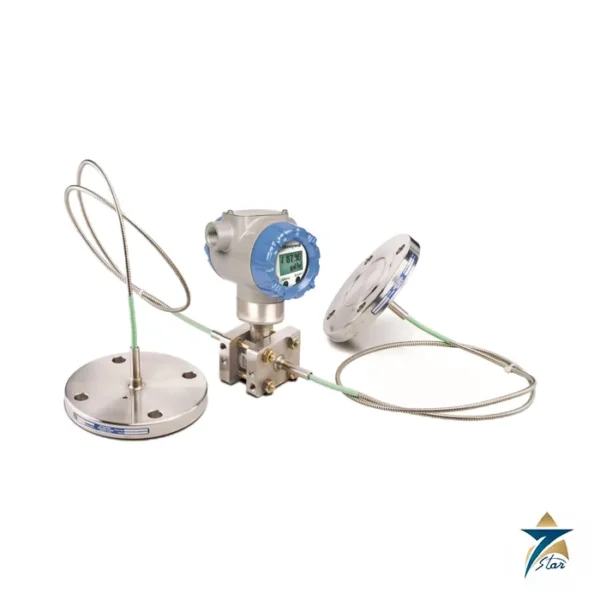
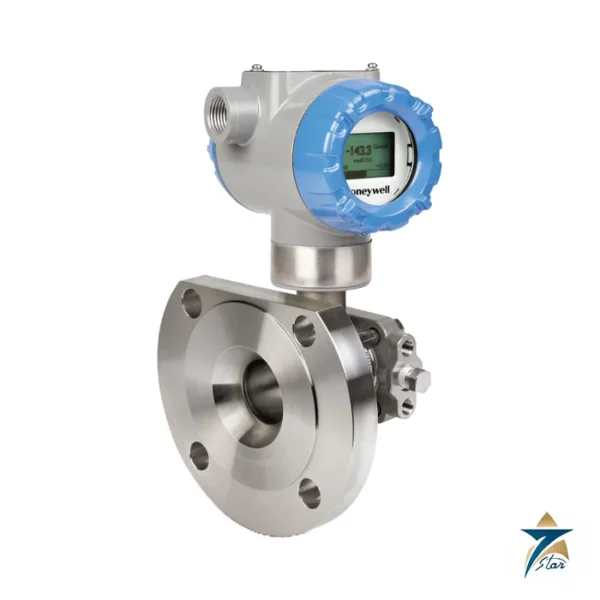
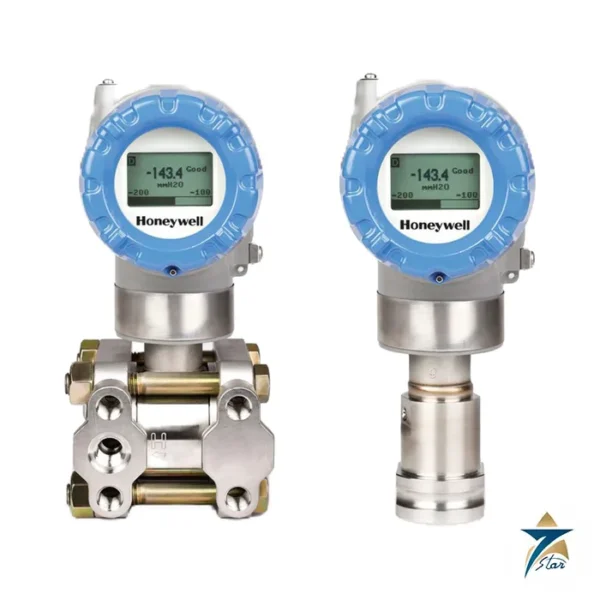
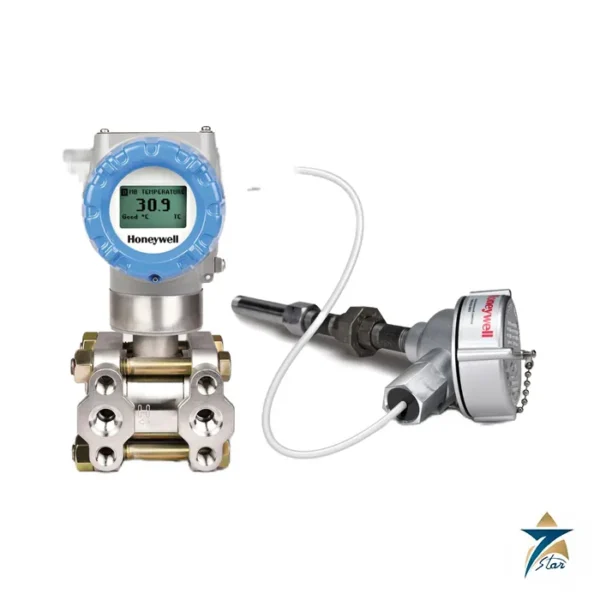
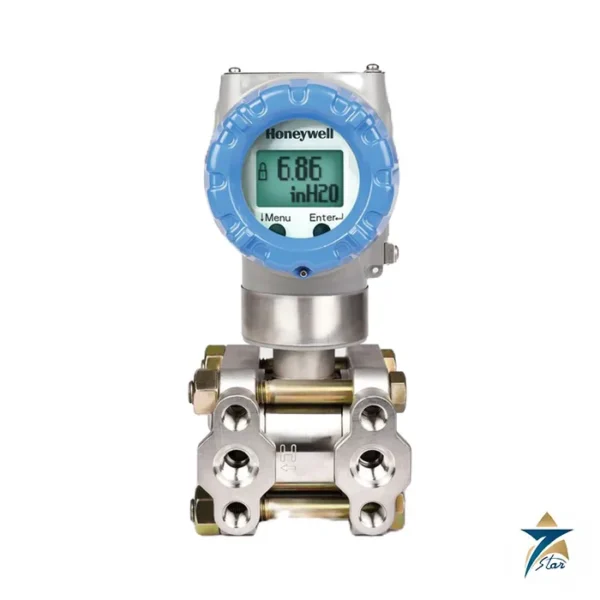
Sibling wireless models in the same family include the STAW84L absolute pressure transmitter, the STDW800 differential pressure range, the STFW828 and STFW724 flange-mounted level transmitters, the STIW400 temperature transmitter and the STUW750 and STUW751 universal I/O transmitters. They share batteries, antennas, brackets and the network, which reduces spare parts variety.
Selecting an STGW800: dual head or in-line, 500 or 3,000 psi
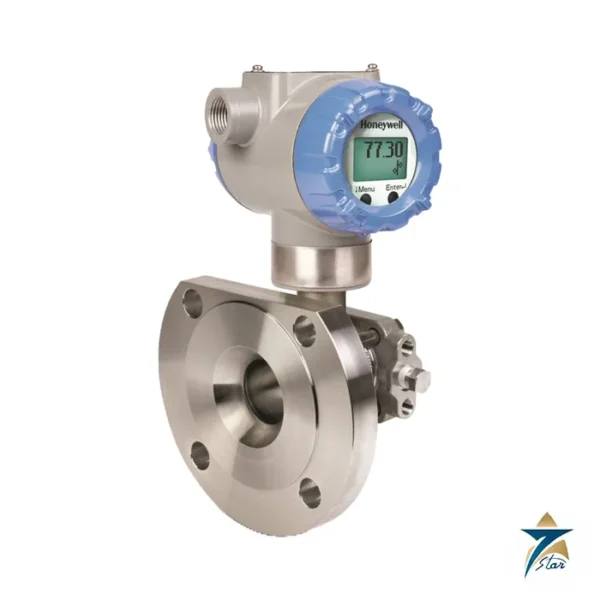
- Body style. The dual-head STGW840 and STGW870 weigh about 5 kg (11 lb) and carry a process head with a bolted flange arrangement and optional vent or drain. The in-line STGW84L and STGW87L weigh about 3.2 kg (7 lb) and thread directly onto the process, which suits compact skids and where dead volume matters.
- Range. Pick the lowest upper range limit that covers the maximum working pressure and any transient, then set the calibrated span as close as practical to the real operating window. The 500 psi bodies allow a 5 psi minimum span; the 3,000 psi bodies allow 30 psi.
- Wetted materials. Barrier diaphragm in 316L stainless steel or Hastelloy C-276; process head in 316 stainless steel on dual-head models and 316L on in-line models; head gaskets in glass-filled PTFE.
- Fill fluid. Silicone oil, NEOBEE M-20 or CTFE (fluorinated oil), chosen according to the process medium and the temperature range.
- Bolting. Zinc-plated carbon steel is standard on dual-head models; 316 stainless steel and NACE-grade A286 bolts and nuts are listed as options.
Radio, antenna and battery choices for the STGW800
The default antenna is a 4 dBi omnidirectional monopole fitted to the housing. Where the transmitter sits low in a congested unit, the datasheet lists remote antenna options: an 8 dBi omnidirectional or a 14 dBi directional parabolic antenna, each with up to two 10 m cables and a lightning surge arrester. Radio output is set at the factory to the limit for the destination country (the datasheet gives 100 mW EIRP for North America and 63 mW EIRP for Europe), so state the country of installation when ordering.
Power comes from commercially available 3.6 V lithium thionyl chloride D cells, with Xeno Energy XL-205F, Eagle Picher PT-2300H and Tadiran TL-5930/s named as approved models. The battery compartment is intrinsically safe, which allows replacement in a classified area under the relevant permit. A 24 VDC supply is available for locations where a powered device is acceptable.
Hazardous-area approvals listed for the STGW800
The datasheet lists intrinsically safe, non-incendive and flameproof/dust-ignition-proof protection under FM, CSA, ATEX and IECEx schemes, for example Ex ia IIC T4 Ga for intrinsic safety and Ex db [ia Ga] IIC T6 to T4 Gb with Ex tb [ia Da] IIIC for flameproof and dust installations. The permitted ambient and process temperature depends on the temperature class selected, so check the exact table against the area classification of the unit, and confirm the approval marking on the delivered nameplate.
Installation, commissioning and maintenance of the STGW800
- Mount the transmitter so that the antenna points vertically, on a 2 inch (50 mm) pipe with the supplied bracket in carbon steel or stainless steel, or on a wall.
- Allow for the radio path. Steel structures, pipe racks and tall vessels can block the signal even within the nominal 350 m, so plan the access point positions before fixing the transmitter.
- Commission by joining the network either locally through the infrared interface with a handheld, or over the air using the unique encrypted key supplied from the factory.
- Zero and span can be set from the external adjustments, and a custom factory calibration to your LRV and URV is an ordering option.
- Plan a battery-change interval from the publish rate you choose; slower publishing extends life. Firmware updates can be delivered through the network, so nobody has to climb to the transmitter.
Typical STGW800 applications in Oman and the GCC
In oil and gas facilities the STGW800 suits wellhead and manifold pressure monitoring, flare header and fuel-gas skid readings, and temporary monitoring during shutdowns where laying cable is not justified. Power and desalination plants use wireless gauge pressure for cooling-water, seawater feed and chemical dosing lines in areas that are awkward to reach. Petrochemical sites can add measurement points to an existing system without opening cable trays. The aluminum housing with epoxy-polyester paint, or the stainless steel option, should be matched to coastal humidity, salt-laden air and summer ambient levels; direct sun on the housing raises the electronics temperature above the ambient reading, so shade or a sunshield is good practice.
Information to send with an STGW800 RFQ
- Model (STGW840, STGW870, STGW84L or STGW87L) and calibrated range with units.
- Process fluid, maximum and minimum temperature, and any vibration or pulsation.
- Wetted material, fill fluid and bolting requirements, including NACE needs.
- Hazardous-area classification and the approval scheme the site requires.
- OneWireless release of the existing network (R2xx or R3xx), antenna option and country of installation.
- Power choice (battery or 24 VDC), bracket material, tag text and quantity.
Documents and quotation for the STGW800
A datasheet for the STGW800 is attached on this page. It covers the model selection guide, ranges, materials and approvals referenced above.
Send the model number and your tag list to Seven Star LLC and we will confirm availability, lead time and any further documents for the quotation.
Other Models in the Honeywell Smartline Wireless Range
Seven Star LLC supplies models from the Honeywell Smartline Wireless range in Oman and the GCC. Compare the related models below and request a quote for the one that matches your application.



















Reviews
There are no reviews yet.