
- Vibration Monitoring
- PLC & I/O Cards
- Industrial Communications
- Automation Accessories
- Controllers & Data Acquisition
- AC Drives
- Isolator & Barrier
- Industrial Computers
- Encoders
- Safety Switches & Guard Locking
- Automation Software
- HMI Displays
- Motor Soft Starters
- Servo Drives
- CCTV & Security
- Robotics
- Pneumatic Cylinders
- Machine Vision

Category guide
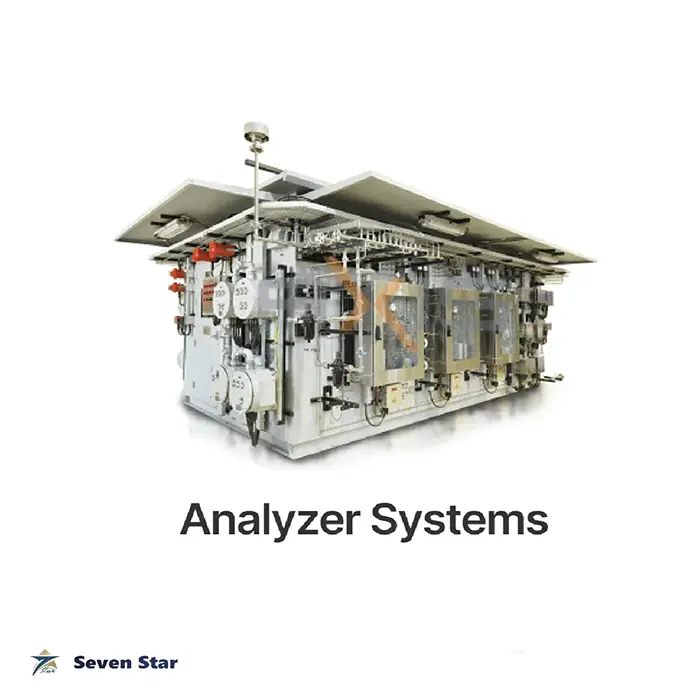
About Analyzer Systems
Analyzer Systems is the part of our catalog for process analyzers: instruments that measure the composition and quality of gas and liquid streams, together with their sensors, spare parts and consumables. The largest groups of listings come from ABB, Siemens, Hach, Galvanic and AMETEK. Seven Star LLC, based in Muscat, supplies these analyzer systems to oil and gas, power, water and petrochemical sites in Oman and the GCC.
Gas Analytics and Liquid Analytics: the two branches
Gas Analytics is split into Gas Analyzer Systems and Gas Analyzer Accessories. The first holds complete instruments: oxygen analyzers, H2S and sulfur recovery analyzers, gas chromatographs, moisture and dew point analyzers and tunable diode laser analyzers from makers such as Applied Analytics, Servomex, Michell Instruments and Teledyne. The second holds spare parts, most of them for the Siemens Maxum II process gas chromatograph, plus sensors and boards for oxygen analyzers.
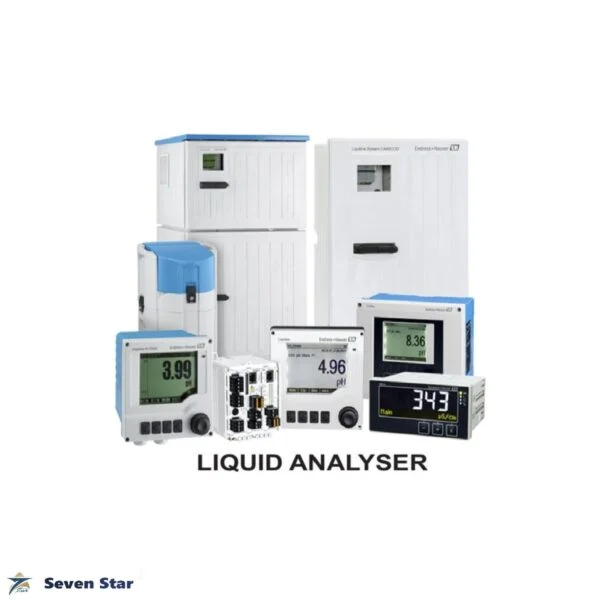
Liquid Analytics has three groups. Liquid Analysis Sensors lists pH, ORP, conductivity, dissolved oxygen and chlorine sensors, largely from ABB and JUMO. Liquid Analytical Systems lists transmitters and online analyzers for silica, sodium, TOC, turbidity and oil in water from ABB, Hach, Endress+Hauser and Yokogawa. Liquid Analytical Accessories lists reagents, buffers and analyzer spares.
What a process analyzer system needs around it
An analyzer is only as good as the sample it receives. Extractive systems take a sample from the process and filter, cool, dry or depressurize it before it reaches the measuring cell. In-situ instruments measure directly in the pipe or duct and avoid the sample line. Most sites also need calibration or validation media, signal integration with the control system and, in classified areas, flameproof or purged enclosures with ATEX or IECEx certification.
What to send for an analyzer quotation
State the component or parameter and its range, the full stream composition, pressure and temperature at the sample point, the area classification, outputs and power supply. For spare parts, the manufacturer part number and analyzer serial number are enough. We check the configuration against the manufacturer documentation, propose the manufacturer’s successor when a model is obsolete, and provide datasheets and manufacturer certificates on request.
What to include in your inquiry
These details let us quote the right item the first time.
- Gas to be measured and its range
- Background gas composition
- Sample pressure and temperature
- Area classification
- Output and communication
- Model and serial number for spare parts
Missing some of them? Send what you have. A nameplate photo or an old part number is enough to start.
Top brands in Analyzer Systems
All brands →











Most viewed in Analyzer Systems


Guides and articles
All articles → Process Gas Analyzers for Refineries and Gas Plants: Oxygen, Moisture, Dew Point and Combustion Measurement Explained
 Water Quality Analyzers for Desalination, Wastewater and Boiler Water: A Practical Guide for Oman’s Plants
 Oman Industry 4.0 in 2026: Smart Factories, Digital Oilfields and the New Procurement Playbook