Rosemount 2110 compact vibrating fork liquid level switch
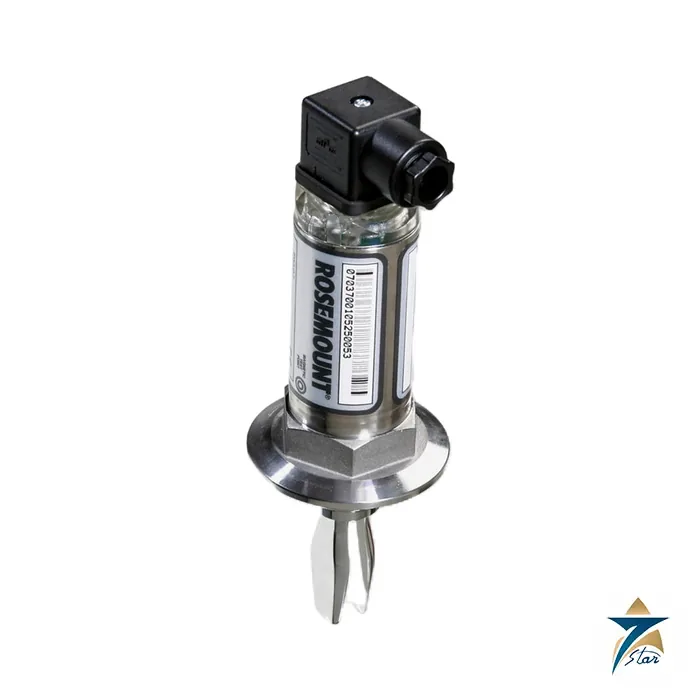
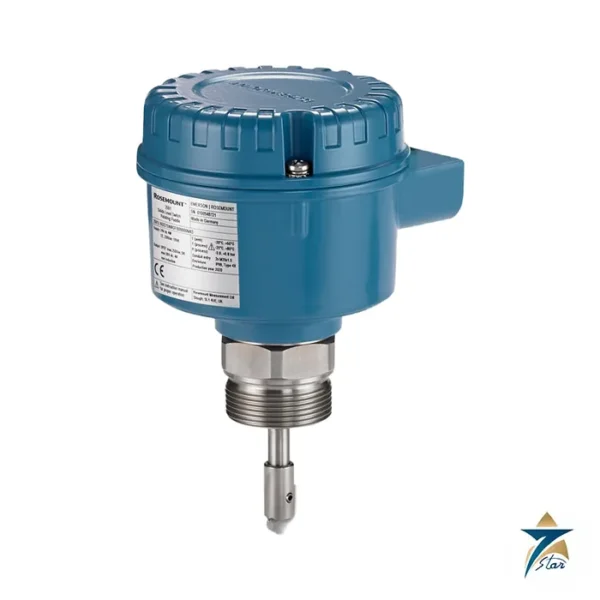
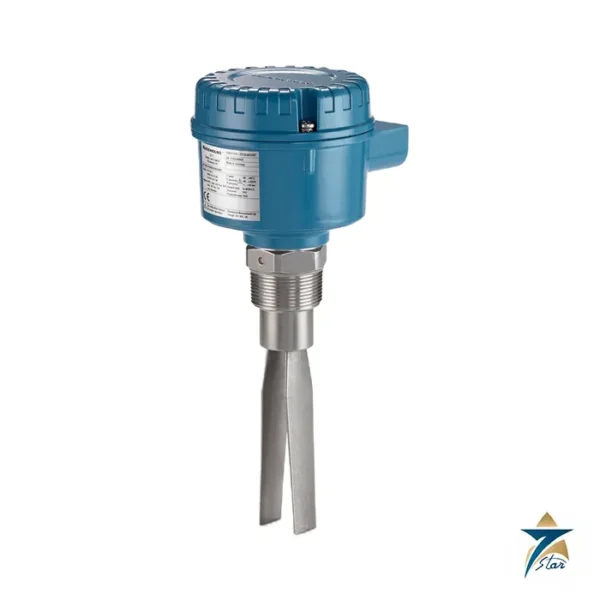
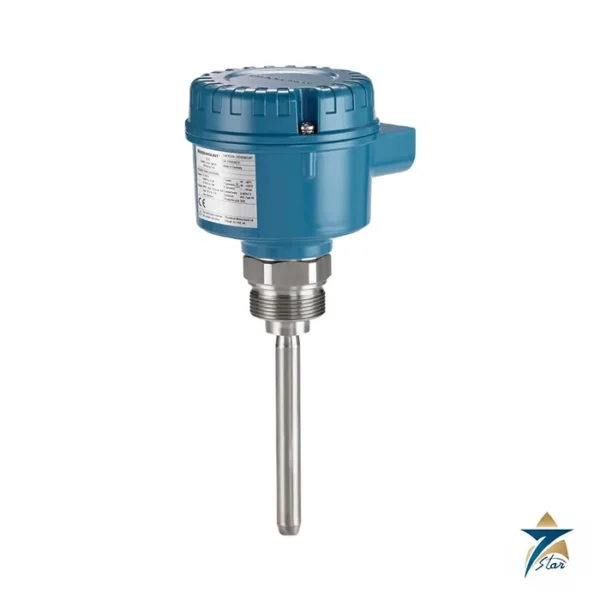
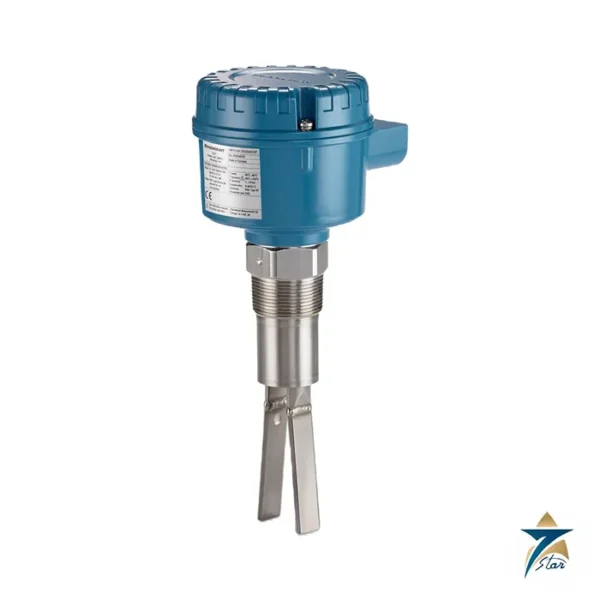
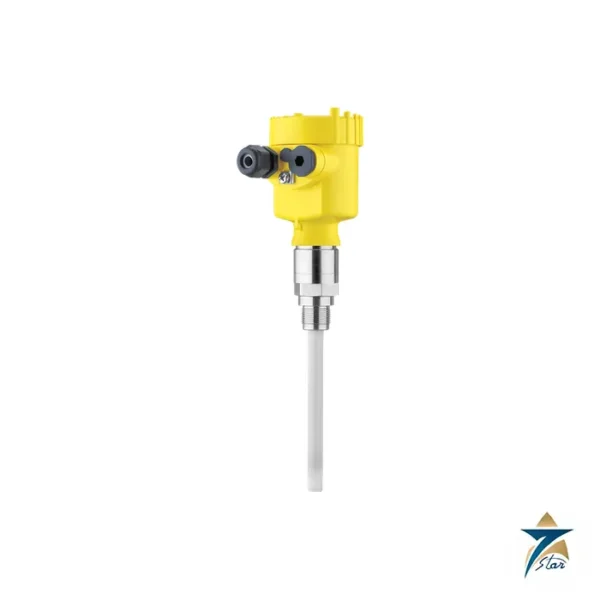
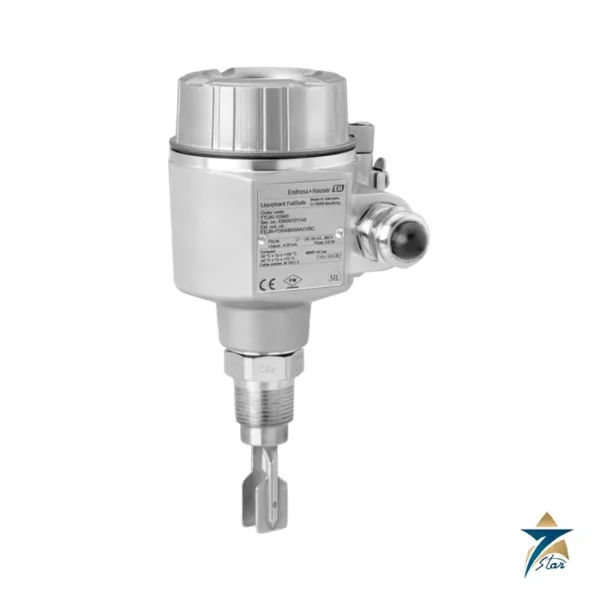
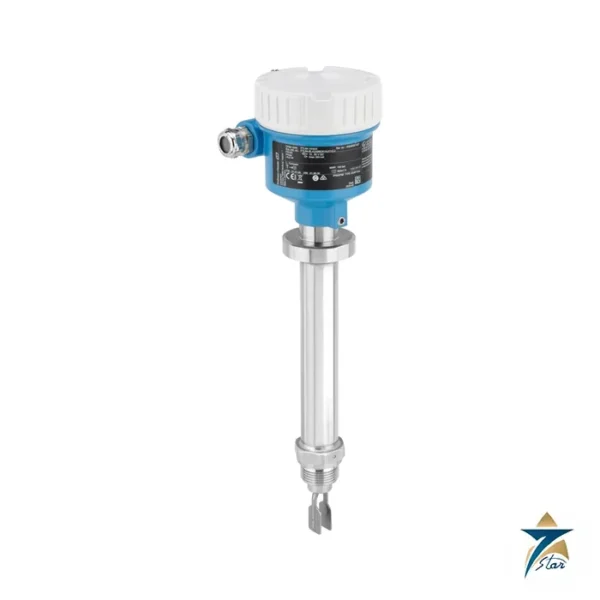
The Rosemount 2110 is a compact point level switch for liquids that uses a vibrating tuning fork. A piezo crystal drives the fork at its natural frequency, and the electronics watch for the change that happens when liquid covers or leaves the fork. It has no moving parts, needs no calibration, and fits into small tanks and narrow pipes. Seven Star LLC supplies the 2110 in Oman and the GCC as an independent supplier in Muscat.
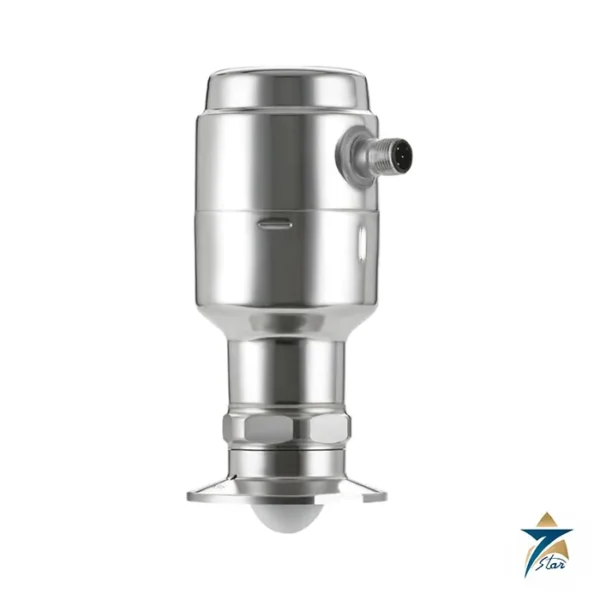
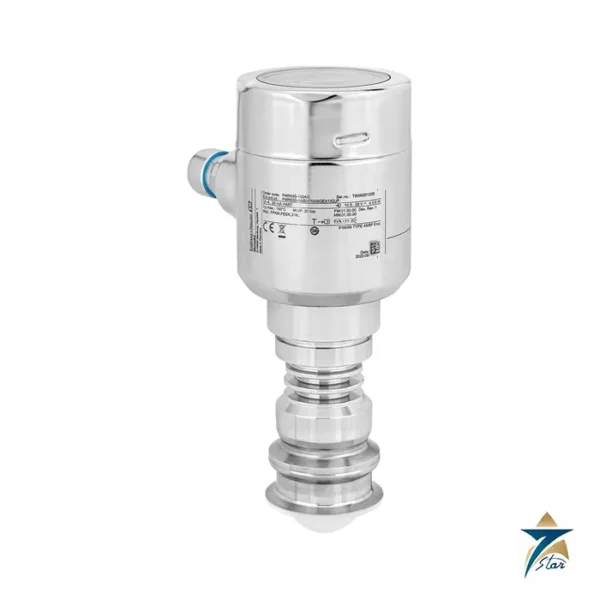
The housing is 304 stainless steel with a DIN 43650 plug and socket for fast wiring, and the process wetted parts are 316L stainless steel (1.4404). A heartbeat LED shows the unit is alive, and a magnetic test point on the side of the housing lets you change the output state for a proof test.
Decoding the 2110 model code
The data sheet gives the example 2110 0 2R 3 NA QA:
- 2110: compact vibrating fork liquid level switch.
- 0 or 1: electronics, direct load switching 21 to 264 Vac or Vdc (0) or PNP/PLC low voltage 18 to 60 Vdc (1).
- 2R: process connection, here a 2-in. (51 mm) Tri Clamp; others are 0A (¾-in. BSPT), 1A (1-in. BSPT), 0D (¾-in. NPT), 1B (1-in. BSPP) and 1L (1-in. BSPP semi-extended, 4.6 in. / 116 mm).
- 3: surface finish; 1 standard, 2 hand polished below 0.4 µm Ra, 3 below 0.76 µm hygienically approved, 4 electro-polished, 7 mechanically polished below 0.1 µm, 8 electro-polished below 0.38 µm.
- NA: no hazardous-location certification, safe area only.
- QA: 3-A certificate; QE is EHEDG, QB ASME-BPE statement, QH FDA statement.
2110 technical specifications
| Parameter |
Specification |
| Manufacturer / part number |
Rosemount (Emerson) / 2110 |
| Measuring technology |
Vibrating fork, point level in liquids |
| Minimum liquid density |
37.5 lb/ft³ (600 kg/m³) |
| Viscosity range |
0.2 to 10,000 cP |
| Switching point (water) |
0.5 in. (13 mm) from the fork tip (vertical) or fork edge (horizontal) |
| Hysteresis (water) |
0.1 in. (2.5 mm) |
| Switching delay |
1 second, dry-to-wet and wet-to-dry |
| Process temperature |
-40 to 302 °F (-40 to 150 °C) |
| Process pressure |
Up to 1450 psig (100 barg) on threaded connections, derated by temperature; 435 psig (30 barg) on hygienic connections |
| Direct load electronics |
21 to 264 Vac 50/60 Hz or Vdc, max 500 mA, 5 A peak for 40 ms |
| PNP electronics |
18 to 60 Vdc, max 500 mA, voltage drop below 3 V |
| Ingress protection |
IP66/67 to EN 60529 |
| Overfill option |
U1: WHG/DIBt overfill protection |
| Wetted materials |
316L stainless steel (1.4404) |
How the 2110 switches
A denser liquid lowers the fork oscillation frequency. Used as a low-level alarm, the liquid drains past the fork, the frequency rises and the output flips from wet to dry. Used as a high-level alarm, the rising liquid reaches the fork and the output flips from dry to wet. The switching mode (dry on or wet on) is chosen by how the plug is wired, so one device serves both duties.
The fast-drip fork shape lets liquid leave the tip quickly, which gives a faster wet-to-dry response in viscous liquids. Turbulence, foam, vibration and coating have little effect, but fork-to-fork bridging should be avoided and solid particles should stay under 0.2 in. (5 mm).
Related parts and where the 2110 sits in the range
The 2110 is the simple, compact entry in the Rosemount vibrating fork family. The 2130 is the more demanding sibling, with a 0.3 to 30 second adjustable delay, self-checking cassettes, hazardous-area options and SIL 2 certification, and with process temperatures to 500 °F. Choose the 2110 for general tanks, pipes, pump protection and basic overfill detection, and move to the 2130 when the loop is safety related or needs an approved area.
Accessories listed in the data sheet include the 1-in. BSPP seal 02100-1000-0001, the adaptor boss 02100-1010-0001 (1-in. BSPP to 1½-in. Tri Clamp), the 2-in. Tri Clamp kit 02100-1020-0001 and the telescopic test magnet 02100-1030-0001. The Tri Clamp kit is not approved for 3-A or EHEDG use.
Selection checklist for the 2110
- Decide the duty: high level, low level, pump control, empty pipe or leak detection.
- Choose electronics: mains direct load switching (0) or PLC low voltage PNP (1).
- Pick the connection and thread standard (BSPT, BSPP, NPT or Tri Clamp) to match the tank nozzle.
- Hygienic use requires a Tri Clamp with finish 3, 4, 7 or 8; then add the certificates you need (QA, QE, QB, QH, Q16).
- Check liquid density is at least 600 kg/m³ and viscosity below 10,000 cP.
- Confirm the area is safe; the data sheet lists only the NA code for this model.
- Add U1 if a German WHG/DIBt overfill approval is required.
Installing, testing and maintaining the 2110
The 2110 can be fitted from the side or top, vertically or horizontally, at any angle. The fork has an orientation groove on the hexagon so the fork edges face the flow. Wire the 4-way DIN 43650 plug (maximum conductor 15 AWG, terminal up to 1.5 mm²) with the supplied PG9 gland for 6 to 8 mm cable, and orient the plug in 90° steps.
During commissioning hold a magnet against the test point to confirm the output changes and the downstream alarm or pump logic responds. The LED flashes or lights to indicate status. With no moving parts, routine work is to inspect the fork for build-up, replace seals when a threaded unit is removed, and repeat the magnet test at your normal proof-test interval.
Typical applications of the 2110 in Oman and the GCC
In the region the compact fork is used on utility skids, lube oil and diesel day tanks, chemical dosing and wash tanks, boiler feed and condensate vessels, and pump dry-run protection in water and desalination plants. Hot, dusty and humid sites favor a sealed stainless housing with a heartbeat LED that can be seen from a distance. Food and beverage and pharmaceutical customers use the polished Tri Clamp version where cleaning cycles apply.
Information to send with your 2110 RFQ
- Full model code, or the connection, electronics and finish you need
- Liquid name, density, viscosity and temperature
- Operating pressure and nozzle type
- Supply voltage and what the switch drives (relay, PLC input, contactor)
- Hygienic or overfill certificates required
- Quantity and delivery location
Documents and quotation
The manufacturer product data sheet for the 2110 is attached on this page, and it is the document to check for the full ordering table, dimensional drawings and approvals before you place an order. It lists every code and the electrical limits referred to above.
Seven Star LLC is an independent supplier in Muscat serving Oman and the GCC. Send us the 2110 model code or your process data and we will reply with availability, lead time and a quotation.




















Reviews
There are no reviews yet.