Overview
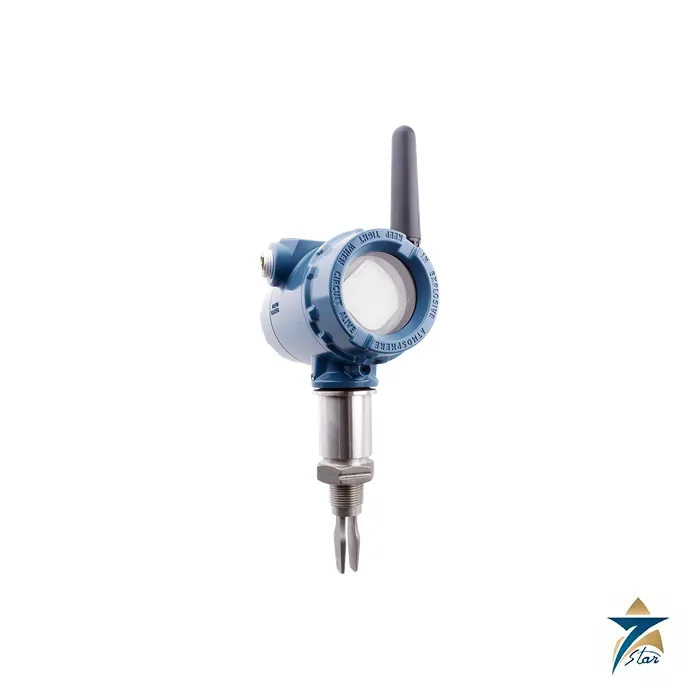
The Rosemount 2160 is the wireless member of Emerson’s vibrating fork level switch family. The product data sheet calls it the world’s first WirelessHART level detector, providing reliable point level detection in liquids without any signal or power cabling. Because the Rosemount 2160 runs on a replaceable power module and reports over a self-organising IEC 62591 network, it brings high and low level alarms, pump protection and overfill detection to tanks and pipes that were previously too remote or too expensive to wire.
Seven Star LLC supplies the Rosemount 2160 to oil and gas operators, refineries, terminals, utilities and chemical plants in Oman and the GCC, from our office in Muscat. For brownfield sites in the interior concession areas, along export pipelines and at coastal tank farms, a wireless fork can add an independent level alarm in days rather than the weeks needed for trenching, cable trays and new marshalling.
Measurement Principle
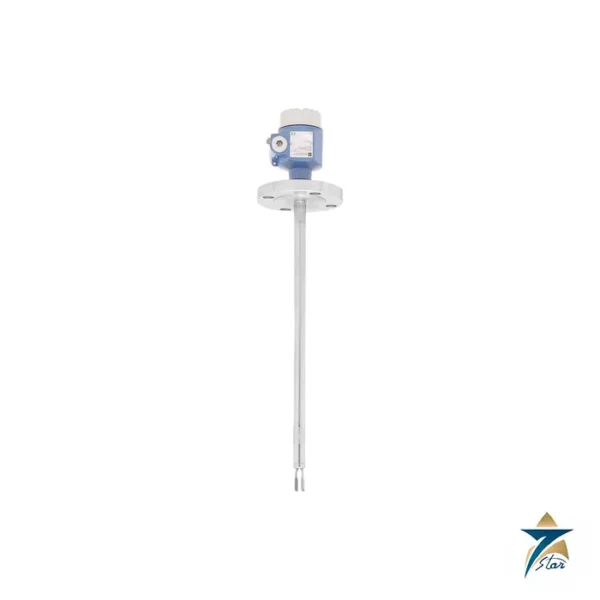
Emerson explains that the Rosemount 2160 works on the tuning fork principle. A piezo-electric crystal oscillates the forks at their natural frequency, and the electronics continuously monitor that frequency, which varies with the liquid in which the forks are immersed: the denser the liquid, the lower the frequency. When the liquid drains past the forks a distinct frequency change is detected and a dry condition is indicated; when the liquid rises and covers the forks another distinct change is detected and a wet condition is reported.
The wet and dry state, together with other parameters, is transmitted at regular intervals over a secure, encrypted wireless link to a gateway. The data sheet states that the sensor is virtually unaffected by turbulence, foam, vibration, solids content, coating products or liquid properties, and that it needs no calibration. As general engineering context, a fork has no moving mechanical parts such as a float arm or hinge, so there is nothing to stick in waxy crude or seize in scaling water, and the built-in diagnostics can detect internal and external damage, coating, blockage and extreme corrosion of the forks.
Engineering Design of the Rosemount 2160
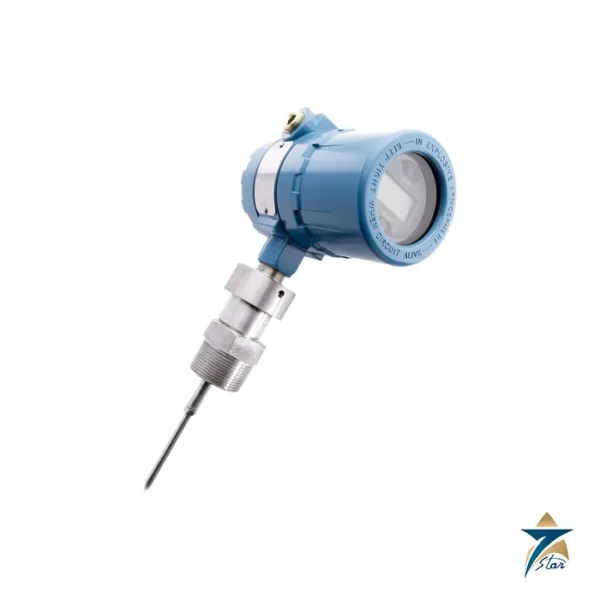
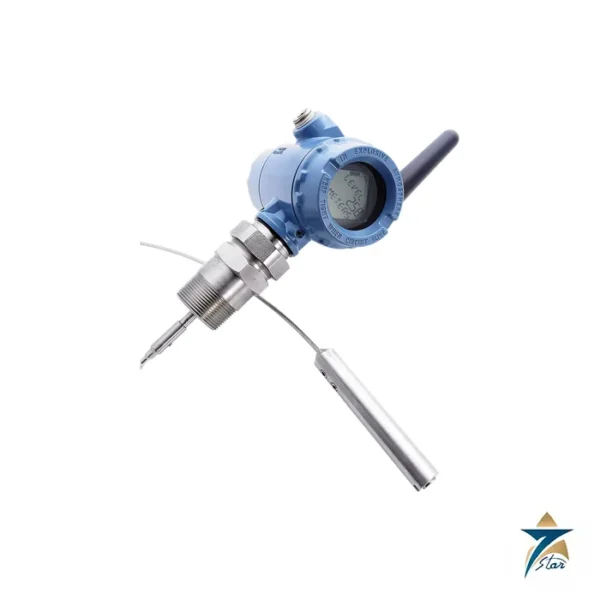
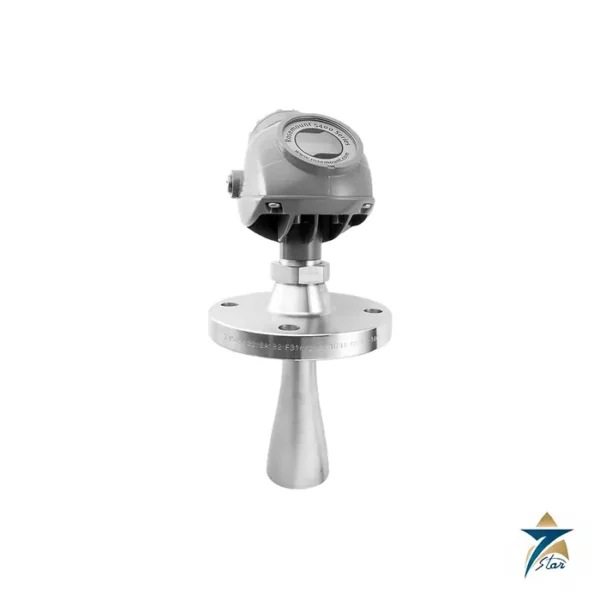
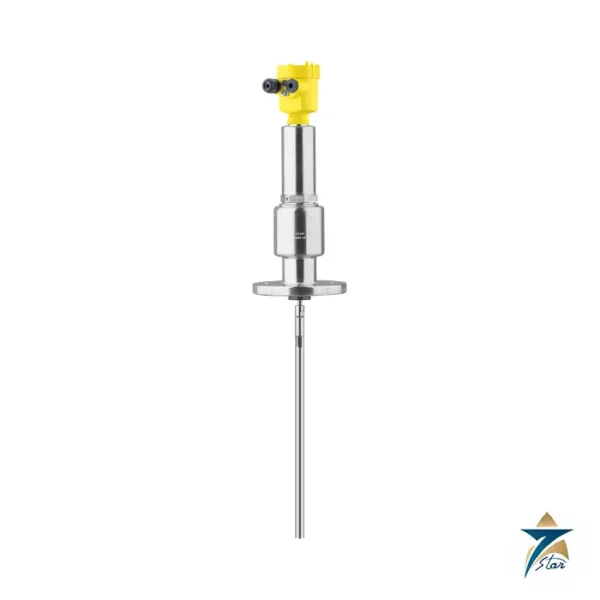
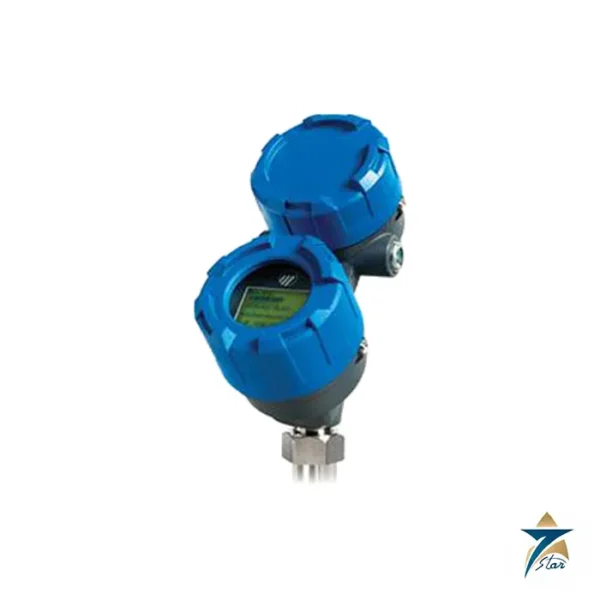
The Rosemount 2160 electronics housing is made of stainless steel or low-copper aluminium with polyurethane paint, rated NEMA 4X and IP66. An omni-directional PBT/PC antenna is integrated in the housing, which can be rotated to align both the forks and the antenna for the best signal and display position. Power comes from a replaceable, intrinsically safe lithium-thionyl chloride module, available as the standard Black Power Module or the extended-life Blue Power Module; the data sheet gives a ten-year life at a one-minute update rate under reference conditions.
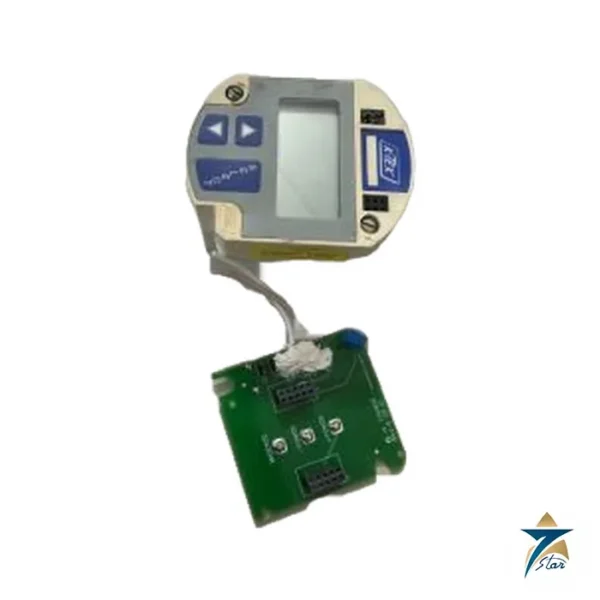
Wetted parts are 316/316L stainless steel, with Alloy C and Alloy C-276 options for flanged and selected threaded connections, and threaded, Tri Clamp and flanged process connections are offered. Forks can be extended up to 3000 mm. A mid-range temperature version covers -40 to 180 °C, while the high temperature version covers -70 to 260 °C using a stainless steel thermal tube. The wireless update rate is user-selectable from one second to sixty minutes, and an optional five-digit LCD shows wet/dry status, electronics temperature, frequency, supply voltage and diagnostics.
Key Features
The Rosemount 2160 data sheet highlights the following capabilities.
- WirelessHART communication removes the cost and complexity of wiring for point level detection.
- Vibrating fork sensing is virtually unaffected by turbulence, foam, vibration, solids or coating products.
- Process temperature capability from -70 to 260 °C covers cryogenic to hot oil applications.
- TUV testing and approval for overfill protection to DiBt/WHG supports critical alarm duties.
- Built-in diagnostics continuously check electronic and mechanical health, including fork damage, coating and corrosion.
- A software-adjustable switching delay from 0 to 3600 seconds prevents false switching in splashing tanks.
- A fast-drip fork design gives quicker wet-to-dry response, especially in viscous liquids.
- The replaceable power module offers up to ten years of life at a one-minute update rate.
Industrial Applications
Emerson lists overfill prevention as one of several layers of protection, high and low level point alarms as a backup to a primary level device, and pump control or limit detection in batch tanks with stirrers and agitators as typical applications for the Rosemount 2160. In Omani oil fields this translates into high-level alarms on produced water tanks and test separators, low-level pump protection on transfer pumps, and leak detection in sumps and bunded areas at remote well pads. At coastal terminals and refineries near Sohar and Duqm, the device can add a wireless high-high alarm to storage tanks during upgrades without hot work on cable routes.
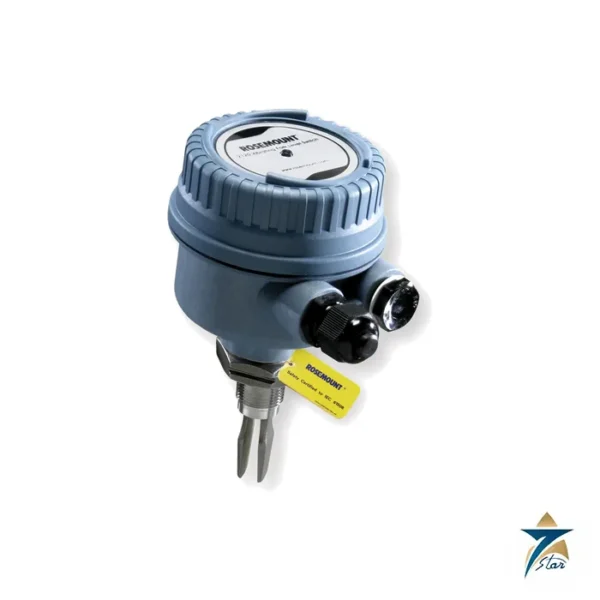
Seven Star LLC supplies the Rosemount 2160 throughout the Sultanate of Oman and the GCC, and can combine it with related Rosemount equipment on a project: the wired Rosemount 2120 vibrating fork level switch and Rosemount 2140 level detector for hard-wired safety loops, and the Rosemount 702 wireless discrete transmitter for other on/off signals on the same WirelessHART network.
Technical Specifications
The values below for the Rosemount 2160 are taken from Emerson product data sheet 00813-0100-4160.
| Parameter |
Specification |
| Model |
Rosemount 2160 Wireless Level Detector, vibrating fork |
| Application |
Point level detection in liquids, including coating and aerated liquids and slurries |
| Output |
IEC 62591 (WirelessHART), 2.4 GHz DSSS, max. 10 mW EIRP |
| Update rate |
User-selectable, one second to sixty minutes |
| Power module |
Replaceable intrinsically safe lithium-thionyl chloride; ten-year life at one-minute update rate |
| Process temperature |
-40 to 180 °C (mid-range version); -70 to 260 °C (high temperature version) |
| Maximum pressure |
Up to 100 barg depending on temperature and connection; hygienic connection 30 barg |
| Wetted materials |
316/316L stainless steel; Alloy C and Alloy C-276 options |
| Process connections |
Threaded, Tri Clamp and flanged |
| Extended fork length |
Up to 3000 mm |
| Hysteresis (water) |
2.5 mm |
| Switching point (water) |
13 mm from fork tip (vertical mounting) |
| Minimum liquid density |
500 kg/m³ |
| Viscosity range |
0.2 to 10000 cP |
| Output delay |
0 to 3600 s, default 1 s |
| Housing |
Stainless steel or low-copper aluminium, NEMA 4X and IP66 |
How to Order
To specify the Rosemount 2160, send Seven Star LLC an RFQ with the liquid, process temperature and pressure, connection type, fork length, hazardous-area certification and power module choice. The Emerson product data sheet is available from the download section of this page. Seven Star LLC supplies Rosemount level instruments from Muscat to customers across Oman and the GCC, with sourcing and model selection support for wireless network planning and commissioning.












Reviews
There are no reviews yet.