A rugged graphite conductivity cell for process water and wastewater
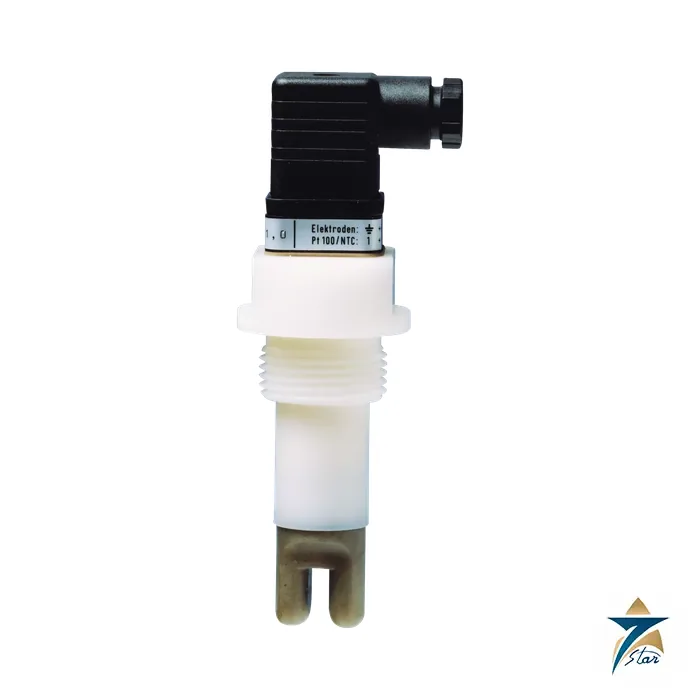
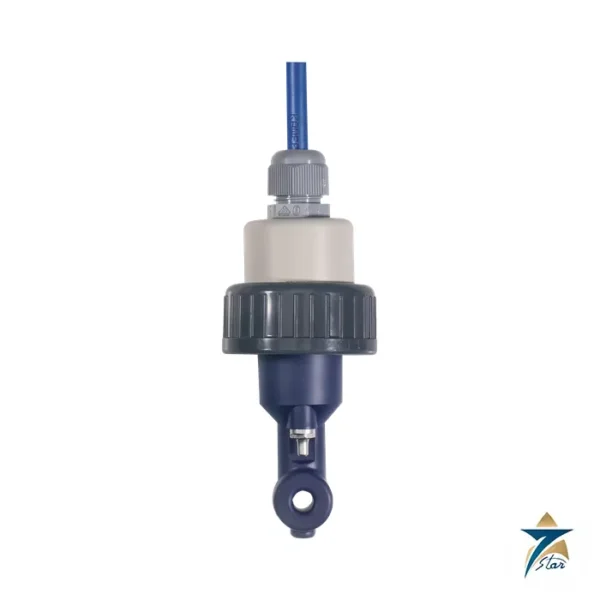
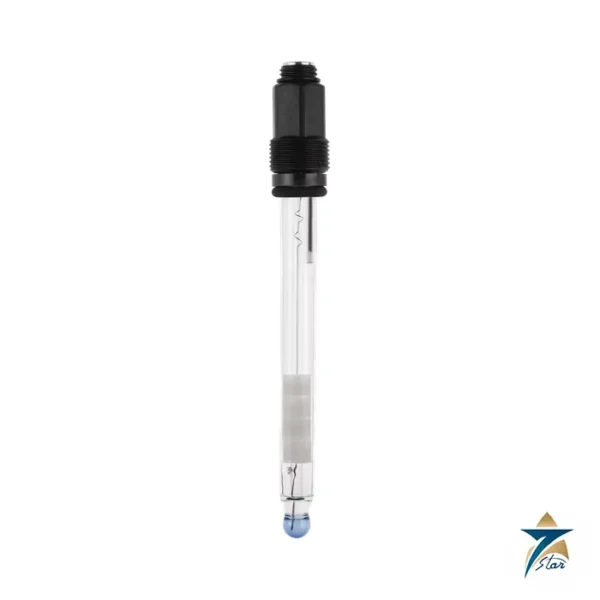
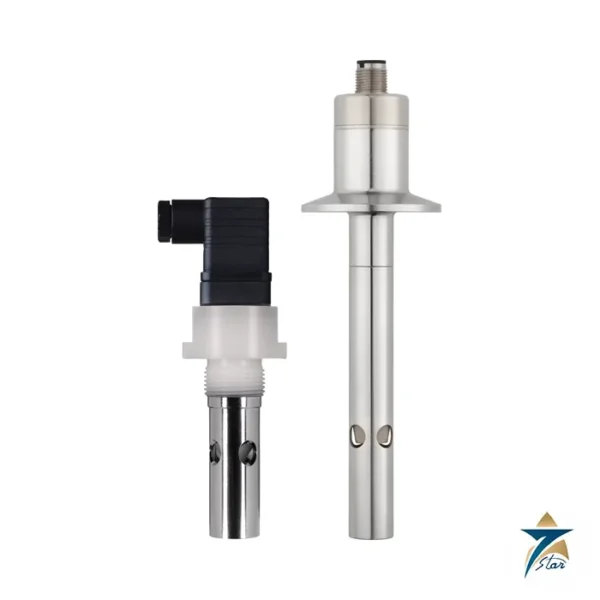
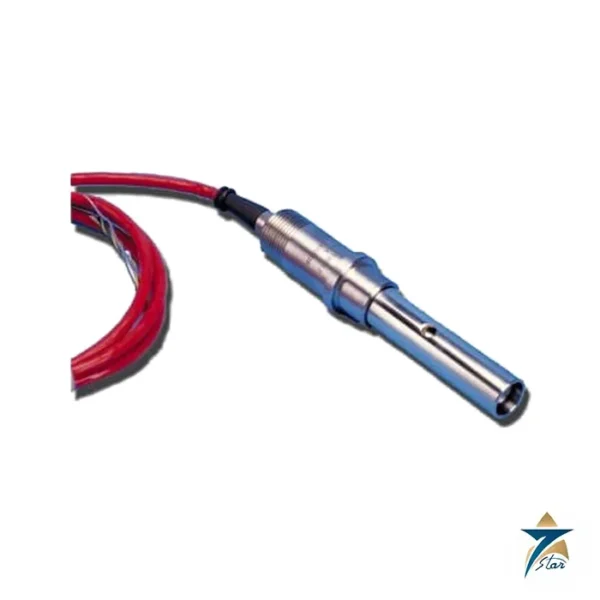
The JUMO tecLine CR-GT (type 202925) is the industrial version of a conductive two-electrode conductivity sensor with graphite electrodes. It has a cell constant of K = 1.0 and a typical measuring range of 10 µS/cm to 15 mS/cm. Together with a suitable transmitter it determines the electrolytic conductivity of liquids, and the datasheet lists media separation, drinking water purification and the checking and treatment of wastewater and domestic water as typical areas. A PVDF body allows a medium temperature of up to 130 °C, so the sensor can be used where a plastic cell would soften. Different process connections let the cell be adapted to a pipe, a tank or a hygienic dairy fitting.
Technical specifications
| Parameter |
Specification |
| Type |
202925 tecLine CR-GT, conductive 2-electrode sensor with graphite electrodes |
| Cell constant |
K = 1.0; production deviation up to ±10 % can be compensated at the transmitter |
| Typical measuring range |
10 µS/cm to 15 mS/cm; the usable range also depends on the transmitter |
| Temperature compensation |
Optional Pt100 (code 1003) or Pt1000 (code 1005), or none |
| Body material |
PVDF |
| Cell material |
Graphite and PES |
| Maximum temperature |
130 °C (PVDF) |
| Maximum pressure |
16 bar at 25 °C, 9 bar at 60 °C, 1 bar at 130 °C |
| Process connection |
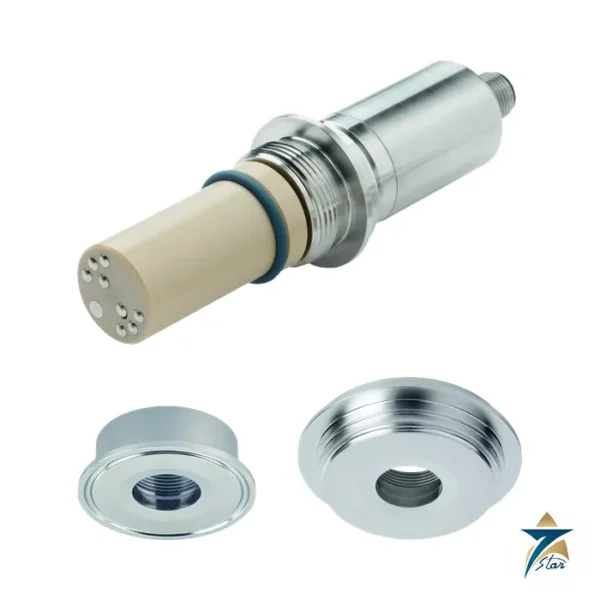
Standard G 3/4A; options G 1A, 3/4-14 NPT, or DIN 11851 DN 25 taper (milk cone) |
| Fitting length |
76 mm (G 3/4A), 78 mm (G 1A), 80 mm (NPT); EL 60 mm for milk cone |
| Electrical connection |
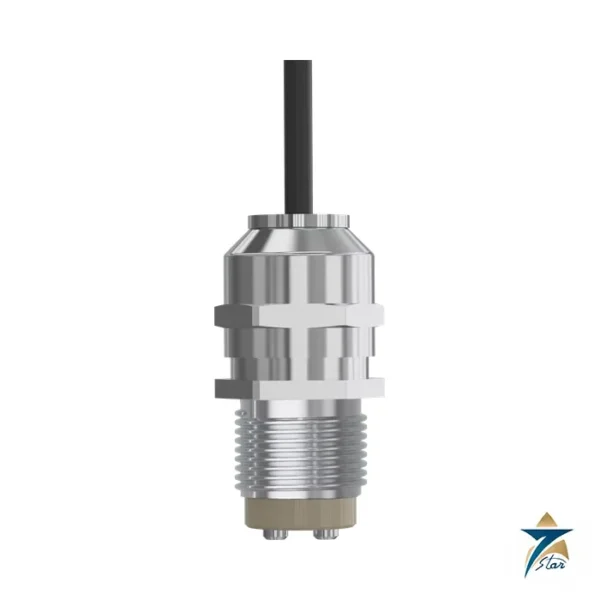
Angled connector to DIN 43650 (Hirschmann), IP65; or 10 m attached cable |
| Wiring |
Outer electrode white; inner electrode brown; temperature compensation yellow and green |
| Order code |
202925 / 0100 – temperature sensor – process connection – electrical connection – 88 – 84 |
| Stock examples |
202925/0100-1003-105-37-88-84 (part 00300200); 202925/0100-0000-105-37-88-84 (00300201); 202925/0100-1003-106-37-88-84 (00089385) |
| Application limit |
Above 10 mS/cm the datasheet recommends 4-electrode or inductive measurement |
How the measurement works and where it stops
A transmitter applies an alternating voltage across the two electrodes, and the current that flows through the liquid depends on its conductivity. With a cell constant of 1.0 the cell suits mid-range water, from lightly mineralised process water to brackish and cooling water. Because the cell is two-electrode, polarisation at the electrodes causes errors when the sensor is used beyond the typical range, so the datasheet recommends four-electrode or inductive measurement when conductivity rises above 10 mS/cm. At the other end, a K = 1.0 cell is not meant for ultrapure water, where a lower cell constant is chosen instead. A temperature sensor in the cell lets the transmitter compensate for the strong influence of temperature on conductivity.
Selection and installation notes
Choose the temperature sensor first: Pt100 is the default option in the stock items, and a Pt1000 may suit transmitters with that input. Then select the process connection. G 3/4A is standard, G 1A and NPT are options for existing fittings, and the DN 25 milk cone fits dairy-type pipework. Connect the cable or plug according to the colours in the datasheet and use a transmitter that supports a K = 1.0 cell. Typical applications in Oman and the GCC are reverse-osmosis permeate and brine checks, cooling-tower blowdown control, and wastewater monitoring. Because the body material is PVDF and graphite is inert in many media, the chemical resistance must still be checked against the actual liquid before specifying the sensor.
As general practice with conductive cells, check the cell constant against a reference solution at commissioning and enter any deviation in the transmitter, since the datasheet allows ±10 % production tolerance. Keep the electrodes clean, because oil films, scale or biofilm raise the apparent resistance and give a low reading, and plan a routine inspection interval that follows how dirty the medium is. Mount the cell so that air bubbles cannot collect between the electrodes and keep the cable away from power cables to limit interference on the weak measuring signal. A sensor with an attached 10 m cable avoids a plug that can corrode in a damp plant room.
Related transmitters and controllers are in the liquid analysis sensors category.
Using the tecLine CR-GT in Oman and the GCC
Conductivity is measured in the region in drinking water treatment, desalination post-treatment, cooling tower water, boiler feed water and wastewater. The CR-GT with graphite electrodes suits the middle range of conductivity, such as drinking water, process water and many wastewater streams. It is not the right choice for high-purity water or for seawater and brine, where very low or very high conductivity needs a different cell constant or an inductive sensor.
Mount the sensor where it stays immersed and where air bubbles cannot collect on the electrodes, and choose a fitting that allows removal for cleaning. Deposits on graphite electrodes cause drift, so plan cleaning and calibration checks in water with scaling tendency, which is common in the region. Match the sensor with a JUMO transmitter or controller that accepts the cell constant and temperature compensation.
Sending a recent water analysis helps us confirm that the conductivity range suits this sensor before ordering.
Information to send with an enquiry
- Liquid and conductivity range
- Temperature and pressure at the sensor
- Process connection and installation fitting
- Transmitter or controller to be used
Related JUMO products: JUMO tecLine Ci-S Inductive Conductivity Sensor, JUMO tecLine CR Conductive 2-Electrode Conductivity Sensor, JUMO ecoLine O-DO Optical Dissolved Oxygen Sensor, Type 202613, JUMO tecLine Br Amperometric Bromine Sensor, Type 202637, JUMO ecoLine NTU Optical Turbidity Sensor and JUMO tecLine Cl2 Free Chlorine Sensor.
Documents and quotation
The hosted document is JUMO data sheet 202925 (4 pages, English). It includes order details and stock items. Confirm temperature sensor, process connection and connector before ordering. Seven Star LLC is an independent supplier in Muscat; send the medium, conductivity range and temperature for a quotation. To help us prepare an accurate quotation, please include the measuring task, operating temperature and pressure, required output signal, supply voltage and cable length, together with the quantity needed and the delivery location. We will then compare these details with the order information in the datasheet.


























Reviews
There are no reviews yet.