Stainless steel conductivity cells for pure and process water
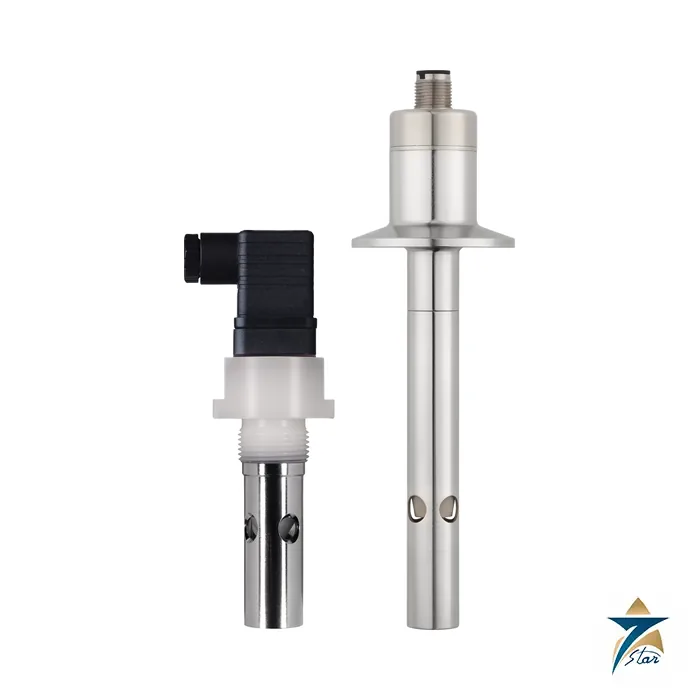
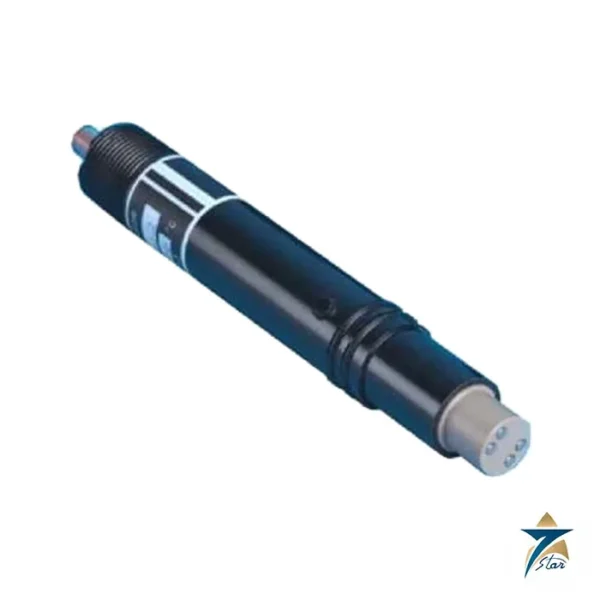
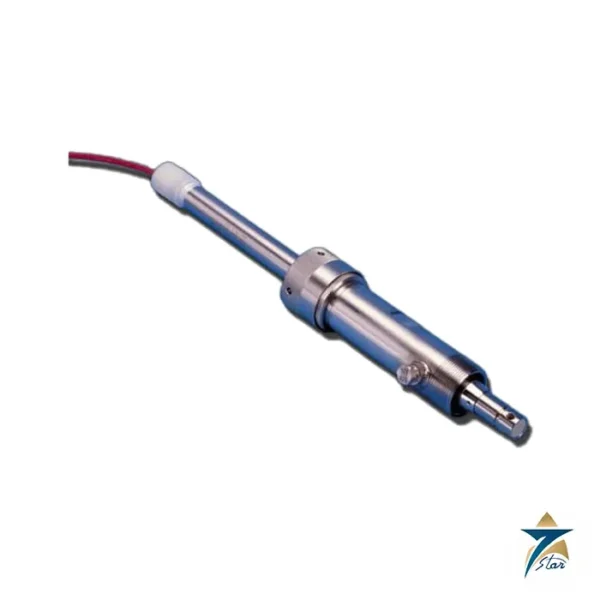
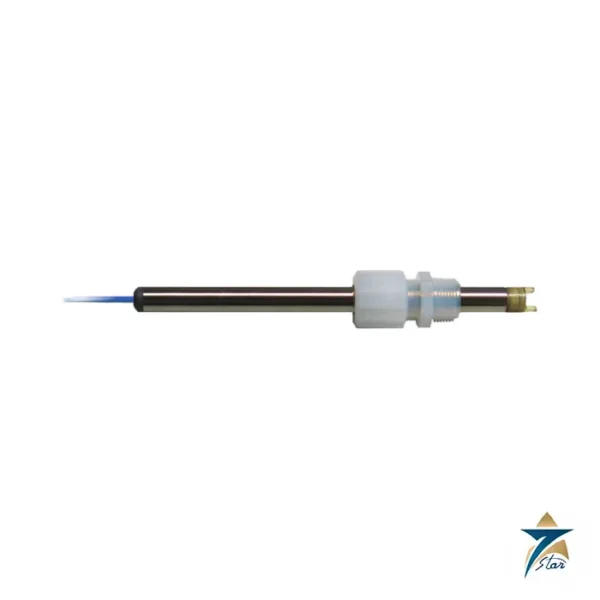
The JUMO tecLine CR series (type 202924) is a family of conductive two-electrode conductivity sensors with a stainless steel or titanium cell, built for pure and highly purified water, pharmaceutical water, chemicals, food technology, chip manufacturing, ion exchangers and reverse osmosis plants. The sensor covers measuring ranges from 0.05 uS/cm up to 1 mS/cm depending on the cell constant and the transmitter in use.
Five basic types sit under the one data sheet: 202924/10 (CR-VA), /20 (CR-VA SL), /21 (CR-VA SL short design), /30 (CR-PK) and /31 (CR-PL). A pharmaceutical package with a surface roughness below 0.8 um is supplied with an ASTM test report, an FDA certificate for insulators and O-rings, and a 3.1 inspection certificate, and a slim 16 mm shaft version and a high-temperature variant are also offered.
Technical specifications
| Parameter |
Specification |
| Data sheet type |
202924 (basic types /10, /20, /21, /30, /31) |
| Principle |
Conductive 2-electrode cell |
| Cell constants |
K = 0.01 1/cm (0.05 to 20 uS/cm) and K = 0.1 1/cm (0.1 uS/cm to 1 mS/cm); actual value can differ by +/-10 % from nominal |
| Temperature compensation |
Pt100 or Pt1000, at least class A, 2-wire |
| Process connections |
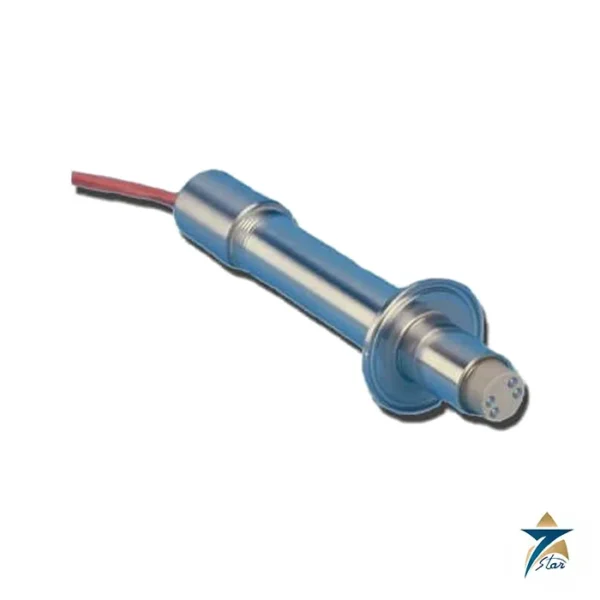
G 1/2 A, G 3/4 A, G 1 A, 1/2-14 NPT, 3/4-14 NPT, DIN 11851 DN 25 taper socket, Clamp DN 25, JUMO PEKA adapter system |
| Body materials |
PVDF (default), stainless steel 1.4571, 1.4435 (pharma) or 1.4404 (HT) |
| Cell materials |
Stainless steel 1.4571 (default), titanium (option), 1.4435 pharma, 1.4404 HT |
| Operating temperature |
Up to 135 C; up to 150 C for sterilization (max. 45 min); HT version up to 200 C |
| Maximum pressure |
16 bar at 25 C or 9 bar at 60 C (standard); HT version 40 bar at 25 C or 17 bar at 200 C |
| Electrical connection |
Right-angle connector DIN EN 175301-803, M12 connector or fixed cable 5 m |
| Certificates |
ASTM test report (ASTM D1125-95, D5391-99), FDA certificate; optional EN 10204 2.1, 2.2, 3.1 |
Reading the order code
The first block selects the basic type, followed by the cell constant (0001 for K = 0.01, 0010 for K = 0.1), the temperature probe (1003 for Pt100 or 1005 for Pt1000 in 2-wire circuit, 0000 for none), the process connection (104, 105, 106, 144, 145, 604, 613 or 997 for the PEKA hygienic adapter), the electrical connection (17 cable, 37 DIN connector, 83 M12), the connection and electrode materials (24, 26, 31 or 60 titanium) and extra codes. Extra code 765 selects the high-temperature version with K = 0.1 and the 3/4 inch NPT connection, 374 and 864 add 3.1 certificates, 955 the ASTM test report and 956 the FDA certificate.
Not every combination is available for every basic type; the data sheet marks which codes apply to which type, and PEKA adapters are ordered separately.
Choosing a sensor for the application
For ultrapure water choose K = 0.01 and keep the cable short, because the measuring ranges depend on the transmitter, and values above the typical range can be affected by polarization. K = 0.1 is the usual choice for permeate, boiler water and process water up to 1 mS/cm. Pharmaceutical users should look at the 1.4435 versions with certificates, and hot CIP or steam lines at the 150 C sterilization rating or the 200 C high-temperature version.
The sensors work with JUMO transmitters such as the AQUIS 500 CR, and the same conductivity measurement principle applies to other manufacturers only when the cell constant is entered correctly.
Installing the cell in pipework or a flow fitting
A two-electrode conductivity cell only reads correctly when the space between its electrodes is completely filled with the liquid being measured. Mount the tecLine CR where the line runs full at all times, preferably in a rising section or a side branch with a steady flow, and avoid the top of horizontal pipes where gas bubbles collect. Air trapped between the inner and outer electrode reduces the effective conductive path and gives a reading that is too low, which in pure water can easily be mistaken for better water quality than the plant is really producing.
Choose the process connection from the list in the specification table so that the electrode tip sits in the flowing stream rather than in a dead leg. Where the hygienic PEKA adapter or a clamp connection is used, follow the adapter documentation for insertion depth and seal selection. Tighten threaded versions on the hexagon of the body and never on the electrode shaft, and route the cable or connector so that it cannot pull on the sensor head.
Wiring and the temperature input
Conductivity of pure water changes strongly with temperature, so the built-in Pt100 or Pt1000 is as important as the electrodes themselves. Connect it to the matching input on the transmitter and select the correct probe type in the transmitter menu; a Pt1000 configured as Pt100, or the reverse, produces a temperature error that the compensation then turns into a conductivity error. Because the probe is wired in 2-wire circuit, the cable resistance adds to the reading, which is another reason to keep cables short and to use the transmitter’s lead compensation if it offers one.
Commissioning checks
Before the system is handed over, enter the cell constant exactly as printed on the sensor or its test report rather than the nominal value, since the data sheet allows the real value to differ from nominal. Then compare the displayed temperature with a reference thermometer at process conditions, and check the conductivity reading against a calibrated reference instrument or a sample measured in the laboratory. For pharmaceutical water systems, file the ASTM test report and any ordered inspection certificate with the validation documents for the loop.
Record the first stable readings after start-up. Having a baseline for conductivity and temperature at known plant conditions makes later drift much easier to recognise.
Maintenance and operation in Oman
Stainless steel and titanium cells are robust, but deposits on the electrode surfaces still alter the measurement. In desalination permeate, boiler feed and RO product lines, inspect the cell during planned shutdowns and clean it with a method compatible with the electrode and seal materials. Do not scratch or polish the electrode surfaces, because this changes the surface condition the cell constant was determined with.
Many plants in Oman have outdoor skids and equipment rooms that become very hot in summer. Keep the transmitter and any connector away from direct sun, protect the M12 or DIN connector from dust and humidity with its seal in place, and check cable glands on electrical enclosures after hot seasons. For lines that are sterilised or cleaned in place, confirm that the cycle stays within the temperature and time limits given in the specification table for the version installed.
Documents and quotation
Please check the cell constant, process connection and materials before ordering, because the final code depends on the installation. The attached manufacturer file, JUMO tecLine CR data sheet 202924 (EN), carries the authoritative data. Send the code you selected and the quantity, and we respond with a written offer. Similar instruments: Liquid Analysis Sensors.












Reviews
There are no reviews yet.