HART and SIL process transmitter in stainless steel
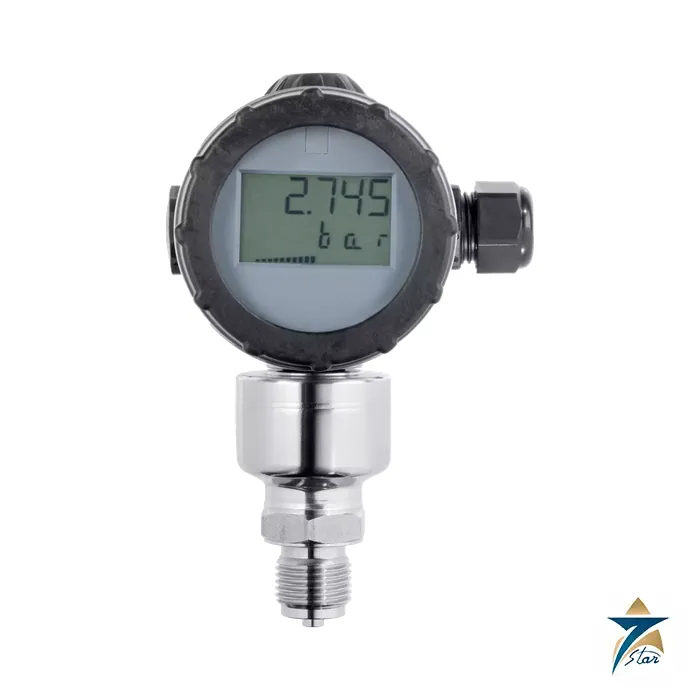
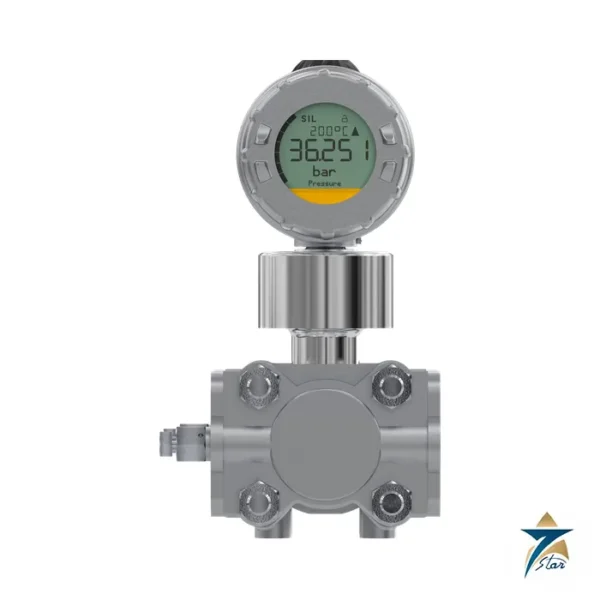
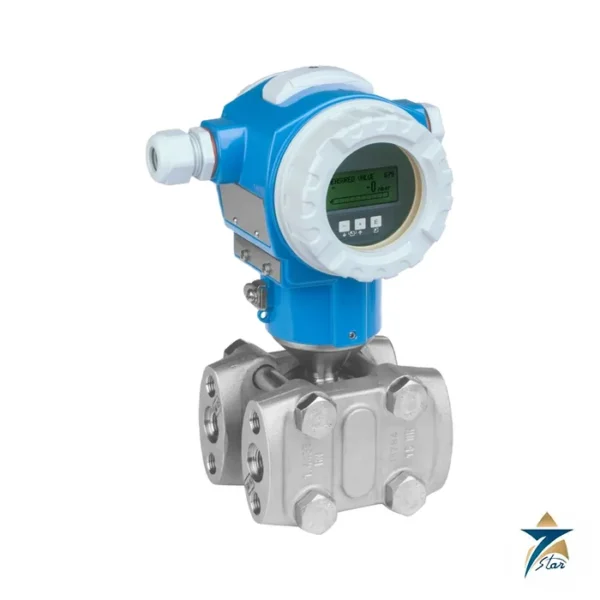
The JUMO dTRANS p20 (type 403025) is a process pressure transmitter for gas, steam and liquids, with a stainless steel housing and sensor, a built-in LCD and a rotary knob for on-site setup. The HART version (output code 410) can be set up with a HART communicator or with the JUMO setup program, and a SIL version evaluated for functional safety is available with the 4 to 20 mA HART output and display.
Key figures from the data sheet are a linearity of 0.05 percent, a turn-down of 1:50, medium temperatures up to 200 C, and optional Ex ia protection to ATEX and UKEX. Diaphragm seals from JUMO data sheets 409772 to 409784 can be attached for hygienic or aggressive media. The Ex d and differential-pressure versions are described in data sheets 403026 and 403022.
Technical specifications
| Parameter |
Specification |
| Data sheet type |
403025 |
| Sensor |
Silicon sensor with stainless steel separating diaphragm / thin-film sensor |
| Ranges (relative) |
-600 to +600 mbar; -1 to +2.5, +4, +10, +25, +100, +250, +600 bar |
| Ranges (absolute) |
0 to 0.6, 2.5, 4, 10, 25 and 100 bar |
| Output |
4 to 20 mA two-wire (405) or 4 to 20 mA with HART (410) |
| Accuracy |
Per range, from r x 0.08 % of set span (turn-down r up to 50) within -20 to +60 C; 0.12 x r % within -40 to -20 C or +60 to +85 C |
| Long-term stability |
0.1 % per year of nominal range |
| Overload / burst |
Listed per nominal range in the data sheet (overload from 6 bar, burst pressure from 12 bar for the lowest rows of the table) |
| Fill medium |
None, or silicone oil (FDA compliant) |
| Protection |
IP66/67 without Ex; IP66 with Ex ia |
| Ex marking as printed |
ATEX/UKEX II 1/2G Ex ia IIC T6 to T3 Ga/Gb; II 1/2D Ex ia IIIC T105 C Da/Db |
| Functional safety |
SIL evaluation by exida for the 4-20 mA HART version (see Safety Manual) |
| Housing and weight |
Short stainless approx. 550 g; long approx. 850 g; precision casting approx. 1600 g |
| Display |
LCD two-line with bar graph, 5 digits; 13 selectable pressure units |
Order code walk-through
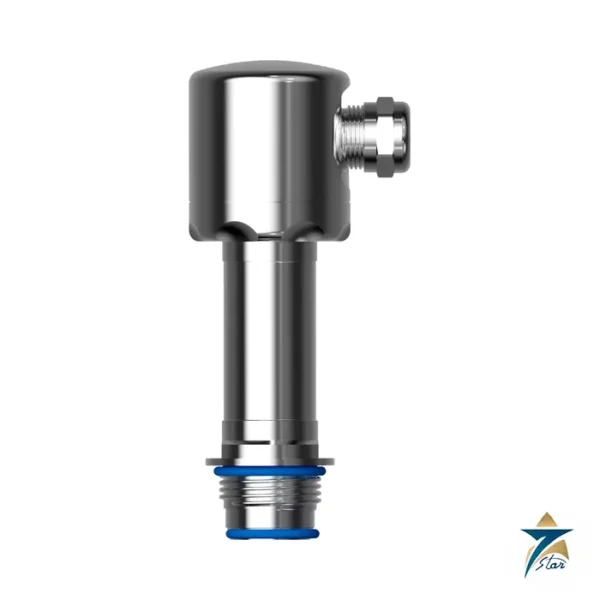
After the type 403025 the code gives the basic extension (0 none, 2 SIL), explosion protection (0 none, 1 ATEX Ex ia), housing (1 short stainless with M12, 2 long stainless with cable fitting, 3 precision casting with M20), electrical connection (36 M12, 82 plastic gland, 93 metal gland), cover material, display (0 none, 1 LCD), operation (0 none, 1 rotary knob), the input range code, the output (405 or 410) and the process connection (504 G 1/2, 512 1/2 NPT, 559 M20 x 1.5, 564 1/2 NPT internal, 571 G 3/4 front-flush).
The stock version printed in the sheet is 403025/0-1-1-36-20-1-1-514-410-504-1-20-01/000 for -1 to +25 bar relative pressure, part no. 00572278. Accessories listed include a USB HART modem (00443447), a PC interface (00456352), an Ex-i repeater power supply (00577948) and a wall and 2 inch pipe holder (00597711).
Practical selection notes
The turn-down of up to 50 lets one 25 bar device cover a 0.5 bar span, but the accuracy figure rises in proportion to the turn-down, so the data sheet formula should be applied to the actual set span. Medium temperature 1 runs up to 120 C and medium temperature 2 up to 200 C; the zero offset is within 1 mbar and 10 mbar respectively. Below -20 C ambient the display stops working and below -30 C operation is not possible.
The JUMO interface must not be used inside an explosion hazardous area; use the HART interface there. Calibration of the mechanical value on site, including DAkkS, is offered as a service item.
Application context for the dTRANS p20
The dTRANS p20 is written for general process duty: gas, steam and liquid lines in plants where a robust stainless steel transmitter with local indication and digital communication is preferred. The HART output lets the device sit on an ordinary 4 to 20 mA loop while still giving the maintenance team access to configuration and diagnostic information from the control room or with a handheld communicator. The SIL version addresses loops that form part of a safety instrumented function, where the transmitter must be chosen and used in line with its Safety Manual. The Ex ia option allows installation in hazardous areas, and the choice of diaphragm seals from the JUMO data sheets named above extends the transmitter to hygienic or aggressive media that should not reach the sensor directly.
How to choose the right configuration
Work through the order code in the same order as the data sheet. Decide first whether the loop needs the SIL version and whether the installation point is in a hazardous area, because those two choices restrict the other options. Then pick the pressure reference, relative or absolute, and the nominal range: choose the range so that the expected operating pressure and any upset pressure stay within the overload limits listed for that range, and use the turn-down to set the span you actually need. Select the housing and electrical connection to suit the cable system on site, the process connection to suit the tapping or the diaphragm seal, and decide whether local indication and the rotary knob are useful at the mounting position. Finally, confirm that the medium temperature falls within the medium temperature option you choose.
Installation and commissioning considerations
Mount the transmitter where the display can be read and the knob reached if local setup is planned, and protect it from direct process heat beyond the stated limits. For steam and hot liquids, the impulse line arrangement should keep the sensor within its permitted medium temperature. In an Ex ia loop, the barrier or repeater supply, the cable and the transmitter must together match the certificate, and configuration inside the hazardous area should be done over HART as the data sheet states. At commissioning, set the span and units, check the zero against the known process condition, and compare the transmitted value with the reading in the control system. For SIL loops, follow the proof test and setup steps in the Safety Manual and record them in the loop file.
How to specify your RFQ
The full order code is the best way to request a quotation, because it fixes every option at once. If you do not yet have it, send the pressure range and reference, the medium and its temperature, the process connection, the housing and electrical connection you prefer, and whether Ex ia, SIL, display and rotary knob are required. Include the quantity, the delivery point and any tag list, and mention if on-site calibration is of interest so it can be discussed with the quotation.
Documents and quotation
Quote requests are handled from this page: attach your tag list or the full code, and note the pressure range, housing, Ex and SIL options. The attached PDF (JUMO dTRANS p20 data sheet 403025 (EN)) is the reference for every value above, and it should be checked again for the final configuration. See also Pressure Instrumentation.














Reviews
There are no reviews yet.