A screw-in thermocouple with exchangeable insert for furnaces and heating plant
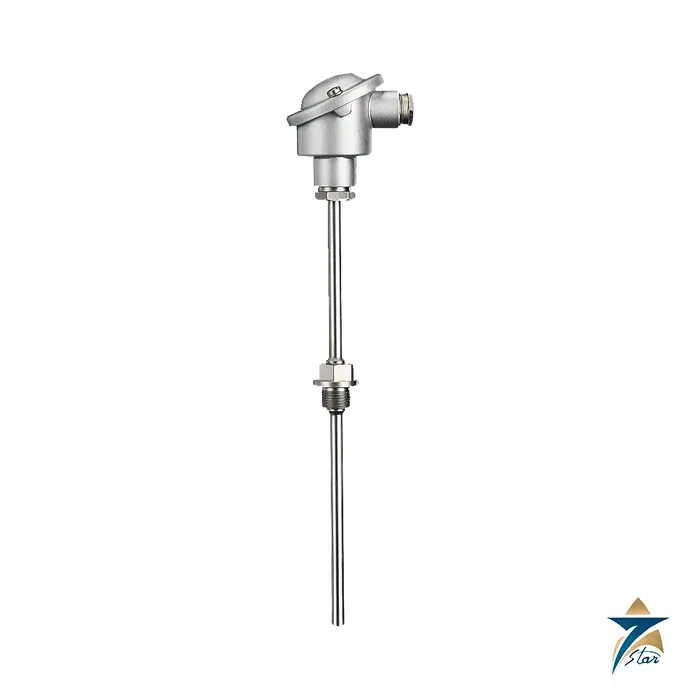
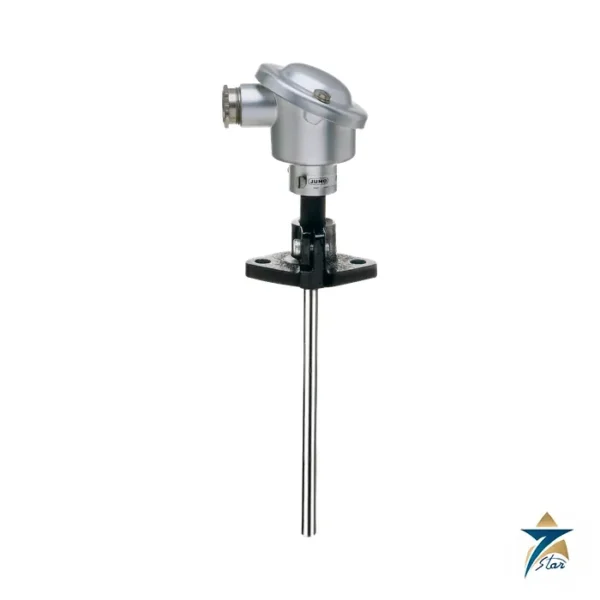
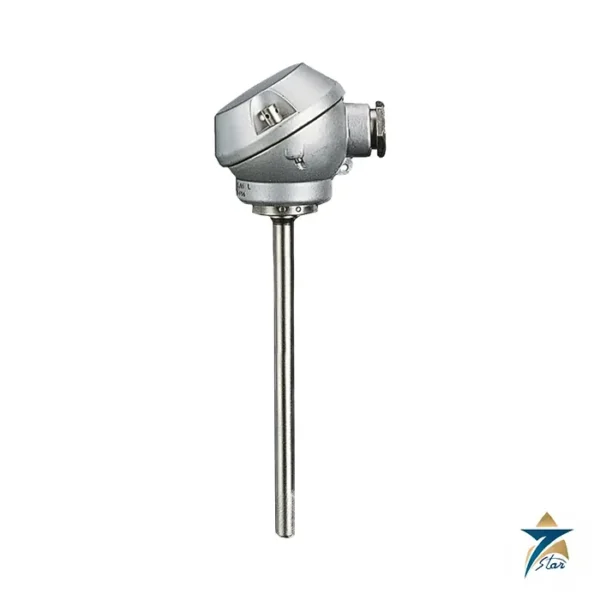
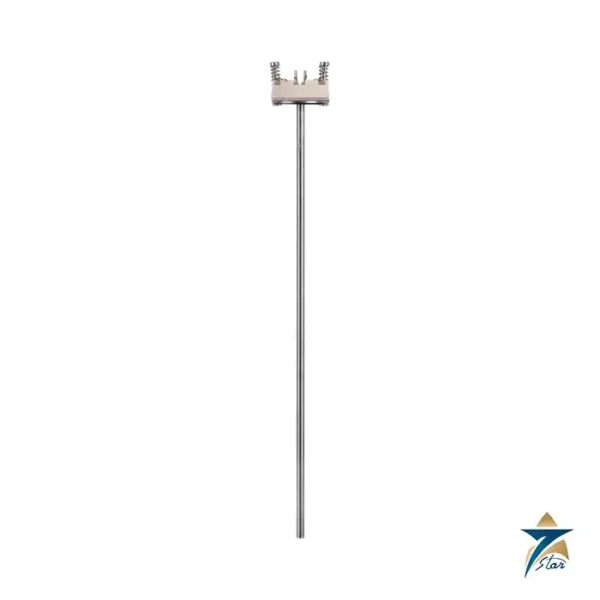
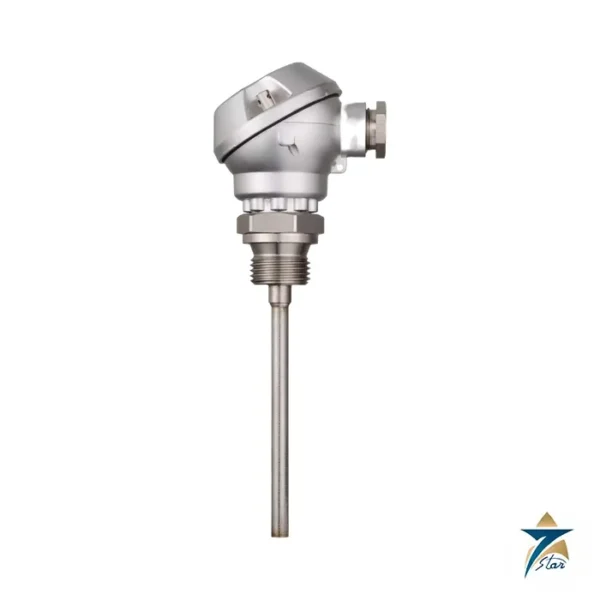
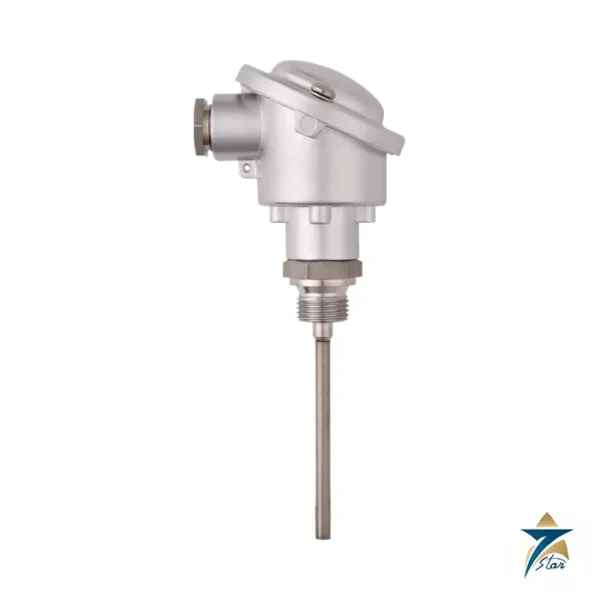
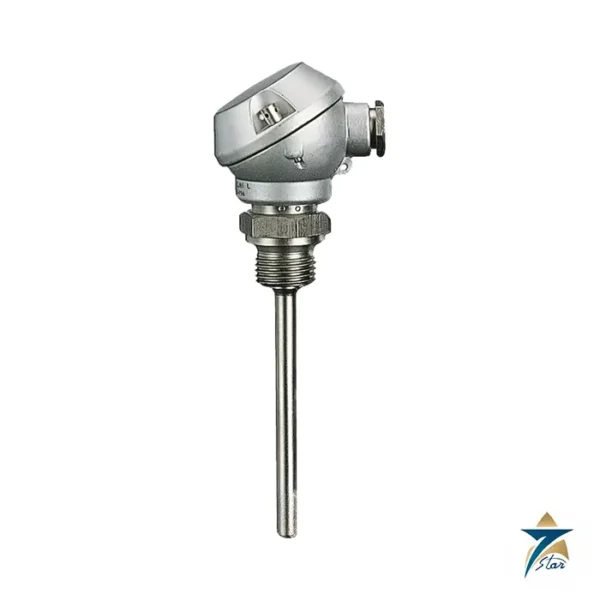
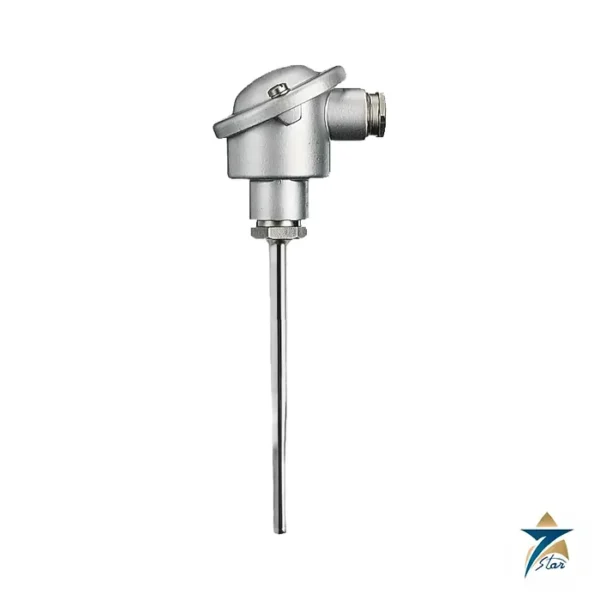
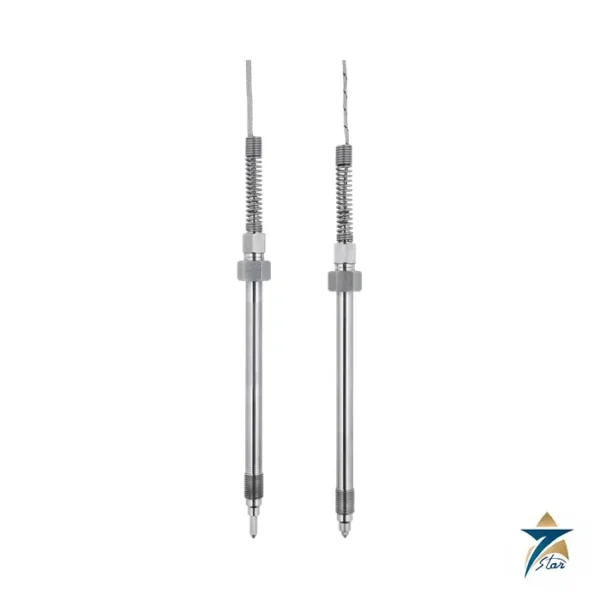
The JUMO 901020 is a screw-in thermocouple with a DIN form B terminal head for temperatures from -200 to +800 degC. Screw-in thermocouples are preferentially used for measuring temperatures in fluids and gases, and the screw connection seals reliably under vacuum and overpressure. JUMO names heating, furnace and kiln, and process technology as application fields. A stainless steel sheath protects the measuring insert against chemical influences and mechanical damage, and the insert itself is exchangeable.
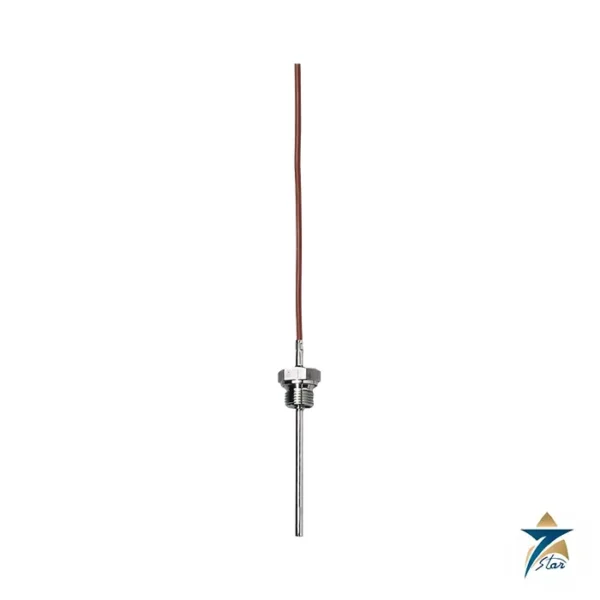
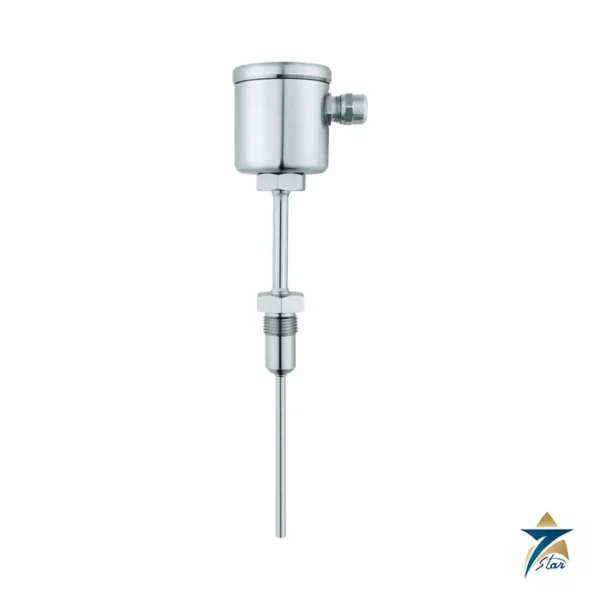
The elements are set into an insulated measuring insert to DIN EN 60584 class 2 (types J and K) or DIN 43710 class 2 (type L), as single or double thermocouples. Type J and L are rated -200 to +600 degC and type K -200 to +800 degC. Two basic types exist: 901020/10 with an extension tube and a continuous sheath, and 901020/20 without extension tube. The connection head tolerates ambient temperatures up to +100 degC and form BUZ, BUZH and NS heads are alternatives.
Technical specifications
| Parameter |
Specification |
| Basic types |
901020/10 with extension tube, continuous sheath; 901020/20 without extension tube |
| Operating temperature |
-200 to +600 degC (150); -200 to +800 degC (165) |
| Thermocouples |
Fe-CuNi J (EN 60584 cl. 2, to 600 degC); Fe-CuNi L (DIN 43710 cl. 2, to 600 degC); NiCr-Ni K (EN 60584 cl. 2, to 800 degC) |
| Number of elements |
1 or 2 |
| Measuring insert |
Exchangeable, insulated structure |
| Sheath |
Stainless steel 1.4571, diameter 9 mm |
| Fitting length EL |
100 to 1000 mm; 160, 200, 250, 300, 400, 600 mm listed; plain text in 50 mm steps |
| Extension tube |
Stainless steel 1.4571, 130 mm (70 mm with code 306) |
| Process connection |
G 1/2 (104), G 3/4 (105), G 1 (106), M18 x 1.5 (126), stainless steel 1.4571 |
| Terminal head form B |
DIN 43729, die-cast aluminium, M20 x 1.5, IP65, -40 to +100 degC |
| Heads BUZ, BUZH |
Die-cast aluminium, M20 x 1.5, IP65, -40 to +100 degC |
| Head NS |
Plastic, M20 x 1.5, IP54, -30 to +130 degC |
| Transmitter options |
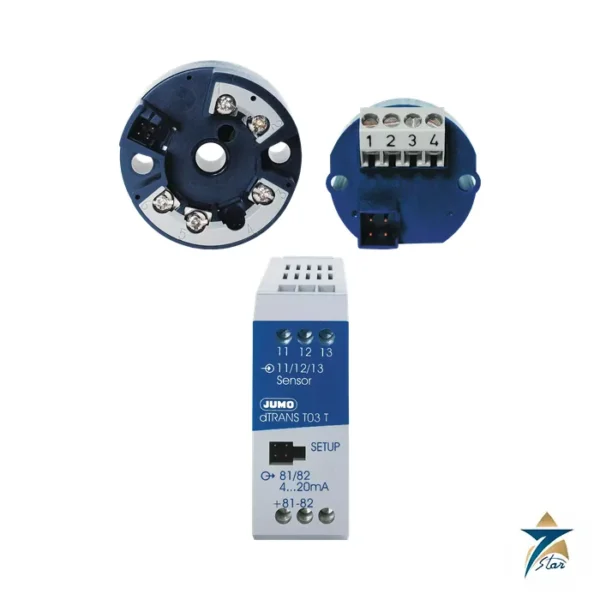
Programmable 4 to 20 mA / 20 to 4 mA (707010); Wtrans B head transducer with radio transmission (707060) |
| Accessories |
Protective sleeves, data sheet 909710 (909721) |
How to specify a 901020 thermocouple
The order code is basic type – operating temperature – measuring insert – sheath diameter – fitting length – process connection / extra codes. The datasheet example is 901020/10 – 150 – 1042 – 9 – 250 – 104 / 000. Insert code 1040 is a single type J, 1042 a single type L, 1043 a single type K, and 2040, 2042 and 2043 are the double versions. The 165 temperature code applies where type K is needed up to 800 degC; types J and L should be ordered with 150 because their limit is 600 degC.
| Extra code |
Content |
| 306 |
Extension tube 70 mm (type /10) |
| 320 / 321 / 322 |
Terminal head BUZ / BUZH / NS |
| 331 / 335 |
1 or 2 programmable transmitters 4 to 20 mA (707010) |
| 859 |
Wtrans B head transducer with radio (707060) |
The range and output of a programmable transmitter are written in plain text at order. Protective sleeves for installation in a pressurised vessel are covered in data sheet 909710 (909721), which is the same accessory sheet that also covers screw-in and weld-in thermowells.
Choosing the thermocouple type and mounting it
Type K reaches the highest temperature in this series (800 degC) and is the usual choice for flue gas, ovens and boilers, while types J and L are limited to 600 degC but are common in older installations that were specified to DIN 43710. Class 2 tolerance is the manufacturer standard in this datasheet. Double thermocouples allow one element for control and one for an independent over-temperature device.
Screw the sheath into the process port with a suitable seal; the extension tube moves the head away from hot surfaces, because the head is limited to +100 degC ambient. Use thermocouple extension or compensating cable up to the controller, matching the type, and observe polarity. For long distances or noisy plants a head transmitter converts the thermocouple to a 4 to 20 mA signal. In hot-climate plants, place heads in shade or behind insulation and check that the ambient near the head stays below the stated limit.
Head choice matters for the environment. Form B, BUZ and BUZH are die-cast aluminium with an M20 x 1.5 entry at IP65 and -40 to +100 degC ambient; the NS head is plastic at IP54 and -30 to +130 degC. When a transmitter replaces the terminal block, the ambient limit is reduced as stated in data sheets 707010 and 707060. The Wtrans B head transducer sends the reading by radio to a receiver described in data sheet 902931, which avoids long signal cables to a remote kiln or burner skid. Type /10 carries a 130 mm extension tube between process and head; extra code 306 shortens it to 70 mm, and type /20 omits it for compact installations.
Documents and quotation
The JUMO data sheet 901020 (dated 2026-01-07) can be downloaded below. Seven Star LLC supplies JUMO thermocouples from Muscat; send the element type, fitting length, thread, head form and transmitter option and we will quote. Other probes are grouped under https://omansevenstar.com/product-category/sensors-transmitters/temperature/.






Reviews
There are no reviews yet.