Overview
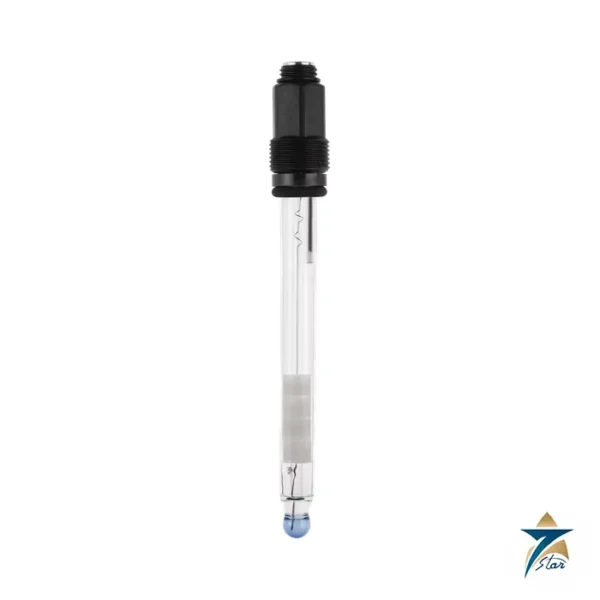
The JUMO pH Glass Electrode measures pH value in conjunction with a reference electrode, using a pH-sensitive membrane glass at the electrode tip to generate the millivolt signal that a compatible transmitter or controller converts into a calibrated pH reading. To cover the wide range of process media encountered across industrial and municipal applications, the JUMO pH Glass Electrode is available with several specialized membrane glass types – UW glass for general aqueous media, C glass for fluoride-containing media, and HT glass for high-temperature and high-alkaline processes.
Working closely with plant engineers in the region, Seven Star LLC proudly supplies the JUMO pH Glass Electrode to water treatment plants, food and beverage processors, and chemical industries across Oman and the GCC. Customers purchasing through Seven Star LLC receive a formal quotation, the manufacturer datasheet, and technical support based in the Sultanate of Oman, supporting reliable pH measurement performance in every installation.
Measurement Principle
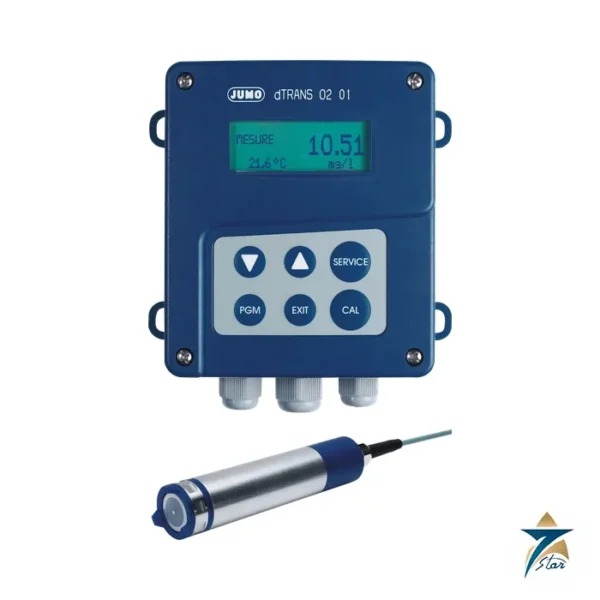
The JUMO pH Glass Electrode operates on the principle of glass membrane potentiometry: hydrogen ions in the process medium interact with the hydrated layer of the pH-sensitive glass membrane, generating a small electrical potential proportional to the hydrogen ion activity of the solution. This potential is referenced against a stable internal reference electrode – either integrated in a combination design or supplied as a separate reference electrode – and the resulting millivolt signal is passed to a transmitter such as the JUMO dTRANS pH 02, which applies the Nernst equation and stored calibration data to display the pH value.
Because different process media place different demands on the glass membrane, the JUMO pH Glass Electrode line offers UW glass rated for general aqueous media up to 80°C, C glass formulated to resist etching in fluoride-containing media up to 50°C, and HT glass capable of continuous operation up to 135°C and in high-alkaline conditions up to pH 14. Selecting the correct membrane glass for the application ensures accurate, drift-free measurement and extends electrode service life, since an incompatible glass type in an aggressive medium accelerates membrane degradation and calibration drift.
Engineering Design of the JUMO pH Glass Electrode
The JUMO pH Glass Electrode is offered with either a plug-head connection for pressureless installations or a Pg13.5 screw-head connection rated to 6 bar at 25°C and 1 bar at 80°C, giving engineers the flexibility to select the mechanical interface that matches their process fitting and pressure conditions. The standard insertion length is 120 mm, with other installation lengths available on request to suit deep-tank, in-line, or flow-cell mounting arrangements.
Internally, the electrode’s glass membrane is shaped and fired to a controlled thickness that balances electrical response speed against mechanical robustness, and the electrode body is constructed to withstand routine handling, cleaning, and calibration cycles in an industrial environment. The plug-head variant connects directly to compatible JUMO transmitters without additional wiring hardware, simplifying electrode replacement during scheduled maintenance.
Key Features
The JUMO pH Glass Electrode is engineered to provide dependable pH measurement across a wide range of process conditions. Key characteristics include:
- Choice of UW, C, or HT membrane glass to match general aqueous, fluoride-containing, or high-temperature/high-alkaline process media.
- Measuring range from pH 0 to 12 (short-term pH 14) with UW glass, extending to pH 0 to 14 with HT glass.
- Operating temperature range from 0°C up to 135°C depending on the selected membrane glass variant.
- Plug-head connection for pressureless installations or Pg13.5 screw-head connection rated up to 6 bar.
- Standard 120 mm insertion length, with alternative lengths available on request for custom installations.
- Compatible with JUMO reference electrodes and analytical transmitters such as the JUMO dTRANS pH 02.
- Robust glass membrane construction designed for repeated calibration and long service intervals.
- Suitable for continuous industrial process monitoring as well as laboratory and spot-check applications.
Industrial Applications
The JUMO pH Glass Electrode is widely used in water and wastewater treatment for pH correction and neutralization, in food and beverage processing where accurate pH control affects product quality and safety, and in chemical dosing systems where precise pH monitoring protects downstream equipment from corrosion. The HT glass variant’s high-temperature and high-alkaline tolerance makes it particularly suited to CIP (clean-in-place) cycles and boiler or cooling water treatment, while the C glass option serves processes involving fluoride-containing streams such as certain etching and metal-finishing operations.
With fast quotation turnaround and technical support, Seven Star LLC distributes the JUMO pH Glass Electrode to desalination plants, food processing facilities, and industrial water treatment operators throughout Oman and the wider GCC, including the Sohar and Salalah economic zones. Regional customers benefit from electrode selection guidance and access to JUMO’s engineering documentation through Seven Star LLC’s technical instrumentation division.
Technical Specifications
The table below summarizes the core technical specifications of the JUMO pH Glass Electrode.
| Parameter |
Specification |
| Model |
JUMO pH Glass Electrode (Type 201081) |
| Membrane glass options |
UW glass 0–12 pH (short-term 14); C glass 0–11 pH; HT glass 0–14 pH |
| Temperature range |
UW glass 0–80°C; C glass 0–50°C; HT glass 0–135°C |
| Pressure range |
Plug head: pressureless; screw head Pg13.5: 6 bar at 25°C, 1 bar at 80°C |
| Process connection |
Plug head (no thread) or screw head Pg13.5 |
| Insertion length |
120 mm standard; other lengths available on request |
| Compatible transmitters |
JUMO dTRANS pH 02 and compatible analytical transmitters/controllers |
| Areas of application |
pH measurement in aqueous, fluoride-containing, and high-temperature/high-alkaline media |
Request a Quote for JUMO pH Glass Electrode
Seven Star LLC supplies the JUMO pH Glass Electrode on request with regional technical support. Contact our instrumentation division for a formal RFQ, to check current availability and lead time, or to download the complete technical datasheet for project specification and correct membrane glass selection. With engineering support in Muscat, Seven Star LLC helps ensure every electrode supplied is correctly specified, with technical support on selection.
Related Products



























Reviews
There are no reviews yet.