Overview
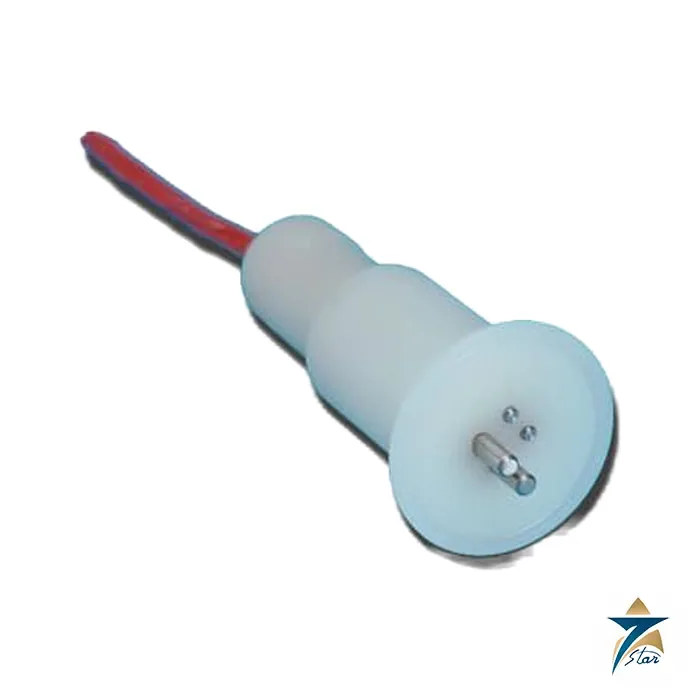
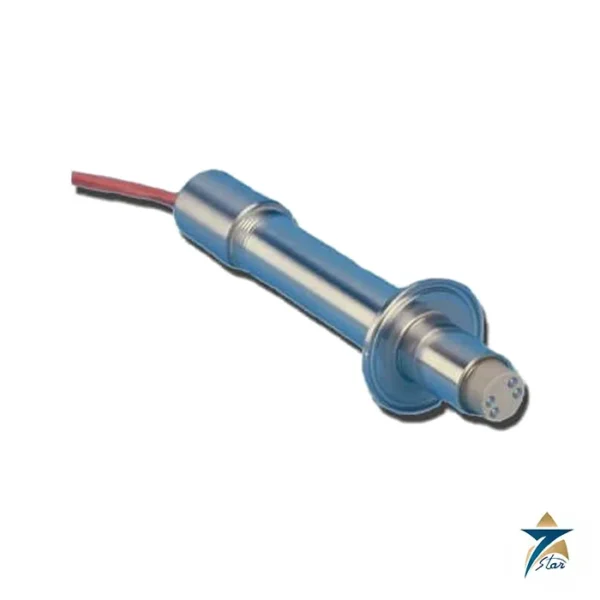
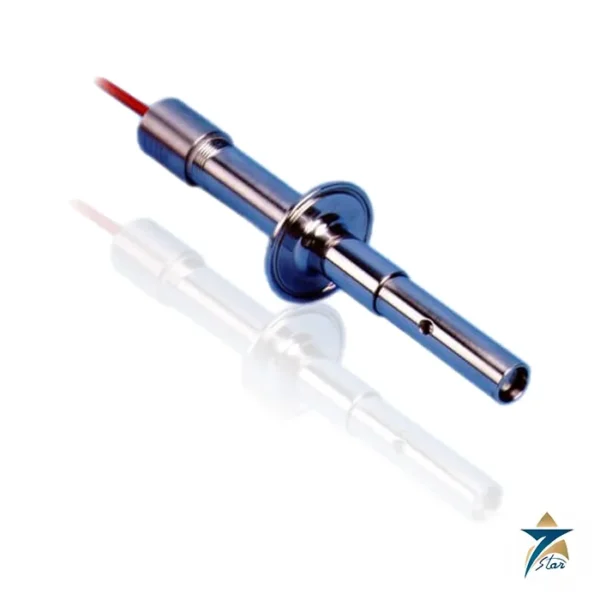
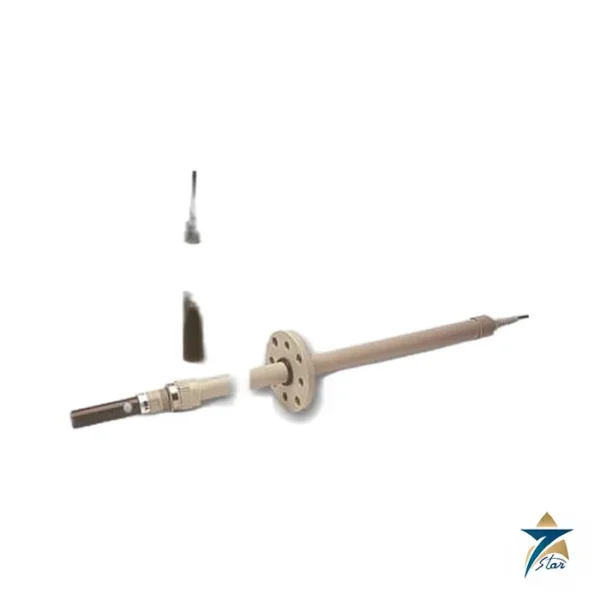
The ABB TB451 electrode is a sanitary, sterilizable tri-clamp two-electrode contacting conductivity sensor built for hygienic process industries. Its Kynar (PVDF) body and integral tri-clamp flange with a ¾-inch NPT electrode fitting make it well suited to CIP/SIP-cleaned lines where chemical resistance and a smooth, crevice-free wetted surface are essential.
Part of ABB’s TB4 sanitary conductivity family, the TB451 is engineered for food, beverage, pharmaceutical, and water-for-injection systems that demand both accurate conductivity measurement and compliance with hygienic design practice. Seven Star LLC supplies the TB451 to processors across Oman and the GCC.
Operating Principle
The TB451 applies an AC voltage across its two stainless steel electrodes and measures the resulting current through the process fluid, which is proportional to the fluid’s conductivity. Its factory-calibrated cell constant allows a paired transmitter to convert this signal into accurate conductivity readings — commonly used in hygienic processes to verify CIP rinse-water purity, confirm product-to-water interface changeover, or monitor dilution and blending concentration.
Engineering Design of the ABB TB451
The TB451’s Kynar (PVDF) body offers strong chemical resistance to cleaning and sanitizing agents while keeping the sensor lightweight and cost-effective compared with an all-stainless design. The integral tri-clamp flange with ¾-inch NPT electrode fitting allows fast, tool-free installation and removal for cleaning or inspection, in line with standard hygienic process fitting practice. The sensor’s pressure/temperature rating steps down as temperature rises: 689 kPa (100 psi) at 90°C, 447 kPa (65 psi) at 121°C, and 275 kPa (40 psi) at 140°C, with 316 stainless steel electrodes and EPDM o-ring seals.
Key Features
- Two-electrode contacting conductivity measurement technology
- Sanitary tri-clamp mount with ¾-inch NPT electrode fitting
- Kynar (PVDF) body for strong chemical resistance
- 316 stainless steel electrodes
- EPDM o-ring seals
- Pressure/temperature derating table: 689 kPa @ 90°C / 447 kPa @ 121°C / 275 kPa @ 140°C
- Tool-free tri-clamp installation and removal for cleaning
- Compatible with ABB AquaMaster/AX400-series conductivity transmitters
- Suited to CIP/SIP-cleaned hygienic process lines
Industrial Applications
The TB451 is specified for food, beverage, dairy, and pharmaceutical production lines across Muscat, Sohar, and Salalah, where hygienic tri-clamp fittings are standard and operators need to verify CIP rinse-water conductivity before returning a line to production, or confirm the product/water interface during changeover.
Across the GCC’s food and beverage and pharmaceutical sectors, the TB451 is also used for dilution and blending control in formulation systems, and for monitoring water-for-injection or purified-water conductivity in pharmaceutical utilities, where its sanitary tri-clamp design simplifies both installation and routine sanitary inspection.
Technical Specifications
| Parameter |
Specification |
| Measurement Technology |
Two-electrode contacting conductivity |
| Installation Type |
Sanitary tri-clamp |
| Process Connection |
Tri-clamp flange, ¾-inch NPT electrode fitting |
| Body Material |
Kynar (PVDF) |
| Electrode Material |
316 stainless steel |
| Seal Material |
EPDM o-rings |
| Pressure/Temperature Rating |
689 kPa @ 90°C / 447 kPa @ 121°C / 275 kPa @ 140°C |
| Output |
Compatible with ABB AquaMaster/AX400-series transmitters |
| Series |
ABB TB4 sanitary conductivity family |
When to Choose the TB451
The TB451 combines a tri-clamp connection with a Kynar (PVDF) body, giving a hygienic mounting with good resistance to the acids, caustics and sanitizers used in cleaning cycles. Engineers usually compare it with the all-stainless TB457: the TB451 is suited to lines where a polymer body is acceptable, while the TB457 is chosen where the specification requires full metal construction. Confirm the ferrule size, the conductivity range to be measured and the cleaning regime before ordering.
Installation and Commissioning
- Install in a sanitary tee or instrument port so the electrodes are fully immersed and no dead leg is formed.
- Avoid high points in the pipe where air or CIP foam can collect around the electrodes.
- Use the gasket material approved by your site hygiene standard and tighten clamps evenly.
- Enter the cell constant and temperature compensation in the transmitter, then verify against a conductivity standard.
Using Conductivity in CIP Control
A common use for the ABB TB451 electrode is to detect the phases of a CIP cycle: pre-rinse, caustic wash, intermediate rinse, acid wash and final rinse all have clearly different conductivity. Using the reading to switch valves and confirm the final rinse reduces chemical and water use and gives a recorded proof that cleaning solutions have been flushed from the line.
Maintenance and Troubleshooting
Check the sensor at planned intervals with a conductivity standard, and inspect the body and gasket faces for scratches or deformation that could trap product. Readings that change slowly between CIP cycles may indicate deposits such as protein film or milkstone, while sudden jumps usually point to entrained air or a wiring issue. Keep the connector dry during washdown of the surrounding area.
Applications in Oman and the GCC
In Oman and the GCC the TB451 is suited to dairy, juice and soft drink plants, bottled water lines, edible oil processing and pharmaceutical water systems, where hygienic design and reliable CIP phase detection are daily requirements.
Documentation for Audits
Food and pharmaceutical auditors often ask for evidence that in-line instruments are calibrated and fit for purpose. Keep the sensor serial number, material certificates where supplied, and each verification result in the instrument file, and link them to the CIP records the sensor supports.
Sourcing from Seven Star LLC
Seven Star LLC supplies the TB451 with matching ABB transmitters and accessories, and can help select between the TB451 and TB457 for your hygienic line.
Request a Quote for ABB Tri-clamp type, stainless steel electrodes TB451
Contact Seven Star LLC to request a quotation for the ABB TB451 sanitary conductivity sensor or to confirm tri-clamp size and wetted-material compatibility for your CIP/SIP process. Our engineering team, serving Oman and the GCC, can help select the correct TB4-family variant for your hygienic process requirements.
Browse the full ABB range or see more Liquid Analysis Sensors products supplied by Seven Star LLC in Oman and the GCC.









Reviews
There are no reviews yet.