Honeywell SmartLine STT650 DIN-rail temperature transmitter
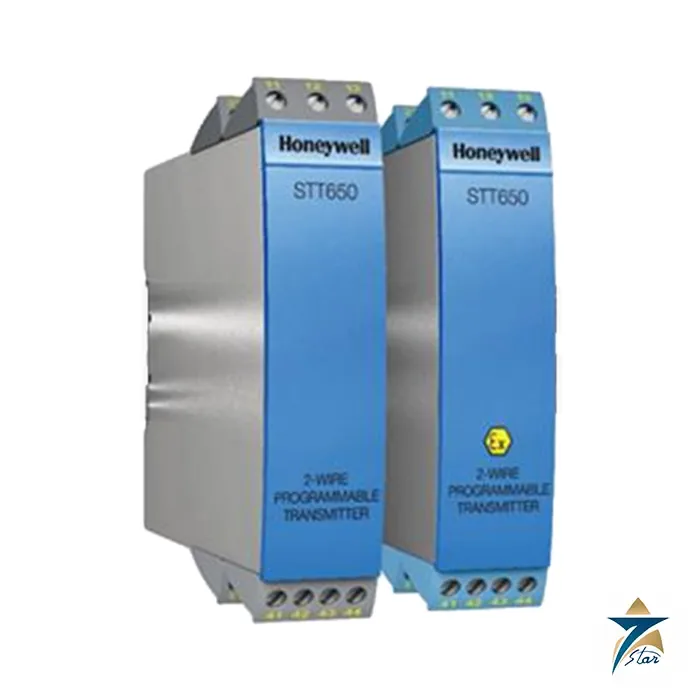
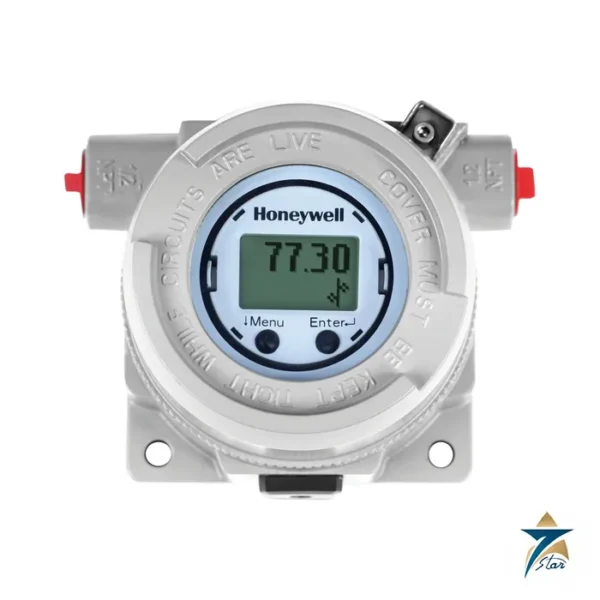
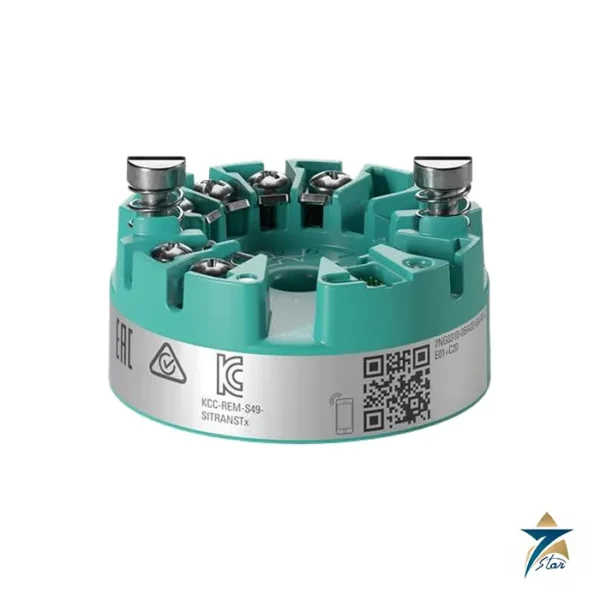
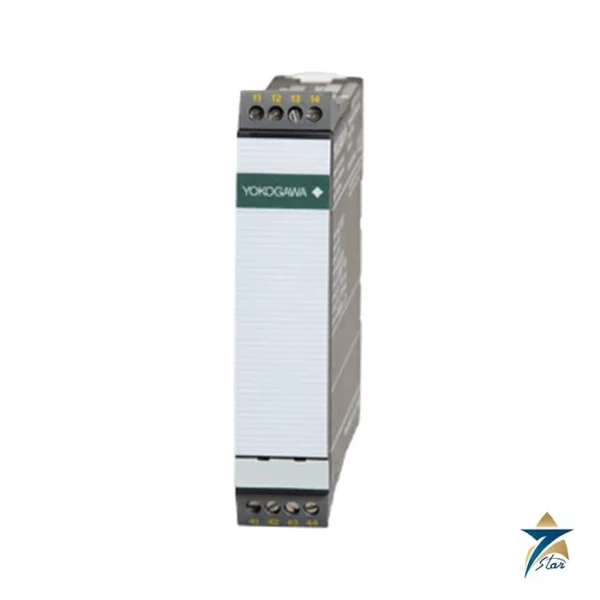
The Honeywell SmartLine STT650 is a 2-wire, universal-input temperature transmitter in a slim DIN-rail housing. It accepts RTDs in 2-, 3- and 4-wire connection, a long list of thermocouple types, resistance (ohm) and millivolt signals, and returns a 4 to 20 mA analog output or a HART version 7 digital signal. The housing is made for marshalling cabinets and panels rather than for mounting in a head or on a pipe.
Honeywell describes the family as compact enough to save over 50 % of panel space, with dual-channel options for taking several temperature measurements on one panel. Seven Star LLC supplies the Honeywell STT650 in Oman and the GCC as an independent supplier in Muscat, mainly for process plants that centralize signal conditioning in control rooms and local equipment rooms.
What the STT650 name tells you
Within the SmartLine temperature range, STT stands for the temperature transmitter family. The STT650 is the DIN-rail model, and other members of the range include the STT700, STT750 and STT850. The specific order code, with the input, approvals and options you need, is built when you order, so please give the full description rather than only the model.
STT650 technical specifications
| Parameter |
Specification |
| Manufacturer / part number |
Honeywell / SmartLine STT650 |
| Input |
Universal: RTD (2, 3, 4 wire); thermocouple types B, E, J, K, L, N, R, S, T, U, W3, W5 and +Lr; ohm; mV DC |
| Output |
4 to 20 mA analog; HART version 7.0 |
| Accuracy |
0.1 °C for RTD inputs |
| Stability |
± 0.12 % of span over 2 years |
| Update / response time |
Analog output 135 ms; HART output 440 ms |
| Supply voltage |
8 to 30 V DC intrinsically safe; 8 to 35 V DC non-intrinsically safe |
| Load resistance |
Analog ≤ (V – 8) / 0.023 A; HART ≤ (V – 7.2) / 0.023 A |
| Power supply effect |
≤ 0.005 % of span per V DC |
| Galvanic isolation |
1500 V AC built in |
| Sensor error detection |
NAMUR NE43 compliant |
| Ambient conditions |
–40 to +85 °C (–40 to +185 °F); 0 to 95 % RH non-condensing |
| Approvals |
CE, IECEx, ATEX, CSA, FM Approvals (intrinsic safety, non-incendive, dust tight) |
| Mounting |
DIN rail, compact design |
| Configuration |
STT17C PC configuration tool, graphical interface, for non-hazardous areas |
How the STT650 measures and protects the signal
A temperature sensor produces either a resistance change (RTD, ohm) or a small voltage (thermocouple, mV). The STT650 linearizes the signal for the chosen sensor type, applies cold-junction compensation for thermocouples, and converts the result to a 4 to 20 mA loop current or a HART digital value. Because of the built-in 1500 V AC galvanic isolation, ground loops between sensor and control system are broken.
Noise immunity is stated as tested for 2 kV surge and 2.5 kV burst. The sensor diagnostics follow NAMUR NE43, so a broken wire or an out-of-range input drives the output to a defined failure level that the control system can detect.
Where the STT650 fits and related Honeywell transmitters
Choose the STT650 when sensors are routed to cabinets and you want rail-mounted conditioning near the I/O. Honeywell also lists the STT700, STT750 and STT850 SmartLine temperature transmitters, and the STT170 from the older STT 3000 family, for other mounting and performance needs. In cabinets the STT650 can serve the same role as an isolated converter module in front of a PLC or DCS card, while adding HART diagnostics and configuration.
STT650 selection and ordering checklist
- Sensor type and connection: RTD wires, thermocouple type, or ohm and mV signals.
- Number of channels (single or dual).
- Output: 4 to 20 mA only or HART 7 as well.
- Approval needed for the area: intrinsic safety, non-incendive or general purpose.
- Measuring span and any special failure-mode setting.
Installation, configuration and maintenance of the STT650
Snap the transmitter onto the DIN rail, wire the sensor to the input terminals and the loop to the output terminals, and check the loop voltage against the load limit shown in the specification. Ranging and sensor type are set through the STT17C configuration tool or a HART communicator. The datasheet for the tool notes it is meant for non-hazardous areas.
In service the stability of 0.12 % of span over two years means long calibration intervals are possible, but a periodic check with a temperature calibrator at the end of the sensor loop remains good practice. Keep terminal screws tight, since thermocouple wiring is sensitive to poor contacts.
Typical applications of the STT650 in Oman and the GCC
Temperature transmitters on rails serve skid cabinets, compressor and turbine auxiliaries, heat exchanger monitoring, furnace and boiler instrumentation, and utility systems in refineries, power plants and desalination units. The operating range of –40 to +85 °C suits cabinets in hot climates, although a shaded, ventilated enclosure is still recommended in direct summer sun.
Sensor wiring deserves attention at commissioning. For RTDs, a 3- or 4-wire connection removes most lead-resistance error, while 2-wire connections need compensation. For thermocouples, use the correct extension cable up to the terminals, because the transmitter measures the terminal temperature for cold-junction compensation. Shield terminations should be grounded at one end only, in line with plant practice, to keep the noise immunity that the isolation and the surge and burst tests are meant to provide.
Information to send with an RFQ for the STT650
- Sensor type, wiring and measuring range.
- Single or dual channel and the loop output required.
- Hazardous-area approval needed.
- Quantity and cabinet layout.
- Delivery location.
Site conditions in Oman for the STT650
Field instruments in Oman are exposed to strong sun, high ambient temperature, wind-blown dust and, on coastal plants, salt in the air. When you specify the STT650, check the ambient and process temperature limits, the enclosure rating and the wetted and housing materials against the actual installation point, and consider sunshades for transmitters mounted in direct sunlight. Cable entries should be sealed with suitable glands so that dust and moisture cannot enter the housing.
Calibration and verification planning matters as much as selection. Record the range, configuration and tag data of each STT650 at commissioning, define a check interval that suits the criticality of the loop, and keep the certificates with the plant documentation so that audits and shutdown work can proceed without delay.
Documents and quotation
The official Honeywell specification 34-TT-03-15 for the SmartLine STT650 DIN-rail temperature transmitter (English) is attached on this page as a PDF. It covers the supported thermocouple, RTD, ohm and millivolt inputs, the accuracy and stability figures, the HART and 4-20 mA output, the single and dual input options, the environmental limits, the approvals and the model selection guide that decodes the STT650 order code. Check the sensor type, the input configuration and the hazardous-area approval you need, then send us the quantity and the delivery location for a quotation.


























Reviews
There are no reviews yet.