Brand:

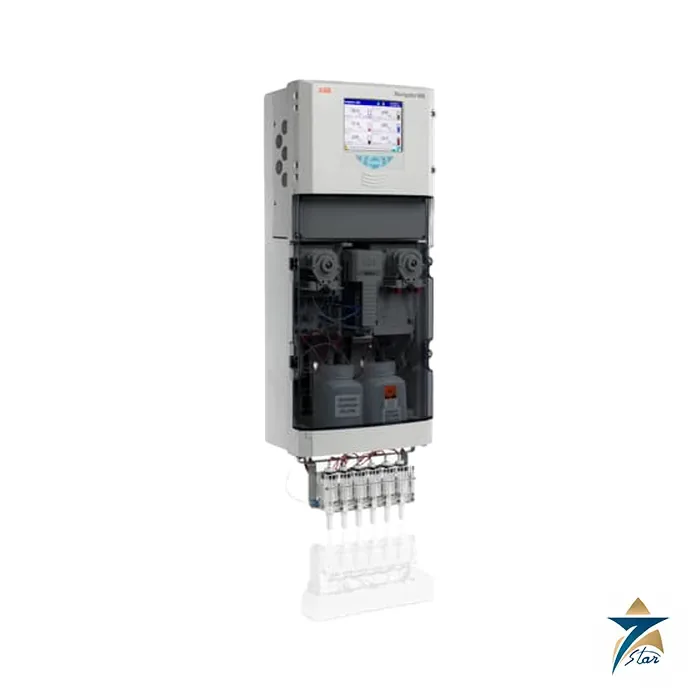
ABB Silica analyzer Navigator AW641

Description

Overview

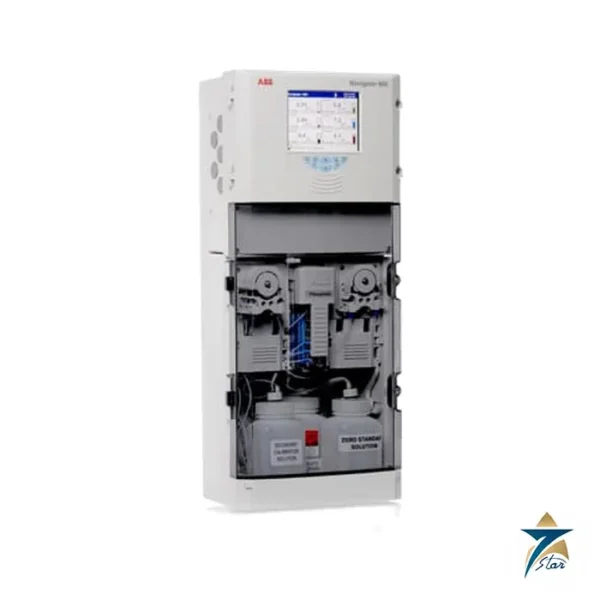
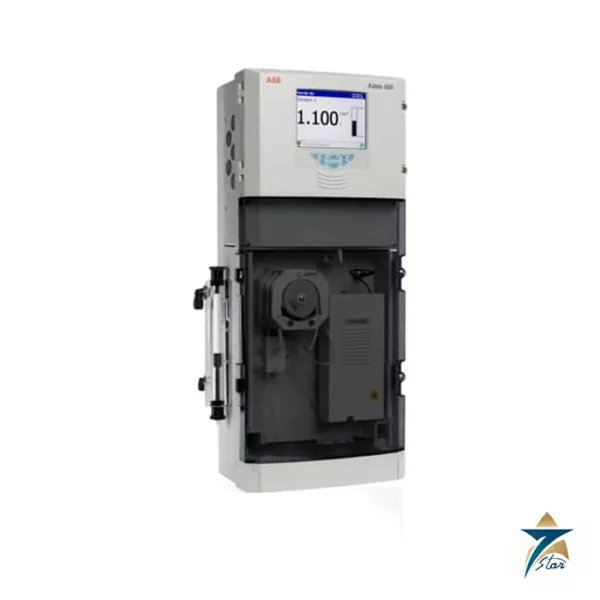
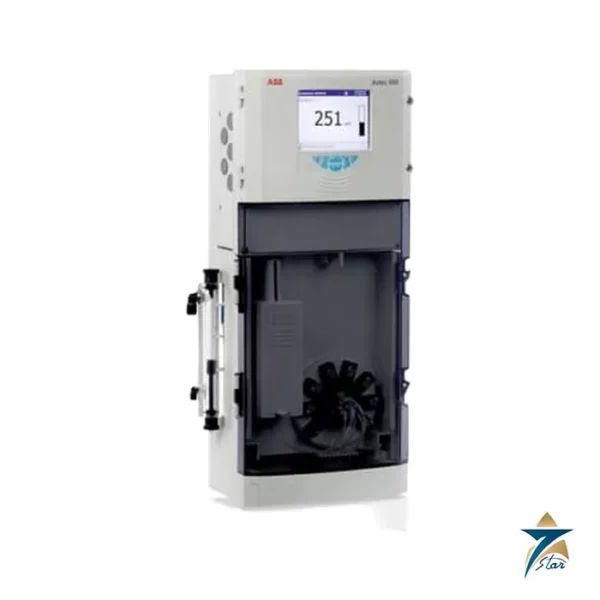
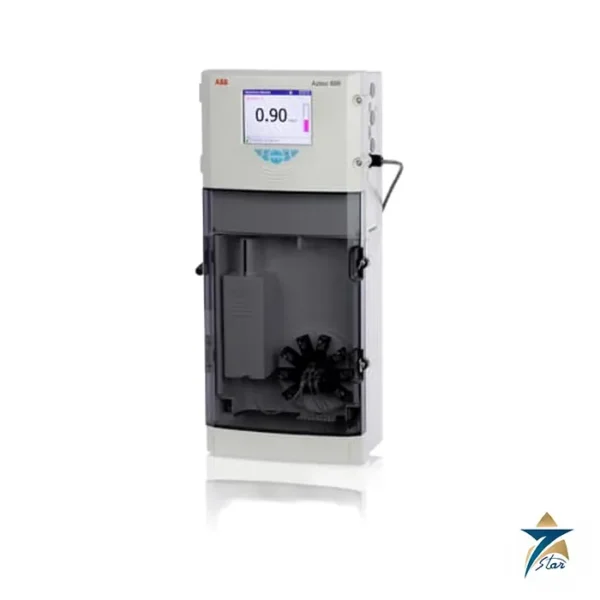
The ABB Silica Analyzer AW641 is an advanced and reliable silica analyzer designed for continuous monitoring of silica in water and steam systems. With high accuracy and low maintenance, the AW641 is perfect for industries such as power generation, semiconductor manufacturing, and water treatment facilities.

This analyzer utilizes advanced colorimetric technology, offering real-time measurements that ensure optimal efficiency in critical processes.

Engineering & Design

The AW641 includes a color display with keypad operation, diagnostics, and a modular design for easy maintenance. The transmitter is rated IP66 and the wet section IP31, with an ambient operating range of 5 to 45 °C.

The analyzer provides Ethernet (web server and FTP), six isolated current outputs and optional Profibus DP V1 for integration into control systems, and automatic calibration and reagent management help reduce manual intervention and improve uptime.

Key Features

  • Continuous silica monitoring
  • Advanced colorimetric technology
  • High accuracy, low maintenance
  • Color display with keypad operation
  • Intelligent diagnostics
  • Modular design for easy maintenance
  • Ethernet and optional Profibus DP V1 communication
  • Automatic calibration
  • Reagent management

Applications

  • Boiler water monitoring
  • Steam system silica control
  • High-purity water processes
  • Power generation
  • Semiconductor manufacturing

Specifications

Specification Value
Manufacturer ABB
Model Navigator AW641
Type Silica analyzer
Technology Colorimetric
Display Color LCD with keypad
Communications Ethernet (web server, FTP); Profibus DP V1 optional
Calibration Automatic
Design Modular
Diagnostics Intelligent

For water chemistry, the ABB AW641 silica analyzer is the continuous monitor, and Seven Star LLC supplies the ABB AW641 silica analyzer with application support.

The AW641 analyser measures the silica content of the boiler water with the colorimetric method.

The ABB AW641 silica analyzer measures the silica concentration of the boiler water with the colorimetric method. The analyzer takes the sample from the steam and the water cycle and the reagent is added for the color development. The photometric cell measures the color intensity and the control unit calculates the silica content in the µg/kg range.

The analyzer runs the automatic calibration cycles with the standard solutions and stores the measured values in the memory. The alarm output is set for the silica limit of the boiler operation and the readings are transferred to the plant DCS over the analog output. The reagent and the spare parts of the AW641 are available for the continuous operation of the analyzer.

The sample conditioning system of the analyzer includes the filter and the flow control of the line, and the maintenance covers the reagent replacement and the cleaning of the measuring cell. The analyzer head and the control unit are mounted on the wall panel of the water chemistry lab.

The AW641 analyzer is installed in the water chemistry laboratory and the sample is drawn from the boiler drum line with the sample conditioning rack. The reagent containers are connected to the analyzer head and the reagent level is monitored by the system. The measured values and the calibration records are stored in the internal memory and the data are exported to the plant database. The analyzer covers the continuous silica monitoring of the steam cycle.

The AW641 analyzer is operated with the reagent kit of the water cycle and the calibration is performed with the zero and the standard solutions. The measuring cycle is programmable for the continuous and the interval operation. The analyzer reports the maintenance alarm when the reagent is low and the spare reagent set is replaced during the routine visit.

Why Continuous Silica Monitoring Matters

Silica carryover from boiler water into steam is one of the most damaging contaminants in power generation and high-pressure steam systems, since it can deposit on turbine blades under high temperature and pressure, reducing turbine efficiency and requiring costly outages for cleaning or blade replacement. Continuous, low-level silica monitoring in the low microgram-per-kilogram range allows plant chemists to detect a developing silica excursion before it reaches levels that risk turbine deposition, giving operators time to adjust blowdown rates, condensate polishing or makeup water treatment before damage occurs.

Because silica measurement at these trace levels is sensitive to reagent quality, sample conditioning and calibration discipline, the AW641’s automatic calibration cycles and reagent management features are particularly valuable for plants that cannot dedicate a full-time chemist to manual silica testing. This is especially important in combined-cycle and cogeneration plants, where boiler chemistry excursions can have an outsized impact on turbine reliability relative to the staffing typically allocated to water chemistry monitoring.

Reagent and Consumable Planning

As with any colorimetric analyzer, the AW641 depends on a consistent supply of fresh reagent to maintain measurement accuracy, and reagent degradation over time or improper storage can introduce measurement bias well before the reagent is visibly exhausted. Plants operating the AW641 as part of a critical boiler water monitoring program should plan reagent replenishment on a fixed schedule tied to expected consumption rates rather than waiting for a low-reagent alarm, since running close to reagent depletion increases the risk of a monitoring gap during an unplanned delivery delay.

Why Seven Star LLC

Seven Star LLC supplies the ABB Navigator AW641 silica analyzer for water chemistry projects across the Gulf, with verified specifications and technical support. Our team assists with application selection, communication setup, and reagent planning.

We serve power and water customers with reliable B2B supply of water analysis instrumentation throughout the GCC.

Installation & Operation

The analyzer measures the silica in the water and steam samples with colorimetric technology, and the results are shown on the display and transmitted over Ethernet or optional Profibus DP, or through the current outputs, to the control system.

Automatic calibration and reagent management reduce the manual workload, and the modular design simplifies the maintenance of the analyzer.

Request a Quote for ABB Silica analyzer Navigator AW641

For the ABB AW641 silica analyzer or any related control and instrumentation requirement, contact the Seven Star LLC team. Submit a formal inquiry through our RFQ page with your measurement range, connection and configuration, and our specialists will respond with a detailed commercial proposal and the official ABB documentation.

Related Products

Datasheets & Documents
  • PDF Datasheet ABB-Silica analyzer Navigator AW641 Datasheet Download
Reviews (0)

Reviews

There are no reviews yet.

How would you rate this product?

It takes about 10 seconds — just tap a star. Your email is never published.

About brand

ABB is the Swiss-Swedish engineering group for electrification and automation: low voltage drives, motors, circuit breakers and motor control, process instruments and analysers, control systems and robots. It was formed on 5 January 1988 by the merger of two older companies. ASEA was founded in Västerås, Sweden, in 1883 by Ludvig Fredholm to make electric lighting and generators. BBC Brown Boveri was founded in Baden near Zurich in 1891 by Charles E. L. Brown and Walter Boveri. ABB Ltd is incorporated in Switzerland, headquartered in Zurich and listed on the SIX Swiss Exchange and Nasdaq Stockholm.

ABB company profile

Formed 5 January 1988, by the merger of ASEA (Sweden) and BBC Brown Boveri (Switzerland), each holding 50%
ASEA Founded 1883 in Västerås, Sweden, by Ludvig Fredholm; first products electric lighting and generators
Brown, Boveri & Cie Founded 1891 in Baden, Switzerland, by Charles E. L. Brown and Walter Boveri
Headquarters Zurich, Switzerland; ABB Ltd became the group holding company in 1999
Ownership Public company listed on SIX Swiss Exchange and Nasdaq Stockholm
Brands in the group Baldor (US motors, acquired 2011), B&R (machine automation, acquired 2017), K-TEK level instruments, Endura and Navigator analysers, SACE breakers
Product families Low and medium voltage drives (ACS series), motors, SACE Tmax and Emax breakers, contactors and soft starters, flow, pressure, temperature and level instruments, liquid and gas analysers, Contrac actuators, AC500 PLCs, Ability System 800xA and S800 I/O, protection relays, robots

Milestones

  • 1883: ASEA is founded in Västerås, Sweden.
  • 1891: Brown, Boveri & Cie is founded in Baden, Switzerland.
  • 1987–1988: The merger is announced on 10 August 1987; ABB Asea Brown Boveri starts operating on 5 January 1988.
  • 1999: ABB Ltd, incorporated in Switzerland, becomes the single holding company of the group.
  • 2011 and 2017: Baldor Electric and B&R join ABB.
  • 2020: ABB sells its power grids business to Hitachi, focusing on electrification, motion, process and machine automation.

Choosing an ABB drive

ABB's ACS drive codes are easy to read once you know the pattern. In ACS580-01-046A-4, "ACS580" is the drive family, "01" means a wall-mounted single drive, "046A" is the rated output current (about 46 A) and "-4" means a 380–480 V supply. The family is chosen by application: ACS355 for compact machinery, ACS310 for simple pumps and fans, ACS580 as the general-purpose drive, ACQ580 for water and wastewater with pump functions such as pipe fill and dry-run protection, and ACS880 for heavy industrial duty with direct torque control. Size the drive on the motor's full-load current, not only its kW rating, and allow derating for the high ambient temperatures common in Gulf electrical rooms.

Where ABB products are used

In Oman and the GCC, ABB drives and motors run pumps, fans and compressors in water and wastewater plants, district cooling, oil and gas and industry. ABB flowmeters, level instruments and analysers are used in water utilities, power and desalination plants and refineries, and SACE breakers protect switchboards in buildings and plants.

ABB products we list

Family Examples
AC drives ACS580, ACS580-01-046A-4, ACQ580, ACS355, ACS310, ACS880-01, FEN-31 encoder module
Breakers, motor control and protection SACE Tmax XT, XT3N 250, SACE Emax 2, AF09 contactor, PSR soft starter, REM615 relay
Flow measurement ProcessMaster FEP300, AquaMaster4, CoriolisMaster FCB430, VortexMaster FSV430, SwirlMaster FSS430, OriMaster FPD500
Pressure, temperature and level 266DRH, 267CS multivariable, TTH300, K-TEK AT100, LMT200, MT5000 GWR, KM26 gauge
Analysers Endura AZ20, AK100 hydrogen purity, Navigator AW641 silica, AW402 chlorine, AWT210
Control systems and actuators AC500, AC500-S, S800 AI810, AC 800F SA 811F, Contrac RSD50, Contrac RHD4000

Ordering ABB products: what we need

Send the full type code from the nameplate (for example ACS580-01-046A-4 or 266DSH...) and, for spare parts, the ABB ID number (such as 3BSE008508R1 or 1SBL176001R3010). For drives, add the motor power and current and any option codes (+...). For instruments, send the complete order code, which sets range, materials and approvals. Baldor motors are listed on their own brand page.

Frequently requested ABB models: ABB FENA-21 Two-Port Ethernet Adapter Module, ABB AHM550.

Facts checked against ABB company filings and published histories of ASEA and Brown, Boveri & Cie, October 2026.
FAQ

Questions about the ABB Silica analyzer Navigator AW641

Answers from our engineering team on installation, compatibility and integration.

01What is the AW641?
It is an ABB Navigator silica analyzer for continuous monitoring of silica in water and steam systems.
02Which technology does it use?
Advanced colorimetric technology with real-time measurements.
03Which protocols does it support?
Ethernet (web server and FTP) and optional Profibus DP V1 for integration into control systems.
04Does it need frequent maintenance?
No, automatic calibration and reagent management reduce manual intervention and improve uptime.
05Where is it used?
Power generation, semiconductor manufacturing, and water treatment facilities.