Brand:

ABB Residual chlorine monitor AW402 with PID

Description

Overview

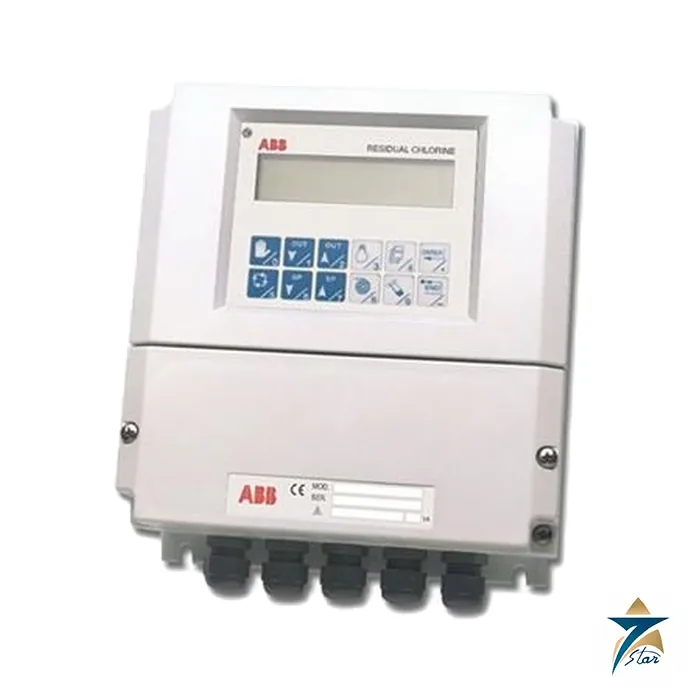
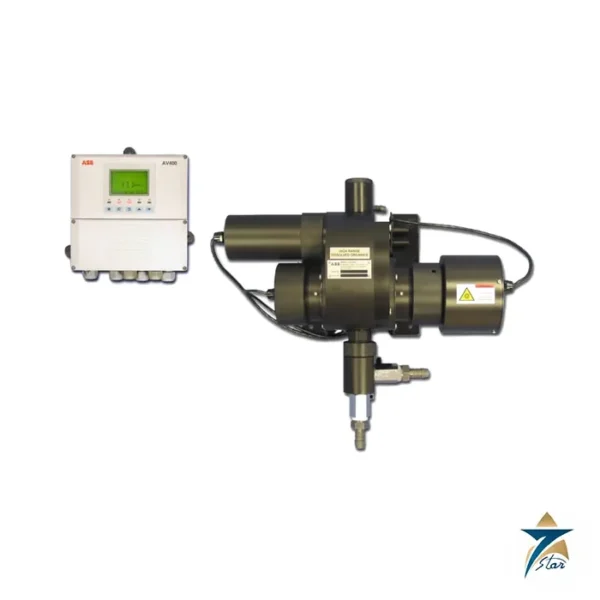
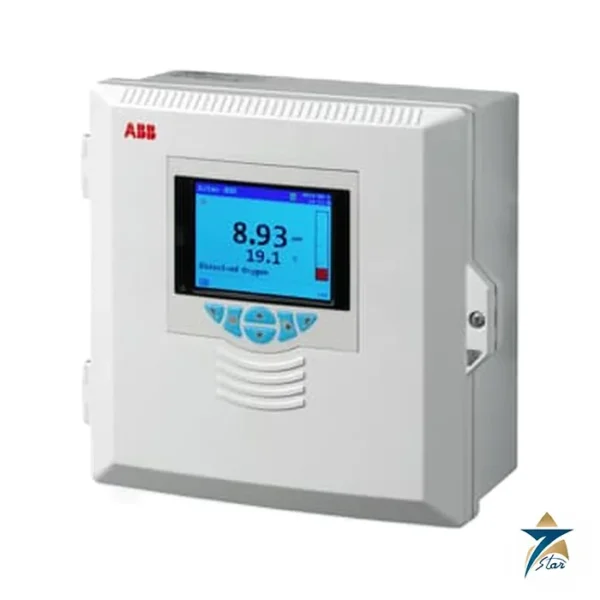
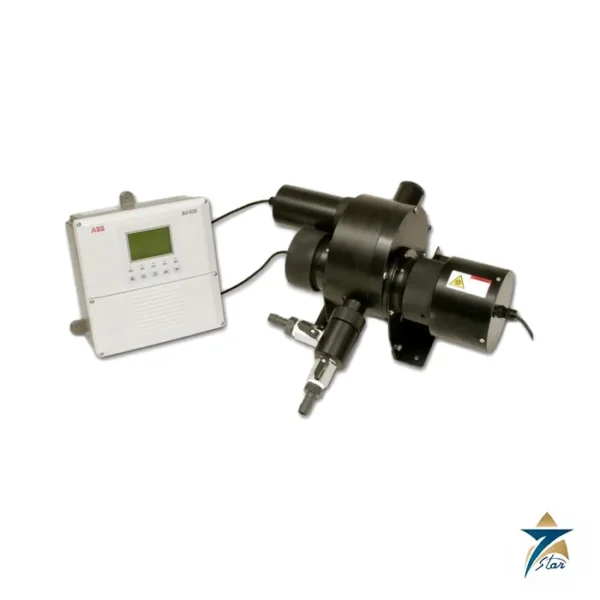
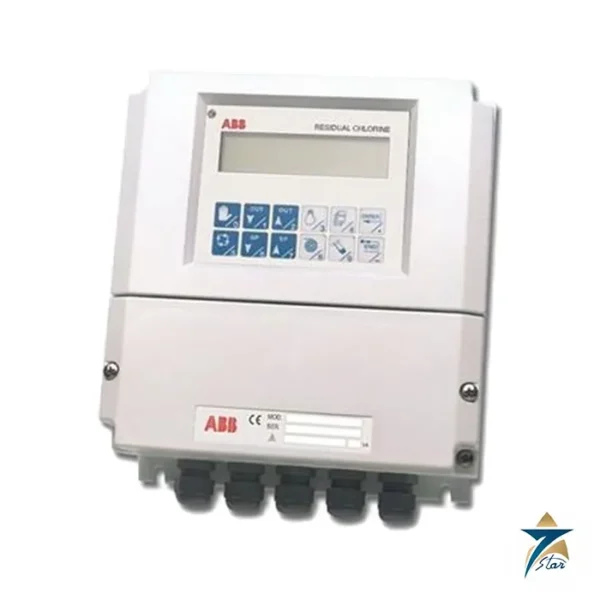
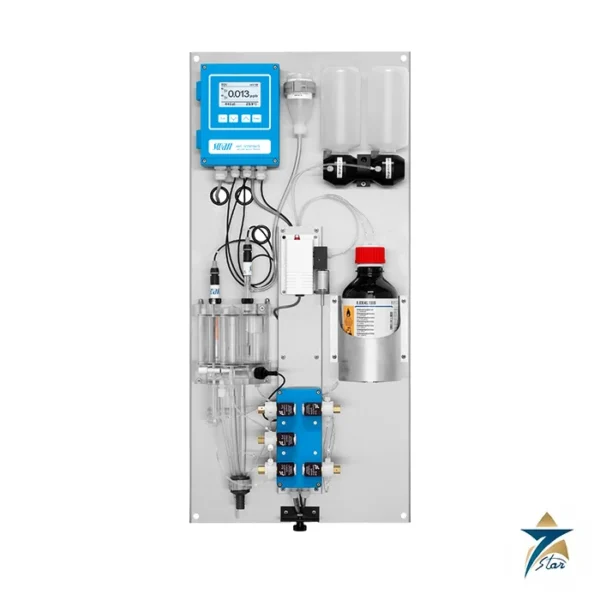
The ABB AW402 Residual Chlorine Monitor with PID is a continuous, online instrument from ABB’s AW400 series that measures free or total residual chlorine, chlorine dioxide, or ozone using a reagentless amperometric sensing cell, with an integrated PID controller built in for direct feedforward dosing control. Unlike the colorimetric Aztec 600 family of ABB analyzers, the AW400 series uses a concentric gold-and-copper electrode cell that generates a current signal directly proportional to oxidant concentration – a design that eliminates ongoing reagent consumption entirely at pH 7.5 and below, a meaningful running-cost advantage for continuous disinfection monitoring.

With fast quotation turnaround and technical support, Seven Star LLC proudly supplies the AW402 Residual Chlorine Monitor to municipal water authorities and industrial disinfection system operators across the Sultanate of Oman and the wider Gulf region. Every unit is supplied on request with manufacturer documentation, regional technical support, and access to original ABB spare parts – with lead time and availability confirmed at quotation.

Measurement Principle

The AW402 uses an amperometric cell with a gold inner (measuring) electrode and a copper outer electrode: when oxidizing substances such as chlorine, chlorine dioxide, ozone, or their derivatives are present in the sample between the electrodes, the gold measuring electrode is depolarized, generating a current signal directly proportional to oxidant concentration. A PT100 thermistor provides software-based temperature compensation, and the sensor covers a 0 to 20 ppm range across chlorine, chlorine dioxide, and ozone detection with a minimum detection limit of 0.005 ppm.

In practical terms this delivers accuracy of 2% or ±0.01 ppb in unbuffered waters below pH 7.5, and 2% or ±10 ppb in buffered waters up to pH 10, with a response time reaching 90% of a step change within 90 seconds – fast enough to support real-time dosing control rather than just passive monitoring. Because the cell operates reagentlessly at pH 7.5 or below, the AW402 avoids the ongoing chemical cost and reagent logistics that a colorimetric chlorine analyzer would require for continuous operation.

Engineering Design of the ABB AW402

What sets the AW402 apart within the AW400 series is its integrated PID controller: rather than pairing the analyzer with a separate loop controller to drive a chlorine dosing pump, the AW402 closes the control loop itself, supporting feedforward dosing strategies that adjust chemical feed rate directly from the measured residual, without the expense of a standalone controller. The sensor assembly is self-cleaning, using a vortex of corundum sand circulating around the electrodes to keep them free of biofilm and scale buildup that would otherwise degrade sensor response over time.

The instrument supports up to three sensor inputs, allowing chlorine, pH, and ORP measurements to be combined on a single transmitter where a plant needs multi-parameter disinfection monitoring from one panel. Pressure-regulated sample flow means the sensor assembly does not require additional flow-control plumbing on installation, and the combination of reagentless operation and self-cleaning electrodes gives the AW402 up to 60 days of unsupervised operation between routine service visits.

Key Features

The AW402 combines reagentless amperometric measurement with built-in dosing control, including:

  • Reagentless amperometric measurement of free or total chlorine, chlorine dioxide, or ozone at pH 7.5 or below.
  • Integrated PID controller for direct feedforward dosing control, eliminating the cost of a separate loop controller.
  • Measuring range of 0 to 20 ppm with a minimum detection limit of 0.005 ppm and 90-second response time.
  • Self-cleaning sensor assembly using corundum sand vortex circulation to prevent electrode fouling.
  • Support for up to three sensor inputs, combining chlorine, pH, and ORP on a single transmitter.
  • Pressure-regulated sample flow with no additional plumbing required for installation.
  • Up to 60 days of unsupervised operation between service visits.
  • PT100-based software temperature compensation for stable readings across varying sample temperatures.

Industrial Applications

Continuous, reliable disinfection monitoring is a core requirement across Oman and the GCC’s drinking water, wastewater, and pool/spa facilities, and the AW402’s built-in PID control makes it particularly well suited to plants that want dosing control and monitoring from a single instrument. In municipal drinking water treatment, the AW402 monitors and controls residual chlorine directly at the point of disinfection, ensuring the finished water leaves the plant with adequate residual to maintain disinfection through the distribution network without manual dosing adjustment. In cooling systems, tertiary wastewater treatment, and fruit and vegetable disinfection processes, the same reagentless measurement and feedforward control capability keeps oxidant dosing tracking process demand automatically.

With engineering support in Muscat, Seven Star LLC supplies the AW402 Residual Chlorine Monitor to water utilities, industrial disinfection operators, and food and beverage processors across Muscat, Sohar, and Salalah, as well as the wider Gulf region. The instrument is not recommended for meat processing, high oil/fat, or fibrous sediment applications, where the sensor’s pressure-regulated flow assembly is unsuited to the sample matrix – Seven Star LLC’s instrumentation division can advise on the correct AW400 series variant for these applications.

Technical Specifications

Key technical specifications for the ABB AW402 Residual Chlorine Monitor are summarized below.

Parameter Specification
Model ABB AW402 Residual Chlorine Monitor with PID
Measuring Principle Amperometric, gold/copper concentric electrode cell (reagentless at pH ≤7.5)
Measuring Range 0 to 20 ppm (chlorine, chlorine dioxide, ozone)
Minimum Detection Limit 0.005 ppm
Accuracy 2% or ±0.01 ppb (pH <7.5); 2% or ±10 ppb (pH <10)
Response Time 90% step change within 90 seconds
Control Integrated PID controller for feedforward dosing
Sensor Inputs Up to 3 (chlorine, pH, ORP combinations)
Unsupervised Operation Up to 60 days
Temperature Compensation PT100 thermistor, software-based

Request a Quote for ABB Residual chlorine monitor AW402 with PID

Seven Star LLC welcomes formal RFQs for the ABB AW402 Residual Chlorine Monitor from municipal water utilities, industrial disinfection operators, and food and beverage processors across Oman and the GCC. We supply on request with lead time confirmed at quotation, provide the full technical datasheet on request, and can connect your team directly with our instrumentation division for application sizing and technical support. Contact Seven Star LLC today to request a formal quotation or technical consultation for your chlorine monitoring and dosing control requirements.

Related Products

Datasheets & Documents
  • PDF Datasheet ABB-Residual chlorine monitor Datasheet Download
Reviews (0)

Reviews

There are no reviews yet.

How would you rate this product?

It takes about 10 seconds — just tap a star. Your email is never published.

About brand

ABB is the Swiss-Swedish engineering group for electrification and automation: low voltage drives, motors, circuit breakers and motor control, process instruments and analysers, control systems and robots. It was formed on 5 January 1988 by the merger of two older companies. ASEA was founded in Västerås, Sweden, in 1883 by Ludvig Fredholm to make electric lighting and generators. BBC Brown Boveri was founded in Baden near Zurich in 1891 by Charles E. L. Brown and Walter Boveri. ABB Ltd is incorporated in Switzerland, headquartered in Zurich and listed on the SIX Swiss Exchange and Nasdaq Stockholm.

ABB company profile

Formed 5 January 1988, by the merger of ASEA (Sweden) and BBC Brown Boveri (Switzerland), each holding 50%
ASEA Founded 1883 in Västerås, Sweden, by Ludvig Fredholm; first products electric lighting and generators
Brown, Boveri & Cie Founded 1891 in Baden, Switzerland, by Charles E. L. Brown and Walter Boveri
Headquarters Zurich, Switzerland; ABB Ltd became the group holding company in 1999
Ownership Public company listed on SIX Swiss Exchange and Nasdaq Stockholm
Brands in the group Baldor (US motors, acquired 2011), B&R (machine automation, acquired 2017), K-TEK level instruments, Endura and Navigator analysers, SACE breakers
Product families Low and medium voltage drives (ACS series), motors, SACE Tmax and Emax breakers, contactors and soft starters, flow, pressure, temperature and level instruments, liquid and gas analysers, Contrac actuators, AC500 PLCs, Ability System 800xA and S800 I/O, protection relays, robots

Milestones

  • 1883: ASEA is founded in Västerås, Sweden.
  • 1891: Brown, Boveri & Cie is founded in Baden, Switzerland.
  • 1987–1988: The merger is announced on 10 August 1987; ABB Asea Brown Boveri starts operating on 5 January 1988.
  • 1999: ABB Ltd, incorporated in Switzerland, becomes the single holding company of the group.
  • 2011 and 2017: Baldor Electric and B&R join ABB.
  • 2020: ABB sells its power grids business to Hitachi, focusing on electrification, motion, process and machine automation.

Choosing an ABB drive

ABB's ACS drive codes are easy to read once you know the pattern. In ACS580-01-046A-4, "ACS580" is the drive family, "01" means a wall-mounted single drive, "046A" is the rated output current (about 46 A) and "-4" means a 380–480 V supply. The family is chosen by application: ACS355 for compact machinery, ACS310 for simple pumps and fans, ACS580 as the general-purpose drive, ACQ580 for water and wastewater with pump functions such as pipe fill and dry-run protection, and ACS880 for heavy industrial duty with direct torque control. Size the drive on the motor's full-load current, not only its kW rating, and allow derating for the high ambient temperatures common in Gulf electrical rooms.

Where ABB products are used

In Oman and the GCC, ABB drives and motors run pumps, fans and compressors in water and wastewater plants, district cooling, oil and gas and industry. ABB flowmeters, level instruments and analysers are used in water utilities, power and desalination plants and refineries, and SACE breakers protect switchboards in buildings and plants.

ABB products we list

Family Examples
AC drives ACS580, ACS580-01-046A-4, ACQ580, ACS355, ACS310, ACS880-01, FEN-31 encoder module
Breakers, motor control and protection SACE Tmax XT, XT3N 250, SACE Emax 2, AF09 contactor, PSR soft starter, REM615 relay
Flow measurement ProcessMaster FEP300, AquaMaster4, CoriolisMaster FCB430, VortexMaster FSV430, SwirlMaster FSS430, OriMaster FPD500
Pressure, temperature and level 266DRH, 267CS multivariable, TTH300, K-TEK AT100, LMT200, MT5000 GWR, KM26 gauge
Analysers Endura AZ20, AK100 hydrogen purity, Navigator AW641 silica, AW402 chlorine, AWT210
Control systems and actuators AC500, AC500-S, S800 AI810, AC 800F SA 811F, Contrac RSD50, Contrac RHD4000

Ordering ABB products: what we need

Send the full type code from the nameplate (for example ACS580-01-046A-4 or 266DSH...) and, for spare parts, the ABB ID number (such as 3BSE008508R1 or 1SBL176001R3010). For drives, add the motor power and current and any option codes (+...). For instruments, send the complete order code, which sets range, materials and approvals. Baldor motors are listed on their own brand page.

Frequently requested ABB models: ABB FENA-21 Two-Port Ethernet Adapter Module, ABB AHM550.

Facts checked against ABB company filings and published histories of ASEA and Brown, Boveri & Cie, October 2026.
FAQ

Questions about the ABB Residual chlorine monitor AW402 with PID

Answers from our engineering team on installation, compatibility and integration.

01What makes the AW402 different from other ABB chlorine analyzers?
The AW402 includes an integrated PID controller, so it can drive a chlorine dosing pump directly using feedforward control, without needing a separate loop controller alongside the analyzer.
02Does the AW402 require ongoing reagent costs?
No. The AW402 uses a reagentless amperometric sensing cell at pH 7.5 or below, eliminating the ongoing chemical cost and reagent logistics that a colorimetric chlorine analyzer would require.
03How much maintenance does the AW402 need?
The self-cleaning sensor assembly uses a corundum sand vortex to keep the electrodes free of fouling, giving up to 60 days of unsupervised operation between routine service visits.
04Can the AW402 monitor more than just chlorine?
Yes. It supports up to three sensor inputs, so chlorine, pH, and ORP measurements can be combined on a single transmitter for plants that need multi-parameter disinfection monitoring from one panel.
05Is Seven Star LLC an experienced supply partner for ABB products?
Yes. Seven Star LLC is an experienced supplier of ABB in Oman and the GCC, supplying genuine ABB instruments with full local technical support.