A near maintenance-free conductivity sensor for water engineering
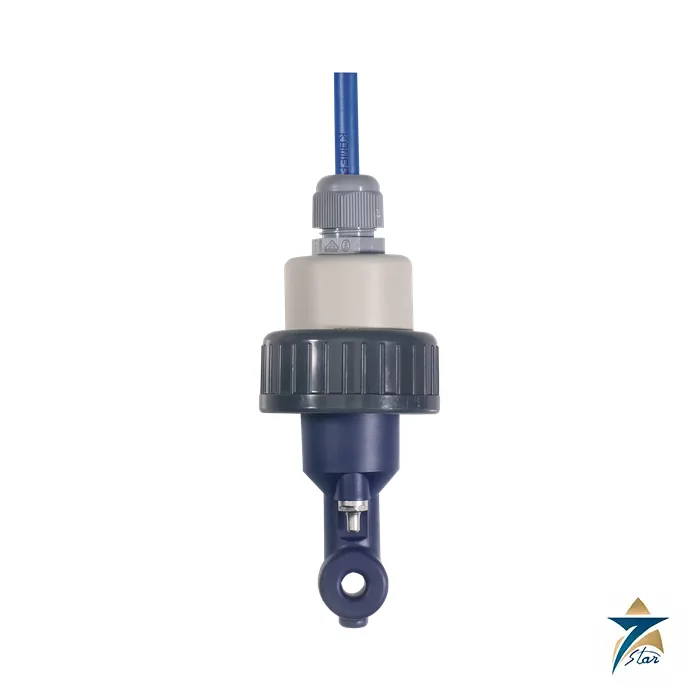
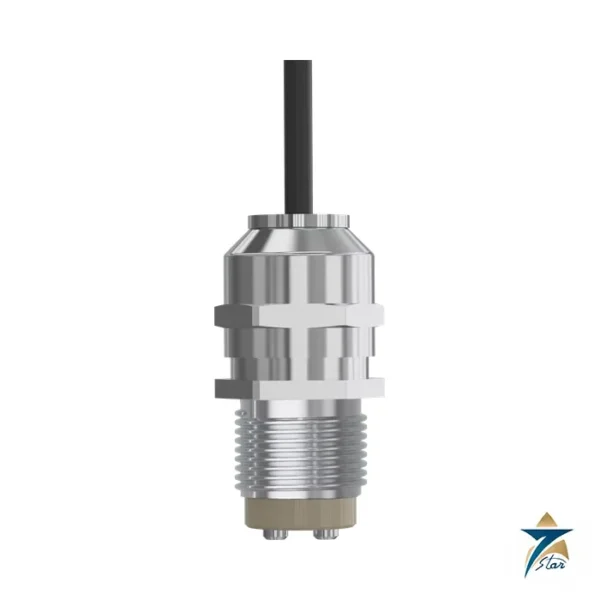
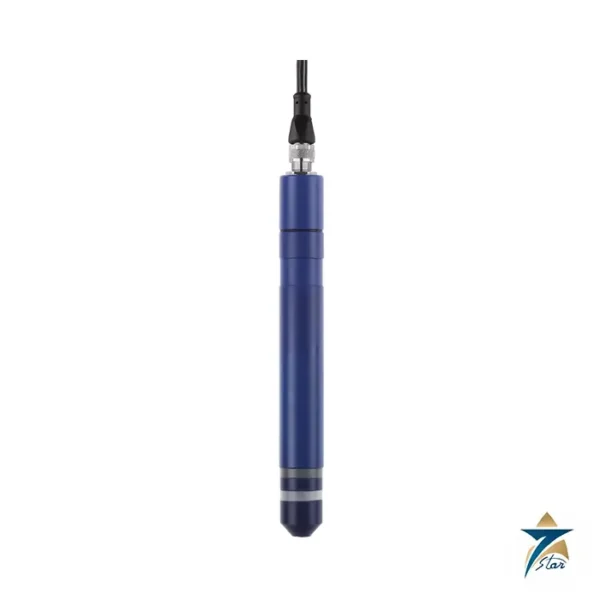
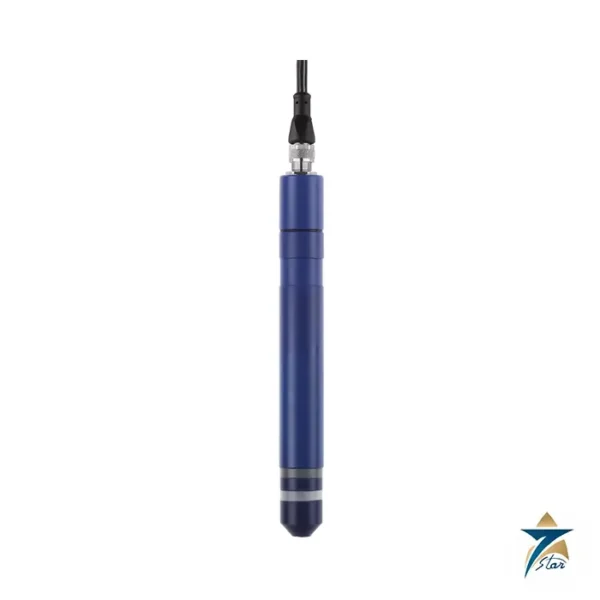
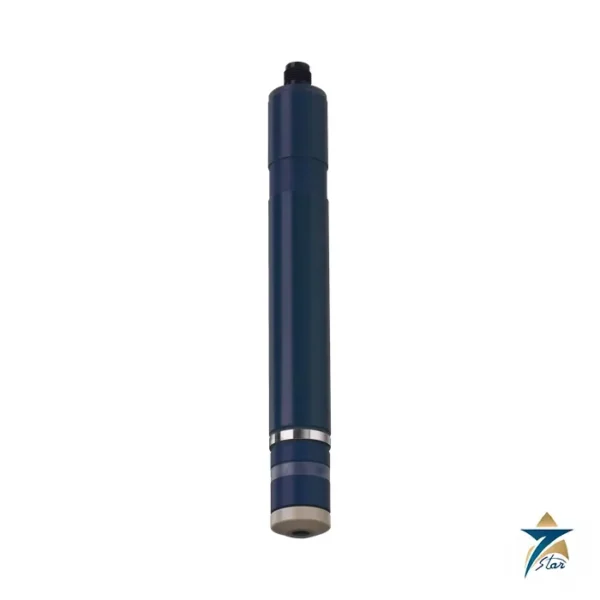
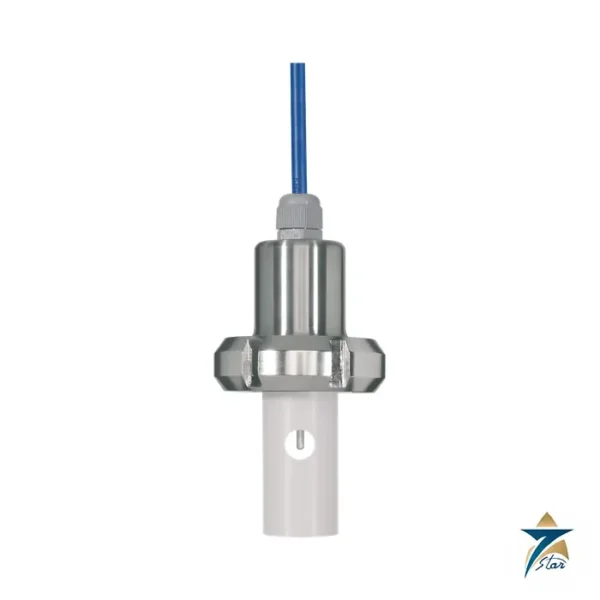
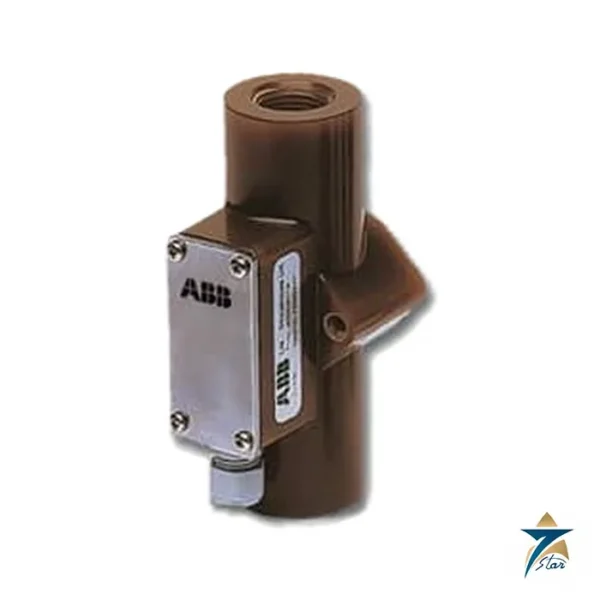
The JUMO ecoLine Ci (type 202943) detects electrolytic conductivity by the inductive principle, so it avoids electrode decomposition and polarisation and stays practically maintenance-free. A film of grease or oil on the sensor hardly affects its accuracy, according to the datasheet. A Pt1000 temperature sensor measures the process temperature at the same time, either exposed in a stainless steel pocket for ultra-fast response or inside the plastic body when the medium could attack the steel. The standard body is polypropylene with PVDF as an alternative, and the sensor is aimed at drinking water and wastewater, air-conditioning and cooling plants, cooling-tower dilution monitoring, carwashes, seawater desalination inlets and swimming pools.
Technical specifications
| Parameter |
Specification |
| Measuring principle |
Inductive, two coils in a hermetically sealed PP or PVDF body with flow-through opening |
| Measuring range |
0 to 1000 uS/cm up to 0 to 2000 mS/cm, depending on the connected transmitter; usual use from about 100 uS/cm |
| Accuracy |
1 % up to 1 mS/cm; 0.5 % in the 10, 50 and 100 mS/cm ranges; 1 % at 1000 and 2000 mS/cm |
| Cell constant |
k = 6.25 per cm (PP versions 10 and 20); k = 4.65 per cm (PVDF version 30) |
| Temperature sensor |
Pt1000 class A; t90 for the three basic type extensions 6 s, 2 min and 10 min (EN 60751) |
| Medium temperature |
Operation -10 to +80 degC (PP) or -10 to +100 degC (PVDF); momentary to +100 or +110 degC (under 15 min); immersion/168 connections to +60 degC pressureless |
| Process pressure |
10 bar at +20 degC; 6 bar at +60 degC; 0 bar (PP) or 4 bar (PVDF) at +80 degC; min. -0.1 bar |
| Ambient / storage temperature |
-10 to +60 degC; -20 to +75 degC |
| Protection |
IP68 (EN 60529); M12 8-pin socket on fixed PUR cable |
| Cable lengths |
10 m standard, 20 m or 30 m |
| Materials |
PP, EPDM, stainless steel 1.4301 or 1.4571 (version dependent); PVDF version with 1.4408 parts; food-use, FDA-listed wetted materials |
| Basic type extension |
10 PP body, exposed temperature sensor (standard); 20 PP body, internal sensor; 30 PVDF body, internal sensor |
| Process connection codes |
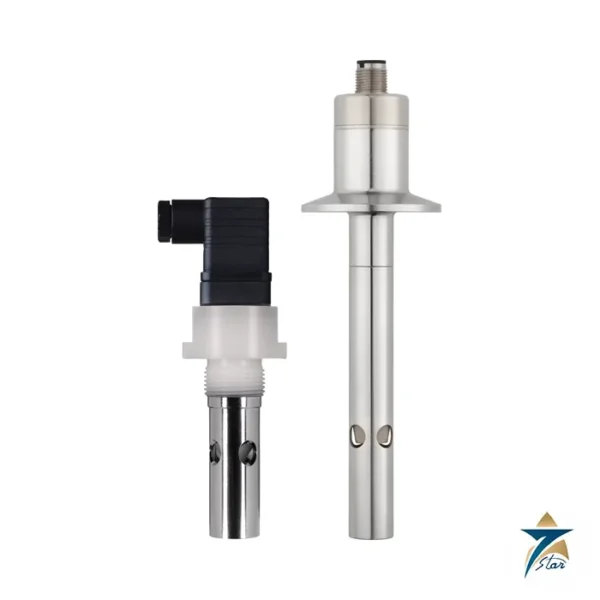
168 PVC union nut G 1 1/2; 169 steel union nut G 1 1/2; 607 DIN 11851 DN 50; 616 clamp DN 50 (2 in); 617 clamp 2.5 in; 690 SMS 2 in; 706 immersion |
| Immersion length (706) |
500, 1000, 1500 or 2000 mm (maximum) |
| Order example |
202943/10-168-0000-21-10/000 |
| Production versions |
202943/10-607-0000-21-10/000 part no. 00550665; 202943/10-706-1000-21-10/000 part no. 00556316 (10 working days) |
Choosing the temperature sensor, body and fitting
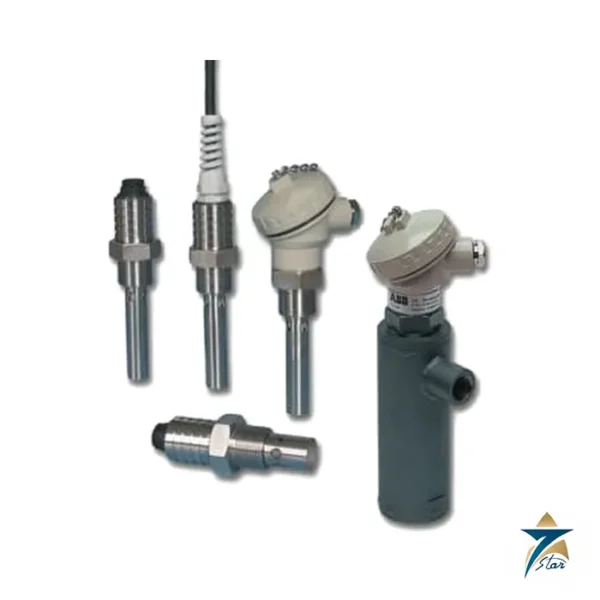
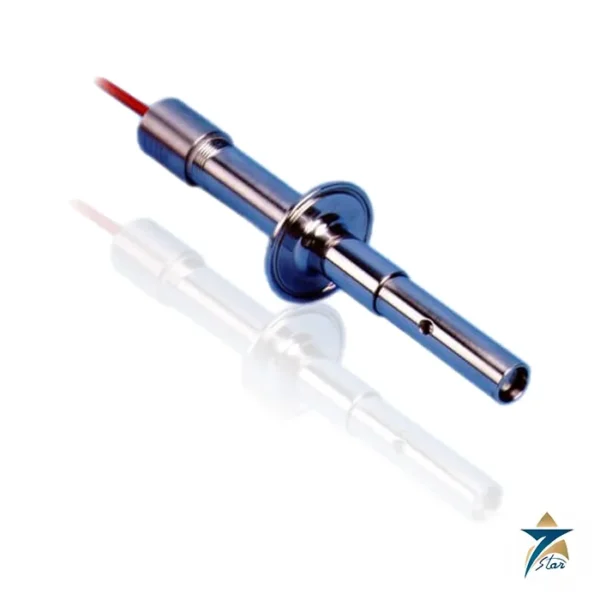
The basic type extension decides how the temperature is sensed. Extension 10 is the standard with an exposed temperature sensor in a 1.4571 stainless steel pocket that reacts quickly; extension 20 puts the sensor inside the PP body so that no metal touches the sample, which matters for aggressive media but slows temperature response; extension 30 is the PVDF body, again with an internal sensor and only available with process connections 168 and 169. Connections 607, 616, 617, 690 and 706 are limited to extension 10 or 20, and the immersion variant 706 is intended for open channels and containers.
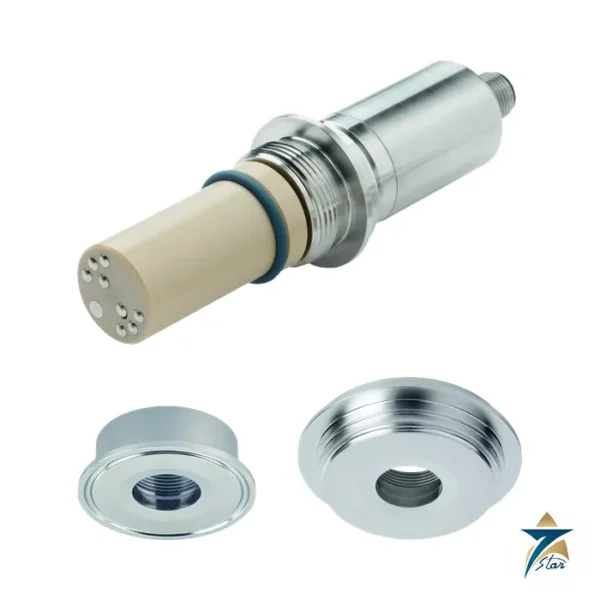
Mating parts are listed with part numbers: PVC T-pieces DN 32 and DN 40 (00439247, 00439249), PP T-pieces DN 32, 40 and 50 (00449511, 00449514, 00449516), union nuts G 1 1/2 in PVC (00439199) or steel (00452039), a DIN 11851 weld-on adapter (00085020), DN 50 grooved union nut (00343368), an SMS 2 in nut (00345162) and PP flanges DN 32 and DN 50 for immersion (00083375, 00083376). A guide slot in the sensor takes a lug on the T-piece, which aligns the cell with the flow direction.
Commissioning and related equipment
Because the cell works inductively, two coils sit inside a hermetically sealed body and the sample liquid passes through an opening in the cell, which forms a liquid loop between them. A transmitter coil is fed with sinusoidal voltage, current is induced in the receiver coil in proportion to the medium conductivity, and the sensor is electrically isolated from the sample by principle. The datasheet describes the cell as extremely stable against temperature and pressure and notes that the wetted materials are approved for food use and physiologically safe. A large range of process connections is offered, including variants that provide spare equipment for older devices, so a replacement can often be matched to an existing pipe or tank fitting without rebuilding the installation.
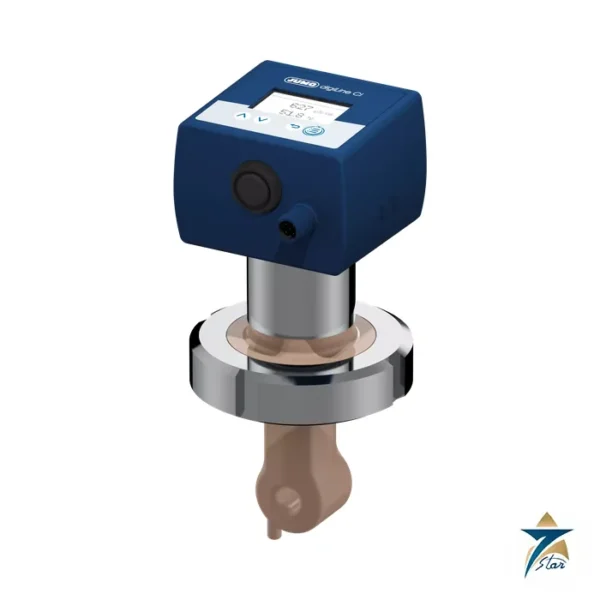
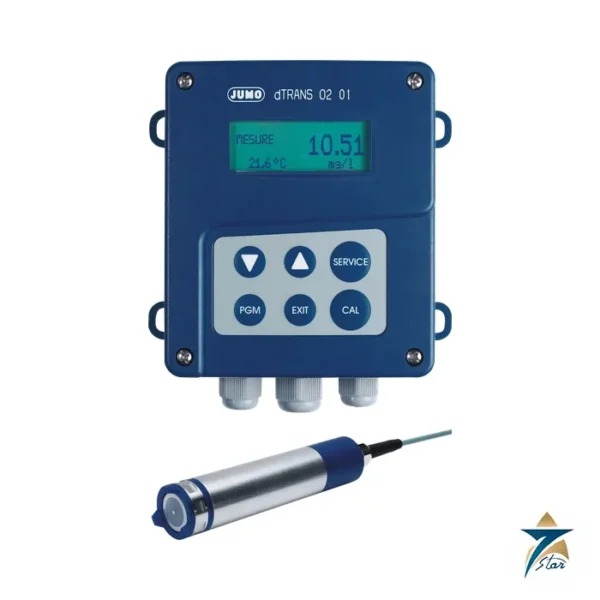
The sensor connects to the JUMO AQUIS 500 Ci (data sheet 202566), the AQUIS touch S/P (202580 and 202581) or the digiLine Ci ST10 (202760). For first commissioning or when parts are replaced the datasheet requires a transmitter or controller, the sensor and a calibration adapter for inductive conductivity measurement, type 202711/21 (part no. 00543395). The datasheet also reminds users that temperature, pressure and sample medium affect the life of the cell.
Published related items are the AQUIS 500 CR, the AQUIS touch P and the dTRANS CR 02; see liquid analysis sensors for further sensors. When enquiring, state the medium, conductivity span, maximum temperature and pressure, pipe size or tank depth, body material and the transmitter to be used.
Related JUMO products: JUMO tecLine Ci-S Inductive Conductivity Sensor, JUMO tecLine CR Conductive 2-Electrode Conductivity Sensor, JUMO tecLine Br Amperometric Bromine Sensor, Type 202637, JUMO ecoLine O-DO Optical Dissolved Oxygen Sensor, Type 202613, JUMO ecoLine NTU Optical Turbidity Sensor and JUMO tecLine Cl2 Free Chlorine Sensor.
Documents and quotation
Hosted for reference is the official JUMO data sheet 202943, version 4.00 dated 2026-09-30, nine pages in English, with technical data, dimensions, accessories and the full order code. Seven Star LLC is an independent supplier in Muscat; send the order code and we will prepare a quotation.



























Reviews
There are no reviews yet.