- Automation & ControlView all 2,895 products
- Automation Accessories
- AC Drives
- PLC & I/O Cards
- Industrial Communications
- Vibration Monitoring
- Controllers & Data Acquisition
- Isolator & Barrier
- Safety Switches & Guard Locking
- Motor Soft Starters
- CCTV & Security
- Encoders
- Pneumatic Cylinders
- HMI Displays
- Servo Drives
- Industrial Computers
- Machine Vision
- Automation Software
- Robotics
Brand: Yokogawa
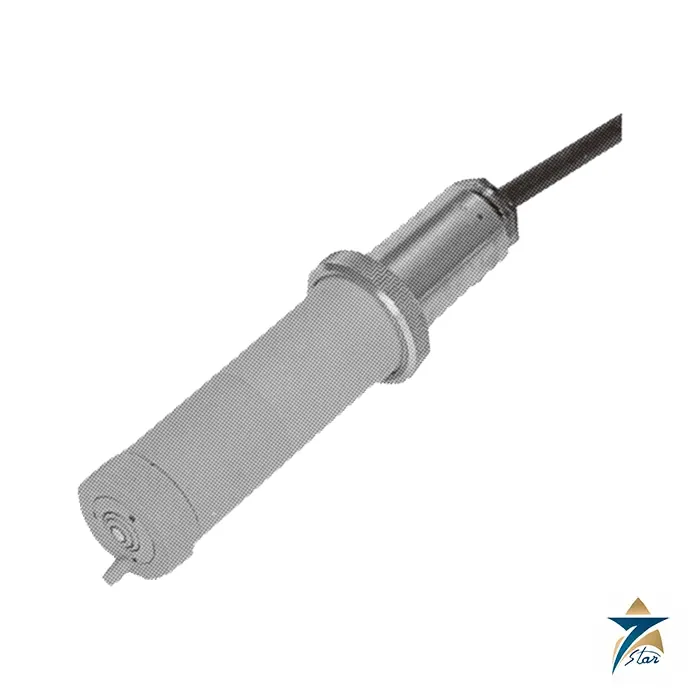
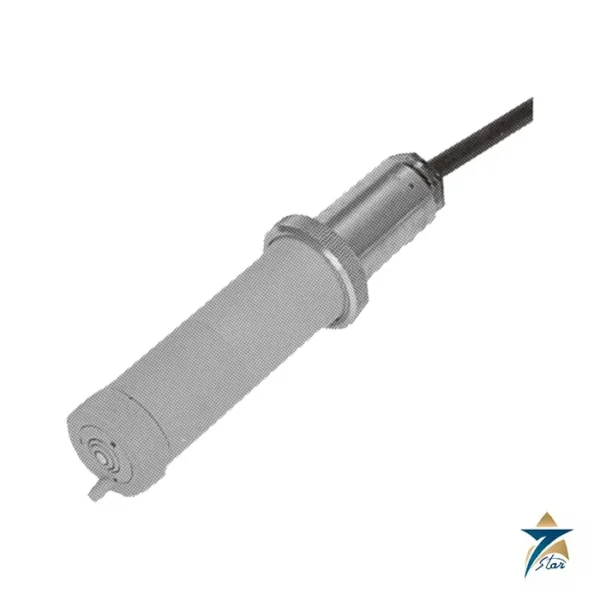
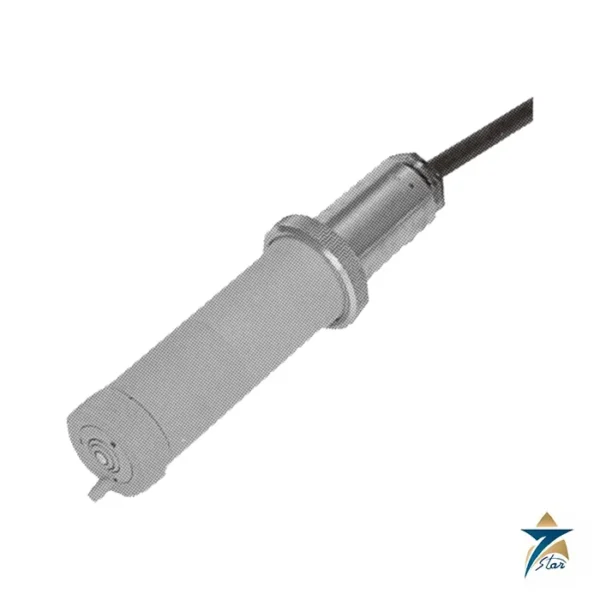
Yokogawa DO30G-NN-50-03-FM DO Sensor, 3 m
Description
DO30G-NN-50-03-FM at a glance
The FM in Yokogawa DO30G-NN-50-03-FM does not mean what it means on a gas detector or an approval label. In the DO30G cable-end list, FM is simply M3 ring terminals. That is the style the manual assigns to the FLXA402 four-wire converter, which is why this variant is the one to quote when the old nameplate shows an FLXA402 on the loop.
The 03 means a 3 m cable, short enough for a sensor mounted a couple of metres from the analyser, and 50 is the 50 micrometre membrane.
Seven Star LLC is an independent supplier serving Oman and the GCC and is not affiliated with the manufacturer.
Sensor characteristics
| Parameter | Value |
|---|---|
| Measuring principle | Galvanic cell dissolved oxygen sensor with replaceable cartridge membrane |
| Measuring range | 0 to 20 mg/L (ppm) |
| Membrane thickness | 50 um |
| Liquid temperature | 0 to 40 C |
| Liquid pressure | 0 to 100 kPa |
| Minimum flow | 20 cm/s or more |
| Temperature compensation | Pt1000 element built in |
| Repeatability | 0.1 mg/L or 3 percent of full scale, whichever is greater |
| Temperature compensation error | Within 3 percent FS for a 5 C change between 0 and 40 C |
| Response time | Within 2 minutes for 90 percent |
| Cable | 3 m with M3 ring terminals (FM) |
| Terminal box | WTB10-DO5 for FLXA402 |
| Weight | Approx. 0.3 kg plus 0.12 kg per metre |
| Materials in contact with the sample | PVC, stainless steel, FEP, nitrile rubber, soft PVC, polycarbonate |
Where FLXA402 fits into the picture
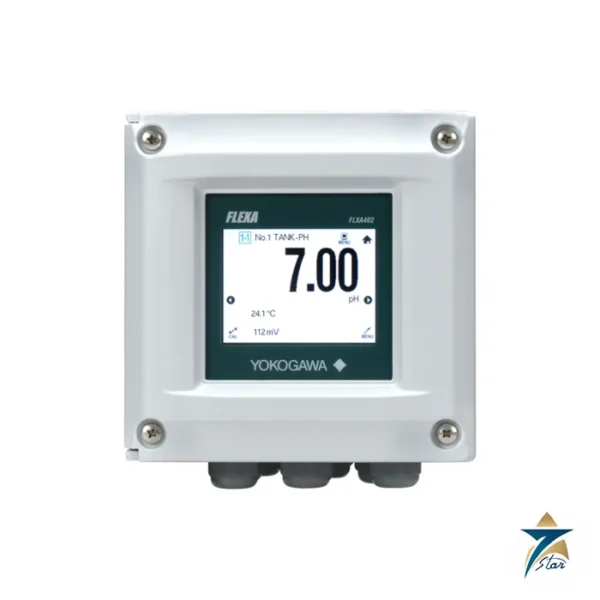
The FLXA402 is the four-wire liquid analyser in the same product family. A four-wire converter is typically chosen where mains power is available, where more outputs and communication are wanted, or when several sensor types will be handled by one platform. DO30G-NN-50-03-FM is the oxygen channel of such an arrangement. The system diagram in the datasheet shows the chain from sensor and holder to converter, which is a useful reference for design checks.
Short cable, short chain
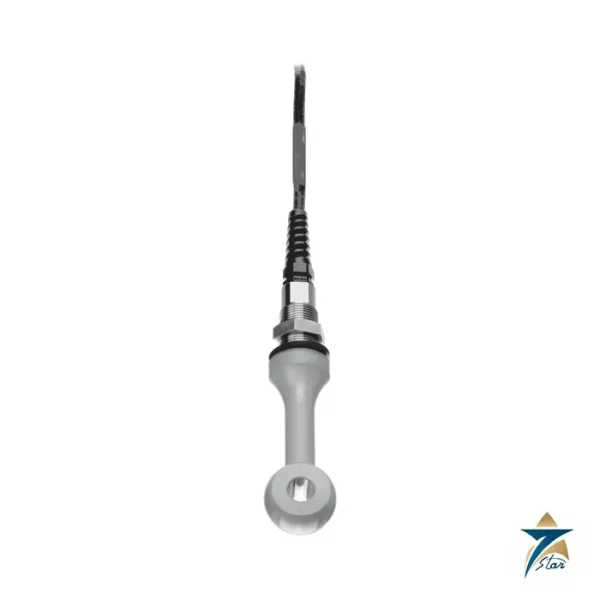
With only 3 m of cable, holder positioning matters. A floating ball holder PB350G or PB360G at the basin edge, or a DOX8HS submersion holder on a rail, needs the converter within reach. If the distance is larger, the WTB10-DO5 box allows up to 40 m of cable on the converter side using JIS A15 gland entries, so the 3 m sensor lead still serves. The box is moulded from fibreglass reinforced polycarbonate and works from -10 to 50 C ambient.
Applications in Gulf conditions
In Oman the 3 m FM version suits compact wastewater package plants, small desalination pretreatment tanks, hotel and resort treatment works, and aquaculture units where distances are small. Warm water holds less oxygen, so the 0 to 20 mg/L range is wider than any saturation value met in these waters, and readings stay within range even on cool nights.
Differences against DO30G-NN-50-05-PN and DO30G-NN-50-10-FL
Range, membrane, repeatability and response are identical across the three. The differences are numeric and physical: 3 m versus 5 m versus 10 m of cable, and M3 ring versus pin versus M4 ring terminals. Cable weight rises by 0.12 kg per metre, so DO30G-NN-50-03-FM is the lightest of the three.
Commissioning checklist
- Confirm that the converter is an FLXA402 and that the M3 terminals match.
- Fit the membrane cartridge and fill with electrolyte; wait for stabilisation.
- Zero the sensor with sodium sulphite solution (L9920BR), then calibrate in air as the converter prompts.
- Check that the flow at the membrane is 20 cm/s or more and that the liquid pressure is within 0 to 100 kPa.
Practical notes on four-wire converters and oxygen sensors
Because DO30G-NN-50-03-FM is intended for the FLXA402, it is worth remembering what the converter expects from a galvanic oxygen cell: a small current signal, the Pt1000 temperature signal on separate conductors, and a clean cable screen. The M3 ring terminals are tagged with marks on each conductor so the wiring can be done without guesswork. After wiring, the first configuration step is selecting the dissolved oxygen sensor type; the second is entering the membrane thickness of 50 micrometres, and then the calibration method, which can be air calibration or comparison with a laboratory value.
Environmental factors also deserve attention: barometric pressure affects the saturation value that air calibration assumes, and salinity changes the solubility of oxygen. For brackish or sea water intakes along the Omani coast, apply the salinity correction in the analyser if it is offered, or calibrate against a lab method. A reading that looks too low in saline water is not always a sensor fault.
Finally, remember the flow requirement: 20 cm/s or more at the membrane. In still tanks, use a holder with some movement, or a flow-through arrangement, so the sensor reports the water and not its own oxygen depletion.
Service life and spares
Plan membrane replacement during routine maintenance rounds, and store the K9171HK membrane and electrolyte pack, the K9088PE polisher and the sodium sulphite reagent with the converter. Keep cable ends dry and tight on the M3 screws, because ring terminals can loosen with vibration at blower-driven basins. When DO30G-NN-50-03-FM is returned to service after storage, check the cartridge for dried electrolyte, inspect the membrane for creases, and follow the refill and stabilisation steps again instead of assuming the earlier calibration still holds. Keep a log of membrane changes, calibration slopes and cleaning dates for each tag, because trends in that log tell you whether a problem is the sensor, the holder position or a change in the process. Spare sensors should be stored dry, upright and away from direct sunlight, and the converter configuration should be saved so a replacement sensor can be commissioned quickly.
Documents and quotation
The datasheet for DO30G-NN-50-03-FM is attached. Send your RFQ to Seven Star LLC with the part number DO30G-NN-50-03-FM, quantity, converter model and delivery location.
Other Models in the DO30G Range
Seven Star LLC supplies models from the DO30G range in Oman and the GCC. Compare the related models below and request a quote for the one that matches your application.
| Model | Category | |
|---|---|---|
| Yokogawa DO30G-NN-50-05-PN DO Sensor, 5 m | Liquid Analytical Systems | View details |
| Yokogawa DO30G-NN-50-10-FL DO Sensor, 10 m | Liquid Analytical Systems | View details |
| Yokogawa DO30G-NN-50-03-FM DO Sensor, 3 m | Liquid Analytical Systems | You are viewing this model |
Datasheets & Documents
- Datasheet Yokogawa DO30G-NN-50-03-FM DO Sensor, 3 m Datasheet Download
Reviews (0)
How would you rate this product? Cancel reply
About brand
Yokogawa is the Japanese measurement and industrial automation company behind the DPharp EJA and EJX pressure transmitters, CENTUM distributed control systems and ProSafe-RS safety systems. Tamisuke Yokogawa set it up in 1915 as an electric meter research institute in Shibuya, Tokyo. It began selling electric meters in 1917, was incorporated as Yokogawa Electric Works in 1920, and has been Yokogawa Electric Corporation since 1986. In 1975 it released CENTUM, which it describes as the world's first distributed control system.
Seven Star LLC is an independent supplier in Muscat. We list Yokogawa transmitters, flowmeters, analysers, controllers, recorders and CENTUM and ProSafe spare modules, and supply them to oil and gas, power, water and process plants in Oman and the GCC by model code.
Yokogawa at a glance
| Established | 1915, Shibuya, Tokyo, by Tamisuke Yokogawa with Ichiro Yokogawa and Shin Aoki |
|---|---|
| Milestones | Electric meters from 1917; incorporated in 1920; CENTUM DCS in 1975; renamed Yokogawa Electric Corporation in 1986 |
| Headquarters | Tokyo, Japan |
| Product families | Pressure and temperature transmitters, magnetic, vortex and Coriolis flowmeters, liquid and gas analysers, controllers and recorders, CENTUM VP DCS, ProSafe-RS safety systems and STARDOM controllers |
Yokogawa products we list
| Family | Models | Typical use |
|---|---|---|
| Pressure and DP transmitters | EJA110E, EJA430E, EJA530E, EJX110A, EJX530A, EJX910A multivariable | Pressure, level and DP flow measurement in process plants |
| Temperature transmitters | YTA610, YTA710 | RTD and thermocouple signals converted to 4-20 mA, HART or fieldbus |
| Flowmeters | ADMAG AXG, ADMAG AXW, ROTAMASS TI, VY vortex, VF701 | Water and conductive liquids, mass flow of hydrocarbons, steam and gas |
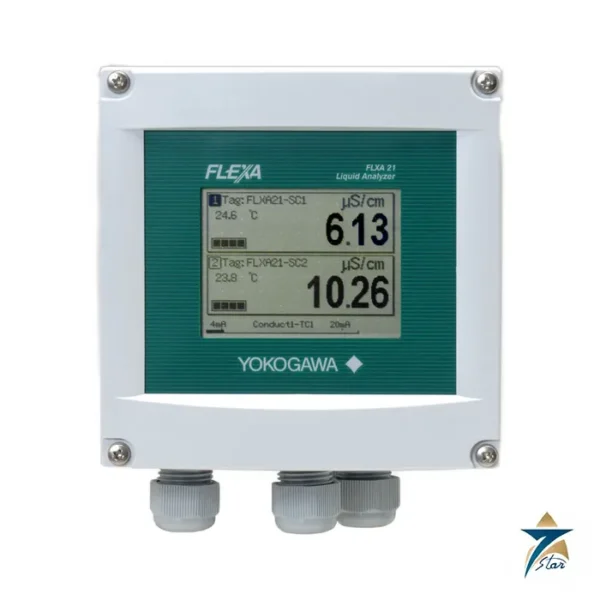
| Analysers | TDLS8000 laser gas analyser, FLXA402, FLXA21 DO, E7042UD zirconia cell, K9471DS cover | Combustion O2, in-situ gas analysis, pH, conductivity and dissolved oxygen |
| Controllers and recorders | UT35A/UT32A, UT32A-D, UT55A/UT52A, UT75A, UP35A/UP32A, UP55A, YS1700, GX10/GX20, GP10/GP20, GM10, µR20000 | Single-loop control, furnace programs and data recording |
| Control and safety systems | CP451-10 processor, ADV161, ADV551, node interface unit, ProSafe-RS, ProSafe-RS Lite, ProSafe-SLS, FCN-500 | Spares and expansions for CENTUM DCS, safety systems and STARDOM |
| Battery packs | S9129FA, S9185FA, S9548FA | Memory backup batteries for DCS and controller modules |
The EJA and EJX transmitters use Yokogawa's DPharp sensor: two silicon resonators whose vibration frequency changes with pressure, so the output is a digital frequency rather than an analogue strain signal. The model code describes the instrument completely. In EJA110E, "110" is a differential pressure transmitter, and the letters after the dash set the span, wetted materials, process connection, electrical output and approvals. When you replace a transmitter, sending the full code from the nameplate avoids a mismatch in range or materials.
Where Yokogawa products are used
In Oman and the GCC, Yokogawa transmitters, analysers and control systems are found in oil and gas production, gas processing and LNG, refineries and petrochemical plants, power and desalination stations, and water treatment. Many plants still run CENTUM CS 3000 and CENTUM VP systems that need spare I/O modules and batteries.
Ordering Yokogawa products: what we need
Send the full model and suffix code from the nameplate (for example EJA110E-JMS5J-912NN/KF22) and the style code. For DCS modules, add the module type and system version. For analysers, send the sensor type, measuring range and process conditions.
Facts checked against Yokogawa's corporate history, October 2026.
Browse Yokogawa products by category: PLC & I/O Cards, Flowmeters, Pressure Instrumentation, Automation Accessories, Temperature Instrumentation.
FAQ
Questions about the Yokogawa DO30G-NN-50-03-FM DO Sensor, 3 m
Answers from our engineering team on installation, compatibility and integration.
01Why choose the FM terminal code on DO30G-NN-50-03-FM?
FM is the M3 ring terminal listed for the FLXA402 converter. If the sensor will connect to an FLXA202 or FLXA21 instead, the PN or FL codes are the matching choices.
02Which terminal box goes with DO30G-NN-50-03-FM?
WTB10-DO5, the terminal box for FLXA402 with M3 screw terminals and a cable with M3 ring terminals, when the converter is mounted away from the sensor.
03How long is the cable of DO30G-NN-50-03-FM?
3 m, the shortest cable length in the DO30G list, which also keeps the weight lowest at the datasheet formula of 0.3 kg plus 0.12 kg per metre.
04Can DO30G-NN-50-03-FM measure in hot process water?
The liquid temperature limit is 0 to 40 C, so it is for ambient-temperature water such as wastewater, rivers and drinking water, not hot condensate or process liquids.
05What is the membrane of DO30G-NN-50-03-FM made for?
It is a 50 micrometre cartridge membrane with high tear resistance and low sensitivity to air bubbles; spares are listed under K9171HK as three membrane assemblies with electrolyte.


Reviews
There are no reviews yet.