Brand:

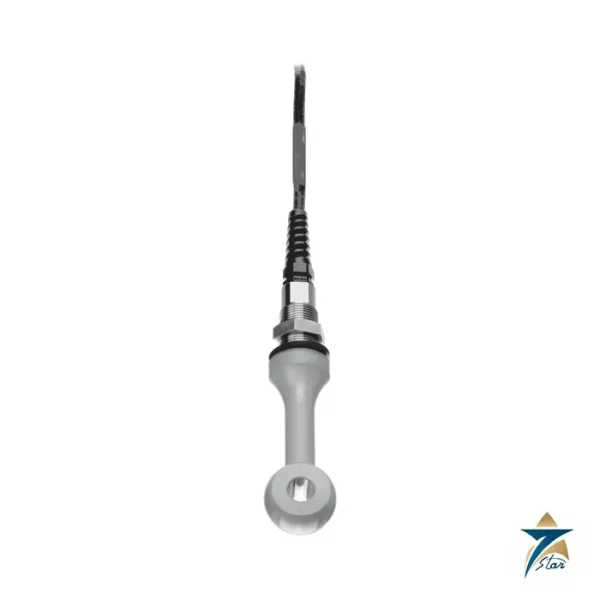
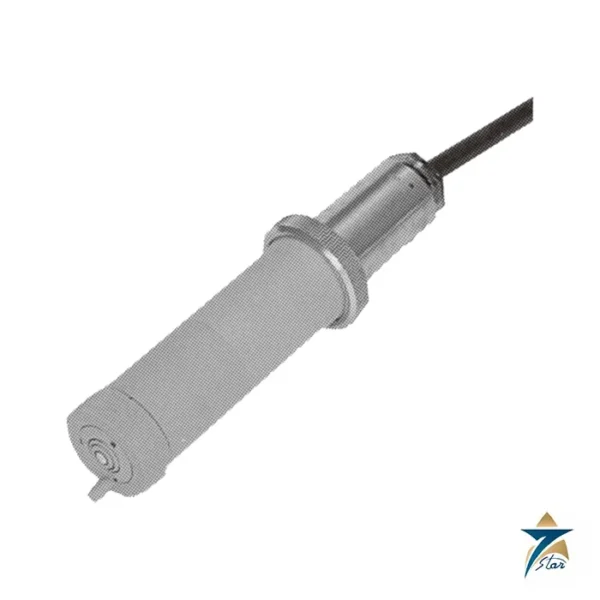
Yokogawa DO30G-NN-50-10-FL DO Sensor, 10 m

Description

Ten metres of cable, ring terminals, two-wire analyser

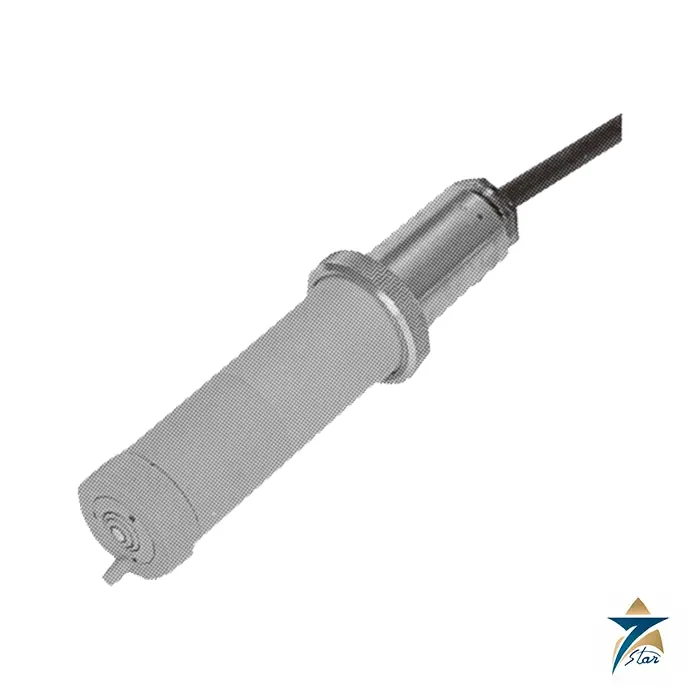
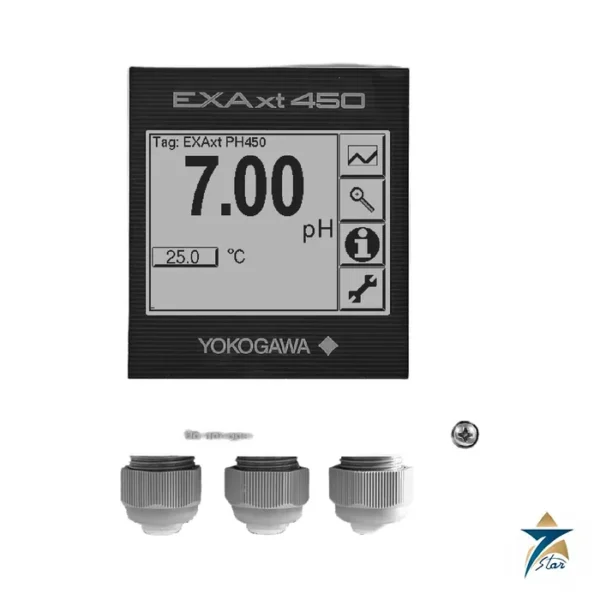
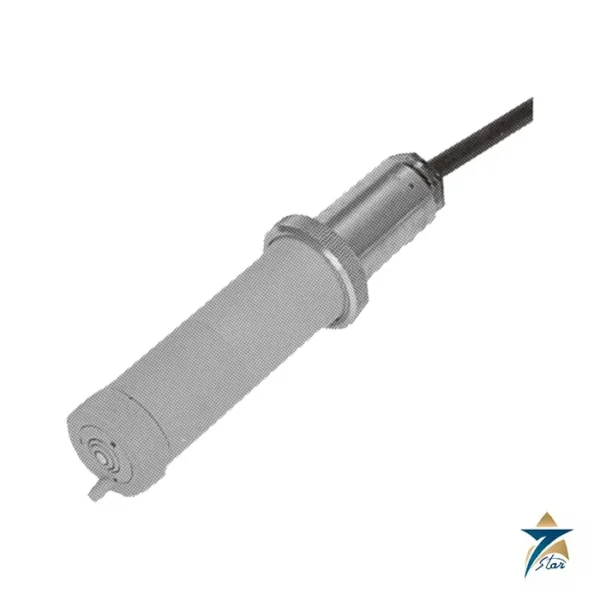
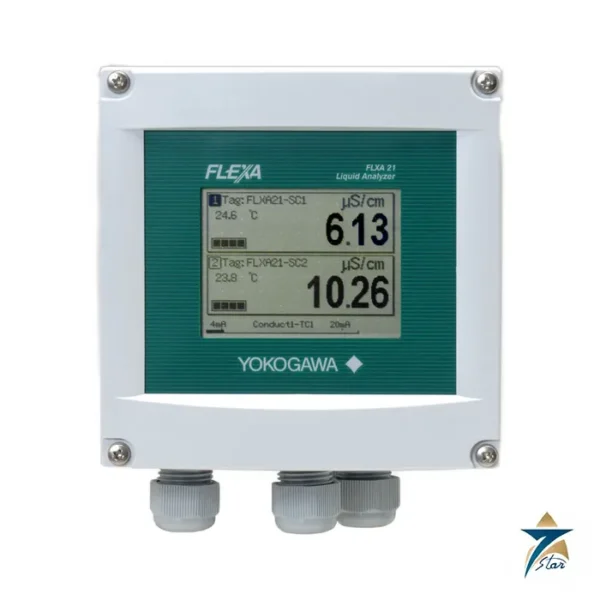
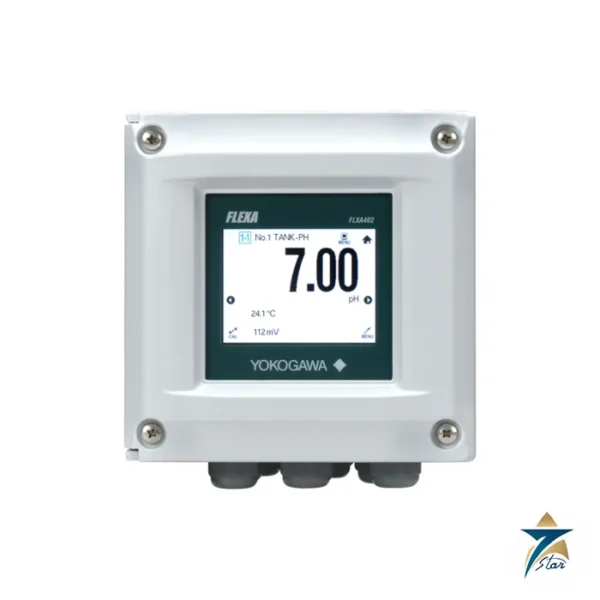
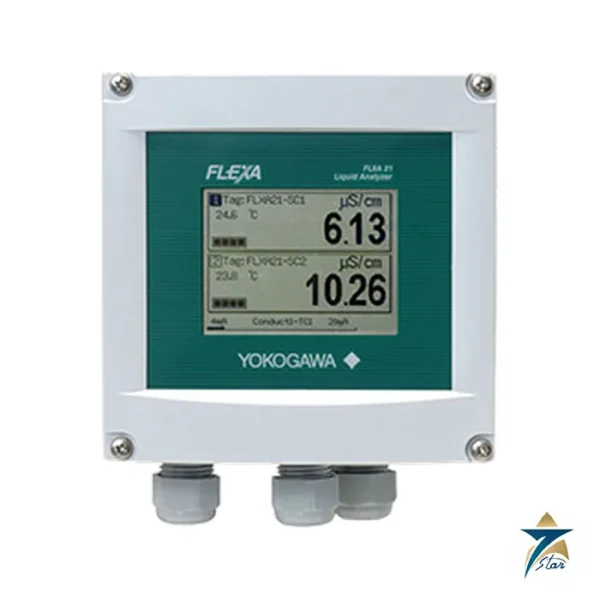
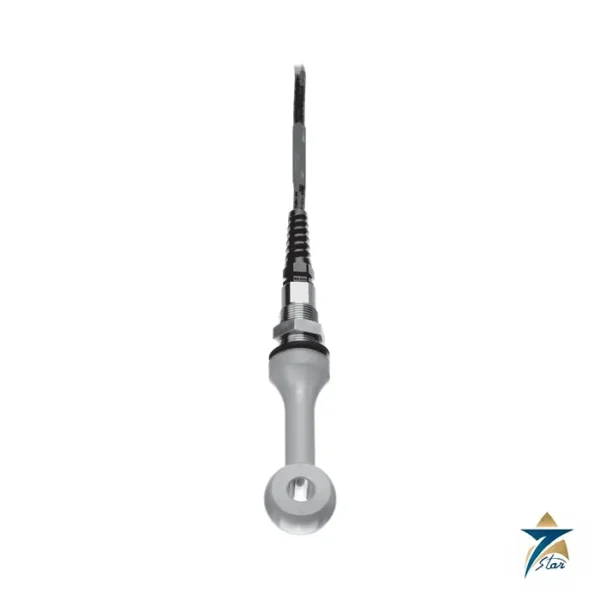
A 10 m lead changes where the analyser can go. On a long aeration tank, a clarifier walkway or a river intake, the converter often cannot sit beside the sensor holder. Yokogawa DO30G-NN-50-10-FL is the dissolved oxygen sensor for that geometry when the converter is an FLXA202 or an FLXA21. The sensor is cabled with 10 m and terminated with M4 ring terminals, which fit the screw terminals of those two-wire units.

This page is meant for maintenance buyers who hold the old part number from a nameplate and need the exact suffix string: the code reads model DO30G, fixed NN, membrane 50, cable 10, terminal FL.

Seven Star LLC is an independent supplier serving Oman and the GCC and is not affiliated with the manufacturer.

Specification overview

Parameter Value
Measuring principle Galvanic cell dissolved oxygen sensor with replaceable cartridge membrane
Measuring range 0 to 20 mg/L (ppm)
Membrane thickness 50 um
Liquid temperature 0 to 40 C
Liquid pressure 0 to 100 kPa
Minimum flow 20 cm/s or more
Temperature compensation Pt1000 element built in
Repeatability 0.1 mg/L or 3 percent of full scale, whichever is greater
Temperature compensation error Within 3 percent FS for a 5 C change between 0 and 40 C
Response time Within 2 minutes for 90 percent
Cable 10 m with M4 ring terminals (FL)
Matching terminal box WTB10-DO4 for FLXA202 and FLXA21
Wetted parts Rigid PVC, stainless steel, FEP, nitrile rubber, heat-resistant soft PVC, polycarbonate
Sensor dimensions 26 mm diameter, about 108 mm head

What FL means compared with PN and FM

The three DO30G terminal codes are not interchangeable in practice. PN is the pin terminal for FLXA402, FLXA202 and FLXA21, FL is the M4 ring terminal for FLXA202 and FLXA21, and FM is the M3 ring terminal for FLXA402. For DO30G-NN-50-10-FL, that means: no pin terminals, no M3 rings, and the cable length of 10 m sits between the 5 m and 15 m choices. Where the old site wiring uses M4 lugs, FL avoids cutting and re-terminating the cable.

Why a membrane-type galvanic cell is used

Galvanic cells generate their own signal and need no polarisation voltage, so warm-up after refill is short with the special electrolyte used here. Oxygen passes through a 50 micrometre membrane and is reduced at the cathode; the current is proportional to oxygen partial pressure and is compensated by the Pt1000 element. The cartridge-type membrane is replaced without removing the cable. Water must flow past the sensor at 20 cm/s or more, otherwise the oxygen consumed at the membrane is not replenished and the reading falls low.

Typical uses around Oman and the GCC

Expect to find the 10 m version in municipal sewage works where aeration lanes are wide, in food and beverage effluent plants, in desalination intake structures, and in fish-farming tanks where the analyser is mounted on a shaded wall. In the Gulf climate, sunlight on the holder and cable matters; mount the converter in shade and keep the cable out of heat sources, because the sensor itself is rated 0 to 40 C liquid temperature.

Installation points for DO30G-NN-50-10-FL

  • Use a floating ball holder PB350G or PB360G, or the DOX8HS submersion holder; keep the holder as vibration-free as possible.
  • Route the 10 m cable in a protected path and keep the surplus in a loose coil rather than a tight bend.
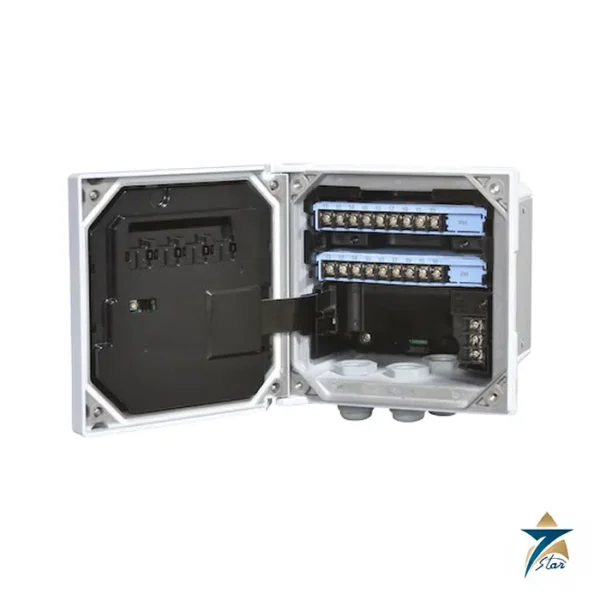
  • Land the ring terminals on the FLXA202 or FLXA21 using the colour or number marks in the manual; a WTB10-DO4 box can be used if you extend beyond the supplied cable up to 40 m on the converter side.
  • After refilling the electrolyte, allow the stabilisation time, perform the zero check with sodium sulphite and then calibrate on air.

Design considerations for long sensor leads

A ten metre lead behaves differently from a short one. The signal of a galvanic cell is small, so cable insulation must stay dry and connections clean; moisture at the ring terminals or in a junction box shows up as drift. Keep the cable clear of power cables and variable-speed drives, which are common around blower rooms, and do not bundle it with the aeration air hose. If a floating holder moves with water level, leave enough slack so the cable never pulls on the sensor head, and protect the jacket where it crosses a handrail. DO30G-NN-50-10-FL has a heavier cable than the shorter versions, so support it with a clip or a hook at the holder rather than letting its weight hang on the strain relief.

Because the datasheet states the weight as roughly 0.3 kg plus 0.12 kg per metre of cable, shipping and handling are easy, but spare cables are not a stock item: the cable is replaceable, yet ordering the complete DO30G-NN-50-10-FL as a unit with the correct terminal style is usually quicker for a plant under time pressure.

Spares and consumables

The datasheet lists a membrane and electrolyte kit with the part number K9171HK (three 50 micrometre membrane assemblies, 50 mL of electrolyte and a syringe), L9920BR sodium sulphite 500 g for zero adjustment, and K9088PE polisher 30 g for the silver electrode. The DOX8A set bundles these items. If you are ordering DO30G-NN-50-10-FL for a new loop, a spare kit for the first year is sensible.

Maintenance schedule thinking

Replace the membrane when the response slows, when readings drift between calibrations, or when the surface has visible damage. Polish the silver electrode with the supplied polish, rinse, refill with fresh electrolyte and let the sensor stabilise. Because this version has a long cable, inspect it for abrasion where it passes over rails or through cable trays.

Documents and quotation

The datasheet for DO30G-NN-50-10-FL is attached. Send an RFQ to Seven Star LLC with the part number DO30G-NN-50-10-FL, the quantity, the converter model and your delivery location in Oman or the GCC.

Other Models in the DO30G Range

Seven Star LLC supplies models from the DO30G range in Oman and the GCC. Compare the related models below and request a quote for the one that matches your application.

ModelCategory
Yokogawa DO30G-NN-50-05-PN DO Sensor, 5 mLiquid Analytical SystemsView details
Yokogawa DO30G-NN-50-10-FL DO Sensor, 10 mLiquid Analytical SystemsYou are viewing this model
Yokogawa DO30G-NN-50-03-FM DO Sensor, 3 mLiquid Analytical SystemsView details
Datasheets & Documents
  • PDF Datasheet Yokogawa DO30G-NN-50-10-FL DO Sensor, 10 m Datasheet Download
Reviews (0)

Reviews

There are no reviews yet.

How would you rate this product?

It takes about 10 seconds — just tap a star. Your email is never published.

About brand

Yokogawa is the Japanese measurement and industrial automation company behind the DPharp EJA and EJX pressure transmitters, CENTUM distributed control systems and ProSafe-RS safety systems. Tamisuke Yokogawa set it up in 1915 as an electric meter research institute in Shibuya, Tokyo. It began selling electric meters in 1917, was incorporated as Yokogawa Electric Works in 1920, and has been Yokogawa Electric Corporation since 1986. In 1975 it released CENTUM, which it describes as the world's first distributed control system.

Seven Star LLC is an independent supplier in Muscat. We list Yokogawa transmitters, flowmeters, analysers, controllers, recorders and CENTUM and ProSafe spare modules, and supply them to oil and gas, power, water and process plants in Oman and the GCC by model code.

Yokogawa at a glance

Established 1915, Shibuya, Tokyo, by Tamisuke Yokogawa with Ichiro Yokogawa and Shin Aoki
Milestones Electric meters from 1917; incorporated in 1920; CENTUM DCS in 1975; renamed Yokogawa Electric Corporation in 1986
Headquarters Tokyo, Japan
Product families Pressure and temperature transmitters, magnetic, vortex and Coriolis flowmeters, liquid and gas analysers, controllers and recorders, CENTUM VP DCS, ProSafe-RS safety systems and STARDOM controllers

Yokogawa products we list

Family Models Typical use
Pressure and DP transmitters EJA110E, EJA430E, EJA530E, EJX110A, EJX530A, EJX910A multivariable Pressure, level and DP flow measurement in process plants
Temperature transmitters YTA610, YTA710 RTD and thermocouple signals converted to 4-20 mA, HART or fieldbus
Flowmeters ADMAG AXG, ADMAG AXW, ROTAMASS TI, VY vortex, VF701 Water and conductive liquids, mass flow of hydrocarbons, steam and gas
Analysers TDLS8000 laser gas analyser, FLXA402, FLXA21 DO, E7042UD zirconia cell, K9471DS cover Combustion O2, in-situ gas analysis, pH, conductivity and dissolved oxygen
Controllers and recorders UT35A/UT32A, UT32A-D, UT55A/UT52A, UT75A, UP35A/UP32A, UP55A, YS1700, GX10/GX20, GP10/GP20, GM10, µR20000 Single-loop control, furnace programs and data recording
Control and safety systems CP451-10 processor, ADV161, ADV551, node interface unit, ProSafe-RS, ProSafe-RS Lite, ProSafe-SLS, FCN-500 Spares and expansions for CENTUM DCS, safety systems and STARDOM
Battery packs S9129FA, S9185FA, S9548FA Memory backup batteries for DCS and controller modules

The EJA and EJX transmitters use Yokogawa's DPharp sensor: two silicon resonators whose vibration frequency changes with pressure, so the output is a digital frequency rather than an analogue strain signal. The model code describes the instrument completely. In EJA110E, "110" is a differential pressure transmitter, and the letters after the dash set the span, wetted materials, process connection, electrical output and approvals. When you replace a transmitter, sending the full code from the nameplate avoids a mismatch in range or materials.

Where Yokogawa products are used

In Oman and the GCC, Yokogawa transmitters, analysers and control systems are found in oil and gas production, gas processing and LNG, refineries and petrochemical plants, power and desalination stations, and water treatment. Many plants still run CENTUM CS 3000 and CENTUM VP systems that need spare I/O modules and batteries.

Ordering Yokogawa products: what we need

Send the full model and suffix code from the nameplate (for example EJA110E-JMS5J-912NN/KF22) and the style code. For DCS modules, add the module type and system version. For analysers, send the sensor type, measuring range and process conditions.

Facts checked against Yokogawa's corporate history, October 2026.

FAQ

Questions about the Yokogawa DO30G-NN-50-10-FL DO Sensor, 10 m

Answers from our engineering team on installation, compatibility and integration.

01Which analysers does DO30G-NN-50-10-FL connect to?
The FL code gives M4 ring terminals, which the datasheet assigns to the FLXA202 and FLXA21 two-wire analysers. FLXA402 users should look at the FM ring-terminal version or the PN pin version.
02How long is the cable on DO30G-NN-50-10-FL?
The 10 in the code is a 10 m cable. Weight follows the datasheet formula of about 0.3 kg plus 0.12 kg per metre of cable, so this is a noticeably heavier lead than the 3 m variant.
03Which terminal box suits DO30G-NN-50-10-FL?
WTB10-DO4, which is the box listed for FLXA202 and FLXA21 and uses M4 screw terminals and a cable with M4 ring terminals.
04What accuracy figures apply to DO30G-NN-50-10-FL?
Repeatability is 0.1 mg/L or 3 percent of full scale, whichever is greater, and the temperature compensation error is within 3 percent of full scale for a 5 C change in the range 0 to 40 C.
05Does the 10 m cable change the measuring range?
No. Range 0 to 20 mg/L, membrane 50 um and response within 2 minutes stay the same. Only the lead length and the ring terminal style differ from the other DO30G codes.