
Related products










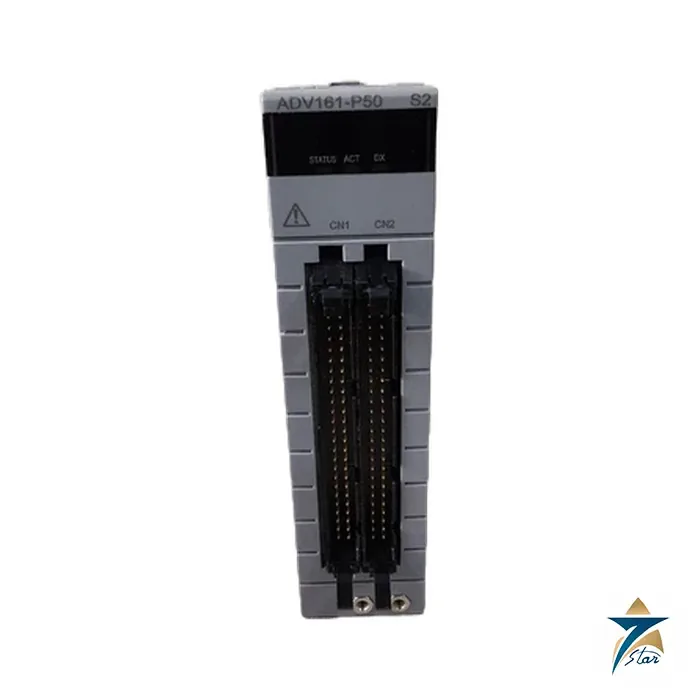
The Yokogawa ADV161-P50 is a 64-channel isolated digital input module built for Yokogawa’s CENTUM VP and CENTUM CS distributed control system I/O architecture. This module acquires 24 V DC ON/OFF signals from field devices such as limit switches, pushbuttons, dry-contact relays, and status indicators, converting them into digital status data for the CENTUM system’s control and monitoring logic. Seven Star LLC supplies the Yokogawa ADV161-P50 to refineries, petrochemical plants, and process facilities across Oman and the GCC operating CENTUM-based distributed control systems that need reliable, high-density digital status acquisition.
Distributed control systems depend on accurate, high-integrity field status data to make safe and correct control decisions, and a DCS with hundreds or thousands of discrete field devices needs I/O modules that combine high channel density with strong electrical isolation to prevent a single field wiring fault from propagating into the control system. The ADV161-P50’s 64-channel design and dual-redundant capability address exactly this requirement, letting plants consolidate large numbers of digital status points into a compact I/O footprint without compromising the isolation and reliability the DCS architecture depends on.
The ADV161-P50 continuously scans its 64 isolated input channels for 24 V DC sink/source signal states from connected field devices, converting each channel’s ON/OFF condition into digital data that is transmitted to the CENTUM VP or CS field control station over the system’s internal I/O bus. High electrical isolation between channels and between the field wiring and the internal control bus protects the DCS from field-side electrical faults, transients, or ground potential differences, while the module’s -P50 suffix configuration adds pushbutton input support for interfacing directly with operator pushbutton stations without additional interposing hardware. The module supports dual-redundant configuration, allowing two ADV161 modules to be paired so that a single module failure does not interrupt digital input acquisition for the connected field devices.
Built to Yokogawa’s CENTUM VP/CS I/O module specification, the ADV161-P50 integrates directly into the standard CENTUM node/nest architecture, sharing the mounting, power distribution, and communication bus of the wider I/O system. Field wiring is typically terminated through relay boards such as the ARM15A together with signal cabling like the AKB337, keeping high-density field termination organized and serviceable at the DCS cabinet. The module’s -P50 suffix configuration is one of several variants in the ADV151/ADV161 family, distinguished by channel count (32 vs. 64), pushbutton input support, and explosion-protection classification, so correct variant selection matters when specifying a replacement or expansion module for an existing CENTUM system.
As a core digital input building block for Yokogawa’s CENTUM VP/CS platform, the ADV161-P50 combines high channel density with the isolation and redundancy features large-scale process plants require from their DCS I/O layer.
The Yokogawa ADV161-P50 is used for digital status acquisition in refinery process units, petrochemical plants, gas processing facilities, and other large-scale industrial sites running CENTUM VP or CENTUM CS distributed control systems, covering field inputs such as valve limit switches, motor status contacts, operator pushbutton stations, level and pressure switch contacts, and safety interlock status signals feeding into plant-wide process control and monitoring logic.
| Manufacturer | Yokogawa Electric Corporation |
| Part Number | ADV161-P50 |
| Module Type | Digital Input Module, 64-channel |
| Input Signal | 24 V DC sink/source, isolated |
| Suffix Configuration | -P50: with pushbutton input, no status display, basic explosion protection classification |
| Redundancy | Dual-redundant configuration supported |
| Compatible System | Yokogawa CENTUM VP / CENTUM CS |
| Related Field Termination | ARM15A relay board, AKB337 signal cable |
| Maximum Current Consumption | Approx. 500 mA (5 V rail, per manufacturer general specification) |
Seven Star LLC is an authorized supplier of Yokogawa CENTUM DCS I/O modules across Oman and the GCC, helping refineries and process plants specify the correct ADV161 variant and supporting field termination hardware for their control system expansion or replacement needs. Our team supports configuration guidance and fast regional delivery to minimize control system I/O downtime during planned maintenance or capacity expansion.
Plants planning a CENTUM I/O expansion or replacing an aging ADV161-P50 module as part of a DCS lifecycle refresh should also confirm rack slot compatibility and firmware revision alignment with their existing field control station, since Yokogawa periodically updates internal module revisions while preserving external form, fit, and function. Seven Star LLC can source both new and factory-refurbished ADV161-P50 units depending on project budget and lead-time requirements, helping plants across Oman and the GCC keep critical digital input capacity available for planned outages, capacity expansions, and emergency module replacement scenarios alike.
Contact Seven Star LLC for pricing, lead time, and availability on the Yokogawa ADV161-P50 digital input module, or to confirm the correct variant and configuration for your CENTUM VP or CENTUM CS system.
Because the ADV151 and ADV161 families are offered in several suffix configurations differing by channel count, pushbutton input support, status display presence, and explosion-protection classification, plants replacing or expanding an existing CENTUM digital input node should confirm the exact suffix code against their DCS configuration documentation before ordering. Specifying the wrong variant, such as a 32-channel ADV151 in place of the 64-channel ADV161, or a module without pushbutton input support where the existing field wiring expects it, can require additional field rewiring or configuration changes at the DCS engineering station. Seven Star LLC’s team can help confirm the correct ADV161-P50 configuration against your system’s existing I/O assignment before shipping, reducing the risk of a mismatched replacement during a planned outage window.
Yokogawa is a global Japanese leader in process automation, industrial instrumentation and control systems, with more than a century of engineering expertise. The company designs and manufactures a comprehensive portfolio including distributed control systems (DCS), safety instrumented systems (SIS), field instruments, analyzers, recorders and industrial software platforms used to monitor, control and optimize complex industrial processes.
Yokogawa solutions are widely deployed in oil & gas production and refining, petrochemical plants, power generation facilities, chemical processing, pharmaceuticals, water & wastewater treatment and advanced manufacturing industries. Its instrumentation portfolio covers pressure, flow, level and temperature measurement, alongside advanced process analyzers for gas and liquid analysis.
Known for high reliability, measurement accuracy and long-term stability, Yokogawa systems are engineered for continuous operation in mission-critical environments. With strong capabilities in digitalization, lifecycle management and plant safety, Yokogawa supports operational efficiency, process safety and sustainable industrial performance across global industrial infrastructures.
Choose the option that best fits your needs to get the fastest response from our team.
Automatically fill the RFQ form with this product's details for a faster process.
Manually enter multiple part numbers, specific brands, or custom requirements.


Reviews
There are no reviews yet.