Half-automated Abel flash point with electric ignition
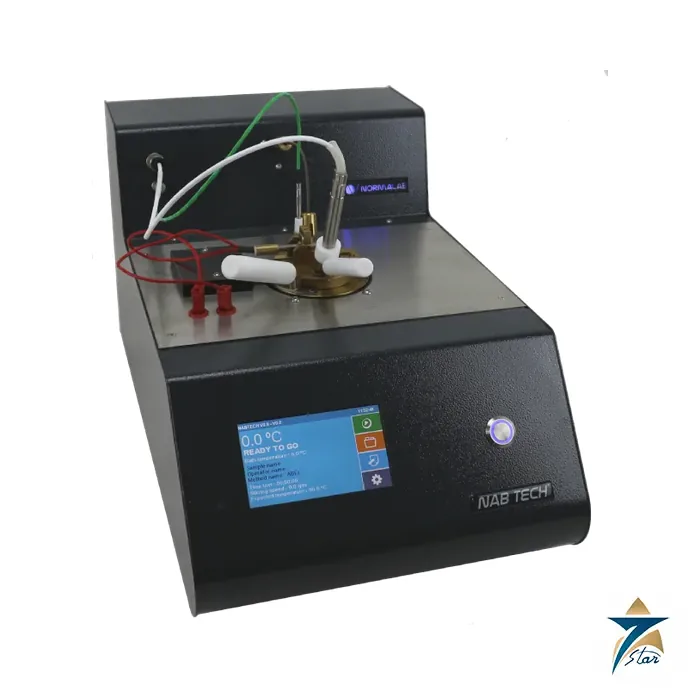
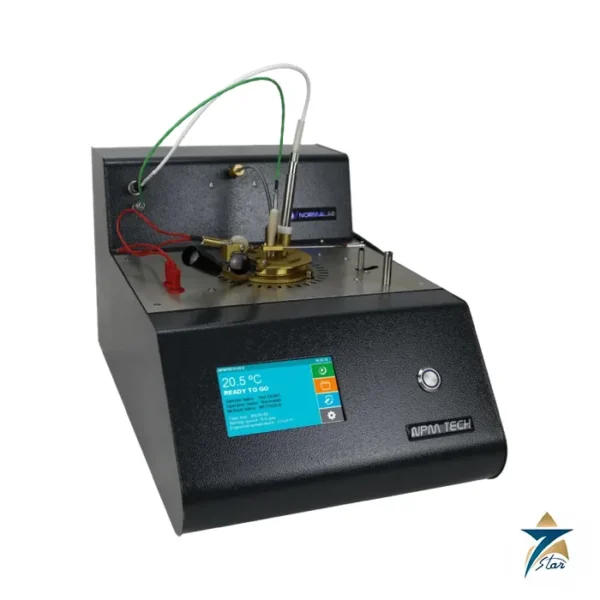
The Normalab NAB Tech is a half-automated Abel closed-cup flash point tester for combustible liquids with flash points between -30 and 75 °C. A 4.3 inch resistive colour touch screen controls the test, a preset temperature ramp of 1 °C per minute is built in, and the operator presents the ignitor by push button. The ignitor is electric and adjustable from 0 to 100 percent, so no gas supply is needed, and a thermocouple detects the flash without any calibration.
Technical specifications
| Parameter |
Specification |
| Manufacturer / model |
Normalab NAB Tech |
| Order number |
42300 |
| Temperature range |
-30 to +110 °C; cryostat mandatory below ambient |
| Temperature accuracy |
0.2 °C (Pt 100 probe, class B); °C or °F display |
| Stirring |
Adjustable and settable, 0 to 30 rpm |
| Temperature ramp |
Predefined, 1 °C/min |
| Detection and ignition |
Thermocouple; 100% electrical, adjustable 0 to 100% |
| Cooling |
Mechanical fan; sample cooling to 0 °C integrated, cryostat needed below |
| Data |
Micro SD, last 20 results; 1 RS232C port; 2 micro USB for update |
| Power |
AC 230 V, 50/60 Hz, 4 A |
| Dimensions and weight |
275 mm wide; 470 mm and 250 mm for depth and height (the brochure and product page list them in opposite order); 15 kg |
Standards and applications
The brochure cites IP 170, ISO 13736 and related methods. Applications are the petroleum industry, cosmetics and perfumes, pharmaceutical and chemical industries, REACH applications and transportation class for hazardous goods. A specially treated cover resists freezing and is easy to clean, and a removable tray with a drain collects overflow or condensate at low temperature. Barometric correction with temperature compensation is built in.
The software offers predefined programme files, simplified temperature calibration with up to five calibration offsets, French and English menus and data transfer or printing by RS232. Safety measures are password-protected access, an electric spark plug protected by a thermal fuse, a dedicated alarm for every error message, audible alarms and a visual indicator.
Scope of delivery and options
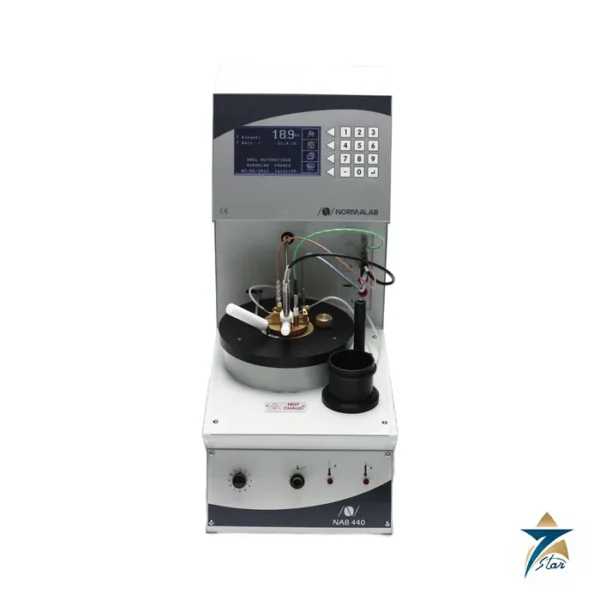
The NAB Tech is delivered with a lid with ignitor and thermocouple, a cup, a stirring cable, a power cable and a stylus. Options: a cryostat (needed below ambient), an RS232 ticket printer, the NCAL calibration kit and a lid and cup holder. Compared with the automated NAB 440, the NAB Tech is lighter and gas-free, but the operator triggers each ignitor presentation.
Abel flash point work often involves volatile samples, so sample handling matters as much as the instrument: cool the sample and cup before filling, fill to the cup mark without trapped air and close the lid at once. With a preset ramp of 1 °C per minute and a single push button for ignitor presentation, a trained operator can run repeat tests with consistent timing. The tester stores the last 20 results on a micro SD card and prints through RS232, which is adequate for a routine laboratory log.
Laboratory installation
Place the NAB Tech on a stable, level bench in a well-ventilated area, ideally under an extraction hood suited to flammable vapours, and away from draughts that could disturb the vapour space during a test. Connect it to the 230 V AC supply listed in the specification table through an earthed outlet, and leave space around the housing so the fan can move air freely. If tests below ambient are planned, position the cryostat close to the instrument with short, insulated hoses, and make sure the removable drain tray can be reached and emptied without moving the tester. Keep sample containers, waste receptacles and cleaning solvents nearby, but outside the immediate area of the ignitor.
Commissioning and verification
After installation, choose the display units and menu language, check the stirring speed setting and confirm that the ignitor responds to the push button. Run the temperature calibration routine with the offsets the software allows, then test a certified reference material with a known Abel flash point and compare the result with its certificate before releasing the tester for routine samples. If the NCAL calibration kit is part of the order, use it for the temperature check as described in the Normalab documentation. Record each verification so the laboratory can demonstrate traceability during audits and customer visits.
Routine care and maintenance
Clean the cup and lid after every test to remove residues that could carry over into the next sample, and inspect the ignitor and thermocouple for deposits. Empty and clean the drain tray, especially after low-temperature work when condensate collects there. Copy the stored results from the micro SD card to the laboratory system before newer tests replace them, and apply software updates through the micro USB port only as directed by the manufacturer. Repeat the reference material check at the interval set by the laboratory quality system and after any repair, adjustment or relocation of the instrument.
Working conditions in Omani laboratories
Refineries, fuel terminals and chemical plants in Oman often run flash point testing in site laboratories where room temperature can climb in summer if air conditioning fails or is overloaded. A warm room makes it harder to keep volatile samples cool between sampling and filling the cup, and light fractions lost at that stage raise the measured flash point. Store samples in a cool place in closed containers, keep the laboratory temperature stable, and plan the cryostat requirement around the lowest flash point expected among the products you test. Dust from outdoor sampling points should be kept away from the cup and lid, as contamination affects both cleaning effort and results.
Operator training and test records
Because the operator presents the ignitor for each step, results depend on consistent technique. Train every analyst on the same procedure, from sample cooling and cup filling to the moment the button is pressed, and have new staff run duplicate tests on a reference sample before they report results. Keep the printed tickets or exported files with the sample identity, operator name and any deviation from the method, so that a disputed result can be traced back to how the test was actually run.
Documents and quotation
The Normalab brochure is linked here. Seven Star LLC, an independent supplier in Muscat, quotes the tester within its liquid analytical systems range. Confirm the cryostat requirement and calibration kit before ordering.









Reviews
There are no reviews yet.