- Automation & ControlView all 2,894 products
- Automation Accessories
- AC Drives
- PLC & I/O Cards
- Industrial Communications
- Vibration Monitoring
- Controllers & Data Acquisition
- Isolator & Barrier
- Safety Switches & Guard Locking
- Motor Soft Starters
- CCTV & Security
- Encoders
- Pneumatic Cylinders
- HMI Displays
- Servo Drives
- Industrial Computers
- Machine Vision
- Automation Software
- Robotics
Brand: Yokogawa
Yokogawa ISC40G-GG-T1-05 Inductive Conductivity Sensor
Description
Yokogawa ISC40G-GG-T1-05 in context
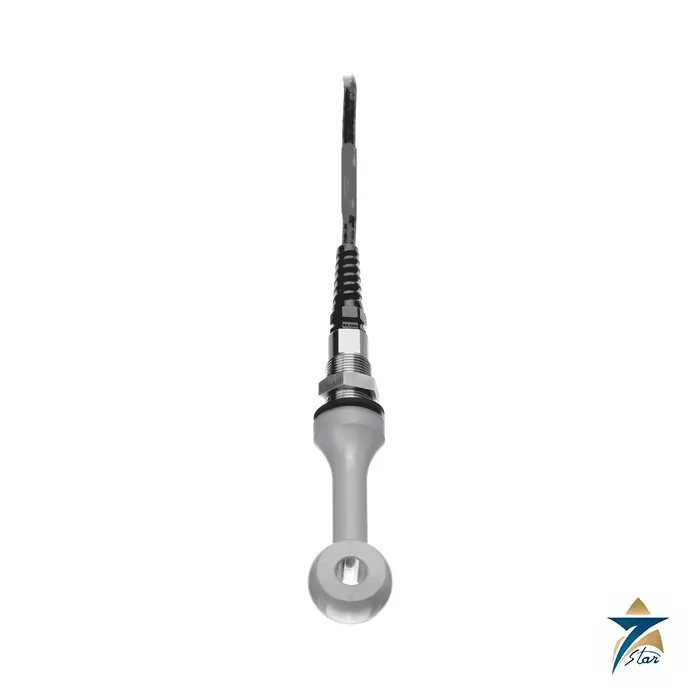
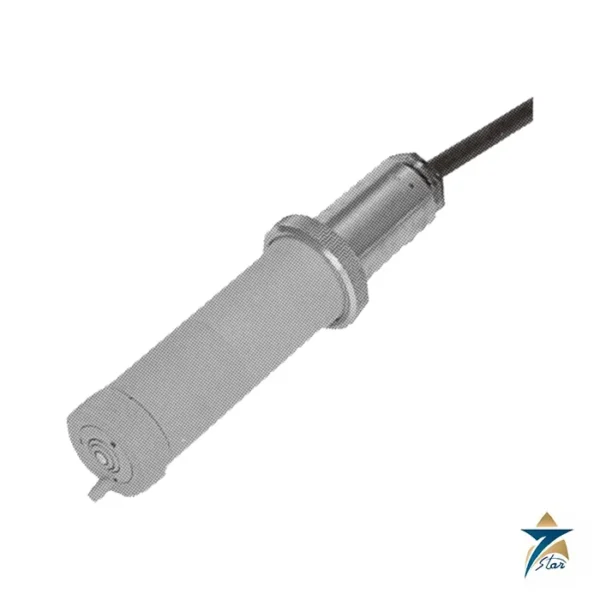
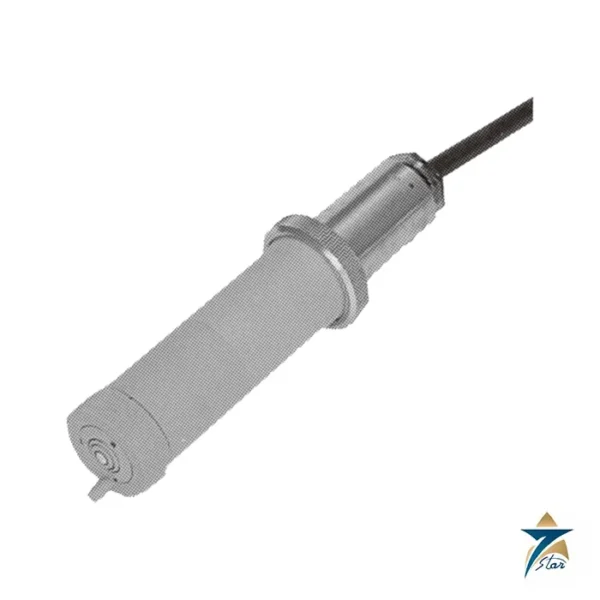
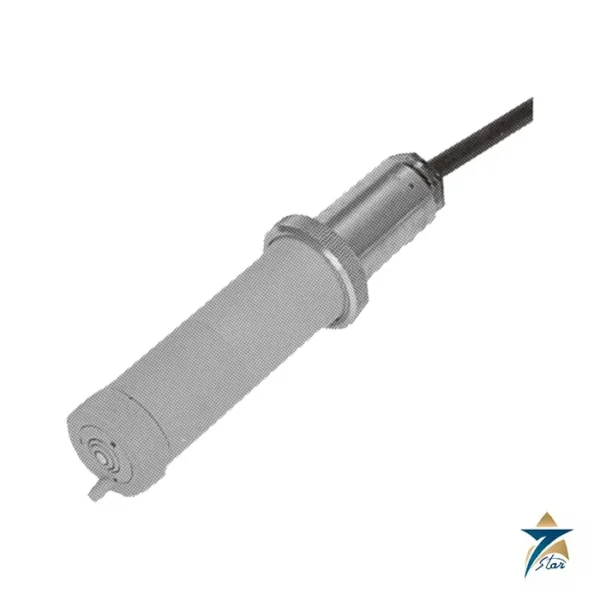
Conductivity cells with electrodes foul, polarise and wear. An inductive cell does neither because no metal touches the liquid. Yokogawa ISC40G-GG-T1-05 is a toroidal sensor: two high-permeability magnetic rings are encased in a glass-filled PEEK body with a large bore, and the liquid passing through the bore forms the single-turn loop that couples them. The measuring principle suits acids, alkalis, brines, slurries and any liquid that would coat a two-electrode cell.
The code is easily broken into parts: GG for the glass-filled PEEK general model, T1 for the Pt1000 element, 05 for 5 m of cable. It is the standard starting point of the ISC40G range.
Seven Star LLC is an independent supplier serving Oman and the GCC and is not affiliated with the manufacturer.
Material and construction
The body of the GG model is 30 percent glass-filled PEEK, which the datasheet states is FDA approved. PEEK resists erosion and abrasion and is chemically tolerant except against hydrofluoric acid and oxidising concentrated acids, where the PFA model is the alternative. The sensor has a stainless steel AISI 316 mounting thread, nut and a Viton sealing gasket, so it can be fitted in a bulkhead style in holders with double O-ring seals.
ISC40G-GG-T1-05 technical data
| Parameter | Value |
|---|---|
| Sensor type | Inductive (toroidal), general model GG, glass-filled PEEK |
| Operating range | 0 to 2000 mS/cm at process temperature |
| Accuracy | 0.5 percent of reading plus 0.5 uS/cm |
| Process temperature | -20 to 130 C |
| Process pressure | 0 to 20 bar (290 psig) |
| Temperature element | Pt1000 to IEC 751 (T1) |
| Installation factor | 1.88 per cm nominal, PEEK |
| Response | t90 under 5 minutes for conductivity |
| Cable | 5 m, up to 50 m with WF10 and BA10 |
| Weight | Approx. 1.3 kg with 5 m cable |
| Package | 350 x 270 x 50 mm for 3 m and 5 m cable |
How ISC40G-GG-T1-05 differs from other ISC40G variants
The sensor-type letters pick body and shape: GG is general PEEK, GR retractable PEEK, GS shaft PEEK and TG general PFA. ISC40G-GG-T1-05 differs from the TG model in pressure (20 bar versus 15 bar), in the response time (under 5 minutes versus under 10 minutes), in the installation factor (1.88 versus 3.00 per cm) and in the sensor error to be added (0.5 versus 1.0 uS/cm). The 05 versus 10 in other pns changes only the cable length and the weight.
Why a toroidal cell instead of electrodes
A contacting cell reads well in clean, dilute water but loses accuracy when its electrodes foul, corrode or polarise, which is common in concentrated acids, caustic, brine and slurries. The toroidal principle eliminates polarisation and fouling errors because the measuring elements are sealed inside the plastic body. The bore is wide, so a flowing stream helps keep it clean, and the sensor is happy with solids that would plug a narrow cell. The datasheet lists applications for all ranges except ultra pure water, and states that every sensor is shipped with a standard quality inspection certificate. For ultra pure water work, a contacting cell with a small cell constant is the right choice, and the SC450G converter family is a good match for that.
Another advantage is range. One ISC40G-GG-T1-05 covers values from about 1 uS/cm to 2 S/cm and temperatures from -20 to 130 C. That span can replace several contacting cells with different cell constants, which reduces the number of spares a plant must hold.
Applications for the PEEK general sensor
Typical duties include acid and caustic concentration in chemical plants, regeneration monitoring on ion exchange skids, cooling water blowdown, brine strength in desalination, fertiliser slurries and pulp and food process lines. In the Gulf these correspond to the water treatment blocks, chemical dosing stations and CIP skids at industrial estates.
Selection, holders and flange adapters
For the GG model the datasheet lists flange adapters: /SFA in AISI 316 for 2 inch ANSI 150 lb, /SFD for DN50 PN16, /TFD in TFM with AISI 316 for DN65 PN10, and /TFN in TFM for DN65 PN10. The ISC40FF flow fitting exists in stainless steel for up to 150 C and 1.0 MPa, polypropylene up to 100 C and 0.6 MPa, and PVDF up to 130 C and 1.0 MPa. Choose the fitting by your process temperature and pressure; the sensor alone can handle more than some plastic fittings, so the fitting rating usually sets the limit of the installed assembly. For direct insertion into larger pipes, ball-valve insertion and sanitary flange models exist elsewhere in the same series, and your engineer should state which mounting method the loop uses before the order is placed.
Installation and calibration
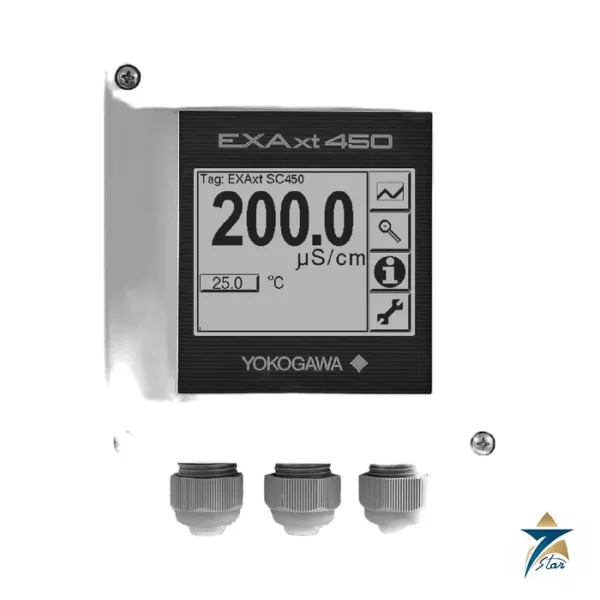
Fit the sensor so liquid flows through the bore, preferably without air bubbles, and keep at least 25 mm free around the sensor body to avoid a wall effect, or calibrate in place. Use the Pt1000 element only for cell compensation and indication, because the manual says it is not meant for process temperature control. Connect it to a compatible Yokogawa converter and check the installation factor entered in the converter.
Maintenance
The inductive principle keeps maintenance low: rinse the bore if solids build up, check the cable and gland, and verify against a reference solution during planned turnarounds. Replace the sensor if the body shows erosion or chemical attack. Because ISC40G-GG-T1-05 has a fixed cable, handle it by the body and nut, never by the cable, and keep the cable end dry during storage. When the sensor is mounted in a holder with less than 25 mm clearance, repeat the in-situ calibration after any change to the piping, and record the cell factor so a replacement can be commissioned against the same reference.
Documents and quotation
The datasheet for ISC40G-GG-T1-05 is attached. Send your RFQ to Seven Star LLC with the part number ISC40G-GG-T1-05, quantity and delivery location.
Datasheets & Documents
- Datasheet Yokogawa ISC40G-GG-T1-05 Inductive Conductivity Sensor Datasheet Download
Reviews (0)
How would you rate this product? Cancel reply
About brand
Yokogawa is the Japanese measurement and industrial automation company behind the DPharp EJA and EJX pressure transmitters, CENTUM distributed control systems and ProSafe-RS safety systems. Tamisuke Yokogawa set it up in 1915 as an electric meter research institute in Shibuya, Tokyo. It began selling electric meters in 1917, was incorporated as Yokogawa Electric Works in 1920, and has been Yokogawa Electric Corporation since 1986. In 1975 it released CENTUM, which it describes as the world's first distributed control system.
Seven Star LLC is an independent supplier in Muscat. We list Yokogawa transmitters, flowmeters, analysers, controllers, recorders and CENTUM and ProSafe spare modules, and supply them to oil and gas, power, water and process plants in Oman and the GCC by model code.
Yokogawa at a glance
| Established | 1915, Shibuya, Tokyo, by Tamisuke Yokogawa with Ichiro Yokogawa and Shin Aoki |
|---|---|
| Milestones | Electric meters from 1917; incorporated in 1920; CENTUM DCS in 1975; renamed Yokogawa Electric Corporation in 1986 |
| Headquarters | Tokyo, Japan |
| Product families | Pressure and temperature transmitters, magnetic, vortex and Coriolis flowmeters, liquid and gas analysers, controllers and recorders, CENTUM VP DCS, ProSafe-RS safety systems and STARDOM controllers |
Yokogawa products we list
| Family | Models | Typical use |
|---|---|---|
| Pressure and DP transmitters | EJA110E, EJA430E, EJA530E, EJX110A, EJX530A, EJX910A multivariable | Pressure, level and DP flow measurement in process plants |
| Temperature transmitters | YTA610, YTA710 | RTD and thermocouple signals converted to 4-20 mA, HART or fieldbus |
| Flowmeters | ADMAG AXG, ADMAG AXW, ROTAMASS TI, VY vortex, VF701 | Water and conductive liquids, mass flow of hydrocarbons, steam and gas |
| Analysers | TDLS8000 laser gas analyser, FLXA402, FLXA21 DO, E7042UD zirconia cell, K9471DS cover | Combustion O2, in-situ gas analysis, pH, conductivity and dissolved oxygen |
| Controllers and recorders | UT35A/UT32A, UT32A-D, UT55A/UT52A, UT75A, UP35A/UP32A, UP55A, YS1700, GX10/GX20, GP10/GP20, GM10, µR20000 | Single-loop control, furnace programs and data recording |
| Control and safety systems | CP451-10 processor, ADV161, ADV551, node interface unit, ProSafe-RS, ProSafe-RS Lite, ProSafe-SLS, FCN-500 | Spares and expansions for CENTUM DCS, safety systems and STARDOM |
| Battery packs | S9129FA, S9185FA, S9548FA | Memory backup batteries for DCS and controller modules |
The EJA and EJX transmitters use Yokogawa's DPharp sensor: two silicon resonators whose vibration frequency changes with pressure, so the output is a digital frequency rather than an analogue strain signal. The model code describes the instrument completely. In EJA110E, "110" is a differential pressure transmitter, and the letters after the dash set the span, wetted materials, process connection, electrical output and approvals. When you replace a transmitter, sending the full code from the nameplate avoids a mismatch in range or materials.
Where Yokogawa products are used
In Oman and the GCC, Yokogawa transmitters, analysers and control systems are found in oil and gas production, gas processing and LNG, refineries and petrochemical plants, power and desalination stations, and water treatment. Many plants still run CENTUM CS 3000 and CENTUM VP systems that need spare I/O modules and batteries.
Ordering Yokogawa products: what we need
Send the full model and suffix code from the nameplate (for example EJA110E-JMS5J-912NN/KF22) and the style code. For DCS modules, add the module type and system version. For analysers, send the sensor type, measuring range and process conditions.
Facts checked against Yokogawa's corporate history, October 2026.
Browse Yokogawa products by category: PLC & I/O Cards, Flowmeters, Pressure Instrumentation, Automation Accessories, Temperature Instrumentation.
FAQ
Questions about the Yokogawa ISC40G-GG-T1-05 Inductive Conductivity
Answers from our engineering team on installation, compatibility and integration.
01What does ISC40G-GG-T1-05 mean?
ISC40G is the inductive conductivity sensor, GG is the general model in glass-filled PEEK, T1 is a Pt1000 temperature element and 05 is a 5 m cable.
02What conductivity range can ISC40G-GG-T1-05 measure?
The datasheet gives an operating range of 0 to 2000 mS/cm at process temperature, with a wide rangeability from 1 uS/cm to 2 S/cm in practice and an error of 0.5 uS/cm for the PEEK model.
03What are the temperature and pressure limits of ISC40G-GG-T1-05?
Process temperature is -20 to 130 C and pressure is 0 to 20 bar (290 psig) for the PEEK sensor.
04How far can the cable be extended?
A maximum of 50 m in total is allowed, using the WF10 extension cable and the BA10 junction box in combination with the supplied cable.
05Why is spacing around ISC40G-GG-T1-05 important?
The installation factor is 1.88 per cm nominal for PEEK and changes if the sensor sits within 25 mm of a holder wall, so in-situ calibration is needed to meet the stated accuracy in that case.


Reviews
There are no reviews yet.