A battery-friendly digital pressure cell for handhelds, loggers and wireless devices
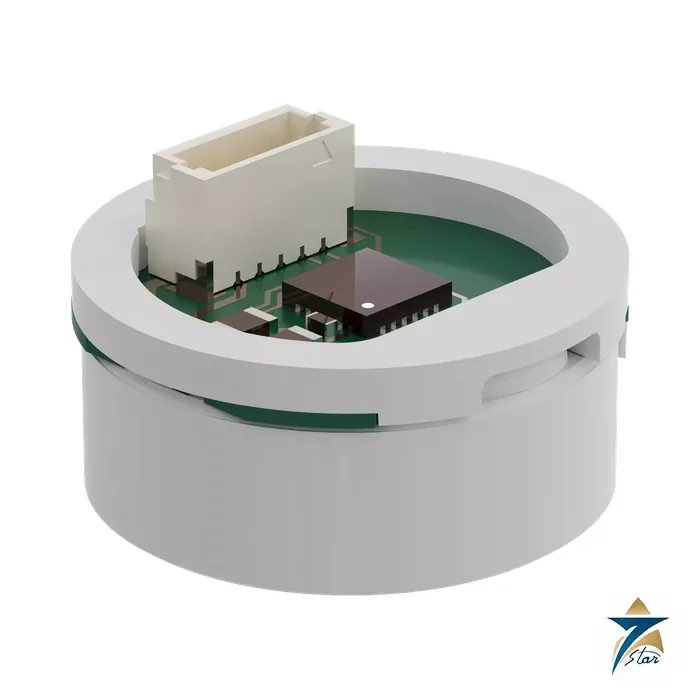
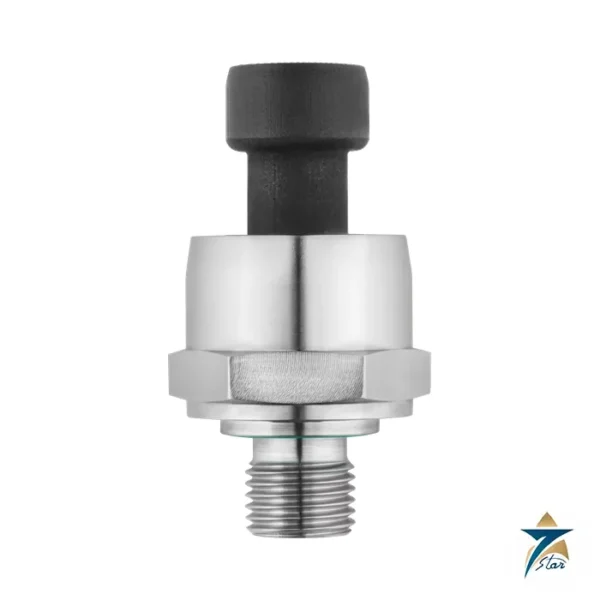
The JUMO CEROS C02 M (type 405106) is a digital, factory temperature-compensated and calibrated pressure measuring cell with an I2C output, designed as a module for pressure transmitters, level probes, data loggers, digital manometers, valve blocks and pumps. A ceramic thick-film sensor with integrated signal processing is hermetically encapsulated and measures relative pressure from 1.6 bar up to 60 bar. Because it draws less than 1 mA in operation and under 50 nA in sleep mode, runs from 1.68 to 3.6 V and wakes up in under 1 ms, it is aimed at battery-powered and wireless equipment. A digital signature can be read out for unambiguous traceability.
Technical specifications
| Parameter |
Specification |
| Measuring principle |
Ceramic thick film, relative pressure; Al2O3 96 % sensor |
| Ranges (bar) |
0 to 1.6, 2.5, 4; -1 to +1, +3, +6, +10, +16, +25, +40, +60 |
| Linearity / accuracy |
Linearity under 0.2 % of span; accuracy under 0.4 % at 20 degC and 0.5 % (0 to 85 degC); under 1 % over -20 to +100 degC |
| Long-term stability |
Under 0.2 % of span per year |
| Overload / burst |
1.6 and 2.5 bar: 6 / 12 bar; 4 bar and -1 to +3: 12 / 25; -1 to +6: 24 / 36; -1 to +10: 40 / 60; -1 to +16: 50 / 75; -1 to +25: 100 / 150; -1 to +40 and +60: 120 / 200 (vacuum-proof) |
| Temperature output |
Internal cell temperature, -20 to +80 degC, accuracy plus or minus 2 K |
| Interface |
I2C, DC 3.3 V, master-slave; address 0x2C (7-bit) or 0x58 with R/W bit; clock up to 3.4 MHz |
| Resolution / timing |
Up to 16 bit; ready under 2.5 ms; conversion under 3 ms; response t0.9 3 to 6 ms; wake-up under 1 ms |
| Supply |
DC 1.68 to 3.6 V; operating under 1 mA; sleep mode under 50 nA |
| Pull-up resistors |
1 to 10 kohm on SCL and SDA |
| Operating temperature |
JST connector version -25 to +85 degC; edge connector version -40 to +120 degC |
| Vibration / shock |
20 g at 5 to 2000 Hz; 75 g for 11 ms; 100 g for 1 ms |
| Insulation |
DC 700 V voltage; over 50 Mohm at DC 500 V; ESD HBM at least 4 kV (GND, UB) |
| Materials |
Ceramic Al2O3 96 % (C795); process connection AISI 304 (1.4301); O-ring FPM |
| Load changes |
More than 10 million; humidity in storage under 90 % without condensation |
| Cell codes |
231 ceramic sensor element only; 232 with process connection and FPM seal |
| Process connections |
502 G 1/4 and 504 G 1/2 (DIN EN 837); 511 1/4-18 NPT; 521 G 1/4 DIN 3852-11; 000 none |
| Electrical connection |
39 JST connector (type BM05B-SRSS-TB); 42 edge connector for plug-in PCB |
| Extra code |
983 test report |
| Order example |
405106/000-472-231-000-523-42/983 |
Using the cell in your own design
This is a component, not an end device. The datasheet states that it does not meet the requirements of equipment with a safety function under the Pressure Equipment Directive 2014/68/EU and is not subject to application-specific EMC requirements, so the maker of the end product must test, declare conformity and apply CE marking where required in the European Economic Area. Further measures in the terminal device may be needed to meet application-specific EMC requirements.
Besides pressure, the cell outputs a temperature value from its integrated sensor. The datasheet explains that this maps the internal temperature of the cell and gives an indication of the medium temperature, with a stated range of -20 to +80 degC and an accuracy of plus or minus 2 K, so it should not be treated as a precision medium measurement. Operating temperature depends on the connector: -25 to +85 degC for the JST version and -40 to +120 degC for the edge connector version. The wetted parts are ceramic, 304 stainless steel and an FPM O-ring, so the resistance of those materials to the medium must be checked, as the datasheet reminds.
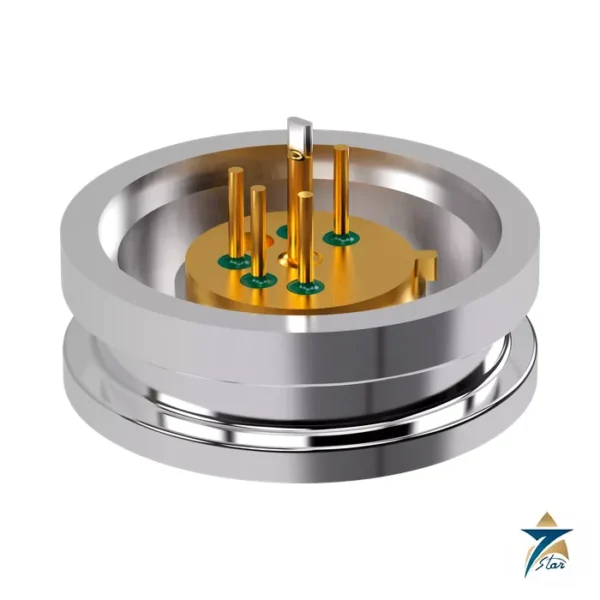
Mounting is flexible. The 231 element can be fitted in a housing with a threaded ring M20 and an O-ring, or held by a snap ring, using the dimensional examples in the datasheet, with the housing bore around 18.2 mm. The edge connector version plugs directly into a PCB without an extra connector, with a recommended nickel-gold contact surface, while the JST version suits a cable harness. Calibration position is the cell vertically upright with the membrane downward, and mounting position in use is any.
Setup software, ordering and enquiry details
The cell is accessed over I2C using the JUMO CEROS Series 02 setup software (part no. 00759752) and a USB to I2C 3.3 V JST interface (00772261), which visualises process values and permits configuration and zero-point or offset correction, for example after installation. The communication details are in a separate JUMO CEROS Series 02 interface description. Pins are SDA, SCL, UB and GND, with an EOC pin on the JST version.
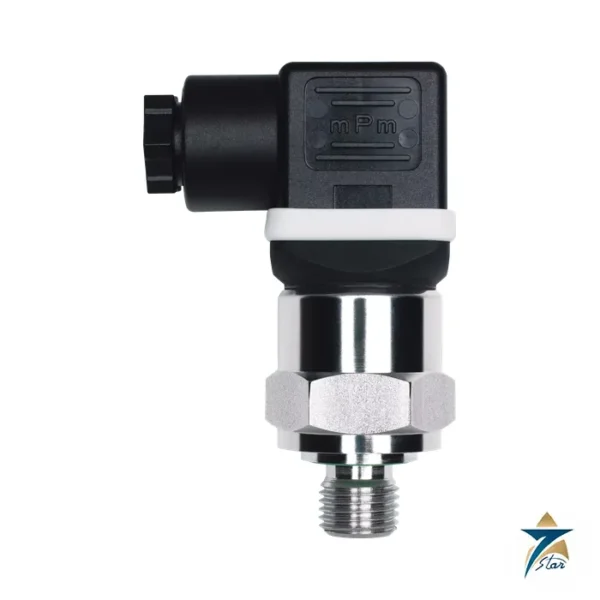
The datasheet suggests uses such as handheld or wireless battery equipment. For finished transmitters in the same program see the published dTRANS p30 and browse pressure instrumentation. An OEM enquiry should give the range, expected annual volume, medium and temperature, connector type, whether the process connection is needed (cell code 232) and whether a test report is wanted.
Related JUMO products: JUMO CEROS S01 M 405101 Digital Pressure Measuring Cell, JUMO TAROS S46 H Hygienic Pressure Transmitter, JUMO dTRANS p02 DELTA Differential Pressure Transmitter, JUMO MIDAS C18 SW Titanium Seawater Pressure Transmitter, JUMO DELOS SI Hygienic Pressure Switch and Transmitter and JUMO DELOS HP High-Pressure Transmitter with Switching Contacts.
Documents and quotation
Hosted for reference is the official JUMO data sheet 405106, version 2.00 dated 2023-03-10, ten pages in English, with dimensions, mounting examples, connection diagram and the order code. Seven Star LLC is an independent supplier in Muscat; send the order code and we will prepare a quotation.























Reviews
There are no reviews yet.