SIL 2 differential pressure for level, flow and filter monitoring
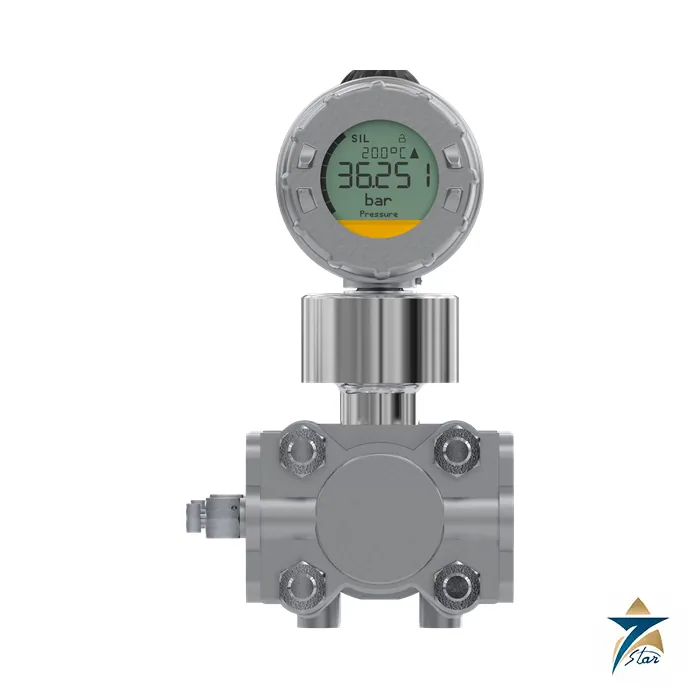
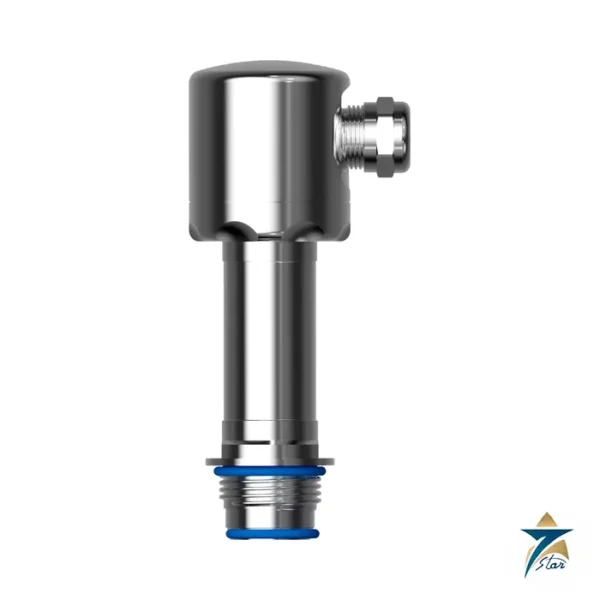
The JUMO SIRAS P21 DP (type 403024) is a differential pressure transmitter in stainless steel for level monitoring, minimum and maximum limits, range monitoring of gases and liquids without solids, and flow measurement by the differential pressure principle. It is programmed through the rotary knob and LCD or through the HART interface with a handheld or Windows-based software.
The 4 to 20 mA HART version has been assessed for functional safety and is certified by TUV Nord to DIN EN 61508 parts 1 to 3 (edition 2.0); JUMO states it suits process fill-level and process pressure monitoring up to SIL 2 and points to a Safety Manual. The single-port pressure version of the same family is described in data sheet 403028.
Technical specifications
| Parameter |
Specification |
| Data sheet type |
403024 |
| Differential ranges |
0 to +1 bar; -1 to +1 bar; -1 to +6 bar; -1 to +100 bar DP |
| Sensor |
Silicon sensor with stainless steel separating membrane |
| Filling medium |
Silicon oil, or halogenated oil |
| Output |
4 to 20 mA two-wire with HART protocol, HART version 7 |
| Supply |
DC 24 V +/-3 V (reference condition) |
| Display |
Dot-matrix LCD 96 x 32 pixels, 5 digits, 27 x 9 mm area; languages German, English, French, Spanish, Russian; 13 pressure units |
| Operation |
Rotary knob and LCD on site; setup program via HART |
| Protection |
IP66/IP67 (DIN EN 60529) |
| Ambient temperature |
-40 to +85 C (standard) |
| Functional safety |
TUV Nord, DIN EN 61508 ed. 2.0; SIL 2 monitoring, Safety Manual |
| Process connection |
2 x 1/4-18 NPT (DIN EN 837) in the order example |
| Housing and weight |
Short about 3.0 kg; long about 3.3 kg; precision casting about 4.0 kg |
| Explosion protection |
ATEX/IECEx ia and ia+d options listed as in preparation in the sheet; confirm availability before ordering |
Specifying the unit
The ordering example shows the structure: 403024/000, explosion protection 0 (none), housing 1 short with M12, 2 long with cable fitting or 3 long precision casting, electrical connection 36 round plug M12 or 93 metal cable fitting, stainless lid, display 1, operation knob 1, input range 531 to 534, output 410, process connection 511 and the filling medium code (01 silicon oil). The short housing is only available with the M12 plug.
Accessories printed in the data sheet include 4-pole and 5-pole M12 cable boxes (00404585, 00409334, 00419130, 00419133), a HART modem, mounting brackets for 2 inch pipe and tag-number marking (extra code 634).
Application notes
Because both ports are on a stainless steel measuring cell with a separating membrane, the device handles gases and clean liquids, but the data sheet states that it is not suitable for heating oil and that the medium must not corrode the membrane material. The calibration position is the device upright with the process connection at the side of the measuring cell; zero offset from position can be corrected on site.
For level measurement in closed tanks, select the range from the density and the height of the liquid column; for flow measurement across an orifice or Venturi, choose the range from the maximum differential.
Working through the selection
Differential pressure transmitters are easy to over- or under-range, so begin by writing down the measurement task in plain terms. For a level application, record the liquid density, the minimum and maximum levels, and whether the tank is open or pressurised. For a flow application, take the maximum differential produced by the primary element at full flow from its calculation sheet. For range or limit monitoring, note the trip points the safety function must detect. The chosen range should cover the full process span without leaving the normal reading squeezed into a small part of it.
Then check the remaining points one by one: compatibility of the medium with the stainless steel membrane, the filling medium that suits the process, the housing and electrical connection combination from the order structure, and whether the loop is part of a safety instrumented function that needs the SIL-assessed HART version and the Safety Manual.
Installation and commissioning practice
- Mount the transmitter in the calibration position described above wherever possible, and correct any position-related zero offset on site after installation.
- On liquid service, place the transmitter below the tapping points so that gas bubbles can rise back to the process; on gas service, place it above so condensate drains away.
- Keep the high and low impulse lines the same length and temperature, so that both sides of the cell see the same conditions.
- Verify the 4 to 20 mA loop and HART communication with the control system before configuring range, unit and damping.
- For safety functions, follow the proof-test and configuration steps defined in the Safety Manual and record them in the loop file.
Considerations for the Gulf region
Process plants, desalination units and utilities in Oman often install instruments outdoors, where housings warm up under direct sun and dust is carried by wind. The stated ambient range and IP66/IP67 protection are the basis for planning, but practical steps still help: orient cable entries downward, make sure the M12 plug or cable fitting is fully tightened, and avoid locations where the LCD faces the afternoon sun. In humid coastal sites, temperature swings between day and night can cause condensation in unprotected impulse lines, which affects a differential reading more than a single-port measurement.
Ongoing checks and RFQ content
Routine work typically includes zero checks with both sides equalised, comparison against a reference at a known process point, and inspection of the impulse lines for blockage or leaks. The HART interface lets technicians review settings and diagnostics without disturbing the process wiring.
For a precise quotation, provide the full order code built from the structure above, or failing that the differential range, filling medium, housing and electrical connection, process connection, whether SIL capability is required, any hazardous-area requirement, tag-number marking needs and the quantity.
Documents and quotation
The manufacturer document (JUMO SIRAS P21 DP data sheet 403024 (EN)) is attached to this page as a PDF. Send the complete type code or part number you need through the quotation form and we will reply with availability and delivery terms; please confirm the differential range, housing type and filling medium against the plant specification before ordering. More in Pressure Instrumentation.
















Reviews
There are no reviews yet.