Hygienic pressure transmitter for dairies, breweries and autoclaves
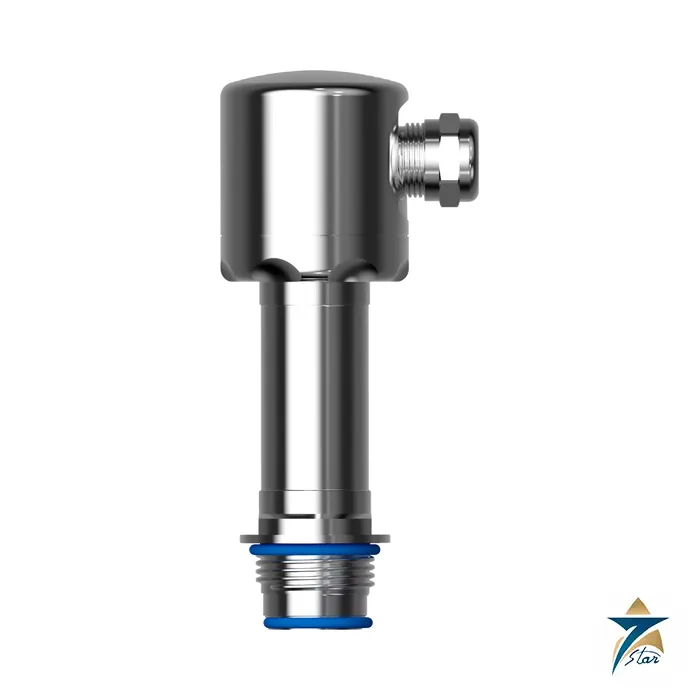
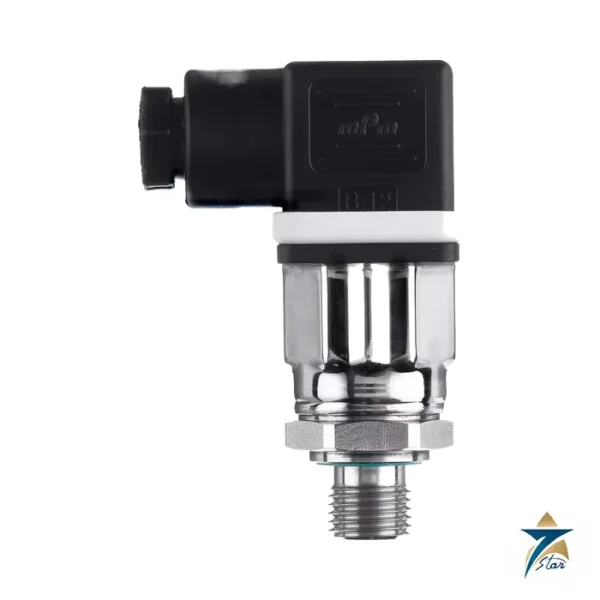
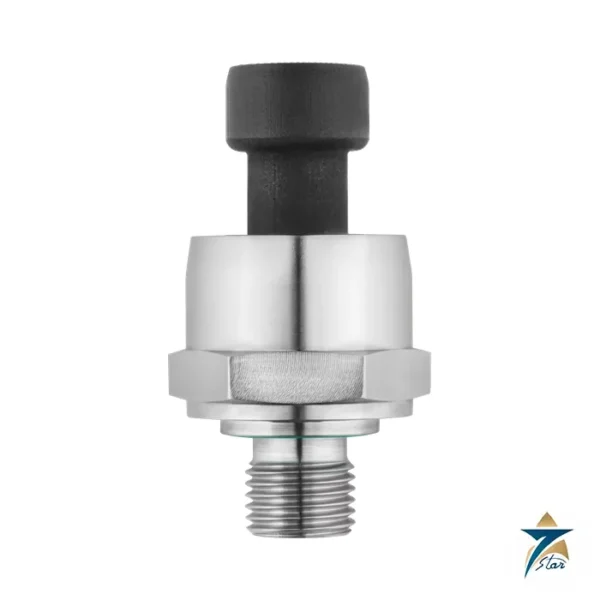
The JUMO TAROS S46 H (type 402071) is a hygienic pressure transmitter with a piezoresistive silicon cell and a 316L membrane, built for food and beverage, biogas and bioethanol production, sterilization and autoclave duty, pharmaceuticals and biotechnology. A built-in magnetoresistive switch lets the zero point be corrected from outside with a magnet, with no need to open the housing.
It measures relative or absolute pressure and outputs 4 to 20 mA on two wires or 0 to 10 V, 1 to 5 V or 1 to 6 V on three wires. The data sheet states it is EAC-compliant and UL-approved, and certified according to EHEDG in the versions with clamp, VARIVENT and JUMO PEKA process connections.
Technical specifications
| Parameter |
Specification |
| Data sheet type |
402071 |
| Pressure types |
Relative and absolute |
| Relative ranges |
-1 to 0 bar up to 0 to 100 bar; small spans from 0 to 0.1 bar and -0.1 to +0.1 bar |
| Absolute ranges |
0 to 0.6 bar up to higher ranges, selected by input code 487 onward |
| Outputs |
4 to 20 mA (DC 8-30 V); DC 0-10 V (11.5-30 V); DC 1-5 V; DC 1-6 V |
| Membrane / wetted parts |
Stainless steel 1.4435 (316L); process connection 1.4404 (316L); FPM O-ring (EPDM or VMQ optional) |
| Medium temperature |
-20 to +125 C (span 0.4 bar or below); -40 to +125 C (above 0.4 bar) |
| Ambient temperature |
-20 to +85 C (span 0.4 bar or below); -40 to +85 C (above) |
| Sterilization |
Up to 140 C for 30 min (autoclave version); CIP/SIP 140 C for 1 h per day |
| Protection |
Cable IP68; M12 plug IP67; cable socket IP65; terminal head IP69 |
| Vibration / shock |
20 g at 10 to 2000 Hz; 50 g for 11 ms |
| Approvals as printed |
EHEDG EL Class 1 (EHEDG-C2000058) for clamp connections 613 and 616 and further hygienic types listed in the sheet; UL and EAC per the data sheet |
How to specify one
The order code starts with 402071 and a basic type extension: 000 for the standard unit, 045 for the autoclave-compatible version and 051 for a relative-pressure version without zero adjustment. The input code selects the range, the output code selects 405 (4 to 20 mA), 415, 418 or 420, and the process connection code covers DIN 11851 taper sockets (604, 607), clamp DN 25 to 50 (613, 616), grooved union tank connections (652, 653), VARIVENT (685, 686) and the JUMO PEKA hygienic system (997).
Electrical connection codes include an attached shielded cable, an M12 round plug (36), a DIN line socket (61) and a terminal head. Extra codes include 061 for UL approval and 374 for a 3.1 material inspection certificate. The filling medium is silicone oil.
Cleaning and sterilizing
The complete transmitter with its screwed-on protective cap tolerates sterilization at up to 140 C for 30 minutes at no more than 3.6 bar absolute ambient pressure, and normal CIP/SIP runs of up to 140 C for one hour per day. The data sheet cautions that long-term stability may differ from the nominal figure depending on how often cleaning or autoclaving occurs.
Rated mounting is upright with the process connection pointing down; other positions work but can add a zero offset that the magnetic zero adjustment can remove.
Selection considerations for hygienic pressure measurement
Choosing a hygienic transmitter starts with the process connection, because it decides whether the instrument can be cleaned in place without dead legs. The connection should match the existing fittings on the tank or line, and where hygienic certification is needed, the certified connection types listed in the data sheet should be preferred. The O-ring material is the next decision: the standard elastomer, or one of the optional materials, should be checked against the product, the cleaning chemicals and the cleaning temperatures used in the plant.
The measuring range should cover normal process pressure with sensible headroom, while relative and absolute measurement are chosen by the application. Tank level by hydrostatic pressure and line pressure monitoring normally use relative pressure; vacuum processes, evaporators or autoclave chambers may call for absolute measurement. The output signal should match the input card of the PLC or controller, and the two-wire current loop is usually preferred for longer cable runs because it is less sensitive to voltage drop and noise.
Integration in food and pharmaceutical plants
In a dairy, brewery or pharmaceutical facility, the transmitter typically feeds the plant control system for pressure monitoring, pump control or level calculation. Its signal is often used to confirm that CIP and SIP cycles reach the intended conditions, so the instrument becomes part of the hygiene record as well as the process control loop. Where a 3.1 material certificate is needed for validation files, the extra code should be included in the order from the start.
Installation and commissioning practice
The transmitter should be installed in a position that drains fully, avoiding pockets where product or cleaning fluid can stay behind. The data sheet’s preferred upright orientation reduces zero offset, and any offset from a different orientation can be removed with the magnetic zero adjustment after installation. Seals should be fitted carefully and clamps tightened evenly so the hygienic joint stays flush with the pipe or vessel wall.
At commissioning, the zero should be checked at atmospheric or known reference pressure, the loop tested end to end with the control system, and the scaling confirmed in the controller. Cable glands or plugs must be properly closed so the stated protection rating is achieved during washdown.
Operation and maintenance in GCC climate conditions
Food and beverage plants in Oman and the Gulf often combine hot outdoor conditions with air-conditioned process halls, which can lead to condensation on cold pipes and instruments when doors open or cooling stops. Selecting the connection type with the right protection class for the washdown regime helps here. Transmitters on outdoor tanks or biogas installations should be shaded from direct sun, since high surface temperatures can push the electronics toward their ambient limit.
Routine checks should include the zero point, especially after many sterilization cycles, since the data sheet notes that frequent cleaning or autoclaving can affect long-term stability. Seals should be inspected and replaced as part of the plant’s hygiene programme, and the membrane should never be touched with hard tools during cleaning.
Documents and quotation
Quote requests are handled from this page: attach your tag list or the full code, and note the pressure range, process connection and hygienic approval. The attached PDF (JUMO TAROS S46 H data sheet 402071 (EN)) is the reference for every value above, and it should be checked again for the final configuration. See also Pressure Instrumentation.















Reviews
There are no reviews yet.