Millwatch carbon monoxide detector for coal and biomass pulverising mills
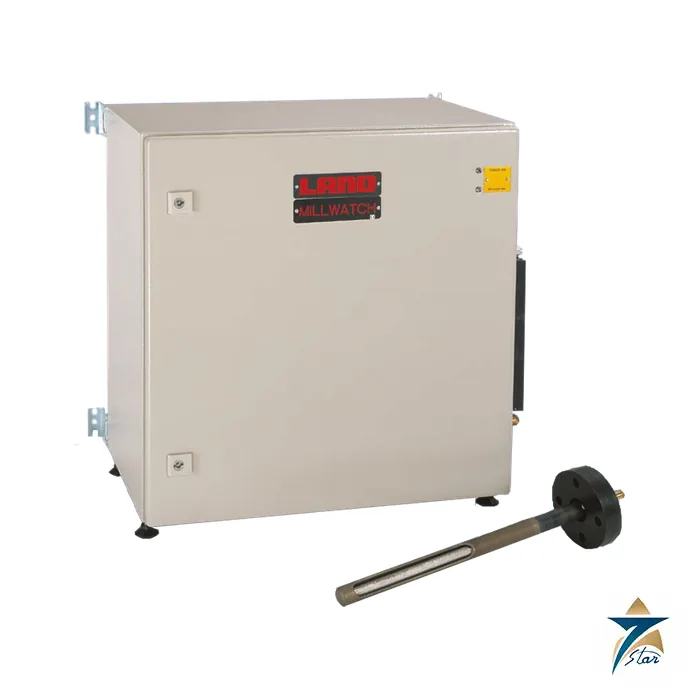
The AMETEK Land Millwatch is a continuous carbon monoxide (CO) analyser for the outlet of coal and biomass pulverising mills. It draws a gas sample from the mill, measures CO with a dual-sensor system and warns the operator of the start of oxidation or early-stage combustion. Because there is almost no CO in normal air, a rise in CO appears much earlier than a rise in temperature, and the manufacturer notes that the system detects change significantly faster than temperature measurement.
The Millwatch is aimed at power generation operators using coal or biomass in horizontal and vertical mills, typically with the sample probe at the classifier outlet. Seven Star LLC supplies the Millwatch in Oman and the GCC as an independent supplier in Muscat, for plants that need to protect mills and downstream equipment from fire and explosion.
Millwatch technical specifications
| Parameter |
Specification |
| Manufacturer / part number |
AMETEK Land (LAND Instruments International) / Millwatch |
| CO measurement ranges |
0-100 up to 0-2000 ppm in 50 ppm steps |
| Resolution |
1 ppm / 1 mg/m³ |
| Detection limit |
2 ppm (brochure) |
| Optional O₂ ranges |
0-5 % to 0-25 % (single stream only) |
| Calibration |
Automatic 2-point, span and zero |
| Display |
Backlit LCD, 4 × 20 characters, 8 access keys |
| Analogue outputs |
4-20 mA isolated current loop for each CO and O₂ measurement |
| Relay outputs |
2 × level alarms; System OK; Calibration/Maintenance |
| Relay rating |
Isolated changeover (Type C), 1 A at 240 V AC or 5 A at 240 V DC |
| Enclosure |
Painted steel, sealed IP65 / NEMA 4 |
| Ambient temperature |
0 to 45 °C standard; to -20 °C with case heater; to 50 °C with vortex cooler |
| EMC / electrical safety |
EN 50 081 and EN 50 082 / EN 61010-2 |
| Power supply |
100-120 V AC or 190-240 V AC, 50-60 Hz, 300 VA |
| Instrument air (cooling) |
5-10 bar (70-150 psi), clean and dry, 300 l/min (10.5 cfm) |
| Calibration gas |
100 to 500 ppm CO in nitrogen recommended, 2 bar; about 20 litres per calibration |
| Size (H × W × D) / weight |
600 × 600 × 350 mm / 53 kg |
Specifications are shared with the Silowatch in the manufacturer’s combined specification sheet. Options listed are twin-stream CO, sample probe and lines, heating or cooling, and oxygen measurement (single stream only).
How the Millwatch samples and measures
A rugged probe extracts gas from the mill outlet. The probe uses a large-area stainless steel filter protected by a hardened abrasion shield, and blowback keeps the filter clear so the analyser does not need frequent stops. For outdoor service, freeze-protected sample lines are available. The sample is analysed continuously by two CO sensors, with no multiplexing, which gives stability and allows the system to spot calibration drift automatically. The manufacturer quotes a typical T90 response of under 50 seconds and a detection limit of 2 ppm.
The Millwatch calibrates itself using a certified gas cylinder, in a two-point span and zero routine. Because it is checked against reference gas, operators have confidence that a quiet display means a genuine absence of CO, not a faulty sensor. Level alarms can be set to the conditions of each mill, and System OK and Calibration/Maintenance relays tell the control system when readings should not be trusted.
Where the Millwatch fits compared with the Silowatch
The Millwatch and the Silowatch use the same hardware platform and the same sheet of specifications; what differs is the point of sampling and the duty. The Millwatch is installed on a mill outlet where gas is moving, dust is abrasive and temperatures change quickly. The Silowatch (a separate AMETEK Land product) takes its sample from the headspace of a storage silo or pulverised-fuel bin. Choose the Millwatch for horizontal or vertical coal and biomass mills and the Silowatch for storage. Plants that have both normally specify both, and the twin-stream option lets one analyser watch two adjacent mills.
Selection checklist for the Millwatch
- Mill type and fuel. Horizontal or vertical, coal or biomass, and the sampling location at the classifier outlet.
- CO range. Ranges run from 0-100 up to 0-2000 ppm in 50 ppm steps; state the range and the alarm levels you plan to use.
- Single or twin stream. Twin stream monitors two adjacent mills; oxygen measurement is available only on single-stream systems.
- Climate. Standard ambient range is 0 to 45 °C. For Gulf summer sites, ask about the vortex cooler option (to 50 °C), which needs 5-10 bar instrument air at 300 l/min. For cold sites, the case heater extends operation to -20 °C.
- Utilities. Mains at 100-120 V AC or 190-240 V AC, clean dry instrument air, and a CO calibration cylinder.
- Outputs. Isolated 4-20 mA for CO (and O₂ if fitted) and Type C relays for alarms, System OK and Calibration/Maintenance.
Installation and maintenance of the Millwatch
Mount the 600 × 600 × 350 mm enclosure (53 kg) on a firm wall or frame near the mill, at a distance allowed by the sample line design. Fit the probe and heated or freeze-protected lines according to the manufacturer’s installation drawing, connect the instrument air and calibration gas, and wire the outputs. After commissioning, run an automatic calibration and confirm that the 4-20 mA outputs and relays respond.
In service, keep a spare calibration cylinder available, check the blowback and probe filter during planned stops, and review the alarm log. The enclosure is IP65 / NEMA 4, so it tolerates dusty mill-house conditions, but the door should be kept closed and seals inspected.
Typical Millwatch applications in Oman and the GCC
Coal and biomass milling in the region is found in power stations, cement plants and some industrial boilers. High temperatures and fine dust make spontaneous heating a real concern, especially during start-up, shutdown and fuel changes. An early CO alarm lets operators take preventative action before a fire starts. The brochure does not list hazardous-area certification for the analyser, so tell us your site requirements at enquiry stage and we will confirm what documents exist.
Information to send with a Millwatch RFQ
- Mill type, fuel and mill outlet temperature and pressure.
- Required CO range and whether oxygen measurement is needed.
- Number of streams (single or twin).
- Ambient temperature, outdoor or indoor mounting, and need for heater or cooler.
- Available mains voltage and instrument air.
- Interface to DCS or burner management system.
Documents and quotation
The manufacturer brochure and specification sheet covering the Millwatch and Silowatch is attached on this page.
Send us the part number, the mill details and your site conditions, and Seven Star LLC will confirm availability and lead time for Oman and the GCC.



























Reviews
There are no reviews yet.