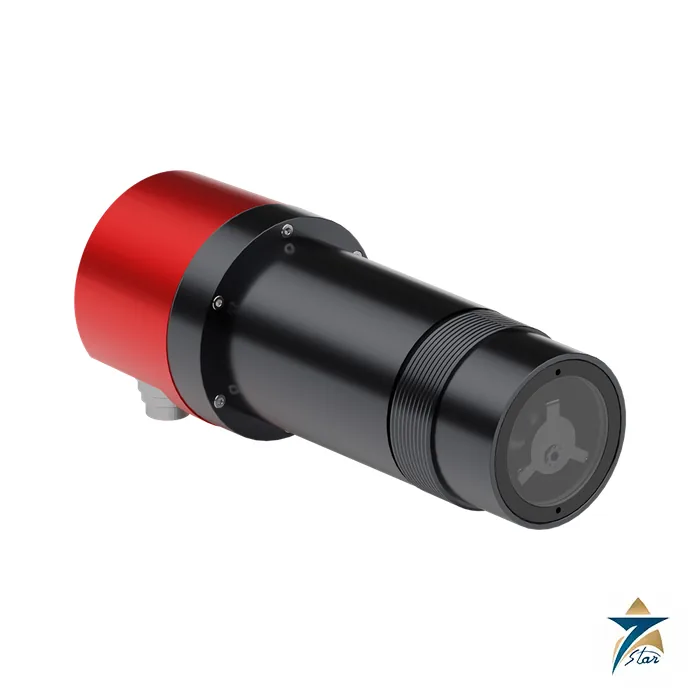
The AMETEK Land SPOT+ series is a family of smart, high-precision fixed pyrometers for non-contact temperature measurement of hot processes. The catalogue groups them in three families: monochromatic (mono) pyrometers, ratio pyrometers, and multi-mode application pyrometers for specific processes. Standard-body models share a patented pulsed green LED targeting pattern, an integrated video sight with local display, and a web server for configuration; fibre-optic versions have no sighting image.
Seven Star LLC supplies Land SPOT+ pyrometers from Muscat; the catalogue is a family guide, so the exact model is selected from the target material, temperature and sighting conditions.
Mono, ratio and application pyrometers compared
Mono pyrometers (M100, M160, M210, M390, M3-5 and the fibre-optic M100 FO and M160 FO) work on a single wavelength. They need a clear view of the target and knowledge of its emissivity, and the shortest practical wavelength is normally recommended because emissivity influence falls with shorter wavelength. The catalogue lists M100 for metals, glass and refractories, M160 for metals and glass processing, M210 for low-temperature metals, M390 for reheat furnaces and M3-5 for rolling mill coilers and heat treatment.
Ratio pyrometers (R100, R160, R210 and fibre-optic R100 FO and R160 FO) use two wavelengths and can compensate for dust, dirty windows, steam, obstacles and a slightly changing emissivity, as long as both signals are affected proportionally. They also monitor signal strength, which indicates window contamination or obstruction. R100 targets high-temperature processes such as cement kilns.
The application pyrometers use multi-band sensing with built-in modes: AL and AL LT for aluminium production, GS for galvanised and galvannealed steel strip, MM for molten metal in foundry and tapping, and TMT for tube wall metal temperature in furnaces, boilers, reformers and crackers.
Technical specifications
| Parameter |
Specification |
| Mono family (SPOT+ M) |
50 to 2500 degC (122 to 4532 degF); field of view 30:1 to 200:1; 1.0, 1.6, 2.3, 3.9 um and 3-5 um detectors |
| Ratio family (SPOT+ R) |
125 to 3500 degC (257 to 6332 degF); field of view 60:1 to 200:1 |
| Application family (SPOT+ AL, GS, MM, TMT) |
125 to 1800 degC (model dependent); field of view 30:1 to 230:1 |
| Examples |
MM: 600-1800 degC, 200:1; TMT: 300-1800 degC, 230:1, 3.9 um; GS: 200-1000 degC on reflective surfaces |
| Accuracy (mono and duo) |
+/-0.25% K or 2 K; ratio and multi: +/-0.5% K or 5 K (model dependent) |
| Repeatability / resolution |
Under 1 degC / 0.1 degC; noise under 0.5 degC RMS |
| Response time |
1 ms to 10 s, adjustable (model dependent) |
| Sealing |
IP65 |
| Analogue I/O |
Two 4-20 mA outputs, one 4-20 mA input, contact closure input, relay output |
| Communications |
EtherNet/IP, REST API, Modbus TCP/IP, web server |
| Power |
Power over Ethernet, or 19 to 30 V DC at the instrument; 8 W maximum |
| Ambient temperature |
5 to 60 degC specified; 0 to 70 degC operating before cooling |
| Software |
Web browser configuration; optional SPOTPro with datalogging up to 1 kHz |
Selection notes
Choose between families from the process, not the price. Send the target material and its surface condition, minimum and maximum temperature, target size and distance (which sets the spot size through the field of view), whether dust, steam or a window is in the path, the output and network required, the ambient temperature at the mounting point and whether a hazardous area housing, fibre-optic head or cooling accessory is needed. Hazardous area housing and a full range of mountings and accessories are listed as available.
How the AMETEK Land SPOT+ Series works
A pyrometer collects the infrared radiation from a hot target and converts it into a temperature signal. Mono types read a single wavelength. Ratio types compare two wavelengths, and application types use several bands with built-in modes for a specific process.
Where the SPOT+ Series is used
- Reheat furnaces
- Rolling mill coilers
- Aluminium production
- Galvanised steel strip lines
- Cement kilns
Selection checklist for the SPOT+ Series
- Target material
- Temperature range
- Mono, ratio or application type
- Emissivity of the target
- Dust, steam or dirty windows
- Field of view needed
- Standard body or fibre-optic
- Output and communication needs
Installation, commissioning and maintenance notes for the SPOT+ Series
Mount the pyrometer so it has a clear sight of the target and use the green LED pattern and the video sight to aim it. Set the emissivity for mono types. Keep the lens and any window clean, and watch the signal strength on ratio types for contamination.
Requesting a quotation for the AMETEK Land SPOT+ Series
Please send the target material, the temperature range and the sighting conditions. Seven Star LLC serves industrial customers in Oman and the GCC and replies with a quotation based on the information provided.
SPOT+ Series pyrometer type
It is a family of smart fixed pyrometers for non-contact temperature measurement.
SPOT+ Series process use
They are made for hot processes.
SPOT+ Series families
The catalogue has mono, ratio and multi-mode application pyrometers.
SPOT+ Series targeting
Standard-body models share a patented pulsed green LED targeting pattern.
SPOT+ Series video sight
They have an integrated video sight with a local display.
SPOT+ Series web server
A web server is used for configuration.
SPOT+ Series fibre-optic versions
Fibre-optic versions have no sighting image.
SPOT+ Series mono models
The mono models are M100, M160, M210, M390, M3-5 and the fibre-optic M100 FO and M160 FO.
SPOT+ Series mono principle
Mono pyrometers work on a single wavelength.
SPOT+ Series emissivity
They need a clear view of the target and knowledge of its emissivity.
SPOT+ Series wavelength choice
The shortest practical wavelength is normally recommended because emissivity influence falls with shorter wavelength.
SPOT+ Series M100 and M160
The M100 is listed for metals, glass and refractories, and the M160 for metals and glass processing.
SPOT+ Series M210 and M390
The M210 is for low-temperature metals and the M390 for reheat furnaces.
SPOT+ Series M3-5
The M3-5 is for rolling mill coilers and heat treatment.
SPOT+ Series ratio models
The ratio models are R100, R160, R210 and the fibre-optic R100 FO and R160 FO.
SPOT+ Series ratio principle
Ratio pyrometers use two wavelengths.
SPOT+ Series ratio compensation
They can compensate for dust, dirty windows, steam, obstacles and a slightly changing emissivity.
SPOT+ Series signal strength
They also monitor signal strength, which shows window contamination or obstruction.
SPOT+ Series R100
The R100 targets high-temperature processes such as cement kilns.
SPOT+ Series application models
The application pyrometers use multi-band sensing with built-in modes.
SPOT+ Series aluminium modes
The AL and AL LT modes are for aluminium production.
SPOT+ Series other modes
GS is for galvanised strip, MM for molten metal and TMT for tube wall temperature in furnaces and boilers.
SPOT+ Series mono range
The mono family covers 50 to 2500 degrees C with a field of view of 30:1 to 200:1.
SPOT+ Series ratio range
The ratio family covers 125 to 3500 degrees C with a field of view of 60:1 to 200:1.
Pyrometer records for the SPOT+ Series
Record the target, the emissivity set and the date of each lens cleaning.
Choosing the right SPOT+ Series model
Choose the model from the target material, the temperature and the sighting conditions.
Documents and quotation
To request a quotation for the SPOT+ pyrometer, send Seven Star LLC the full model or order code, quantity, and any nameplate data from an existing unit that is being replaced or matched.Please name the SPOT+ model (for example M160, R210 or TMT). Our Muscat team checks the request against the manufacturer document, which can be downloaded from this page, and replies with a formal quotation. Prices, stock and lead times are confirmed per inquiry.
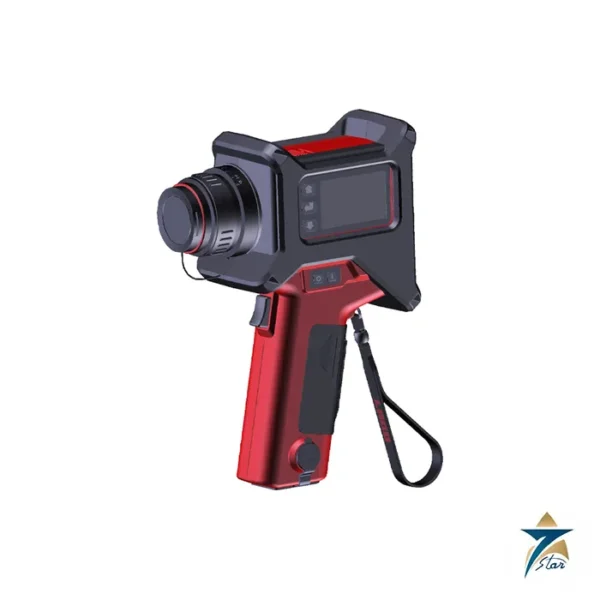
A handheld option is shown on this site as AMETEK Land Cyclops L portable non-contact pyrometer; browse the temperature instrumentation category for related products.












Reviews
There are no reviews yet.