- AC Drives
- Industrial Communications
- PLC & I/O Cards
- Automation Accessories
- Vibration Monitoring
- Controllers & Data Acquisition
- CCTV & Security
- Safety Switches & Guard Locking
- Encoders
- Industrial Computers
- Servo Drives
- Motor Soft Starters
- HMI Displays
- Pneumatic Cylinders
- Isolator & Barrier
- Automation Software
- Machine Vision
- Robotics
Brand
General Monitors
General Monitors makes fixed gas and flame detection systems for hazardous industrial sites. Four aerospace engineers founded the company in 1961 in El Segundo, California, to build hydrogen gas monitors for the US space program. It later moved to Costa Mesa and, in 1991, to Lake Forest, California. MSA Safety acquired General Monitors in October 2010, and its detectors are now sold as part of the MSA fixed gas and flame detection range. Seven Star LLC is an independent supplier listing General Monitors gas detectors, flame detectors, ultrasonic leak detectors and replacement sensors for buyers in Oman and the GCC. Detectors and sensors are matched from the full model code on the label.
Read the full brand profile- 9 products
- 1 category



Brand profile
About General Monitors
- Founded
- 1961
- Headquarters
- Lake Forest, USA
- Speciality
- Gas and flame detection
- Listed with us
- 9 products
General Monitors makes fixed gas and flame detection systems for hazardous industrial sites. Four aerospace engineers founded the company in 1961 in El Segundo, California, to build hydrogen gas monitors for the US space program. It later moved to Costa Mesa and, in 1991, to Lake Forest, California. MSA Safety acquired General Monitors in October 2010, and its detectors are now sold as part of the MSA fixed gas and flame detection range.
Seven Star LLC is an independent supplier listing General Monitors gas detectors, flame detectors, ultrasonic leak detectors and replacement sensors for buyers in Oman and the GCC. Detectors and sensors are matched from the full model code on the label.
General Monitors company profile
| Origin | Founded in 1961 in El Segundo, California, by four aerospace engineers making hydrogen detection equipment for the US space program |
|---|---|
| Location | Lake Forest, California, USA (since 1991) |
| Ownership | Part of MSA Safety since 14 October 2010 |
| Product families | Catalytic and infrared point gas detectors, open-path infrared detectors, toxic gas sensors, multi-spectrum infrared and UV/IR flame detectors, ultrasonic gas leak detectors |
| Typical duty | Combustible gas, H2S and fire detection on wellheads, gas plants, refineries, offshore platforms and terminals |
Milestones
- 1961: Four aerospace engineers found the company in El Segundo, California, making hydrogen detectors for the US space program.
- 1991: The company moves to Lake Forest, California.
- 2010: General Monitors becomes part of MSA Safety on 14 October.
General Monitors detectors and sensors
| Model | Type | Typical use |
|---|---|---|
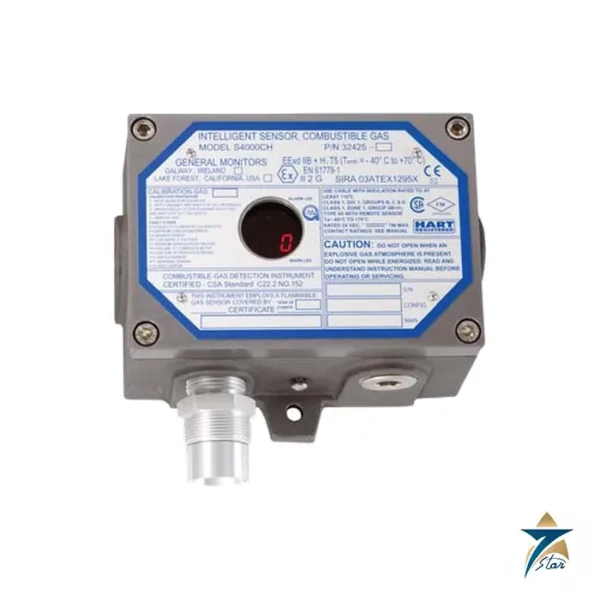
| S4000CH | Catalytic bead combustible gas detector | Point detection of flammable gases and vapours, including hydrogen |
| IR400 | Point infrared hydrocarbon gas detector | Methane and hydrocarbon detection without catalyst poisoning, and in inert atmospheres |
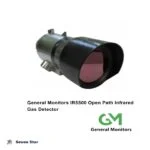
| IR5500 | Open-path infrared gas detector | Perimeter and line-of-sight monitoring across process areas and fence lines |
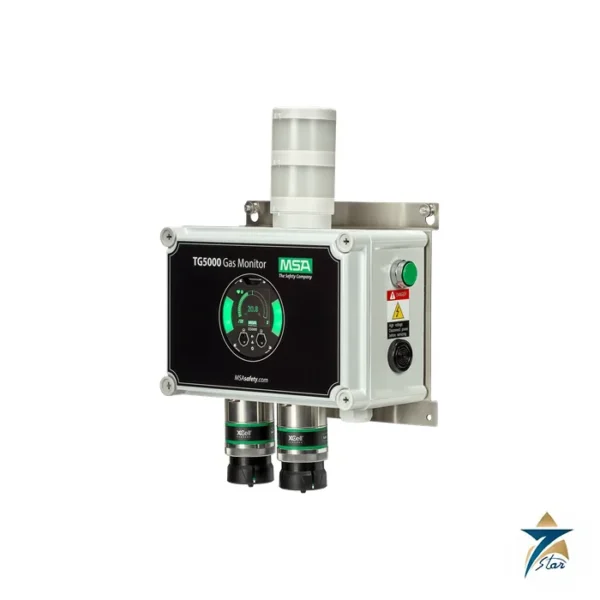
| TG5000, 51457-1 H2S sensor | General-purpose gas monitor; H2S replacement sensor (0-100 ppm) | TG5000 for combustible, toxic or oxygen monitoring in wastewater, utility and light industrial sites; 51457-1 for H2S detectors |
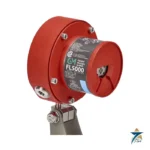
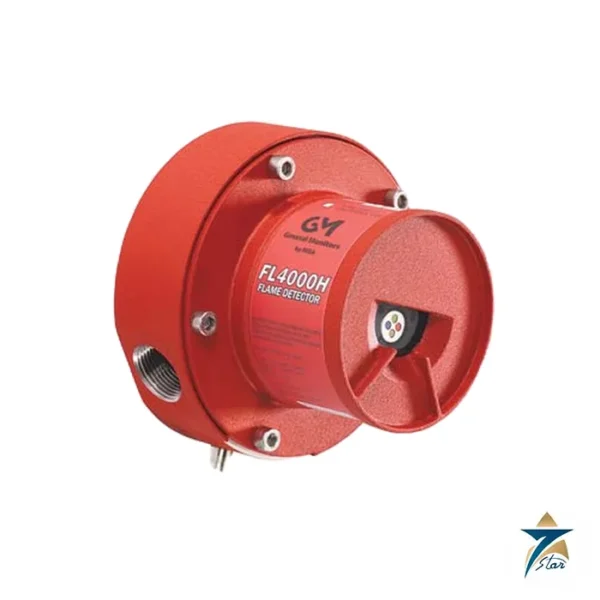
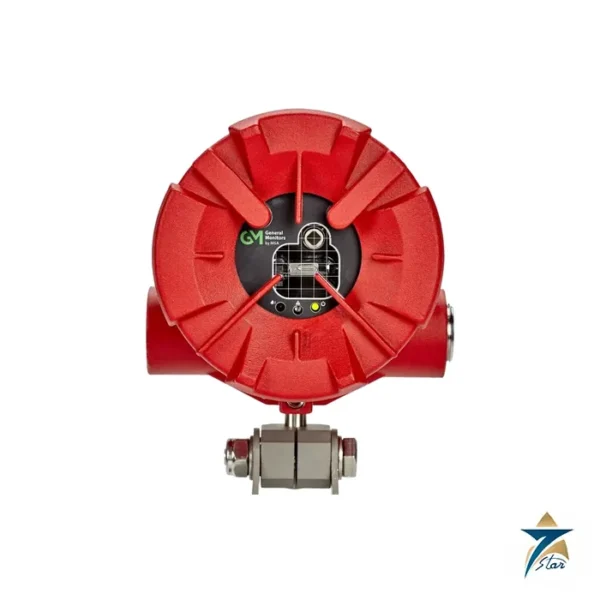
| FL4000H, FL5000 | Multi-spectrum infrared (MSIR) flame detectors | Hydrocarbon fire detection with resistance to false alarms from sunlight and hot work |
| FL500 | UV/IR flame detector | Hydrocarbon fire detection in compressor houses, pump rooms and loading areas |
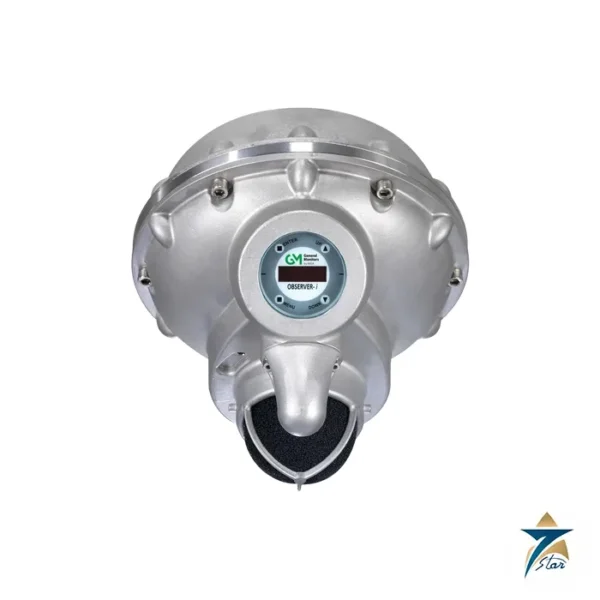
| Observer-i | Ultrasonic gas leak detector | Detects the sound of pressurised gas leaks, including where wind disperses the gas before it reaches a point detector |
Where General Monitors detectors are used
Gas and flame detectors form the field layer of a fire and gas system. In Oman and the GCC they are installed on wellpads and gathering stations, gas processing and sulphur recovery units, refineries, LNG plants, tank farms, loading terminals, offshore platforms and power stations. A typical layout combines point detectors near leak sources, open-path detectors across process areas, ultrasonic detectors on high-pressure gas equipment and flame detectors covering fire zones.
Ordering General Monitors equipment: what we need
Send the full model code from the detector label, which defines gas type, range, output, housing material, thread and approvals, plus the serial number. For replacement sensors give the detector model and the gas and range of the installed sensor. For a new detector add the gas or fire hazard, area classification, output required (4-20 mA, HART, Modbus or relays), mounting and the certification needed on site, such as ATEX or IECEx.
Facts checked against MSA Safety and General Monitors company information, October 2026.