
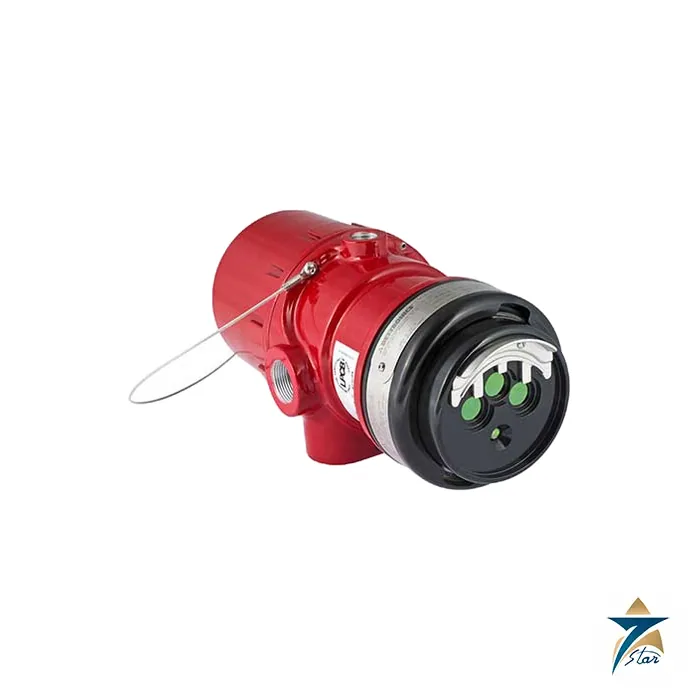
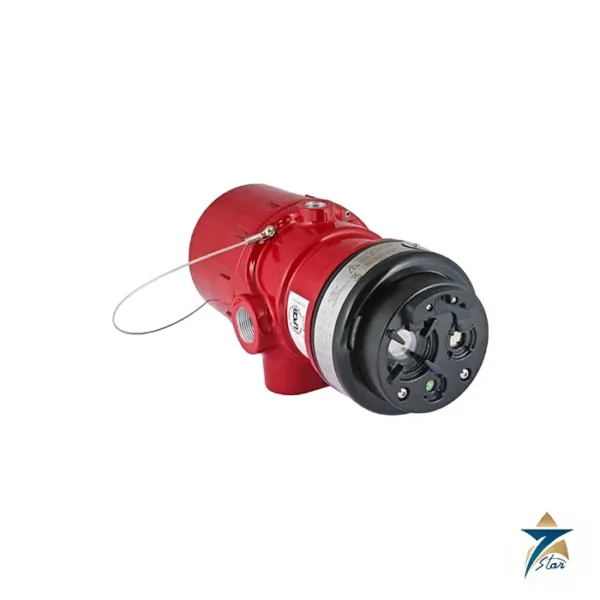
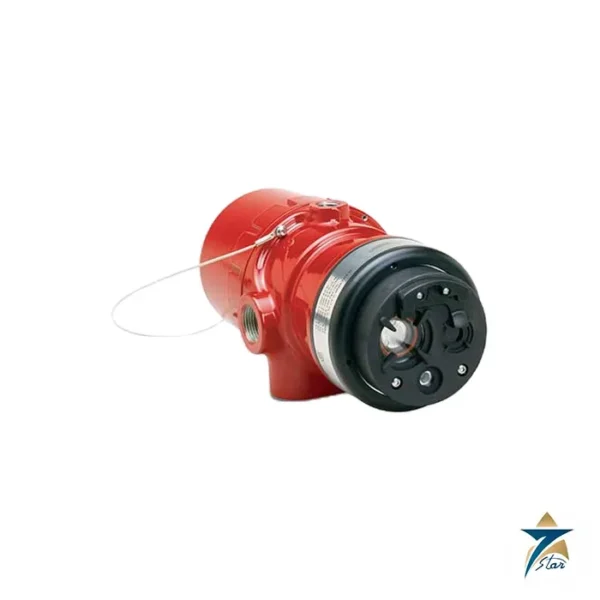
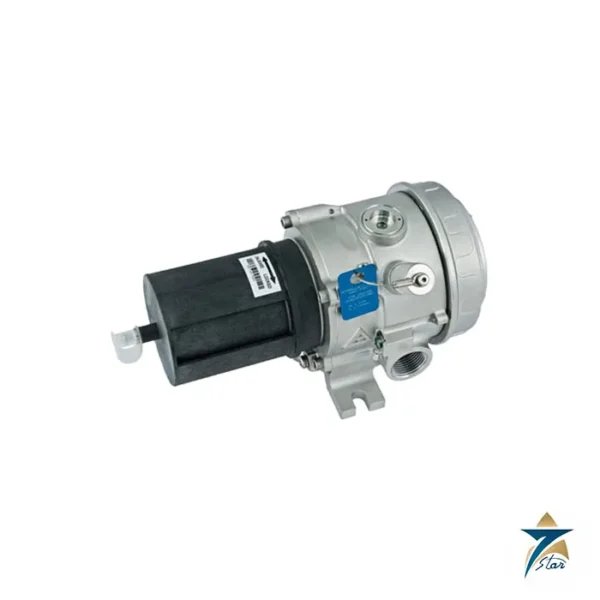
The Det-Tronics X3301 is a multispectrum infrared (MIR) flame detector built for hazardous process plants where fires must be confirmed quickly and nuisance alarms are costly. It uses three infrared sensors and dedicated signal processing to recognise fires from light and heavy hydrocarbon fuels, from methane and propane plumes to diesel, jet fuel and alcohol pool fires, while rejecting background infrared sources such as hot machinery, sunlight and flare radiation. Det-Tronics, which today operates within Spectrum Safety Solutions, positions the Det-Tronics X3301 as its flagship IR flame detector, and it carries FM 3260 performance approval, EN54-10 certification and SIL 2 capable certification to IEC 61508.
Seven Star LLC supplies the Det-Tronics X3301 to oil and gas, petrochemical and power operators across Oman and the GCC as a trusted supplier, backed by engineering support in Muscat. Our instrumentation team helps project and maintenance engineers in the Sultanate of Oman choose the correct housing, output and certification variant for each fire zone, whether the detector is going onto a new wellpad, a gas plant expansion or a brownfield retrofit.
A hydrocarbon flame emits a strong and characteristic band of infrared energy around 4.3 microns, produced by hot carbon dioxide in the combustion zone, and it flickers in a way that steady heat sources do not. The Det-Tronics X3301 watches the 4 to 5 micron region with three separate IR sensors, each tuned to a different part of that band. Its embedded microprocessor compares the energy ratios and flicker behaviour between the three channels, so a real fire produces a pattern that a heated vessel, a reflection of the sun or a modulated hot body cannot reproduce. Only when the multispectrum signature matches a flame does the detector move into alarm.
This approach gives the Det-Tronics X3301 a long detection range together with strong false alarm rejection, which is the combination that matters on large open process areas. According to the specification sheet, in the very high sensitivity setting a one square foot n-heptane fire is detected at 250 feet (76.2 m) in an average of 17 seconds, and a 32 inch methane plume at 125 feet (38.1 m) in about 5 seconds. Closer fires are reported much faster, for example around 3 seconds for n-heptane at 100 feet. Several Det-Tronics X3301 sensitivity levels allow engineers to trade range against immunity zone by zone.
The detector housing is cast in copper-free painted aluminium or 316 stainless steel (CF8M), with a choice of 3/4 inch NPT or M25 conduit entries and an integral wiring compartment, so no separate junction box is needed at the device. Two protection concepts are offered: a flameproof Ex d IIC model with ratings down to T4 for ambient temperatures up to +125°C, and an increased safety Ex d e IIC model. Both versions are rated IP66/IP67 and NEMA Type 4X. Microprocessor-controlled heated optics keep the window clear of condensation, frost and ice, which helps performance in coastal humidity and cold desert nights alike.
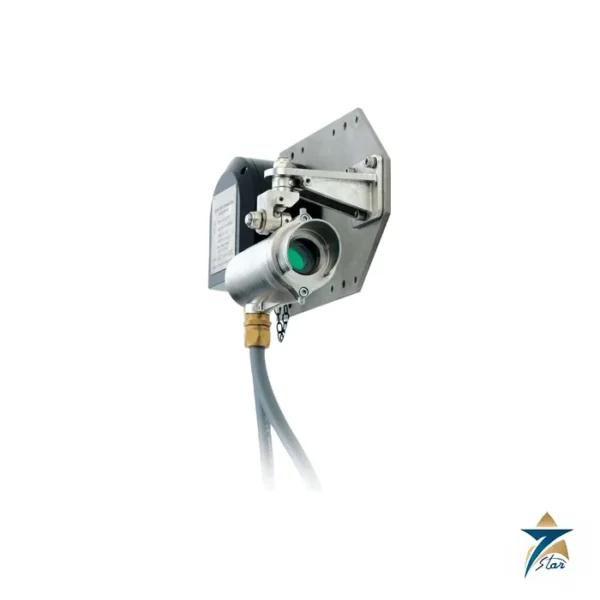
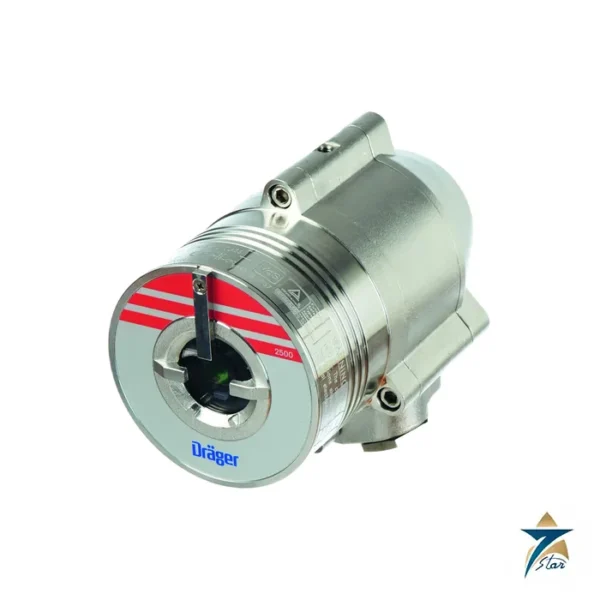
Field verification is built into every Det-Tronics X3301. The patented Optical Integrity (oi) function automatically checks the optical path and sensors every 60 seconds and signals a fault if the window is dirty or blocked, while magnetic and manual oi tests allow a technician to confirm response from ground level without a separate test lamp. A tri-colour LED on the faceplate shows normal, fault and fire states, and the Det-Tronics X3301 stores 1,500 time and date stamped events for post-incident review. The Q9033 aluminium mounting arm, sun shades and air shields complete a typical installation.
The Det-Tronics X3301 combines detection range, diagnostics and interface flexibility in one device:
The specification sheet lists offshore production platforms and production ships, refineries, loading racks, compressor stations, turbine enclosures, LNG and LPG facilities, gas separation plants, hangars, warehousing and marine duties as typical locations. In Oman this maps directly onto upstream gathering stations and gas processing trains in the interior concessions, crude export and loading terminals on the coast, LNG and petrochemical complexes in Sur and Sohar, and gas turbine power and desalination plants in the Duqm, Sohar and Salalah industrial zones. Wherever several fuels are handled in the same area, one Det-Tronics X3301 can cover pool fires and gas jet fires without changing detector type.
Operators that run Det-Tronics fire and gas systems often standardise on the Det-Tronics X3301 for open process areas and pair it with UV or UVIR detectors in enclosed or high-speed hazard zones. Seven Star LLC supplies complete Det-Tronics X3301 detector sets, mounting arms and spares from Muscat, and our engineers support selection of sensitivity settings, output type and hazardous area certification so the detectors arrive ready for the client’s cause-and-effect design.
The key data below is taken from the Det-Tronics X3301 specification data sheet 90-1218; refer to instruction manual 95-8704 for full model details.
| Parameter | Specification |
|---|---|
| Model | X3301 Multispectrum IR Flame Detector |
| Detection technology | Three IR sensors, spectral range 4–5 microns |
| Field of view | 90° horizontal × 75° vertical (at minimum 70% of on-axis distance) |
| Typical response | n-heptane 1 × 1 ft at 250 ft (76.2 m), 17 s average; methane 32 in plume at 125 ft (38.1 m), 5 s (very high sensitivity) |
| Operating voltage | 24 Vdc nominal (18 to 30 Vdc), maximum 2 V peak-to-peak ripple |
| Power consumption | 4 W minimum without heater; 17 W at 30 Vdc with heater at maximum |
| Relay outputs | Fire alarm (Form C), fault (Form A), auxiliary (Form C); 5 A at 30 Vdc |
| Analogue output | Optional isolated 0–20 mA (±0.3 mA) with HART option |
| Operating temperature | –40°C to +75°C; hazardous location ratings from –55°C to +125°C |
| Humidity | 0 to 95% RH, withstands 100% condensing for short periods |
| Enclosure | Copper-free painted aluminium or 316 stainless steel (CF8M); IP66/IP67, NEMA 4X |
| Conduit entries | 3/4 inch NPT or M25 |
| Hazardous area | Ex d e IIC T6…T5 Gb or Ex d IIC T6…T4 Gb; Class I Div. 1 Groups B, C and D |
| Approvals | FM 3260, EN54-10, ATEX, IECEx, CSA, DNV, US Coast Guard; SIL 2 capable (IEC 61508) |
| Shipping weight | Aluminium 3.2 kg; stainless steel 6.3 kg |
For alternative multispectrum and triple IR technologies in our catalogue, compare the General Monitors FL5000 MSIR flame detector, the Dräger Flame 1500 (IR3) flame detector and the Simtronics DM-TV6-T flame detector.
Within the same family, see the Det-Tronics X5200 UVIR flame detector and Det-Tronics Eagle Quantum Premier controller.
To request a formal quotation for the Det-Tronics X3301, check current availability and lead time or download the technical datasheet, contact the instrumentation division at Seven Star LLC. Send us the model code, enclosure material, conduit thread and output option you need, and our engineers in Muscat will confirm Det-Tronics X3301 availability, delivery time and accessories for your project anywhere in Oman and the GCC.
Browse Det-Tronics products by category: Fire & Gas Detector.
Choose the option that best fits your needs to get the fastest response from our team.
Automatically fill the RFQ form with this product's details for a faster process.
Manually enter multiple part numbers, specific brands, or custom requirements.











Reviews
There are no reviews yet.