Brand:

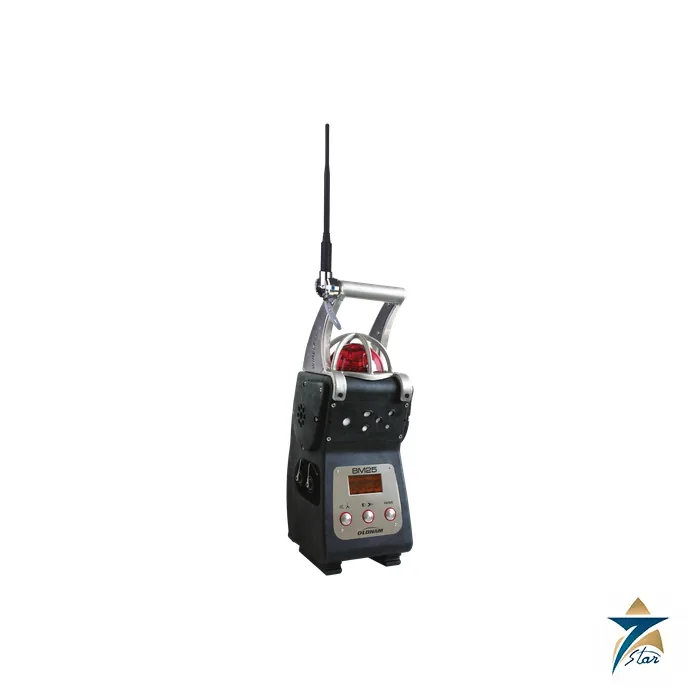
Oldham BM 25A Transportable Multi-Gas Area Monitor

Description

Overview

The Oldham BM 25A is a transportable multi-gas area monitor from Teledyne Gas and Flame Detection. Teledyne describes it as packing the benefits of a fixed system area monitor into a rugged, user-friendly and transportable instrument. The Oldham BM 25A detects one to five gases at the same time and is intended for mobile or temporary work, team protection, area surveillance and places where fixed detection is not practical. It weighs about 6.8 kg (15 lb), has a carrying handle and a 360 degree beacon, and is available in a standard version and a wireless version, the BM 25A Wireless, that forms a self-healing mesh network.

Seven Star LLC supplies the Oldham BM 25A, its sensors, chargers and the MX 40 wireless controller to oil and gas operators, refineries, contractors, shutdown and turnaround teams, tank cleaning crews and utilities in Oman and the GCC. Our Muscat team helps configure the gases and network size, and we provide model selection support from Muscat.

Key Features of the Oldham BM 25A

  • Up to five gases simultaneously: catalytic, infrared, electrochemical and photo-ionisation sensor options.
  • Loud, visible alarm: 103 dB audible alarm and an ultra-bright LED beacon visible through 360 degrees.
  • Long runtime: NiMH battery for up to 170 hours of operation, or 135 hours in wireless mode, with a full recharge in about 4.5 hours.
  • Long-term monitoring: an intrinsically safe trickle charger supports extended monitoring in classified zones.
  • Rugged case: impact-resistant polycarbonate, IP66.
  • Data logging: 200,000 measurements, more than four months for a five-gas configuration, with STEL and TWA values available.
  • Graphic backlit display for gas readings and status.

Sensors and Measuring Ranges

According to the Teledyne brochure, the Oldham BM 25A measures explosive gases from 0 to 100 percent LEL with a catalytic sensor at 1 percent resolution, and methane, propane, butane, isobutane, LPG, ethanol and pentane from 0 to 100 percent LEL with infrared sensors; methane is also available from 0 to 100 percent volume by infrared. Oxygen is measured from 0 to 30 percent volume at 0.1 percent resolution. Electrochemical toxic sensors include carbon monoxide (0-100 or 0-1000 ppm), hydrogen sulfide (0-100 ppm), hydrogen (0-2000 ppm), sulfur dioxide (0-30 ppm), chlorine (0-10 ppm), nitrogen dioxide (0-30 ppm), nitric oxide (0-300 ppm), hydrogen chloride and hydrogen cyanide (0-30 ppm), ammonia (0-100 or 0-1000 ppm), phosphine, arsine, ozone, phosgene and hydrazine (0-1 ppm), silane (0-50 ppm), ethylene oxide (0-30 ppm), hydrogen fluoride (0-10 ppm) and chlorine dioxide (0-3 ppm). Carbon dioxide is measured from 0 to 5 percent volume by infrared, and VOCs as isobutylene from 0 to 1500 ppm with a PID sensor.

Wireless Mesh Network

The optional radio allows several Oldham BM 25A units to communicate on one network or to send data to a controller. Teledyne lists 2.4 GHz, 100 mW IEEE 802.15.4 radio, up to 30 devices per network and up to 16 independent networks without interference, with a communication distance of about 0.6 mile line of sight between two units. The mesh has no central hierarchy: each node can send, receive and relay data, and if a node fails the data takes another route. When a unit goes into gas alarm, every unit in the network reports a corresponding alarm transfer, so a whole work team is warned. If the network splits, each unit still alarms locally, and when the obstacle is removed the groups merge again automatically.

The SmartWireless MX 40 controller gives an operator interface to the network. It handles up to 32 wired or wireless devices including up to 16 BM 25A units, is packaged in a NEMA 4X enclosure, can be configured for up to eight zones, and displays device location, alarm status, gas reading, battery life and signal strength, with SD card data logging. Command functions include alarm reset, acknowledge, test and radio silence, and Oldham addressable I/O modules add 4-20 mA inputs and outputs, relay outputs and contact inputs.

Certifications

The Oldham BM 25A is certified to ATEX and IECEx. The standard version without an IR sensor carries II 2G / I M1 marking with Ex db ia IIC T4 Gb protection, and versions with an IR sensor carry II 2G / I M2. The wireless BM 25 AW has equivalent markings, and INMETRO versions are also listed with an ambient range of −20 to +55°C. Always check the marking of the supplied unit against the area classification.

Applications of the Oldham BM 25A

  • Perimeter monitoring during plant shutdowns, turnarounds and hot work.
  • Tank cleaning, vessel entry and confined space support around the entry point.
  • Temporary coverage when a fixed detector is out of service.
  • Pipeline tie-ins, well intervention and drilling site perimeters.
  • Utility tunnels and excavations with H2S, CO or oxygen deficiency risks.

An Oldham BM 25A complements permanent detection such as the Oldham OLCT 100 and the Oldham OLCT 710, which feed controllers like the Oldham MX 62 in permanent installations.

Deployment Tips (General Guidance)

This guidance is general practice rather than Teledyne data. Place each Oldham BM 25A between the potential leak source and the workers, at a height suited to the gas density, and away from obstructions that block the beacon. Bump test before each deployment, record the results in the instrument log, calibrate at the intervals in the user manual, and keep batteries charged between jobs. When using the wireless Oldham BM 25A, check signal quality on site, because steel structures and tanks can shorten the line-of-sight range.

Technical Specifications

Parameter Oldham BM 25A (Teledyne brochure GF-30035L-EN)
Gases 1 to 5 simultaneously
Sensors Catalytic, infrared, electrochemical, PID
Case Impact-resistant polycarbonate, IP66
Dimensions / weight 470 x 180 x 190 mm; 6.8 kg (15 lb)
Alarms 103 dB audible; 360 degree LED beacon
Battery NiMH, up to 170 h (135 h wireless); recharge 4.5 h typical
Data logging 200,000 measurements
Wireless 2.4 GHz, 100 mW, IEEE 802.15.4; 30 devices per network; 16 networks
Operating temperature −20 to +50°C, sensor dependent
Warranty Two years excluding consumables, per Teledyne

How to Order

To order the Oldham BM 25A, send Seven Star LLC the gases and ranges you need, the number of units, whether you need the wireless version and MX 40 controller, and your charging arrangements. Our Muscat team will prepare a formal quotation. The Teledyne brochure and ATEX user manual can be downloaded from this page, and we provide model selection support from Muscat for customers across Oman and the GCC.

Datasheets & Documents
  • PDF Datasheet Teledyne Oldham BM 25A Transportable Gas Detection Brochure (GF-30035L-EN) Download
  • PDF Manual Teledyne Oldham BM 25 ATEX User Manual Download
Reviews (0)

Reviews

There are no reviews yet.

How would you rate this product?

It takes about 10 seconds — just tap a star. Your email is never published.

About brand

Oldham is the French gas detection brand known for the OLCT fixed detectors and the MX series controllers used in oil and gas, chemical and utility plants. Its factory in Arras, northern France, has made gas detection equipment since 1948. The brand is part of Teledyne Gas and Flame Detection today and trades as Teledyne Oldham Simtronics.

Seven Star LLC is an independent supplier in Muscat. We list Oldham fixed gas detectors, controllers and a transportable area monitor, and supply them and their spare sensors to plants in Oman and the GCC by model and gas type.

Oldham company profile

Origin Arras, France; manufacturing on the Arras site dates back to 1948
Ownership history Bought by Industrial Scientific in 2006. The fixed gas detection business was sold to Industrial Safety Technologies (IST) in 2013, which also owned Simtronics. It is now part of Teledyne Gas and Flame Detection.
Product families Fixed detectors for combustible, toxic and oxygen gases (catalytic, infrared, electrochemical), gas detection controllers, and transportable area monitors
Applications Wellheads, process units, compressor and pump houses, tank farms, analyser shelters, battery rooms, car parks and water treatment plants

Milestones

  • 1948: Manufacturing begins on the Arras site in France.
  • 2006: Industrial Scientific buys Oldham.
  • 2013: The fixed gas detection business is sold to Industrial Safety Technologies, which also owned Simtronics; it is now part of Teledyne Gas and Flame Detection.

Oldham products we list

Model Type Typical use
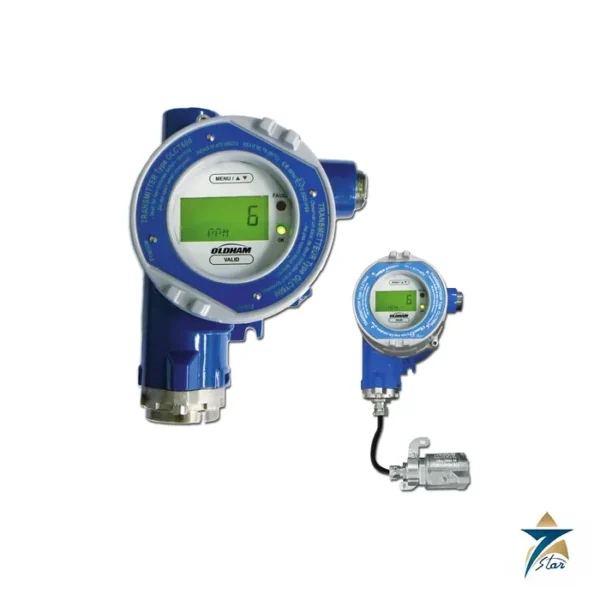
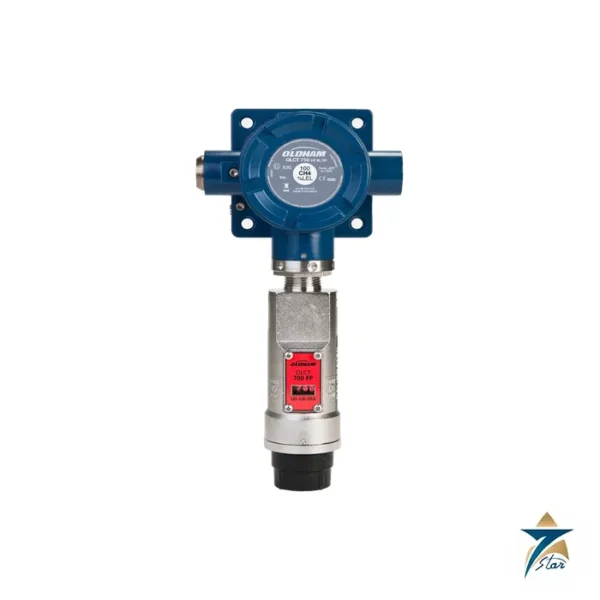
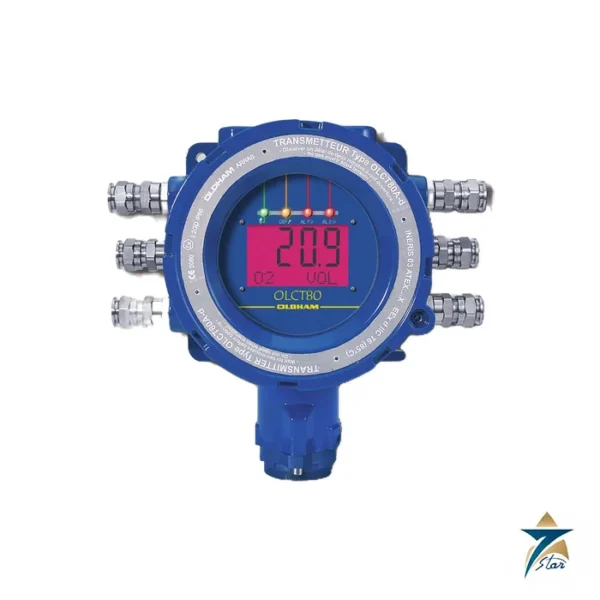
OLCT 100, OLC100 / OLCT 100 IR Fixed detector, explosion-proof Combustible, toxic or oxygen detection in hazardous areas; the IR version uses an infrared sensor for hydrocarbons
OLCT 60, OLCT 80, OLCT 710 Fixed detector transmitters Industrial gas detection with 4-20 mA output to a controller or DCS
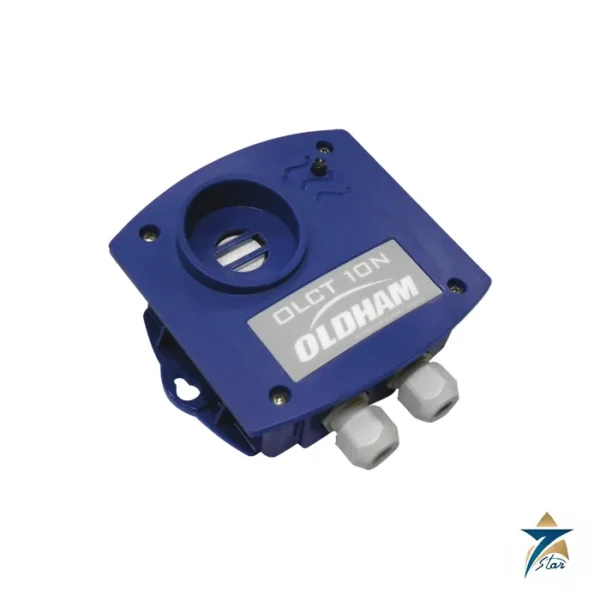
OLCT 10N Digital detector Combustible, toxic and oxygen detection on a digital bus in non-hazardous areas such as car parks and plant rooms
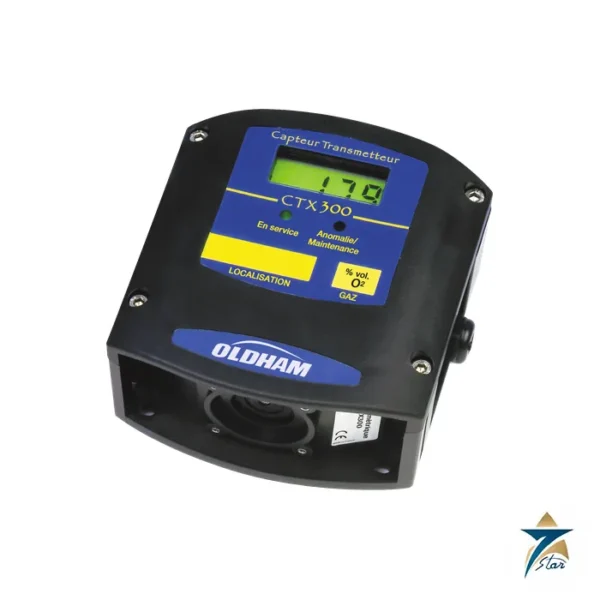
CTX 300 Transmitter Toxic, oxygen and refrigerant gas monitoring in safe areas
MX 32, MX 43, MX 62 Gas detection controllers Read the detectors, show gas levels, and drive alarms and relays; MX 62 handles the largest number of channels
BM 25A Transportable area monitor Temporary multi-gas monitoring during shutdowns, confined space work and hot work

The sensor follows the gas. Catalytic bead sensors measure combustible gases in % LEL, infrared sensors measure hydrocarbons and do not need oxygen or suffer from poisoning, and electrochemical cells measure toxic gases such as H2S and CO and oxygen in ppm or % volume. A fixed system is a loop: the detectors in the field, a controller such as the MX 43 that sets alarm thresholds, and the relays that trip ventilation, shutdown valves or sounders.

Where Oldham gas detection is used

In Oman and the GCC, Oldham detectors and controllers protect oil and gas production stations, refineries, gas plants, fuel depots, water and wastewater plants, and building plant rooms, often for H2S and combustible gas.

Ordering Oldham equipment: what we need

Send the model, the gas and measuring range, the sensor type (catalytic, infrared or electrochemical), the hazardous area classification and the output (4-20 mA or digital). For controllers, add the number of channels and relays. For spare sensors, send the part number from the detector label.

Facts checked against Teledyne Gas and Flame Detection and Industrial Scientific company information, October 2026.

FAQ

Questions about the Oldham BM 25A Transportable Multi-Gas Area Monitor

Answers from our engineering team on installation, compatibility and integration.

01How many gases can the Oldham BM 25A detect?
Up to five gases at the same time, using catalytic, infrared, electrochemical and PID sensors.
02How long does the battery last?
Teledyne lists up to 170 hours of operation, or 135 hours in wireless mode, with a typical recharge time of 4.5 hours.
03How does the wireless version work?
BM 25A Wireless units form a self-healing 2.4 GHz mesh network of up to 30 devices, transfer alarms to every unit on the network and can report to an MX 40 controller.
04Is the BM 25A certified for hazardous areas?
Yes, it carries ATEX and IECEx certification, for example II 2G with Ex db ia IIC T4 Gb protection, with marking depending on the version and sensors.
05Does Seven Star LLC supply the Oldham BM 25A in Oman?
Yes. Seven Star LLC supplies Oldham BM 25A monitors, sensors, chargers and MX 40 controllers in Oman and the GCC, from our office in Muscat.