Brand:

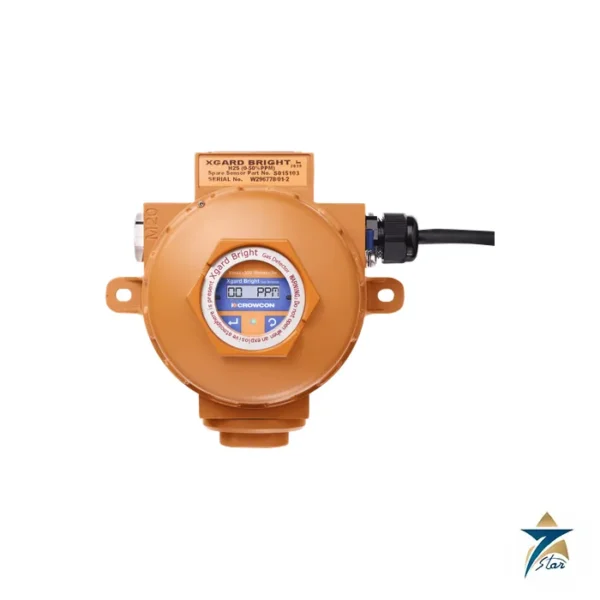
Oldham IR Gas Detector OLC100 / OLCT 100

Description

Overview

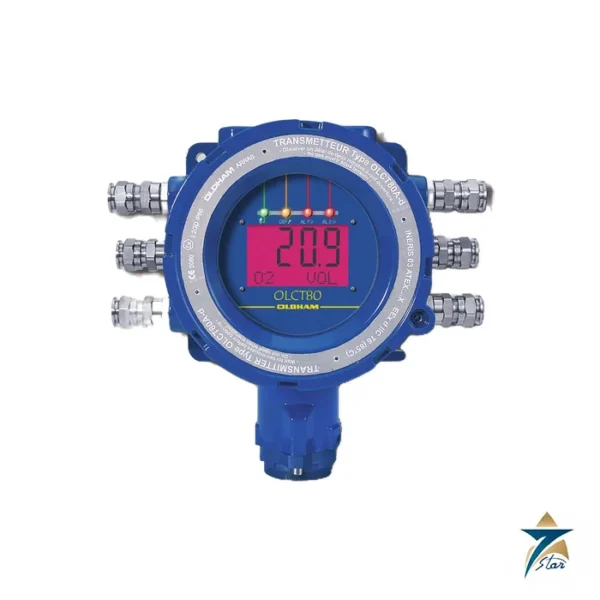
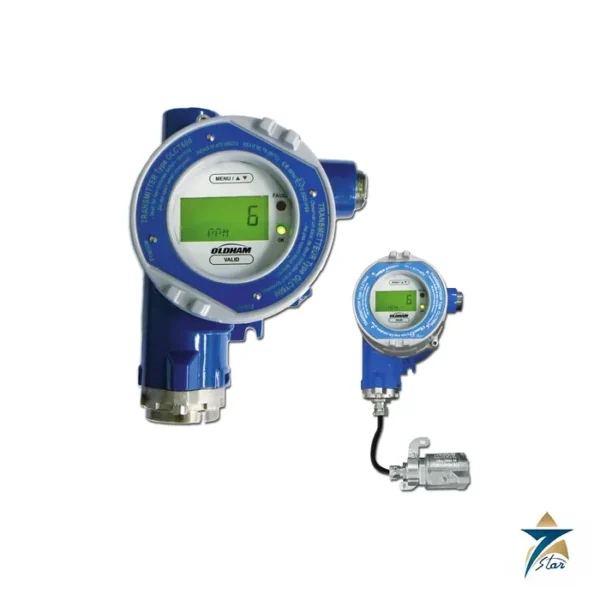
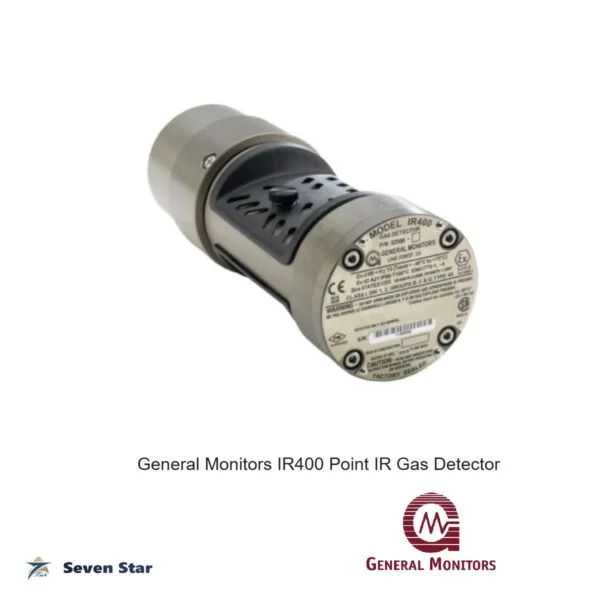
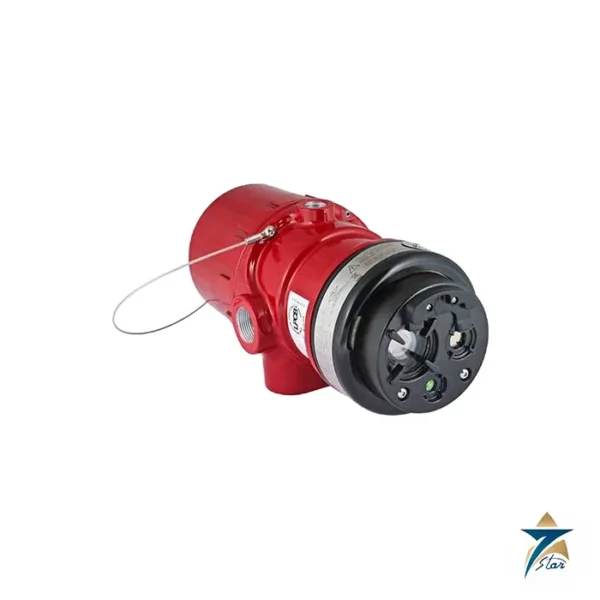
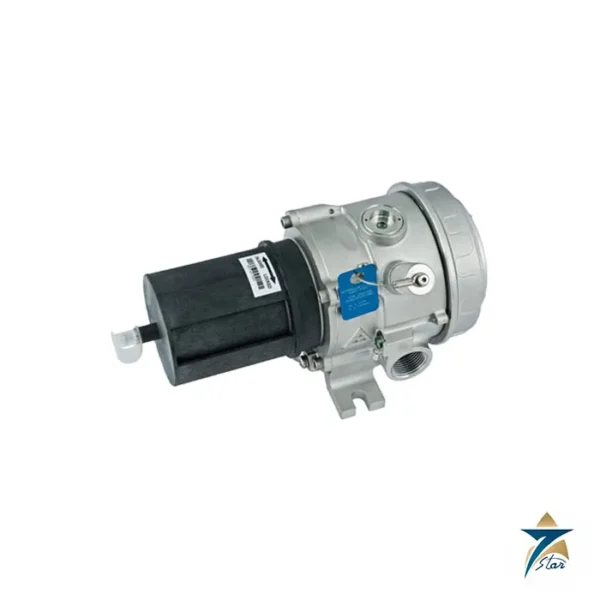
The Oldham OLCT 100 gas detector in its IR version is an infrared CO2 or combustible gas detector and transmitter built to withstand harsh environments such as offshore platforms, petrochemical and chemical industries, naval installations, and wastewater treatment plants.

The detector provides a 4-20 mA analogue transmitter output for direct connection to gas detection controllers and safety systems, with SIL2 capability for safety instrumented applications.

Engineering & Design

Infrared technology is often the only solution for environments where catalytic sensors fail, because the measurement does not depend on combustion and is resistant to poisons. The OLCT 100 uses a double source / four beam optical arrangement with heated optics and dirty optics compensation, maintaining accuracy as contamination builds on the window.

The IP67 enclosure suits outdoor and offshore installation, and non-intrusive calibration allows the detector to be adjusted without opening the housing, reducing the risk of moisture ingress and simplifying maintenance.

Key Features

  • Infrared CO2 or combustible gas detection
  • 4-20 mA analogue transmitter output
  • SIL2 capability
  • IP67 enclosure
  • Double source / four beam optics
  • Heated optics and dirty optics compensation
  • Resistant to poisons
  • Long lifespan exceeding 10 years
  • Non-intrusive calibration
  • Low maintenance design

Applications

  • Offshore platforms
  • Petrochemical and chemical plants
  • Naval installations
  • Wastewater treatment plants
  • Onshore and offshore gas detection

Specifications

Specification Value
Manufacturer Oldham
Model OLCT 100 IR
Measured Gases CO2 or combustible gas
Technology Infrared
Output 4-20 mA analogue
Safety SIL2 capability
Protection IP67
Optics Double source / four beams, heated
Calibration Non-intrusive
Lifespan Greater than 10 years

For fixed gas detection projects in harsh environments, the Oldham OLCT 100 gas detector is a proven choice, and Seven Star LLC supplies the Oldham OLCT 100 gas detector with verified specifications for your site.

For fixed gas detection projects across the Gulf, the Oldham OLCT 100 gas detector is a commonly specified instrument. It provides the 4-20 mA signal your controller expects, and Seven Star LLC supplies the OLCT 100 with project documentation and engineering support.

For multi-detector projects, the Oldham OLCT 100 gas detector configuration is repeated across the installation with consistent documentation.

Why Seven Star LLC

Seven Star LLC supplies the Oldham OLCT 100 IR gas detector for fixed gas detection projects across the Gulf, with verified specifications and technical support. Our team assists with gas type selection, calibration planning, and integration with detection controllers.

We serve oil and gas, petrochemical, marine, and utility customers with reliable B2B supply of gas detection equipment throughout the GCC.

Installation & Operation

Installation of the OLCT 100 IR follows the standard fixed gas detection practice: the detector is mounted at the monitoring point and connected to a gas detection controller over the 4-20 mA loop. The IP67 enclosure allows outdoor and offshore mounting, and the non-intrusive calibration method keeps the housing sealed during adjustment.

Routine operation is essentially maintenance-free because the infrared source and detector arrangement is immune to the poisoning that affects catalytic sensors, and the heated optics keep condensation from disturbing the measurement.

Supply Chain & Sourcing

Seven Star LLC sources the Oldham OLCT 100 IR directly through the manufacturer distribution network, giving Gulf customers access to current production units and the full documentation package.

For projects involving multiple detectors, we support spare parts planning, calibration gas supply, and the interchangeability checks that keep installed gas detection systems maintainable.

Daily operation of the detector is limited to verifying the controller reading and the fault status. Because the IR measurement does not consume the sensing element, the long-term cost of ownership is lower than catalytic detection in poisoned environments.

Calibration intervals are established by site practice and gas detection standards, and the non-intrusive procedure allows bump testing and span adjustment with the housing sealed. For maintenance teams, the diagnostic information from the transmitter supports early identification of optics contamination and component ageing.

Request a Quote for Oldham IR Gas Detector OLC100 / OLCT 100

For the Oldham OLCT 100 gas detector or any related control and instrumentation requirement, contact the Seven Star LLC team. Submit a formal inquiry through our RFQ page with your measurement range, connection and configuration, and our specialists will respond with a detailed commercial proposal and the relevant Oldham documentation.

Detector Siting and Commissioning

Good infrared detection starts with correct siting. Combustible hydrocarbon vapours heavier than air collect near grade, while lighter gases and hot releases rise, so the mounting height should follow the density of the target gas and the site gas detection philosophy. Place each head close to likely leak sources such as pump seals, compressor skids, flanged manifolds and loading points, and orient it so that the optical window is protected from direct water jets and heavy sand deposition.

During commissioning, confirm the gas type and range on the nameplate against the cause-and-effect matrix, check the loop wiring and screen termination at the controller end, and verify that the controller alarm thresholds match the detector range. Zero the head in clean air, then apply a certified test gas through the calibration accessory and record the response. A documented zero and span check at hand-over gives the maintenance team a baseline for later trending.

Troubleshooting Checklist

  • Reading drifts or fault flag appears: inspect the optical window for dust, salt film or insect nests and clean it according to the manual before recalibrating.
  • No signal at the controller: measure loop current at the terminals and check supply voltage and cable continuity before suspecting the head.
  • Slow response to test gas: check that the calibration adaptor is seated correctly and the flow rate is as specified.
  • Negative reading after a sand storm: contamination of the optics is the usual cause; the dirty optics compensation extends the interval, but it does not replace cleaning.

Applications in Oman and the GCC

Desert and coastal sites in the region combine high ambient temperature, humidity swings, salt-laden air and blowing sand. These conditions shorten the life of catalytic sensors and increase the value of infrared measurement. The Oldham OLCT 100 gas detector is a practical fit for wellhead and gathering stations in the interior of Oman, gas processing facilities, refineries and terminals at Sohar and Duqm, and pumping stations on water and wastewater networks where hydrocarbons or CO2 must be monitored.

Sourcing Through Seven Star LLC

Seven Star LLC supplies OLCT 100 IR heads and related accessories to operators, EPC contractors and maintenance teams across the GCC. Send the existing tag list or the model code from the nameplate, and our engineers will check the gas type, range and certification against your requirement before we issue an offer.

Related Products

Datasheets & Documents
  • PDF Datasheet Oldham IR Gas Detector OLC100 / OLCT 100 Datasheet Download
Reviews (0)

Reviews

There are no reviews yet.

How would you rate this product?

It takes about 10 seconds — just tap a star. Your email is never published.

About brand

Oldham is the French gas detection brand known for the OLCT fixed detectors and the MX series controllers used in oil and gas, chemical and utility plants. Its factory in Arras, northern France, has made gas detection equipment since 1948. The brand is part of Teledyne Gas and Flame Detection today and trades as Teledyne Oldham Simtronics.

Seven Star LLC is an independent supplier in Muscat. We list Oldham fixed gas detectors, controllers and a transportable area monitor, and supply them and their spare sensors to plants in Oman and the GCC by model and gas type.

Oldham company profile

Origin Arras, France; manufacturing on the Arras site dates back to 1948
Ownership history Bought by Industrial Scientific in 2006. The fixed gas detection business was sold to Industrial Safety Technologies (IST) in 2013, which also owned Simtronics. It is now part of Teledyne Gas and Flame Detection.
Product families Fixed detectors for combustible, toxic and oxygen gases (catalytic, infrared, electrochemical), gas detection controllers, and transportable area monitors
Applications Wellheads, process units, compressor and pump houses, tank farms, analyser shelters, battery rooms, car parks and water treatment plants

Milestones

  • 1948: Manufacturing begins on the Arras site in France.
  • 2006: Industrial Scientific buys Oldham.
  • 2013: The fixed gas detection business is sold to Industrial Safety Technologies, which also owned Simtronics; it is now part of Teledyne Gas and Flame Detection.

Oldham products we list

Model Type Typical use
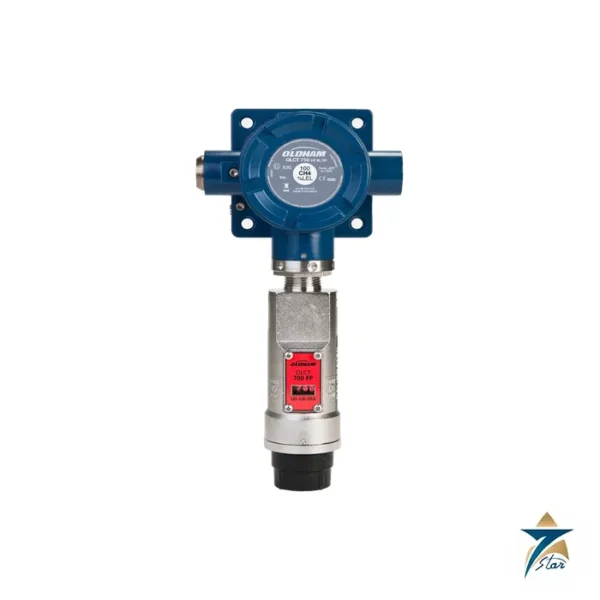
OLCT 100, OLC100 / OLCT 100 IR Fixed detector, explosion-proof Combustible, toxic or oxygen detection in hazardous areas; the IR version uses an infrared sensor for hydrocarbons
OLCT 60, OLCT 80, OLCT 710 Fixed detector transmitters Industrial gas detection with 4-20 mA output to a controller or DCS
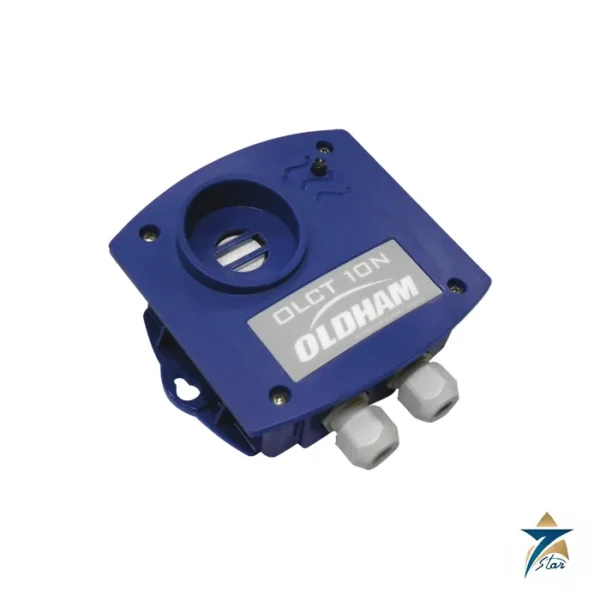
OLCT 10N Digital detector Combustible, toxic and oxygen detection on a digital bus in non-hazardous areas such as car parks and plant rooms
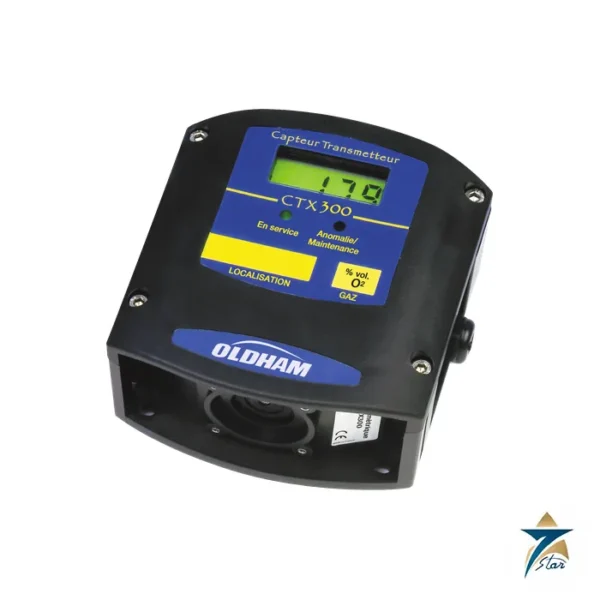
CTX 300 Transmitter Toxic, oxygen and refrigerant gas monitoring in safe areas
MX 32, MX 43, MX 62 Gas detection controllers Read the detectors, show gas levels, and drive alarms and relays; MX 62 handles the largest number of channels
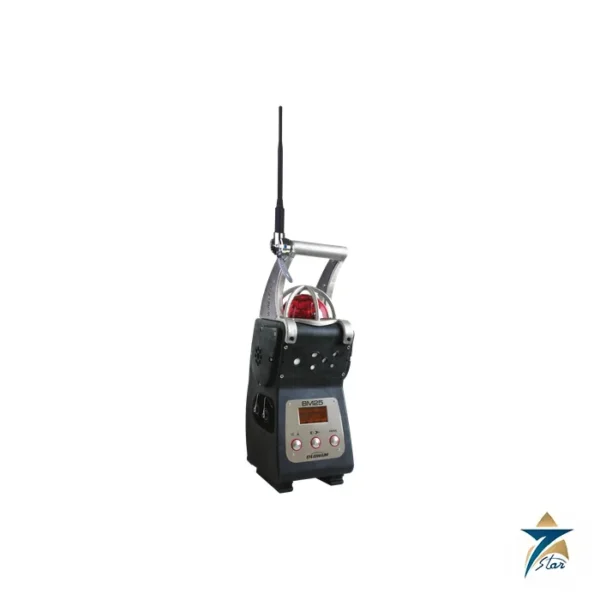
BM 25A Transportable area monitor Temporary multi-gas monitoring during shutdowns, confined space work and hot work

The sensor follows the gas. Catalytic bead sensors measure combustible gases in % LEL, infrared sensors measure hydrocarbons and do not need oxygen or suffer from poisoning, and electrochemical cells measure toxic gases such as H2S and CO and oxygen in ppm or % volume. A fixed system is a loop: the detectors in the field, a controller such as the MX 43 that sets alarm thresholds, and the relays that trip ventilation, shutdown valves or sounders.

Where Oldham gas detection is used

In Oman and the GCC, Oldham detectors and controllers protect oil and gas production stations, refineries, gas plants, fuel depots, water and wastewater plants, and building plant rooms, often for H2S and combustible gas.

Ordering Oldham equipment: what we need

Send the model, the gas and measuring range, the sensor type (catalytic, infrared or electrochemical), the hazardous area classification and the output (4-20 mA or digital). For controllers, add the number of channels and relays. For spare sensors, send the part number from the detector label.

Facts checked against Teledyne Gas and Flame Detection and Industrial Scientific company information, October 2026.

FAQ

Questions about the Oldham IR Gas Detector OLC100 / OLCT 100

Answers from our engineering team on installation, compatibility and integration.

01What is the OLCT 100 IR?
It is an Oldham infrared gas detector for CO2 or combustible gas, built for harsh environments such as offshore and petrochemical installations.
02What output does it provide?
It provides a 4-20 mA analogue transmitter output with SIL2 capability.
03Why choose infrared technology?
Infrared detection is resistant to poisons and is often the only solution where catalytic sensors fail.
04How is calibration performed?
Calibration is non-intrusive, performed without opening the housing.
05What is the expected lifespan?
The detector exceeds 10 years of service life with low maintenance.