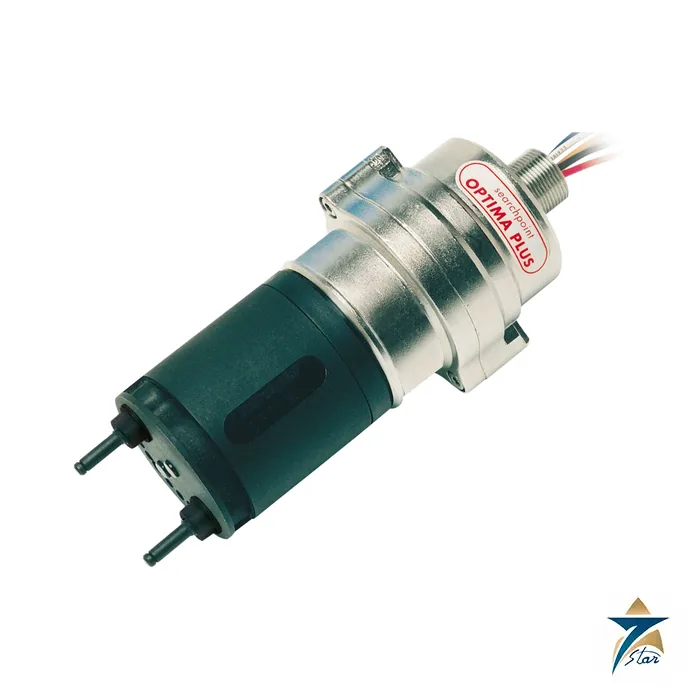
Searchpoint Optima Plus point infrared flammable gas detector
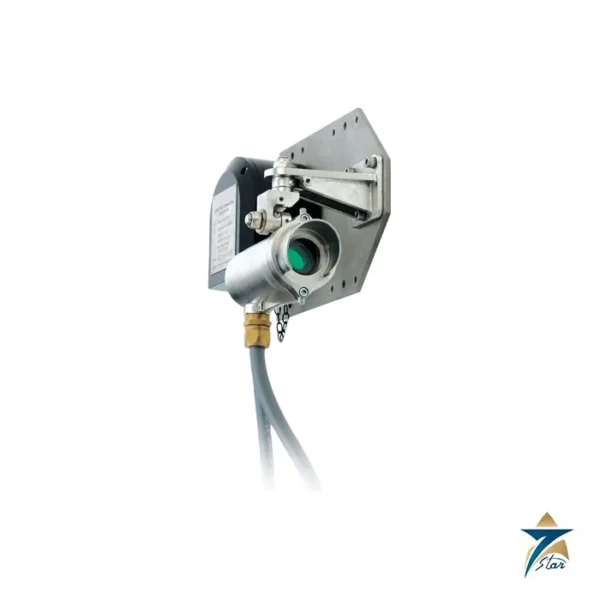
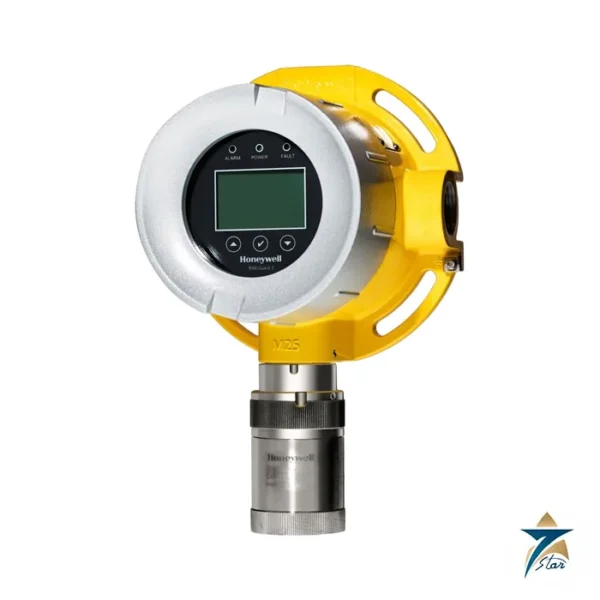
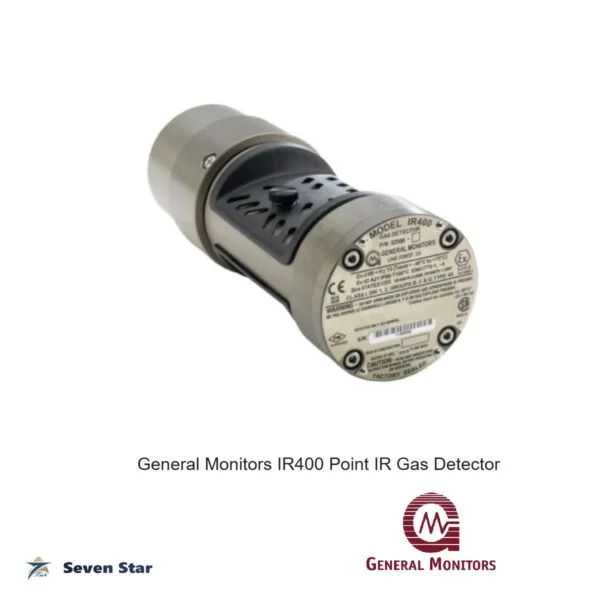
Searchpoint Optima Plus is a Honeywell point infrared detector for flammable hydrocarbon gas and vapour. It is a compact 316 stainless steel sensing head, with a 4-20 mA output, that is certified for hazardous areas and carries a safety integrity rating of SIL 2. Seven Star LLC supplies Searchpoint Optima Plus in Oman and the GCC as an independent supplier in Muscat.
Unlike a catalytic bead, an infrared detector does not burn gas on a hot element, so it is not poisoned by silicones, sulphur or lead compounds and it keeps working in atmospheres with little or no oxygen. That is the main reason operators select it for gas-fired turbines, offshore modules and process areas where sensor poisoning has been a history.
Searchpoint Optima Plus specification table
| Parameter |
Specification |
| Manufacturer / part number |
Honeywell / Searchpoint Optima Plus |
| Technology |
Point infrared flammable gas detector |
| Measuring range |
0-100 % LEL; wide selection of hydrocarbon gas and vapour calibrations; other ranges and solvent calibrations for specialist uses |
| Signal output |
4-20 mA, autosensing sink or source |
| Signal levels |
Inhibit 1-3 mA (default 2 mA); warning 0-6 mA (default 3 mA); fault 0 mA (HART units adjustable to 1 mA); over range 20-21.5 mA (default 21 mA) |
| Digital output |
Optional multidrop Modbus RS485 via DX100(M); optional HART over the 4-20 mA output (HART version 7) |
| Accuracy, hydrocarbon version |
Baseline below ±1 % FSD; at 50 % FSD below ±2 % FSD |
| Accuracy, ethylene version |
Baseline below ±2 % FSD; at 50 % FSD below ±3 % FSD |
| Repeatability / linearity |
Below ±2 % FSD at 50 % FSD / below 5 % FSD |
| Response time |
T50 below 3 s; T90 below 4 s (methane) |
| Temperature |
Operational and certified -40 °C to +65 °C |
| Pressure effect |
0.1 % of reading per mbar |
| Power supply |
18-32 V dc (24 V dc nominal), below 4.5 W |
| Material / weight |
316 stainless steel / 1.6 kg |
| Ingress protection |
IP66 / IP67 |
| Functional safety |
IEC 61508 Safety Integrity Level 2 |
Approvals listed in the datasheet include UL and CSA Class 1 Div 1 groups B, C and D, IECEx Ex d IIC tb IIIC with T86 °C or T96 °C depending on ambient, ATEX II 2 GD Ex d IIC Gb Ex tb IIIC Db, performance approval to EN 60079-29-1, CSA C22.2 152 and FM ANSI/ISA-12.13.01. For ATEX compliance the warning current must not be set between 3 and 5 mA.
How the Searchpoint Optima Plus measures gas
Inside the head a lamp produces infrared light that crosses a short gas path. Hydrocarbon molecules absorb part of the light, and the detector compares that absorption with a reference to derive a concentration. The result is then converted to a 4-20 mA loop signal with its defined fault and warning levels. Because the measurement is optical, the response is fast: the datasheet gives T90 below 4 seconds on methane.
Long-term stability is also stated in the datasheet in the manner defined by EN 60079-29-1. For methane on the 100 % LEL range the baseline is within ±2 % FSD and at 50 % FSD within ±4 % FSD; for ethylene the figures are ±4 % and ±5 % FSD. Temperature drift across -40 °C to +65 °C is given as a baseline of ±2 % FSD.
System connections: XNX, DX100(M) and related parts
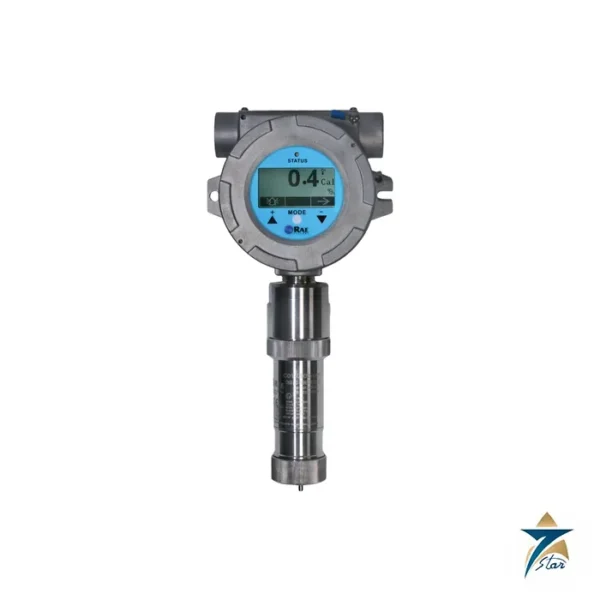
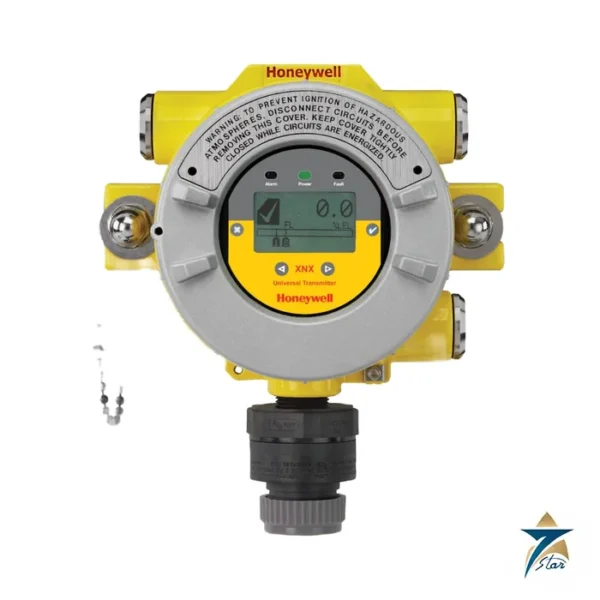
Searchpoint Optima Plus can drive a controller directly through its 4-20 mA output, or it can be connected through an XNX universal transmitter using the IR personality. In the XNX documentation an Optima Plus on an XNX needs up to 9.7 W, and a storm baffle (2108B0280) with its fitting kit (2108B0270) is listed as an accessory. Modbus is obtained through the DX100(M) unit. Diagnostics and recalibration are carried out with a certified hand-held interrogator or, on HART versions, through HART communications.
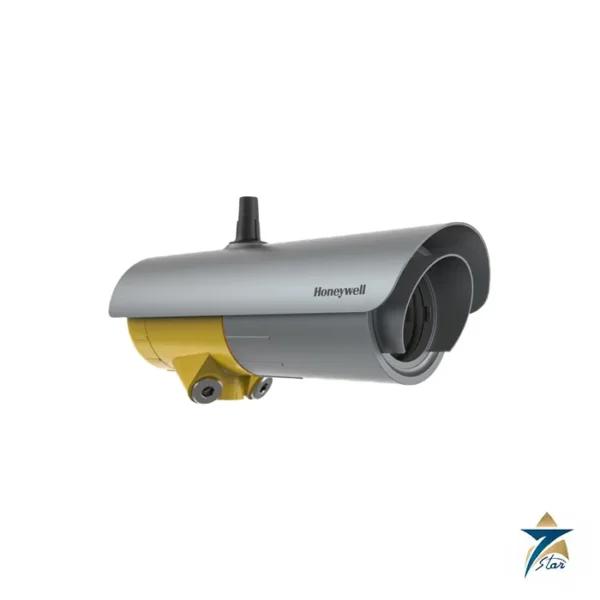
Related Honeywell products often quoted together are Searchline Excel open path detectors for perimeter coverage, the Searchline Excel Cross-Duct for ducts, and the XNX transmitter that unifies them with toxic and oxygen detection.
Selection checklist for Searchpoint Optima Plus
- Gas calibration: hydrocarbon (methane, propane and other vapours) or ethylene, since accuracy figures differ between them.
- Range: 0-100 % LEL is standard; ask about other ranges for solvent applications.
- Output: plain 4-20 mA, HART, or Modbus through a DX100(M).
- Connection philosophy: direct to controller or through an XNX.
- Environmental protection: weather baffle for outdoor or deluge exposure.
- Hazardous-area approval needed on site.
The supply must be at least 18 V dc at the detector after cable drop, and the controller must accept the 0 mA fault and the 3 mA default warning signals as intended by the site philosophy.
Installing and maintaining Searchpoint Optima Plus
The head is mounted facing the potential release with its optical path unobstructed, and gas must reach the measuring chamber by diffusion, so avoid dead pockets and trapped water. Use a storm baffle outdoors to limit wind-driven rain and spray. Route armoured cable, observe the sink or source wiring, and keep the cable screen terminated at one end.
Commissioning checks include the zero signal in clean air and a response test with the correct calibration gas. A certified hand-held interrogator or HART is used to adjust and read diagnostics. Optics should be kept free of dirt and oil, and spare heads or filters should be considered where dust is heavy.
Applications in Oman and the GCC
Infrared point detectors are widely specified on wellheads, separators, compressor shelters, gas-turbine skids, LNG and gas-processing units and fuel storage across Oman and the Gulf. The operating range of -40 °C to +65 °C and the IP66/IP67 stainless body suit hot, dusty and coastal sites. At power and desalination plants the head is used around fuel gas trains and turbine enclosures, while in offshore service its immunity to poisons reduces nuisance calibrations.
Information to send with an RFQ
- Target gas or vapour, and the calibration wanted (hydrocarbon or ethylene)
- Output requirement: 4-20 mA, HART or Modbus
- Whether an XNX or DX100(M) is also required
- Hazardous-area class and approvals
- Accessories such as storm baffle, calibration cup and test gas
- Quantity and delivery location
Documents and quotation
Please send the Searchpoint Optima Plus gas calibration and output option and we will confirm the matching configuration. A datasheet is attached on this page, and we can add related Honeywell manuals on request. Seven Star LLC is an independent supplier in Muscat and does not represent itself as an official Honeywell channel.
We can quote detectors with transmitters and calibration accessories as one package.

























Reviews
There are no reviews yet.