XNX universal gas transmitter: what it is and how the model code works
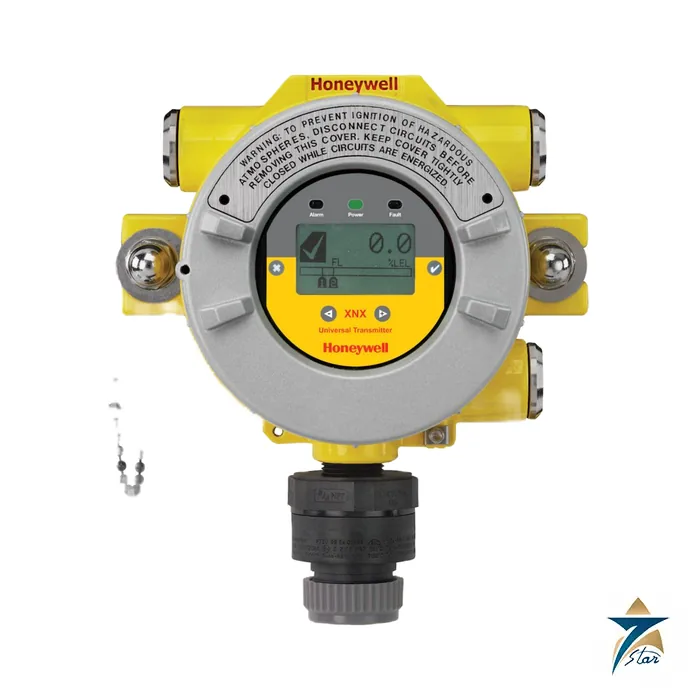
The XNX is a universal gas transmitter in the Honeywell fixed gas detection range. Rather than being a single detector, it is a flameproof electronics head that accepts several different sensor technologies and presents them all through the same display, the same menus and the same outputs. Seven Star LLC supplies the XNX in Oman and the GCC as an independent supplier in Muscat, with the sensor and output configuration quoted to match each site.
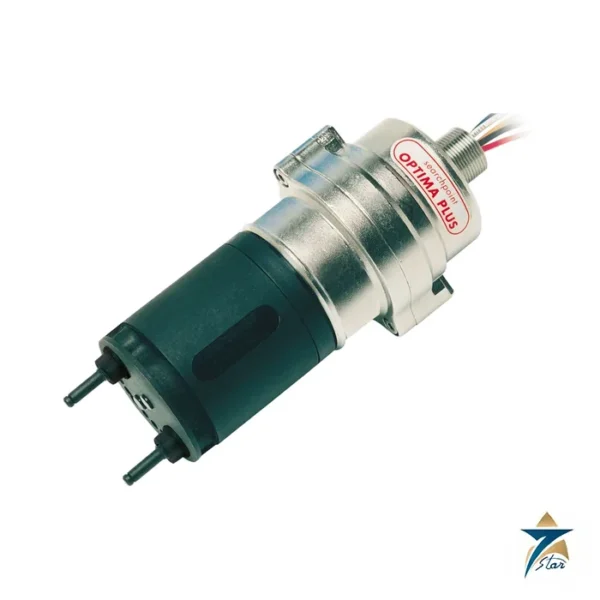
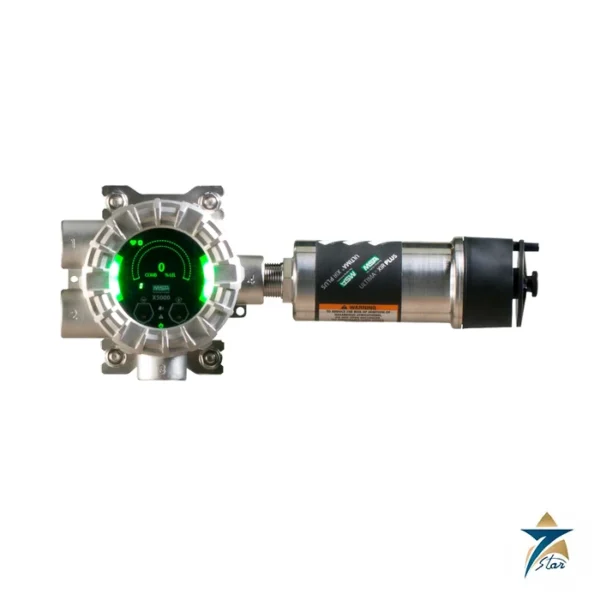
The head is built around a plug-in electronics pod that carries the personality board, any option module and the backlit display. The personality decides which sensor family the transmitter understands. Three exist: the mV personality for catalytic bead and other millivolt-signal heads such as the multi purpose detector (MPD), the EC personality for electrochemical toxic and oxygen cartridges, and the IR personality for the Searchpoint Optima Plus point detector and the Searchline Excel open path system.
The ordering structure of the datasheet reads left to right as XNX followed by approval, entry type, enclosure material, personality, output option, local HART port and sensor with range. In the datasheet’s own example, XNX-AMSV-NNCB1 is an ATEX/IECEx approved unit with five M25 entries, painted 316 stainless steel enclosure, mV personality, no relay or Modbus option, no local HART port, supplied with an MPD catalytic bead sensor for 0-100% LEL. Not every combination is offered, so the exact string is always confirmed before an order is placed.
Technical specifications of the XNX transmitter
| Parameter |
Specification |
| Manufacturer / part number |
Honeywell / XNX (configured with the model code described above) |
| Function |
Universal gas transmitter for flammable, toxic and oxygen sensors |
| Enclosure |
Flameproof; marine-finish painted aluminium alloy or 316 stainless steel |
| Weight (approx.) |
Aluminium 2.8 kg; 316 stainless steel 5 kg |
| Dimensions |
160 x 197 x 114 mm |
| Cable entries |
Five (two right, two left, one bottom): M25 for ATEX/IECEx versions, 3/4 in NPT for UL/CSA versions |
| Ingress protection |
IP66 (EN 60529), NEMA 4X |
| Operating temperature |
-40 °C to +65 °C |
| Operating humidity |
0-99 % RH, non-condensing |
| Supply voltage |
16 to 32 V dc for EC and mV versions; 18 to 32 V dc for the IR version (24 V dc nominal) |
| Maximum power |
EC toxic 6.2 W; mV catalytic or IR cell 6.5 W; IR with Searchpoint Optima Plus 9.7 W; IR with Searchline Excel receiver 13.2 W |
| Analogue output |
Isolated 4-20 mA with HART, selectable sink, source or isolated; HART 6.0 protocol; accuracy ±1 % of full scale |
| Optional outputs |
Relay module (2 alarm and 1 fault SPCO relays), Modbus RTU module or FOUNDATION Fieldbus H1 module; the three are mutually exclusive |
| Hazardous-area marking (datasheet) |
ATEX II 2 (1) G Ex d [ia IIC Ga] IIC T4/T6 Gb; IECEx Ex d [ia IIC Ga] IIC T4/T6 Gb; UL and CSA Class I Div 1; functional safety assessed to SIL 2 |
| Mounting |
Integral lugs; optional pipe bracket for 100-150 mm pipe; optional ceiling bracket |
Values are taken from the Honeywell datasheet. Approvals differ between the ATEX/IECEx and UL/CSA versions, so the certificate set that applies to your configuration should be checked against the version you order.
How the XNX works with each sensor personality
Inside the XNX the personality board conditions whatever the sensor sends and turns it into a gas reading. With the mV personality, the transmitter powers a bridge-type catalytic head or a millivolt infrared head and reads its signal. With the EC personality, a small intrinsically safe barrier sits between the transmitter and the electrochemical cartridge, which is why toxic and oxygen cartridges can be exchanged without a hot work permit. With the IR personality, the transmitter talks digitally to the optical detector and also reports diagnostic values such as optical signal level.
Whatever the sensor, the reading is shown on a large backlit multilingual LCD with text, digits, a bar graph and icons, and is driven out as a 4-20 mA signal with HART superimposed. Configuration is done through magnetic switches, so an engineer can change ranges, alarm points or inhibit the output without opening the flameproof cover. During calibration and set-up the output goes into an inhibit state so the control room is not flooded with false alarms.
In current-loop terms the signal levels are conventional: normal gas measurement sits between 4 and 20 mA, fault is below 1 mA in the default 4-20 mA mode, and over-range is reported up to 22 mA. In HART mode a 3 mA level is used for fault and warning states. Source, sink and isolated wiring are chosen with a switch on the back of the pod.
XNX in the gas detection system: compatible sensors and related parts
The XNX is designed to be the common head of a site. On the flammable side it works with the MPD catalytic and infrared sensor housings, with the Sensepoint HT and the Model 705 high temperature heads, and, in IR form, with Searchpoint Optima Plus and Searchline Excel. On the toxic and oxygen side it takes the XNX EC sensor with its plug-in cartridges, and the sensor interface is intrinsically safe.
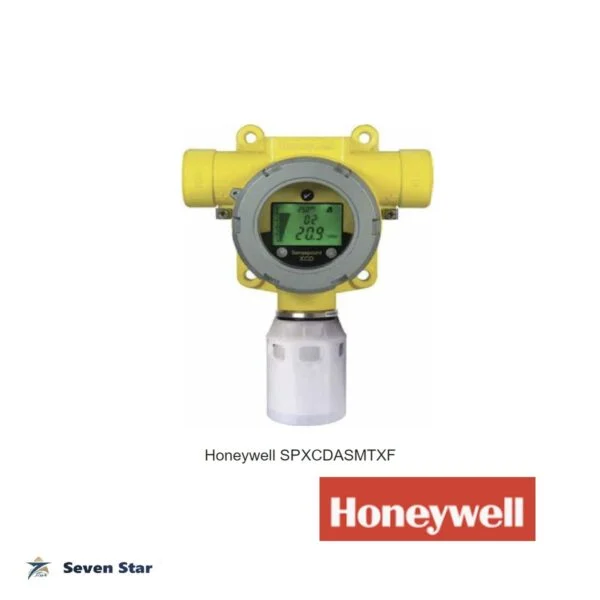
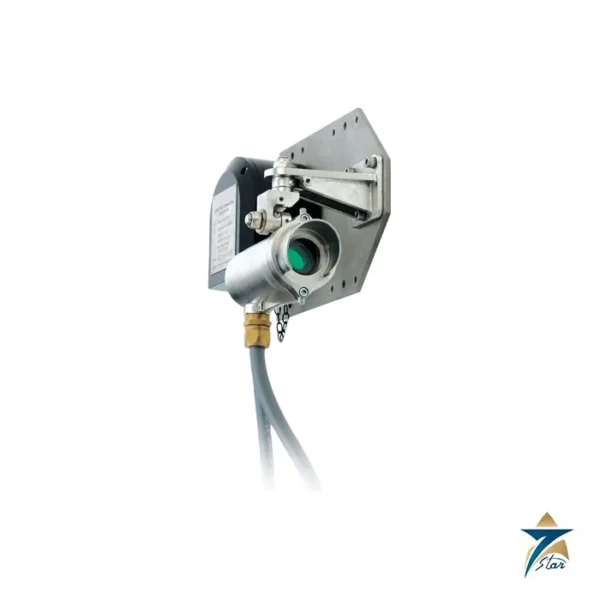
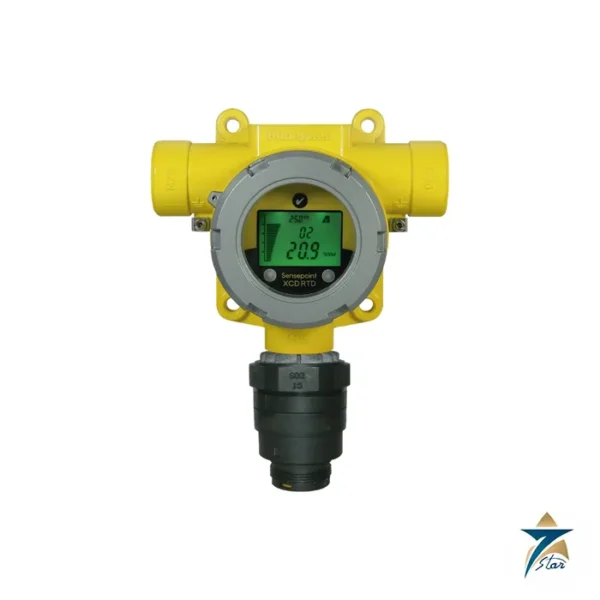
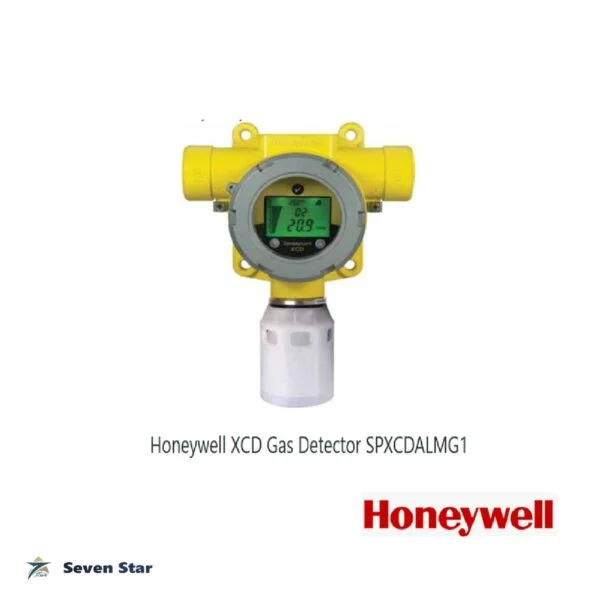
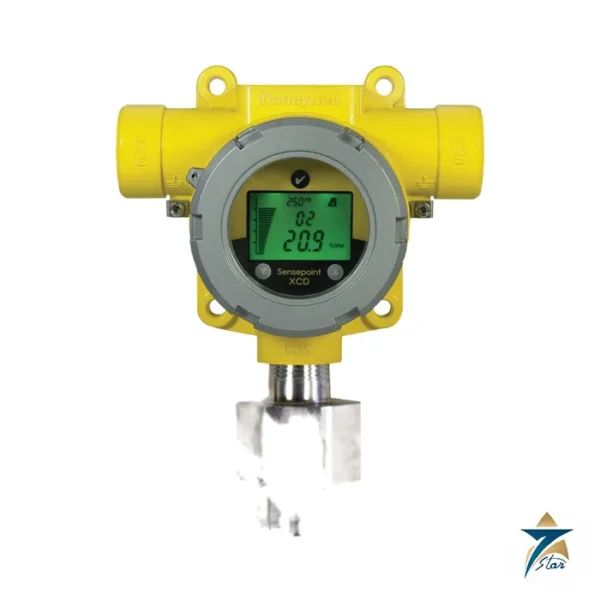
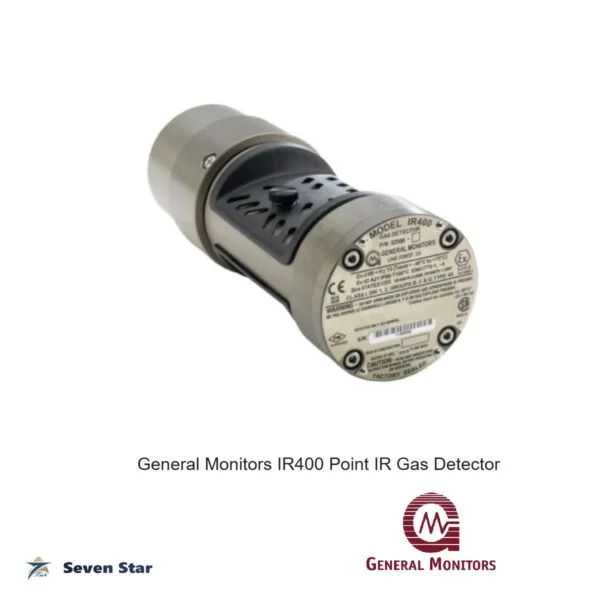
Related parts that often appear on the same enquiry are the Searchpoint Optima Plus point infrared detector, the Searchline Excel open path system and the Searchline Excel Cross-Duct for HVAC intakes, all of which can be connected through the IR personality. The Sensepoint XCD and Sensepoint XCD RFD are separate transmitter platforms and should not be confused with the XNX.
Typical accessories listed by the manufacturer include a pipe mounting kit, a ceiling bracket, a storm baffle and fitting kit for the Optima Plus, a remote gassing kit for functional checks, and a remote sensor mounting kit for the XNX EC sensor.
Selection and ordering checklist for the XNX
- Decide the sensor technology first: catalytic or infrared flammable, electrochemical toxic or oxygen, point infrared or open path.
- Choose the approval set: ATEX/IECEx with M25 entries or UL/CSA with 3/4 in NPT entries.
- Choose the enclosure: painted aluminium for most onshore plant, 316 stainless steel for offshore or heavily corrosive coastal sites.
- Select the output option: standard 4-20 mA with HART only, or add the relay, Modbus RTU or FOUNDATION Fieldbus module (only one of the three).
- Decide whether the optional local intrinsically safe HART port is needed for hot connection of a hand-held communicator.
- State the target gas and range, because sensors other than the MPD are ordered separately.
- Confirm the controller input: current source, sink or isolated, and its supply voltage.
Cable length depends on conductor size. The datasheet gives typical limits for an mV unit with an MPD or an EC unit, for example about 347 m with 1.0 mm² and about 1408 m with 2.5 mm² cable, assuming a single transmitter on a power supply.
Installation, commissioning and maintenance of the XNX
Mounting is straightforward: two integral lugs allow direct surface fixing, and the optional bracket clamps to a pipe of 100 to 150 mm diameter. Cable must be mechanically protected and glanded or conduited in line with the local hazardous-area rules; conductors from 0.5 to 2.5 mm² fit the pluggable cage terminals. The screen should be terminated at one end only, either at the detector or at the controller.
At commissioning, set the source, sink or isolated switch, check supply voltage at the detector under full load, then zero and span the sensor with the correct calibration gas. HART or the magnetic switches can be used. The transmitter has auto-inhibit while a user is in the menus, so the loop should be returned to normal measuring state before leaving the area.
Maintenance is simplified because catalytic and infrared sensors are serviceable and toxic or oxygen cartridges are hot-swappable. Keep spare cartridges, calibration gas and a calibration cup in stock, and plan routine functional checks to match the site procedure.
Typical XNX applications in Oman and the GCC
The datasheet lists offshore production platforms, drilling, refineries, chemical and petrochemical plants, onshore terminals, gas transmission and power stations. These are exactly the sectors found across Oman and the wider Gulf, where an XNX head is typically installed on wellhead pads, compressor stations, LNG and gas-processing units, gas turbine halls and desalination and power plants.
Local conditions matter for selection. High ambient temperature and solar loading favour the stainless enclosure and a sunshade, fine desert dust calls for periodic cleaning of sensor inlets, and coastal humidity increases the importance of well-sealed glands. The operating range of the transmitter is -40 °C to +65 °C, which covers most Gulf sites, but the sensor fitted may have its own narrower limits.
XNX personalities and sensors at a glance
| Personality |
Sensors supported |
Typical gas hazard |
| mV |
MPD catalytic, MPD infrared, Sensepoint HT, Sensepoint, Model 705 HT |
Flammable gas, including CO2 on the infrared MPD |
| EC |
XNX toxic and oxygen cartridges |
Toxic gases and oxygen deficiency or enrichment |
| IR |
Searchpoint Optima Plus, Searchline Excel |
Hydrocarbons, methane; open path flammable gas |
The MPD infrared cartridges cover hydrocarbons 0-100 % LEL, methane 0-100 % LEL or 0-5 % volume, and carbon dioxide 0-5 % volume according to the datasheet.
Information to send with an XNX enquiry
- Complete XNX model code or, if you are replacing a unit, the code from the nameplate
- Sensor type, gas and measuring range
- Hazardous-area classification and certificate requirement (ATEX/IECEx or UL/CSA)
- Output and communication needs: HART, relays, Modbus RTU or FOUNDATION Fieldbus
- Enclosure material, entry thread type and any mounting accessories
- Quantity, delivery location and required calibration gas or spare cartridges
Documents and quotation
Send us the XNX model code and the sensor requirement and we will confirm the configuration and availability. A datasheet is attached on this page, and we can add related Honeywell manuals on request. Seven Star LLC is an independent supplier in Muscat and does not represent itself as an official Honeywell channel.
For multi-point projects we can quote the transmitters together with the matching detectors and calibration accessories.



























Reviews
There are no reviews yet.