Searchline Excel Cross-Duct open path gas detector overview
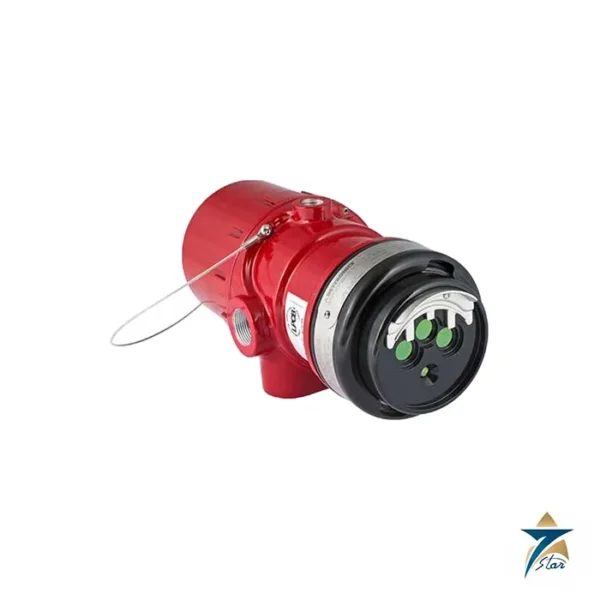
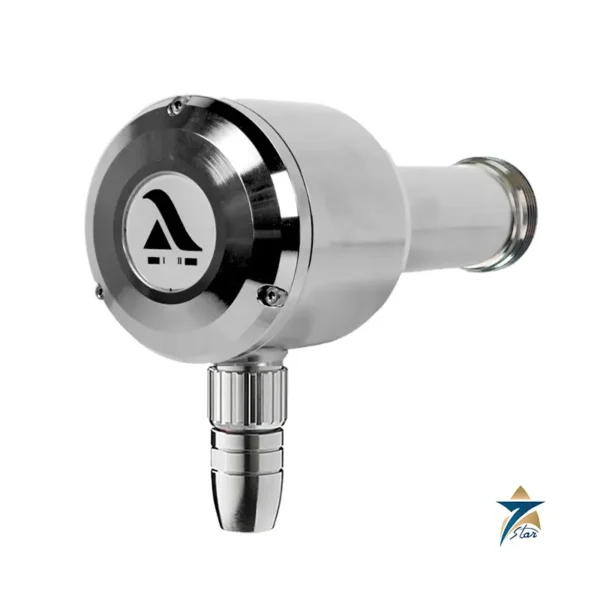
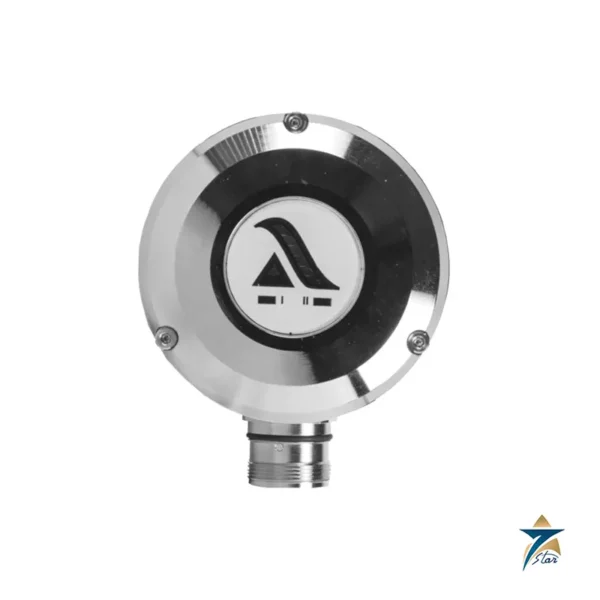
Searchline Excel Cross-Duct is a Honeywell infrared open path flammable gas detector adapted for ducts. It is built on the Searchline Excel open path design, but the beam is short and crosses a duct or turbine enclosure ventilation path instead of a wide plant area. Seven Star LLC supplies Searchline Excel Cross-Duct in Oman and the GCC as an independent supplier in Muscat.
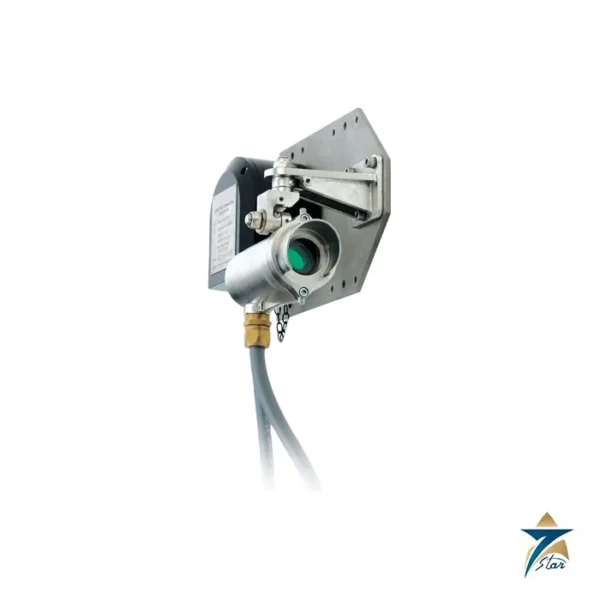
It is a two-part system: a transceiver on one side of the duct and a heated retro-reflector panel on the other. Infrared light travels across the duct, is returned by the reflector and is analysed for absorption by hydrocarbon gas. There is no field alignment procedure to carry out, which was an explicit design goal, and the system tolerates duct flex and vibration.
Searchline Excel Cross-Duct technical specifications
| Parameter |
Specification |
| Manufacturer / part number |
Honeywell / Searchline Excel Cross-Duct |
| Detection principle |
Infrared open path, transceiver plus heated retro-reflector panel |
| Gas calibration |
Methane (mixtures with more than 70 % methane and the balance C2-C6 hydrocarbons); other gases on request |
| Detection range |
0-100 % LEL |
| Path length |
0.5 m to 5 m (duct width) |
| Minimum alarm threshold |
20 % LEL for 0.5-2.5 m duct width; 10 % LEL for 2.5-5 m |
| Response time |
T90 below 1 second |
| Analogue output |
4-20 mA sink or source (default source); over range 21 mA, warning 3 mA, beam block 2.5 mA, inhibit 2 mA, fault 0 mA |
| Digital output |
Modbus RS485 multi drop through DX100(M) or an XNX with Modbus option; RS485 diagnostics link |
| Operating temperature |
-40 °C to +50 °C ambient; duct temperature up to 60 °C if ambient at the units is in range |
| Humidity / pressure |
0-99 % non-condensing; 91.5-105.5 kPa |
| Repeatability |
5.0 % LEL below 1 m; 2.5 % LEL above 1 m |
| Warm-up |
Under 1 hour for full stabilisation |
| Power supply |
Unit 18-32 V dc, 13 W max; heated reflector 18-28 V dc, 6 W nominal at 24 V dc |
| Enclosure |
316 stainless steel, IP66 and IP67 |
| Weight |
Transceiver 13 kg; reflector panel 5 kg (0.5-2.5 m) or 10 kg (2.5-5 m) |
| Vibration |
2-60 Hz, 1 mm peak to peak |
The datasheet marks the transmitter and receiver as ATEX II 2 G Ex d (op is) IIC T5 or T6 depending on ambient limit, with matching IECEx marking and UL Class 1 listing. Heated panel certificates are listed separately. Confirm the paperwork for your project’s exact configuration.
How the Cross-Duct detector works
Hydrocarbons absorb infrared light at specific wavelengths. The system compares the absorbed wavelength to a reference wavelength that the gas does not absorb, so the result is a gas concentration measured as an average along the beam path. That path-integrated signal makes the detector sensitive to a cloud crossing the duct anywhere in the span, not only at one point.
A heated reflector panel is used to keep the optical surface from misting or fogging, which matters in ducts that carry humid air. The datasheet also lists contamination-resistant optics, immunity to catalytic poisons and operation in inert atmospheres, which separates infrared devices from catalytic beads. A built-in functional gas test facility allows a quick system check.
System fit: related parts to Searchline Excel Cross-Duct
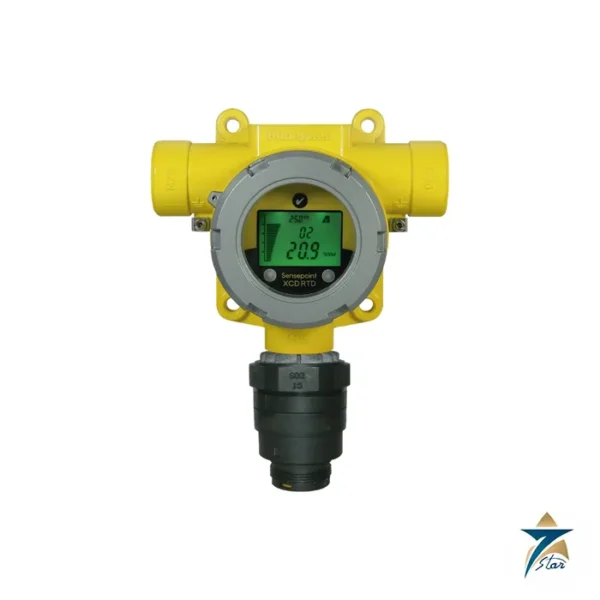
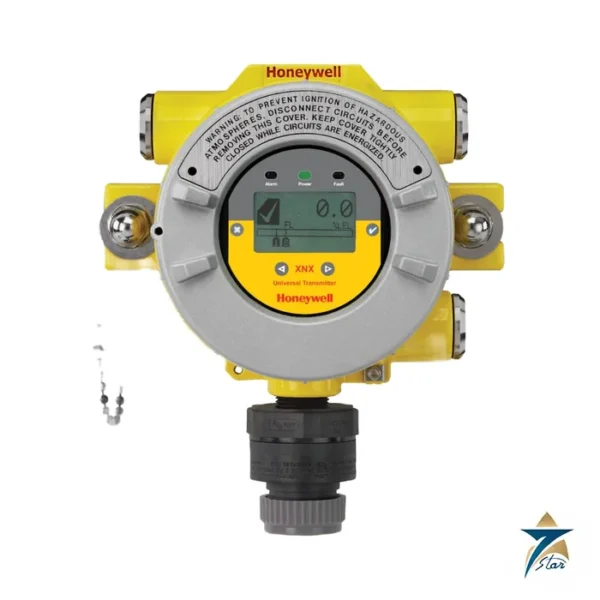
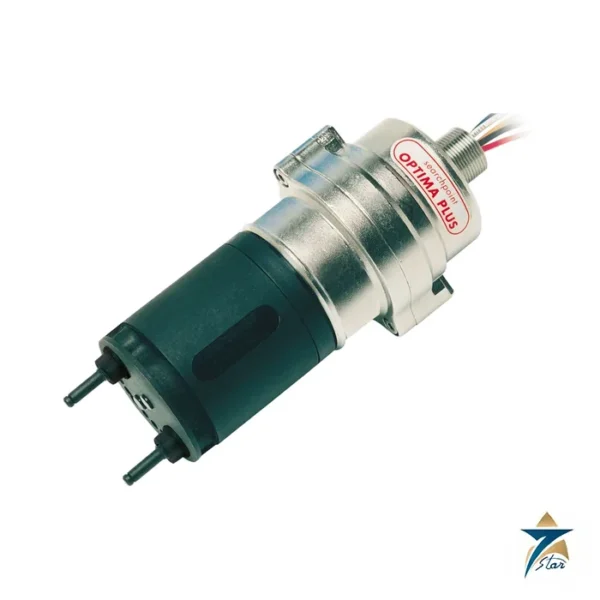
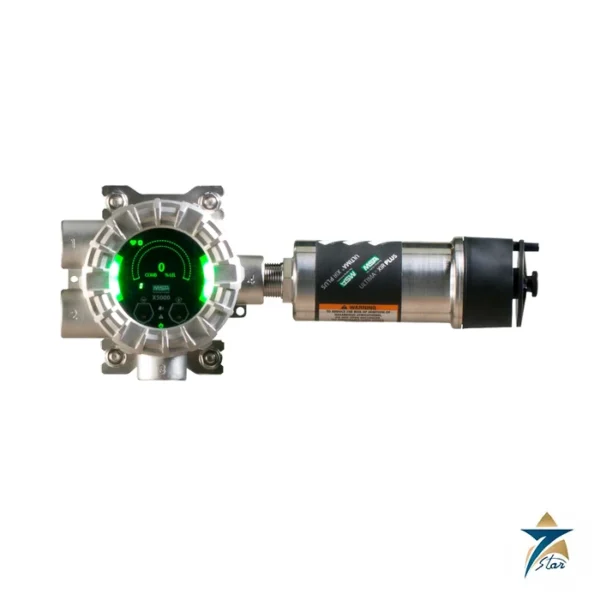
Searchline Excel Cross-Duct is usually chosen alongside Searchpoint Optima Plus point detectors and the main Searchline Excel open path detector for outdoor areas. Its signals can be taken straight into a controller as 4-20 mA, or through Modbus using DX100(M) or an XNX transmitter fitted with the Modbus option. A single Modbus cable can connect up to 32 detectors, which reduces cabling in larger installations. The SHC-1 hand-held interrogator or a HART communicator through the XNX can configure and interrogate it.
Selection checklist for Searchline Excel Cross-Duct
- Measure the internal width of the duct to confirm it falls between 0.5 m and 5 m and choose the matching reflector panel size.
- Confirm target gas (methane calibration is standard) and the alarm philosophy; low alarm points of 10-20 % LEL depend on path length.
- Check maximum ambient temperature outside the duct at both units, which must stay within -40 °C to +50 °C.
- Decide how to read signals: 4-20 mA source or sink, or Modbus through DX100(M) or XNX.
- Plan power: 18-32 V dc for the transceiver and a separate 18-28 V dc feed for the heated reflector.
- Confirm hazardous-area approval needed for the duct location.
Installation, commissioning and maintenance
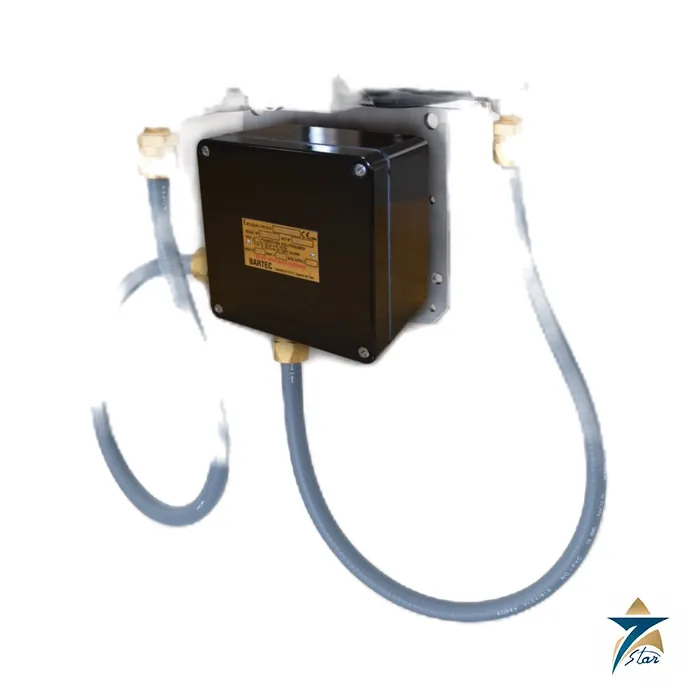
Mount the transceiver and the reflector panel on opposite duct walls using their mounting plates. Because the design is alignment-free, installation is mainly mechanical. Run cable to the junction box and terminal box shown in the datasheet drawing, and provide a separate supply to the heated panel. Allow up to one hour warm-up for stabilisation before checking readings.
In service, check that the optical windows are clean, apply a functional gas test at intervals set by site procedure, and use Modbus or HART diagnostics to read warning, beam block and fault states remotely. The weight of the transceiver (13 kg) should be considered when planning access and lifting.
Typical applications in Oman and the GCC
The datasheet names control rooms, personal refuge areas and turbine enclosures. In Oman and the Gulf these correspond to the HVAC intakes of control buildings and accommodation modules at oil and gas facilities, the ventilation ducts of gas turbine enclosures at power and water plants, and air intakes of LNG or petrochemical process buildings. The aim is to catch hydrocarbon gas entering the duct before it reaches people or ignition sources. Intake ducts in the region carry hot, dusty and sometimes humid air, which explains the heated reflector and contamination-resistant optics.
Information to send with an RFQ
- Duct width, shape and wall material
- Gas to detect and alarm set points required
- Maximum temperature inside the duct and outside at each unit
- Output type: 4-20 mA, HART or Modbus
- Hazardous-area classification and certification needed
- Quantity and delivery location
Documents and quotation
Please send the Searchline Excel Cross-Duct duct widths and the required output type and we will confirm the configuration. A datasheet is attached on this page, and we can add related Honeywell manuals on request. Seven Star LLC is an independent supplier in Muscat and does not represent itself as an official Honeywell channel.
Cabling, junction boxes and test gas can be quoted together on request.



























Reviews
There are no reviews yet.