Overview
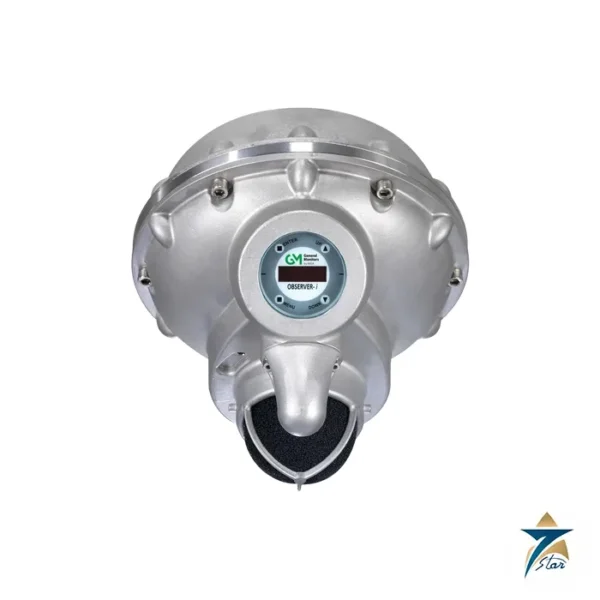
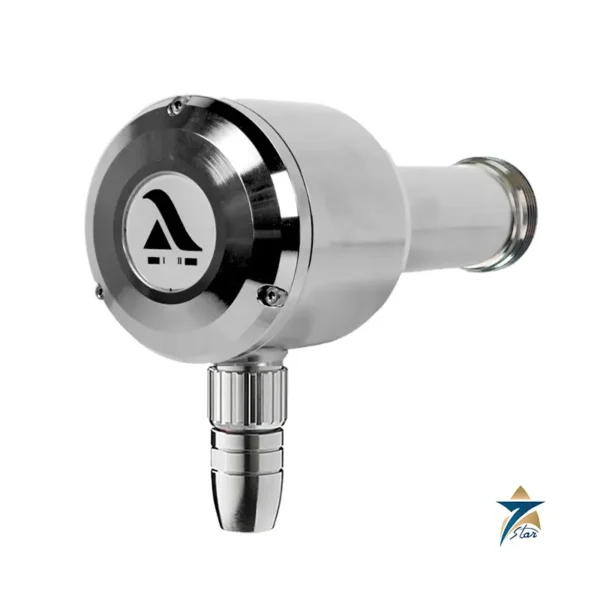
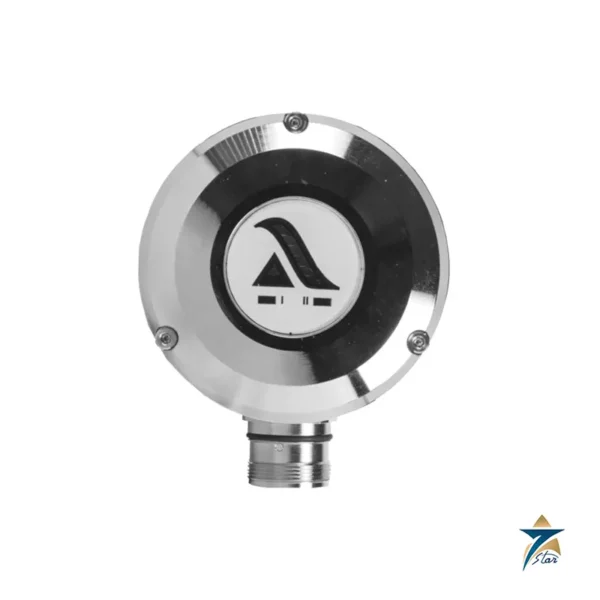
The General Monitors IR400 is a point infrared gas detector built for continuous, reliable detection of combustible hydrocarbon gases and vapors in industrial hazardous areas. Using dual-wavelength infrared absorption rather than a catalytic bead sensor, the IR400 avoids the sensor poisoning risk that silicone, sulfur, and lead compounds pose to catalytic detectors, while delivering fast response even through a splash guard.
As part of General Monitors’ (an MSA Safety brand) established point gas detector range, the IR400 is engineered for demanding oil, gas, and petrochemical environments where continuous, unattended gas monitoring is a safety-critical function. Seven Star LLC supplies the General Monitors IR400 as a trusted MSA Safety/General Monitors supplier to industrial facilities across Oman and the GCC.
Operating Principle
The IR400 measures gas concentration by comparing infrared absorption at a wavelength specific to hydrocarbon molecules against a reference wavelength unaffected by the target gas, calculating gas concentration from the difference. This dual-wavelength infrared approach is immune to the catalytic-poisoning failure mode that silicone vapors, sulfur compounds, and leaded fuels can cause in bead-type combustible gas sensors, and the detector achieves a T90 response of 3 seconds or less even with a splash guard installed — among the fastest response times in its class.
Engineering Design of the General Monitors IR400
The IR400 monitors within the lower explosive limit (LEL) range across approximately 45 combustible hydrocarbon gases and vapors, including methane, propane, butane, ethane, ethylene, gasoline, jet fuel, benzene, and xylene, covering the majority of hydrocarbons encountered in oil and gas processing. Output is provided as an industry-standard 4–20mA signal, with options for Modbus and HART digital communication for integration into modern gas-detection and control systems. The detector is housed in an explosion-proof enclosure rated for hazardous-area installation.
Key Features
- Dual-wavelength infrared detection, immune to sensor poisoning
- Detects ~45 combustible hydrocarbon gases and vapors
- T90 response ≤3 seconds, even with splash guard installed
- 4–20mA output, with Modbus and HART options
- Explosion-proof housing for hazardous-area installation
- No catalytic bead to poison or degrade over time
- Monitors within the lower explosive limit (LEL) range
- Part of General Monitors’ (MSA Safety) established gas detection range
Industrial Applications
The IR400 is specified for continuous combustible-gas monitoring in refineries, gas processing plants, and petrochemical facilities across Muscat, Sohar, and Salalah, where hydrocarbon leaks from process equipment, pipelines, or storage present a fire and explosion risk. Its resistance to catalytic poisoning makes it particularly suited to environments with silicone-based products, sulfur compounds, or leaded fuels present, where a traditional catalytic detector would need frequent recalibration or replacement.
Across the GCC’s oil, gas, and petrochemical sectors, the IR400’s fast response time supports early leak detection and automatic shutdown or ventilation interlocks, helping facilities meet safety case requirements for combustible-gas monitoring in process areas, compressor stations, and loading facilities.
Technical Specifications
| Parameter |
Specification |
| Model |
General Monitors IR400 |
| Detection Technology |
Dual-wavelength infrared absorption |
| Gases Detected |
~45 combustible hydrocarbons (methane, propane, benzene, etc.) |
| Measurement Range |
0–100% LEL |
| Response Time |
T90 ≤3 seconds (with splash guard) |
| Output |
4–20mA, Modbus, HART options |
| Enclosure |
Explosion-proof |
| Accuracy at 25 °C |
±3 % LEL up to 50 % LEL; ±5 % LEL above 50 % LEL |
| Zero drift |
Less than 2 % per year |
| Response time with splash guard |
T50 1.5 s or less, T90 3 s or less |
| Input power |
20 to 36 V DC, 24 V DC nominal, 200 mA max. |
| Analogue output |
0 to 21.7 mA, 600 Ω max. |
| Status current levels |
Fault/start-up 0 mA; zero, calibration, gas check 1.5 mA; dirty optics 2.0 mA |
| RS-485 |
Modbus RTU; 2400 to 19200 baud |
| Storage temperature / humidity |
-50 to +85 °C; 10 to 95 % RH non-condensing |
| Dimensions / weight |
74 mm diameter × 225 mm; 1.35 kg aluminium, 2.7 kg stainless steel |
| Mounting / ingress protection |
3/4 in NPT; Type 4X, IP66 |
General Monitors IR400 Ordering Code and Options
The part number IR400-0-01-1-2-0-1-0 is the configuration that General Monitors lists as its standard build. Each group after the model name selects one option. The first digit is the output: 0 means analogue output with Modbus. Other codes select HART, Hazard Watch calibration or Modbus with a customer-specified address. The two-digit group is the calibration gas: 01 is methane. Further codes cover propane, benzene, hexane, pentane, ethylene, butane, ethane and propylene.
The next digit is the housing: 1 is aluminium and 2 is stainless steel, both with a 3/4 in NPT thread. The optical guard digit is 2 for a splash guard with screen, 1 for a splash guard without screen and 0 for none. The junction-box digit is 0 for no box. The last two digits are the standard approval set and no automatic remote gas calibrator.
So this exact unit is a methane-calibrated, aluminium-housed detector with 4-20 mA and Modbus, splash guard with screen, and no junction box. A HART output needs a different first option code.
General Monitors IR400 Installation and Wiring Notes
The detector is supplied from 24 V DC nominal (20-36 V DC) and draws up to 200 mA. With 14 AWG (2.0 mm²) cable the data sheet allows up to 1100 m between the power source and the detector. The output drops to defined levels below 4 mA to signal fault, zeroing or calibration, and dirty optics, so the receiving system should be configured to recognise them. The unit is factory-calibrated and needs no routine gas calibration; the manufacturer specifies periodic window cleaning and re-zeroing. Listed accessories include a junction box, duct-mount junction box, calibration cup, flow block and rain guard.
Request a Quote for General Monitors IR400-0-01-1-2-0-1-0 Point IR Gas Detector
Contact Seven Star LLC for pricing and availability on the General Monitors IR400 point IR gas detector across Oman and the GCC. Our team can help specify the correct gas detector configuration for your hazardous-area monitoring requirements.
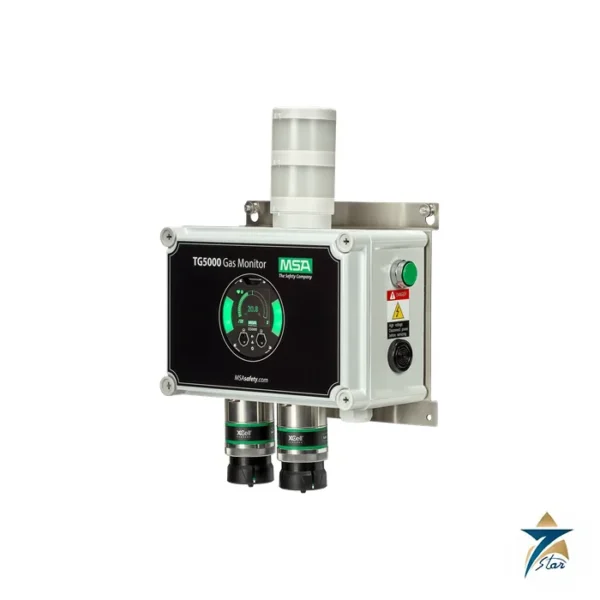
Also available: General Monitors TG5000 Toxic and Combustible Gas Monitor














Reviews
There are no reviews yet.