Brand:

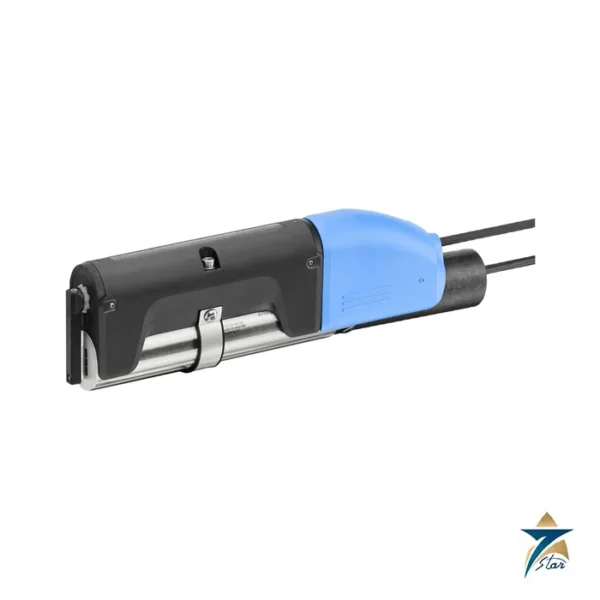
Yokogawa ISC40G-TG-T1-10 PFA Inductive Conductivity Sensor

Description

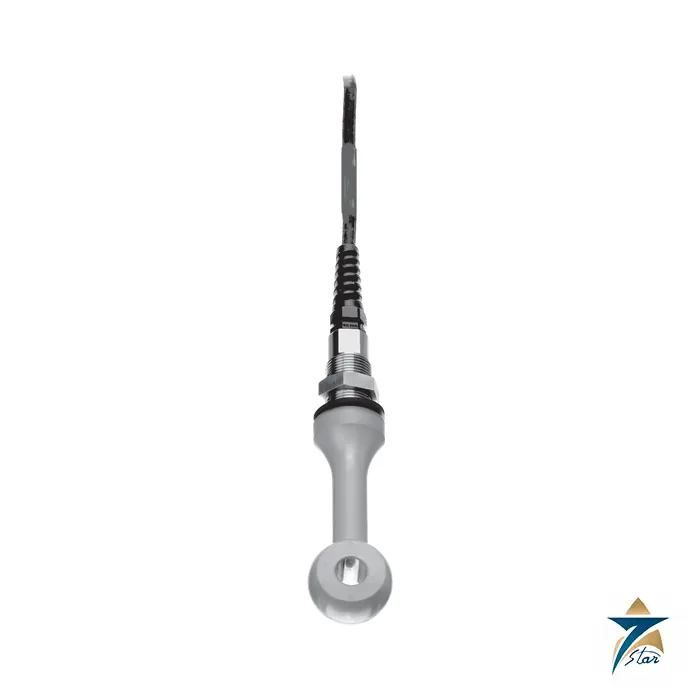
A PFA sensor for chemistry that PEEK does not survive

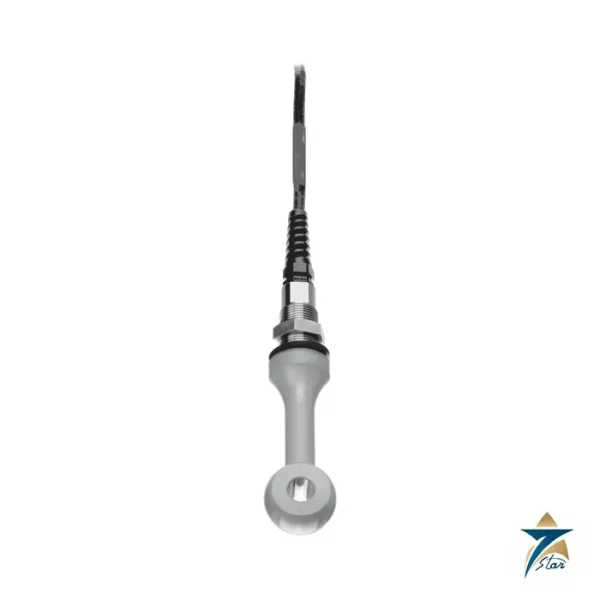
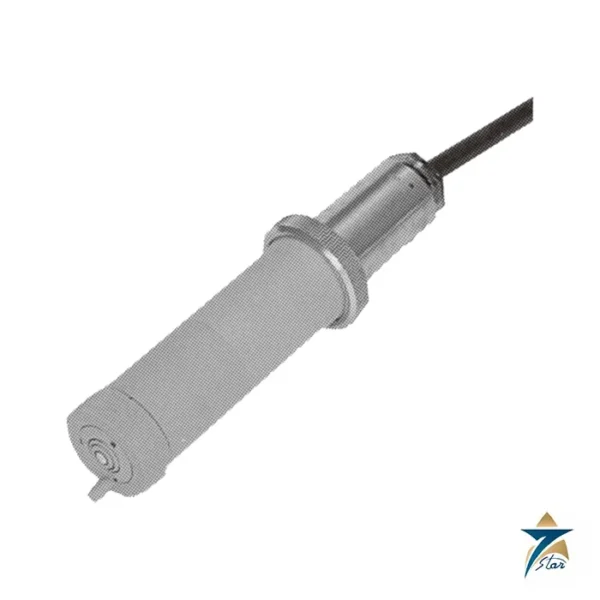
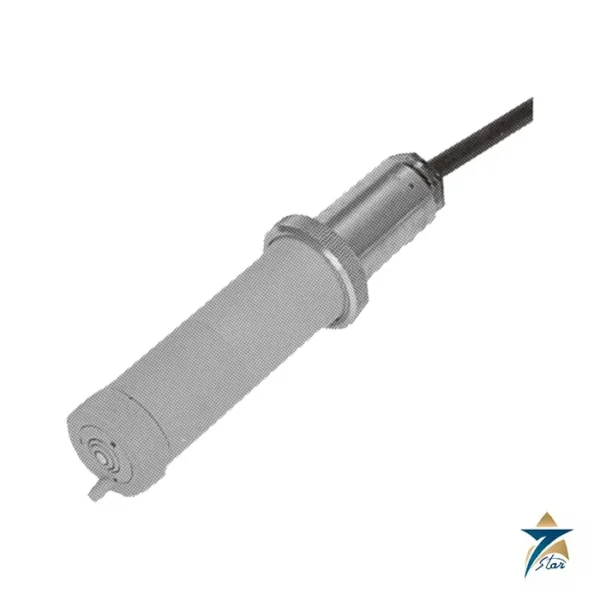
Some plant lines carry liquids that are chemically hostile even to engineering plastics. Hydrofluoric acid etches glass-filled PEEK. Concentrated nitric acid, sulfuric acid and oleum oxidise many polymers. For these duties the ISC40G range offers a PFA-bodied toroidal sensor, and Yokogawa ISC40G-TG-T1-10 is the version with a 10 m cable and a Pt1000 element. It carries the TG sensor-type code, meaning PFA general model, and it shares the same electronics and cable concept as the PEEK sensors.

The part number is easy to decode: TG is PFA general, T1 is Pt1000, and 10 is ten metres of cable, a length chosen when the converter sits in an analyser room away from the pipe.

Seven Star LLC is an independent supplier serving Oman and the GCC and is not affiliated with the manufacturer.

ISC40G-TG-T1-10 data summary

Parameter Value
Body PFA, FDA approved
Thread / nut AISI 316 stainless steel
Operating range 0 to 2000 mS/cm at process temperature
Process temperature -20 to 130 C
Pressure 0 to 15 bar (217 psig); 5 bar (72 psig) at maximum temperature
Installation factor 3.00 per cm nominal for PFA
Sensor error 1.0 uS/cm to be considered
Response t90 under 10 minutes
Temperature element Pt1000 (T1)
Cable 10 m, maximum 50 m with WF10 and BA10
Weight Approx. 1.6 kg with 10 m cable
Package 320 x 240 x 110 mm for 10 m, 15 m and 20 m cable

How the PFA model differs from the PEEK model

The numbers explain the trade. The PFA body takes chemistry that PEEK cannot, but it gives up a little in pressure rating (15 bar against 20 bar), response (under 10 minutes against under 5), and measurement error (1.0 against 0.5 uS/cm). The installation factor also changes, from 1.88 to 3.00 per cm, so a converter must be configured with the right cell factor for TG sensors. Compared with ISC40G-GG-T1-05, ISC40G-TG-T1-10 additionally has the longer 10 m cable and the slightly larger shipping carton.

Where ISC40G-TG-T1-10 earns its place

Candidate duties are acid cleaning and pickling lines, etching baths, semiconductor wet chemistry, fertiliser and phosphate plants, oleum and sulfuric acid strength, and nitric acid concentration monitoring. In Oman and the GCC, such liquids appear in petrochemical complexes, fertiliser works at Sur and Sohar, metal finishing shops and laboratory-scale chemical processes.

Chemical compatibility reasoning for PFA

PFA is a fully fluorinated thermoplastic. It does not swell or crack in strong mineral acids, and it keeps its shape in hot concentrated sulfuric acid, which makes it the logical wetted material for the TG sensor. The datasheet specifically names oleum, nitric acid and sulfuric acid as oxidising concentrated acids for the PFA model, and hydrofluoric acid as a medium that attacks PEEK. When the application is a mixture, the safest procedure is to share the full liquid composition and temperature with your process engineer before the part is ordered. Another point is the permeation of PFA: very thin sections can pass vapours slowly, so for continuous high-temperature acid service, plan on periodic replacement of the sensor as a maintenance item rather than treating it as a lifetime part.

The PFA sensor also changes what a conductivity reading means. With a higher installation factor of 3.00 per cm the raw signal per unit of conductivity is different, and the additional error of 1.0 uS/cm makes the TG sensor a poor fit for very dilute solutions. It is for concentrated and aggressive liquids, where the absolute error is negligible compared with the reading, and where a reading of tens or hundreds of mS/cm is typical. In such solutions, the stated accuracy of 0.5 percent of reading dominates.

Flange adapters and fittings

Options for the general sensor types include /SFA (AISI 316, 2 inch ANSI 150 lb), /SFD (AISI 316, DN50 PN16), /TFD (TFM with AISI 316, DN65 PN10) and /TFN (TFM, DN65 PN10). The datasheet notes that all options except /TFD use AISI 316 SS and O-ring material as the wetted part, while /TFD uses TFM and Kalrez as wetted material with AISI 316 SS non-wetted. A protection hose /PH is offered for the TF flange types in cable lengths equal to the sensor cable.

Installation points that save time

Keep the cable clear of the process pipe and heat sources. Because the process liquid may be hazardous, isolate and depressurise the line before removing the sensor. Position the sensor so its bore faces the flow, and keep 25 mm or more clear of metallic or conductive pipe walls, or perform in-situ calibration with the converter. Enter the nominal factor 3.00 per cm for the PFA sensor as the start value, then trim with a reference solution.

Maintenance and inspection

PFA is smooth and sheds deposits, so cleaning is usually a rinse with a compatible solvent. Inspect the thread and nut for corrosion if wetted by condensate, and keep the Viton gasket in good condition. If the sensor ever shows unstable readings, check the cable and junction box first, because the cable is the most exposed part. For ISC40G-TG-T1-10 specifically, rinse the sensor with clean water after any shutdown that leaves acid in the line, wear suitable protective equipment when handling it, and record the removal date and the condition of the PFA surface so that its remaining service life can be judged. Keep a spare sensor on the shelf for critical acid lines, as a failure there can stop the whole process.

Compatible converters

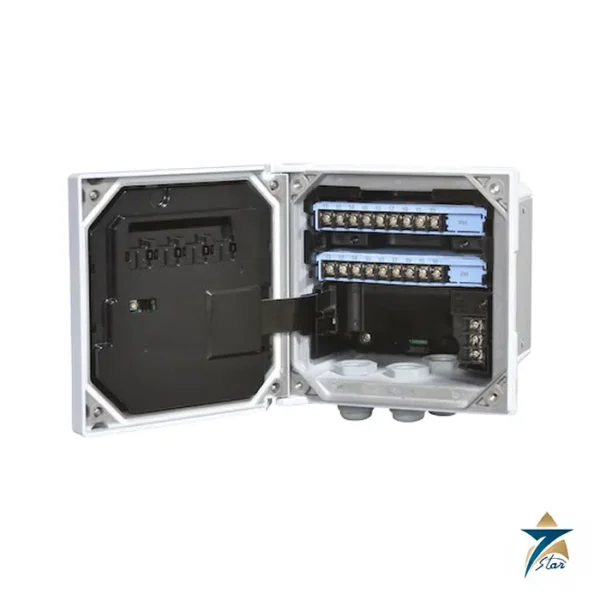
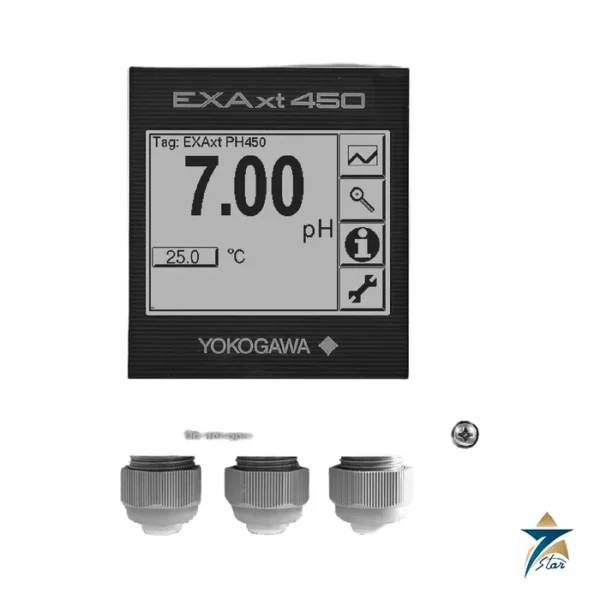
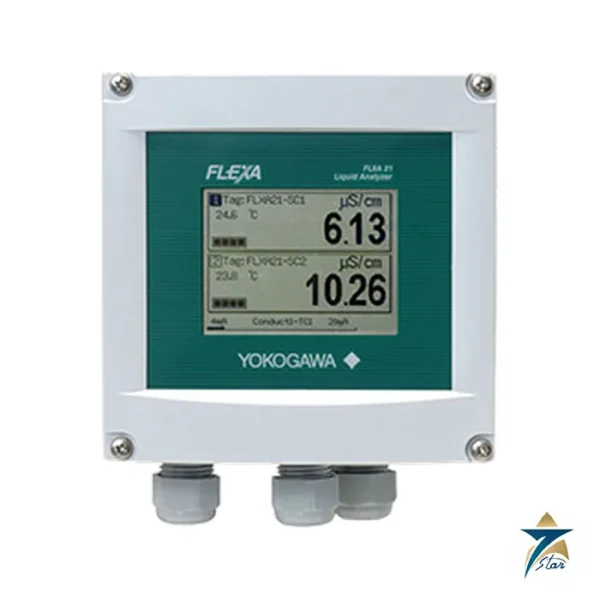
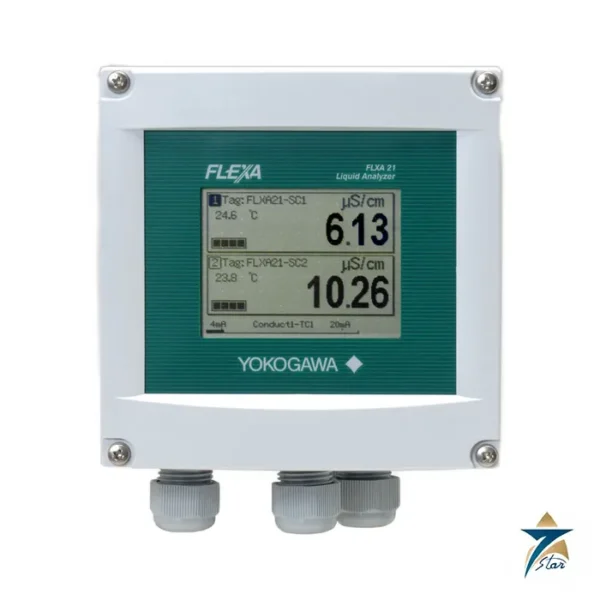
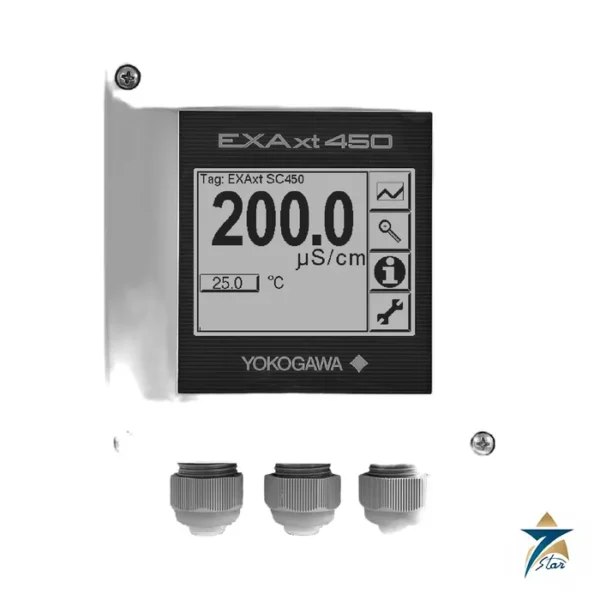
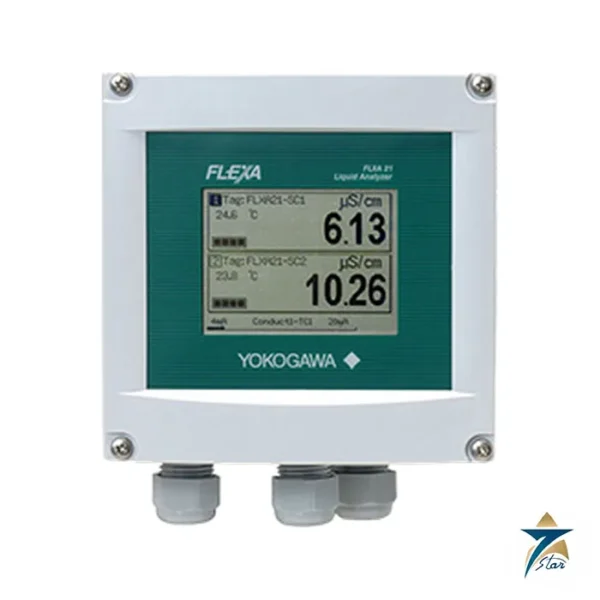
The ISC40 sensors are made for Yokogawa two-wire and four-wire analysers; FLXA21, ISC202S and IC200S appear in the datasheet. Please mention the converter model when you send the RFQ for ISC40G-TG-T1-10, so that the cell factor, the temperature element and the cable are all checked.

Documents and quotation

The datasheet for ISC40G-TG-T1-10 is attached. Send your RFQ to Seven Star LLC with the part number ISC40G-TG-T1-10, quantity and delivery location in Oman or the GCC.

Other Models in the ISC40G Range

Seven Star LLC supplies models from the ISC40G range in Oman and the GCC. Compare the related models below and request a quote for the one that matches your application.

ModelCategory
Yokogawa ISC40G-GG-T1-05 Inductive Conductivity SensorLiquid Analytical SystemsView details
Yokogawa ISC40G-TG-T1-10 PFA Inductive Conductivity SensorLiquid Analytical SystemsYou are viewing this model
Datasheets & Documents
  • PDF Datasheet Yokogawa ISC40G-TG-T1-10 PFA Inductive Conductivity Sensor Datasheet Download
Reviews (0)

Reviews

There are no reviews yet.

How would you rate this product?

It takes about 10 seconds — just tap a star. Your email is never published.

About brand

Yokogawa is the Japanese measurement and industrial automation company behind the DPharp EJA and EJX pressure transmitters, CENTUM distributed control systems and ProSafe-RS safety systems. Tamisuke Yokogawa set it up in 1915 as an electric meter research institute in Shibuya, Tokyo. It began selling electric meters in 1917, was incorporated as Yokogawa Electric Works in 1920, and has been Yokogawa Electric Corporation since 1986. In 1975 it released CENTUM, which it describes as the world's first distributed control system.

Seven Star LLC is an independent supplier in Muscat. We list Yokogawa transmitters, flowmeters, analysers, controllers, recorders and CENTUM and ProSafe spare modules, and supply them to oil and gas, power, water and process plants in Oman and the GCC by model code.

Yokogawa at a glance

Established 1915, Shibuya, Tokyo, by Tamisuke Yokogawa with Ichiro Yokogawa and Shin Aoki
Milestones Electric meters from 1917; incorporated in 1920; CENTUM DCS in 1975; renamed Yokogawa Electric Corporation in 1986
Headquarters Tokyo, Japan
Product families Pressure and temperature transmitters, magnetic, vortex and Coriolis flowmeters, liquid and gas analysers, controllers and recorders, CENTUM VP DCS, ProSafe-RS safety systems and STARDOM controllers

Yokogawa products we list

Family Models Typical use
Pressure and DP transmitters EJA110E, EJA430E, EJA530E, EJX110A, EJX530A, EJX910A multivariable Pressure, level and DP flow measurement in process plants
Temperature transmitters YTA610, YTA710 RTD and thermocouple signals converted to 4-20 mA, HART or fieldbus
Flowmeters ADMAG AXG, ADMAG AXW, ROTAMASS TI, VY vortex, VF701 Water and conductive liquids, mass flow of hydrocarbons, steam and gas
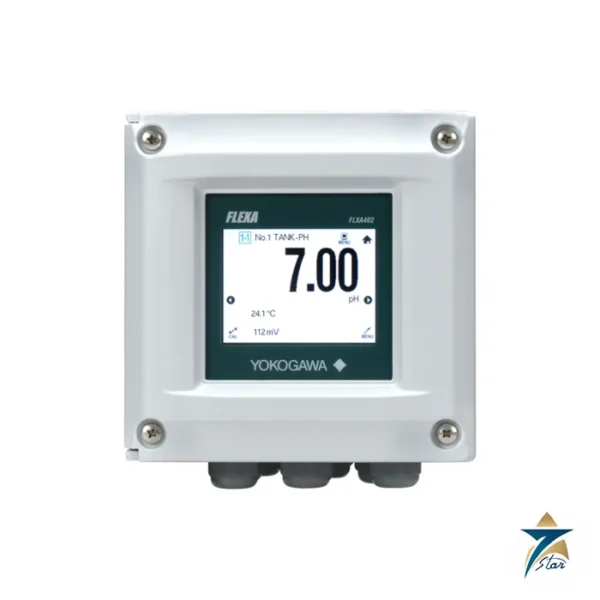
Analysers TDLS8000 laser gas analyser, FLXA402, FLXA21 DO, E7042UD zirconia cell, K9471DS cover Combustion O2, in-situ gas analysis, pH, conductivity and dissolved oxygen
Controllers and recorders UT35A/UT32A, UT32A-D, UT55A/UT52A, UT75A, UP35A/UP32A, UP55A, YS1700, GX10/GX20, GP10/GP20, GM10, µR20000 Single-loop control, furnace programs and data recording
Control and safety systems CP451-10 processor, ADV161, ADV551, node interface unit, ProSafe-RS, ProSafe-RS Lite, ProSafe-SLS, FCN-500 Spares and expansions for CENTUM DCS, safety systems and STARDOM
Battery packs S9129FA, S9185FA, S9548FA Memory backup batteries for DCS and controller modules

The EJA and EJX transmitters use Yokogawa's DPharp sensor: two silicon resonators whose vibration frequency changes with pressure, so the output is a digital frequency rather than an analogue strain signal. The model code describes the instrument completely. In EJA110E, "110" is a differential pressure transmitter, and the letters after the dash set the span, wetted materials, process connection, electrical output and approvals. When you replace a transmitter, sending the full code from the nameplate avoids a mismatch in range or materials.

Where Yokogawa products are used

In Oman and the GCC, Yokogawa transmitters, analysers and control systems are found in oil and gas production, gas processing and LNG, refineries and petrochemical plants, power and desalination stations, and water treatment. Many plants still run CENTUM CS 3000 and CENTUM VP systems that need spare I/O modules and batteries.

Ordering Yokogawa products: what we need

Send the full model and suffix code from the nameplate (for example EJA110E-JMS5J-912NN/KF22) and the style code. For DCS modules, add the module type and system version. For analysers, send the sensor type, measuring range and process conditions.

Facts checked against Yokogawa's corporate history, October 2026.

FAQ

Questions about the Yokogawa ISC40G-TG-T1-10 PFA Inductive Conductivity

Answers from our engineering team on installation, compatibility and integration.

01When should I choose ISC40G-TG-T1-10 instead of a PEEK sensor?
Choose the TG PFA model when the sample is aggressive to PEEK, such as hydrofluoric acid or oxidising concentrated acids like nitric, sulfuric and oleum, which the datasheet names as PFA applications.
02What pressure applies to ISC40G-TG-T1-10?
0 to 15 bar (217 psig), reduced to 5 bar (72 psig) at the maximum process temperature of 130 C.
03How fast does ISC40G-TG-T1-10 respond?
The datasheet gives t90 under 10 minutes for the PFA sensor, slower than the under 5 minutes of the PEEK model, so it suits slow chemical processes better than fast batch control.
04What error must be added for ISC40G-TG-T1-10?
An error of 1.0 uS/cm for the PFA model must be considered when choosing the application, against 0.5 uS/cm for the PEEK model.
05What is the cable length of ISC40G-TG-T1-10?
10 m, which weighs about 1.6 kg in total, and it can be extended to a total of 50 m using the WF10 cable and BA10 junction box.