Automatic Tag closed-cup flash point to ASTM D56
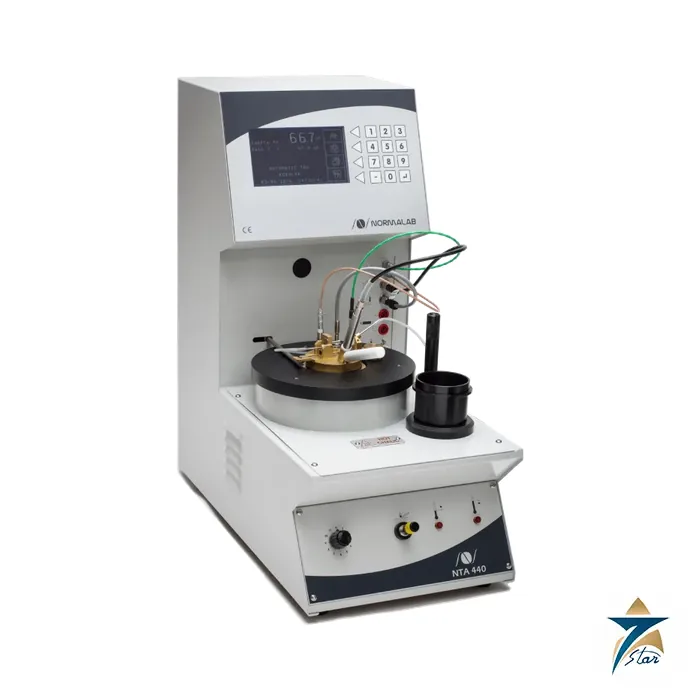
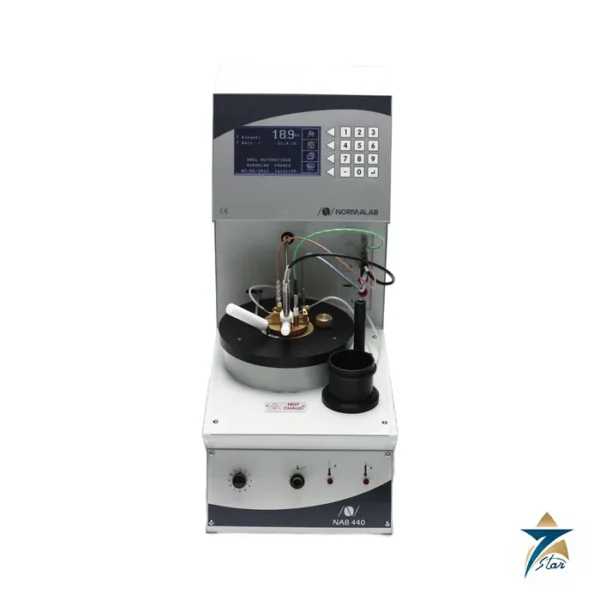
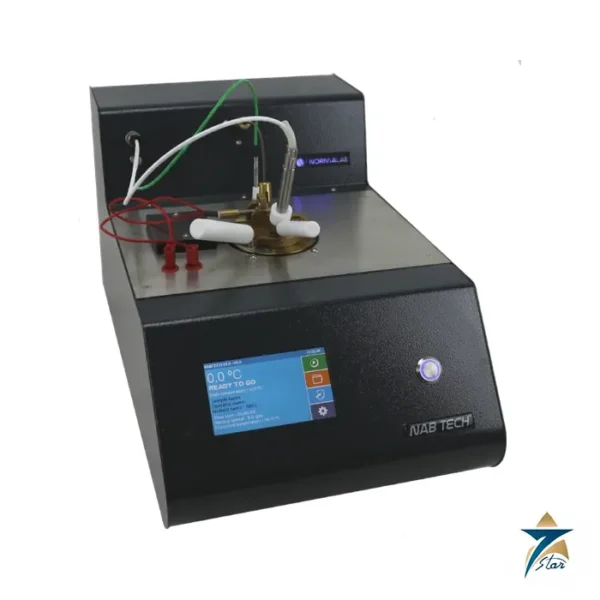
The Normalab NTA 440 is an automatic Tag closed-cup flash point tester. It is used for low-viscosity liquids that flash below 93 °C, such as solvents and light distillates, where the Tag method (ASTM D56, IP 304) is specified. The tester detects the flash with a thermocouple and an ionization ring, applies the test flame automatically with either a gas or an electric ignitor, and shuts off the gas at the end of the test.
Technical specifications
| Parameter |
Specification |
| Manufacturer / model |
Normalab NTA 440 |
| Order numbers |
40600 (AC 230 V, 50 Hz, 4 A); 40600/115V (AC 115 V, 50/60 Hz, 4 A) |
| Test temperature range |
-30 °C (with cryostat) to 110 °C |
| Temperature probe |
Pt 100 (glass) |
| Flash detection |
Double: ionization ring and thermocouple |
| Ignition |
Automatic, gas or electric |
| Data storage |
200 results (brochure); keypad is membrane type, French/English menus |
| Barometric correction |
Automatic or manual entry of atmospheric pressure |
| Units |
°C, °F, mbar, mmHg |
| Gas shut-off |
Automatic at end of test |
| Dimensions and weight |
260 x 535 x 500 mm; 20 kg (brochure) |
Standard and test principle
The brochure scope is the standard test method for flash point by Tag closed cup tester, ASTM D56 with IP 304. In a Tag test the sample is heated slowly in a closed cup with a lid and a small ignition flame is dipped periodically into the vapour space; the flash point is the lowest temperature at which the vapour flashes, corrected to standard pressure. The NTA 440 automates the presentation and detection and applies the barometric correction, which removes operator judgement from the result.
Sub-ambient testing needs a cryostat, and the unit includes the insulated tubing and an anti-freeze ring to connect one.
Scope of delivery and options
Delivered ready for use with a Tag cup (REF 40610), cover (40636), anti-freeze ring (40637), Pt 100 probe (40614), detection cable (40612), detection thermocouple (40379), insulated tubing for the cryostat (60214) and an electric ignitor (40613). Optional accessories: an 8 L cryostat for tests below 40 °C with a range of -50 to 200 °C (REF 22216), a gas cartridge kit with support (60457) and replacement gas cartridges (60458), and a thermal printer.
Compared with Normalab’s Abel testers, which follow IP 170 and ISO 13736, the NTA 440 is the instrument for Tag procedures, so check the product specification before choosing between them: the cup, the heating rate and the permitted sample class differ. The software lets the user choose gas or electric presentation and the pressure unit, and the membrane keypad is sealed against solvent splashes. The 115 V version (40600/115V) is the order code for installations without a 230 V supply.
Keep the cup and cover clean and dry before every test, pre-cool the sample for low flash points and make sure the anti-freeze ring is fitted when the cup runs at low temperature. Check the gas cartridge or regulator before each shift if gas ignition is selected, and keep the electric ignitor as the fallback when gas must be avoided in the room.
Installing the NTA 440 in the laboratory
Place the tester on a stable, level bench in a well-ventilated area, ideally under a fume extraction hood, because flash point testing releases flammable vapours and uses an open test flame when gas ignition is selected. Keep the area free of draughts from doors or air-conditioning outlets, since moving air around the cup can disturb the vapour space and affect the result. Leave enough space behind the unit for the power connection, detection cable and, where used, the insulated tubing to the cryostat.
Connect the tester to a supply that matches the order number chosen, either the 230 V or the 115 V version. When gas ignition is used, connect the gas supply as described in the Normalab manual and check all connections for leaks before the first test. Where the laboratory prefers to avoid gas, the electric ignitor supplied with the unit is the simpler choice.
Commissioning and verification
Before reporting results, verify the instrument with a certified reference material or a check sample of known flash point in the Tag range, following the verification procedure in ASTM D56. Confirm that the barometric pressure entry or automatic correction is working, select the units used in your reports, and keep a record of the verification result. Repeat the verification at the interval set by the laboratory quality system and after any repair or probe replacement.
Selecting the right method and setup
Check the product specification or contract to confirm that the Tag closed-cup method is required, since the choice between Tag, Abel and other closed-cup methods is set by the specification, not by the laboratory. Consider whether samples will need sub-ambient testing, which requires the cryostat, and whether results must be printed at the instrument or transferred to a laboratory system.
Laboratory conditions in Oman and the GCC
Refinery, terminal and fuel-testing laboratories in Oman and the GCC handle volatile samples in a hot climate. Store samples cool and closed, and bring them to the conditions required by the method before testing, because light components can be lost from a warm sample and raise the measured flash point. Keep the laboratory air conditioned and stable, and avoid placing the tester near windows in direct sun. Fine dust from outside should be kept away from the cup and lid; cover the instrument when it is not in use.
Routine care
Clean the cup and lid thoroughly after every test with a suitable solvent and let them dry fully, as residues from the previous sample can affect the next result. Check the probe and detection components for deposits, and wipe the membrane keypad with a soft cloth. Log each test and verification so that any drift in results can be traced.
Documents and quotation
The Normalab leaflet is linked on this page. Seven Star LLC, an independent supplier in Muscat, quotes the tester within its liquid analytical systems range. A photo of sufficient resolution was not available from the manufacturer when this page was prepared. Confirm the voltage version, the cryostat and the gas or electric ignition choice before ordering.




Reviews
There are no reviews yet.