Honeywell MicroRAE wireless four-gas detector
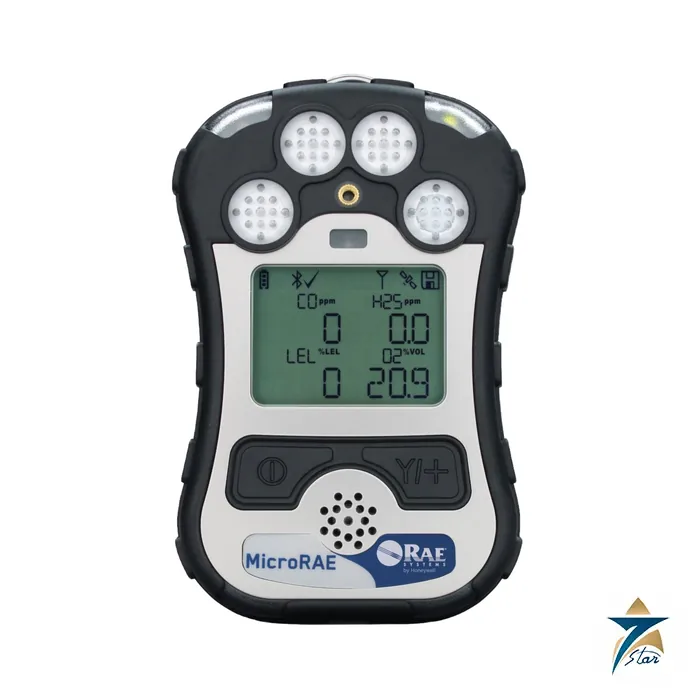
The Honeywell MicroRAE is a compact, wireless diffusion detector that monitors up to four gases at once: hydrogen sulfide, carbon monoxide, oxygen and combustibles as % LEL, with an optional hydrogen cyanide sensor for firefighting configurations. It is designed for connected-worker use, so readings, location, alarms and man-down status can be sent to a remote monitoring system while the worker keeps a simple clip-on instrument.
The datasheet lists a 117 x 76 x 24 mm body that weighs 206 g with the lithium-ion battery and clip, a 100 dB alarm, IP67 protection and a model number of the form PGM26XX. Seven Star LLC supplies the Honeywell MicroRAE in Oman and the GCC as an independent supplier in Muscat.
MicroRAE connectivity options
Several communication routes are listed. A Bluetooth Low Energy link pairs the detector with a smartphone and the Safety Communicator app, which relays data over a cellular network, so no private wireless infrastructure is needed. For plant-wide use there are mesh radio (sub-1 GHz, about 200 m), Wi-Fi (about 100 m) and NB-IoT options. A non-wireless model with BLE is available for sites that want remote monitoring through a phone only. A GPS module supports worker location, though the function can be disabled where local rules require.
MicroRAE technical specifications
| Parameter |
Specification |
| Manufacturer / part number |
Honeywell (RAE Systems) / MicroRAE, model number PGM26XX |
| Gases |
O2 0 to 30 % (0.1 %); LEL 0 to 100 % (1 %); CO 0 to 1,000 ppm (1 ppm to 250 ppm, 3 ppm above); H2S 0 to 100 ppm (0.1 ppm to 50 ppm, 1 ppm above); HCN 0 to 50 ppm (0.2 ppm) |
| Sensors |
Catalytic bead LEL, liquid-type O2 sensor, electrochemical CO, H2S and HCN |
| Size and weight |
117 x 76 x 24 mm; 206 g with battery and clip |
| Display |
Monochrome 44 x 33 mm with two backlight modes; two-button operation |
| Alarms |
Multi-tone 100 dB buzzer, vibration, flashing LEDs, on-screen messages; latching, non-latching or manual override; man-down and wireless connectivity alarms |
| Battery |
Rechargeable Li-ion: 15 hours continuous non-wireless, 12 hours continuous wireless at 20 °C |
| Datalogging |
6 months for 4 sensors at 1-minute intervals; interval 1 to 3,600 s |
| Wireless range |
BLE about 5 m; mesh sub-1 GHz about 200 m; Wi-Fi about 100 m; NB-IoT where signal is above –85 dBm |
| Temperature and humidity |
–20 to +60 °C for T4; 0 to 95 % RH non-condensing |
| Protection |
IP67 |
| Approvals listed |
US/Canada Class I Div. 1 Groups A to D; II 2G Ex ia d IIC T4 Gb; I M1 Ex ia I Ma; INMETRO Ex da ia IIC T4 Ga; Korea Ex ia d IIC T4 |
| Warranty |
Two years on device and sensors; one year on the HCN sensor |
How the MicroRAE keeps workers visible
The detector is a diffusion unit with no pump; gas reaches the sensors through the open ports. Its IntelliFlash light blinks green to show the unit has been bump tested and is monitoring correctly, and a glance mode shows the installed sensor configuration with one button press. A man-down alarm with a pre-alarm sends a remote wireless notification when a worker stops moving, and a panic function allows manual distress calls.
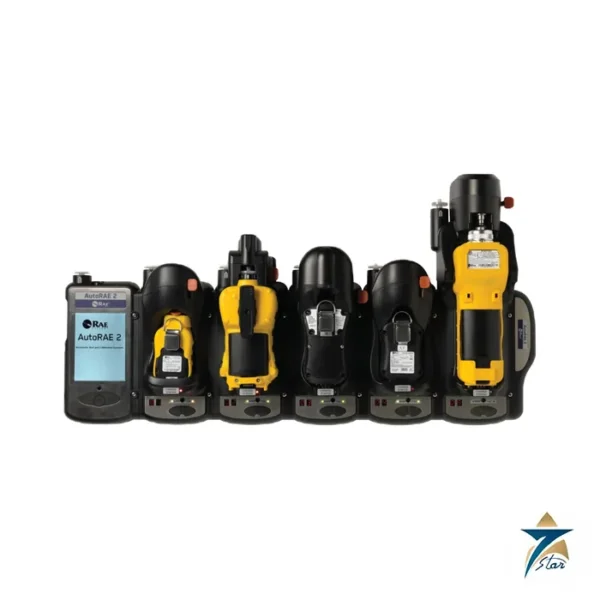
With the AutoRAE 2 station, bump testing and calibration can be performed automatically; the separate Honeywell product brochure quotes about 30 seconds of sensor calibration time for H2S, CO, O2 and LEL, which keeps calibration gas use and downtime low.
Where the MicroRAE fits and related Honeywell detectors
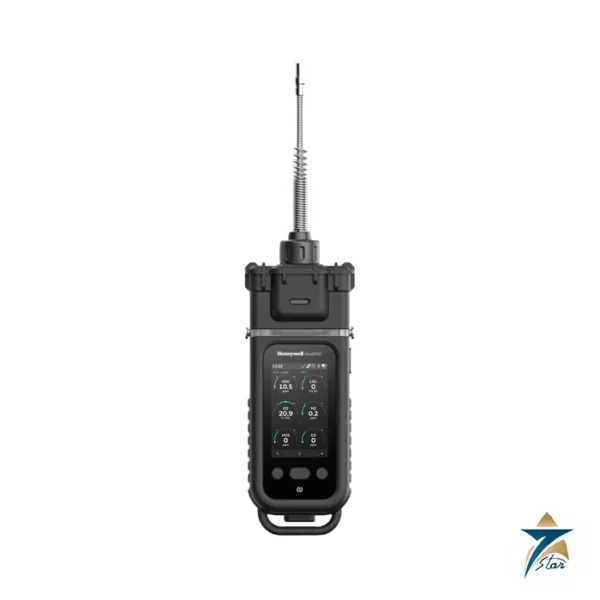
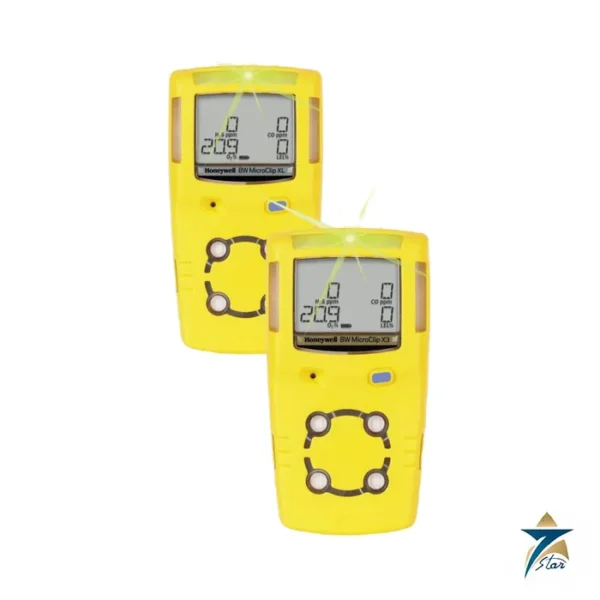
The MicroRAE is the wireless-first four-gas option, while the BW MicroClip XL and X3 are non-wireless clip-on units with long life. A larger pumped alternative is the MultiRAE Pro PGM-6248, and the AreaRAE Plus covers transportable area monitoring. The ConneXt solutions mentioned in the product brochure serve fleets of different sizes, from lone-worker kits to plant-wide networks.
MicroRAE selection and ordering checklist
- Sensor combination: standard four-gas or the HCN option for firefighting.
- Connectivity: BLE with smartphone, mesh, Wi-Fi or NB-IoT, with the infrastructure that exists on site.
- Local rules on GPS and radio approvals for Oman or the destination country.
- Test and calibration method, and charger accessories (gang charger, truck mount charger).
- Accessories such as auxiliary filter and hand pump kit.
Operation and maintenance of the MicroRAE
Charge the unit, switch it on, check the alarm indicators and confirm the IntelliFlash light after the bump test. Calibration is a two-point procedure, manual or automatic. Replace consumable sensors within the warranty periods and keep the LEL sensor filter in good condition to inhibit poisoning from silicones.
The firmware can be upgraded using the instrument management software, and fleet settings such as alarm set points can be managed centrally with Honeywell SafetySuite.
Typical applications of the MicroRAE in Oman and the GCC
Lone-worker rounds at remote wellheads and pumping stations, plant shutdown and turnaround crews, wastewater and utility staff and emergency response teams all benefit from a wireless four-gas detector. In Gulf conditions the IP67 case and the –20 to +60 °C range suit hot, dusty sites, and the smartphone link avoids the cost of a private network for smaller operators.
Information to send with an RFQ for the MicroRAE
- Quantity and sensor configuration.
- Wireless option and monitoring software.
- Charging and docking accessories.
- Calibration gas requirements.
- Delivery location.
Site conditions in Oman for the MicroRAE
Safety and analytical equipment in Gulf plants has to perform reliably in heat, dust and humidity. Before installing the MicroRAE, check the operating temperature range, ingress protection and hazardous-area approvals against the actual location, and consider shading or weather protection for units exposed to direct sun. Sensor positioning should follow the gas properties and the site fire and gas philosophy, with access kept clear for testing.
Plan the test and calibration routine from the start. Record the configuration and alarm settings of each MicroRAE, keep the required calibration gas or test equipment available, and agree a replacement interval for consumable parts so that the system stays compliant with the inspection regime at sites across Oman.
Documents and quotation
The Honeywell MicroRAE datasheet is attached on this page with ranges, wireless data and approvals.
Send the configuration and quantity, and Seven Star LLC will quote the Honeywell MicroRAE detectors.
Other Models in the Honeywell Portable Gas Range
Seven Star LLC supplies models from the Honeywell Portable Gas range in Oman and the GCC. Compare the related models below and request a quote for the one that matches your application.




















Reviews
There are no reviews yet.