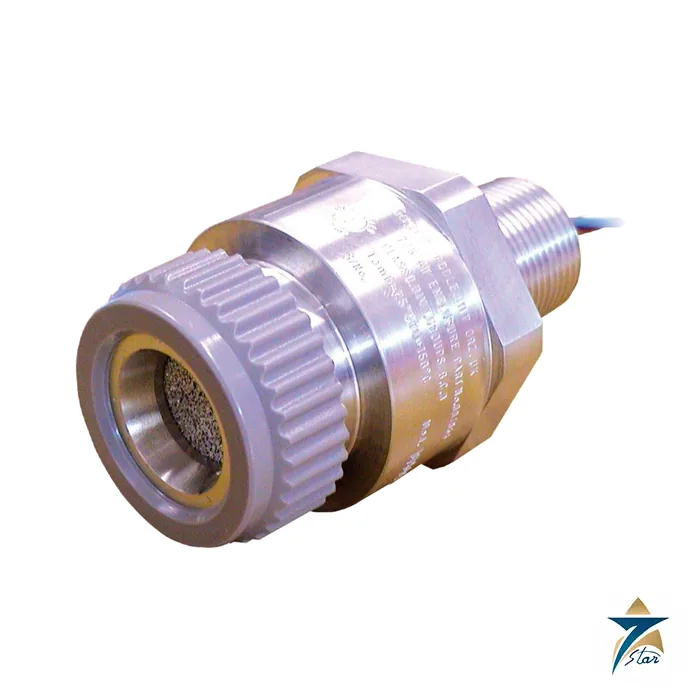
Honeywell Model 705 high temperature flammable gas sensor
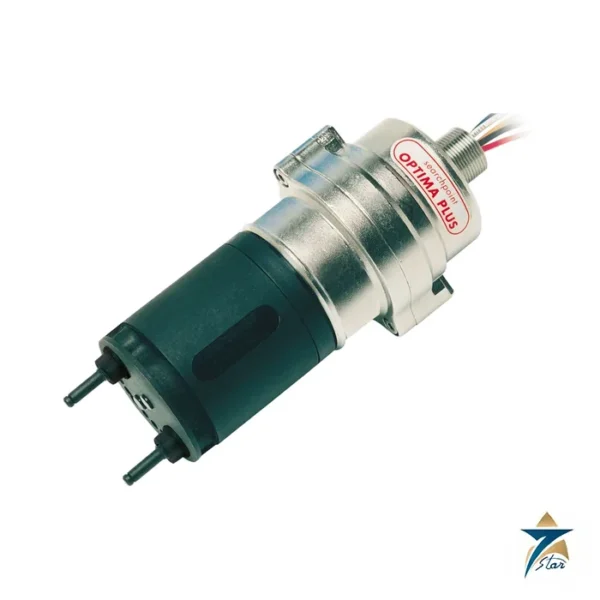
The Honeywell Model 705 is a catalytic bead sensor assembly for combustible gas in places that are too hot for ordinary detector heads. It is certified for hazardous locations at ambient temperatures up to +150 °C (+302 °F), and it uses a specially matched pair of Sieger poison-resistant detector elements in an explosion-proof aluminium housing. The output is a standard three-wire mV bridge, so the 705 is a sensor head, not a transmitter: it needs a compatible controller or a field transmitter to produce readings and alarms.
Seven Star LLC supplies the Honeywell 705 in Oman and the GCC as an independent supplier in Muscat. This page explains what the 705 is, what it needs to work, and what to check before ordering.
What the Model 705 is designed for
Typical applications named by the manufacturer are turbine enclosures and drying ovens in solvent-based printing and coating machines. Both need a sensor that stays stable over a wide temperature span so that alarm points can be set low. The matched detector pair gives a very steady baseline, which allows alarm trip points as low as 5% LEL across -25 °C to +150 °C. The measuring range is configured from 0-20% LEL up to 0-100% LEL, depending on the control card or controller in use.
Model 705 technical specifications
| Parameter |
Specification |
| Manufacturer / part number |
Honeywell / Model 705 High Temperature Sensor |
| Gas type |
Combustible (flammable) gas, calibrated on methane |
| Range |
0-20% LEL or 0-100% LEL (control card dependent) |
| Response |
T60 below 6 s; T90 below 10 s |
| Minimum alarm level |
5% LEL (with recommended 3-month calibration period) |
| Output signal |
mV bridge, three-wire |
| Operating temperature |
-25 to +150 °C (-13 to +302 °F) |
| Humidity |
Continuous 20 to 90% RH; intermittent 10 to 99% RH |
| Operating pressure |
75 to 110 kPa (750 to 1100 mbar) |
| Zero stability |
Time: below ±5% LEL/year; temperature, humidity, pressure: below ±3% LEL each |
| Span stability |
Time: below ±5% LEL/year; temperature: below ±4% LEL; humidity and pressure: below ±3% LEL each |
| Linearity / repeatability |
Better than ±5% of full scale / better than ±2% LEL |
| Warm-up time |
30 minutes |
| Detector operating life |
More than 5 years, typical, in clean atmosphere |
| Power consumption |
0.7 W at 200 mA |
| Enclosure / thread |
Aluminium; 3/4 in NPT mounting thread |
| Weight |
200 g (7 oz) for the sensor |
| Certification |
UL hazardous location, Class I Div 1 Groups B, C and D, ambient -25 to +150 °C |
Performance figures are typical values for a sensor calibrated on 10% LEL methane and tested at 20 °C and 50% RH, as stated by the manufacturer.
How the 705 catalytic sensor works
Inside the head, two matched elements sit in a bridge circuit. One is the active detector bead and the other is a compensating reference. When combustible gas reaches the active bead it oxidises on the catalyst, raising the bead temperature and changing its resistance. The bridge converts that small difference into a millivolt signal proportional to gas concentration, while the reference element cancels drift caused by ambient temperature, humidity and pressure.
Poison-resistant elements tolerate exposure to compounds that would quickly desensitise ordinary beads. That, together with the matched pair, is why the manufacturer quotes a typical operating life above five years in clean air and a storage life with no observed degradation for up to five years in clean, stable conditions.
What the 705 connects to
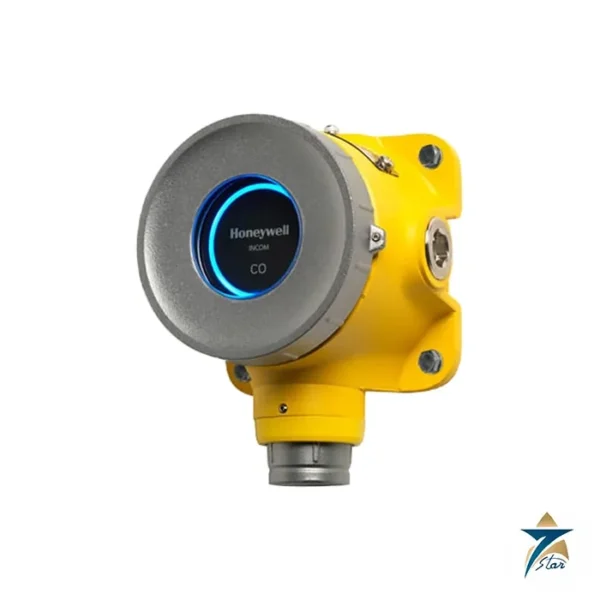
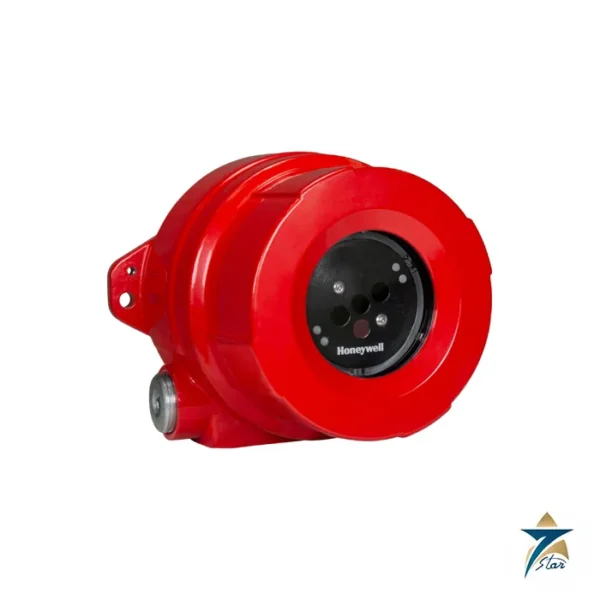
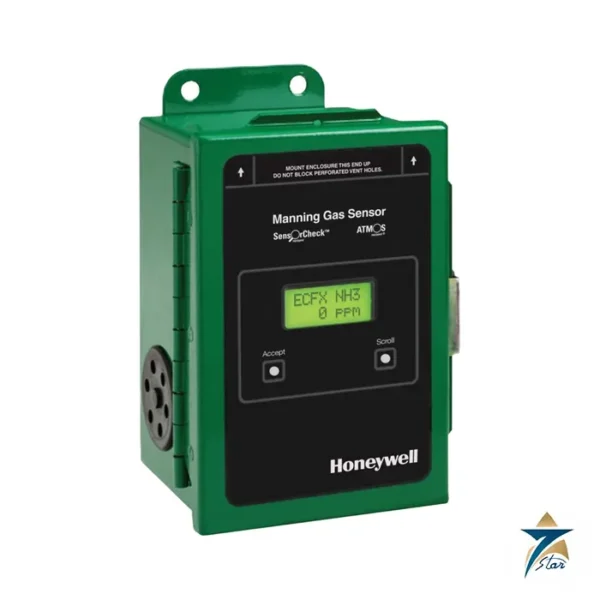
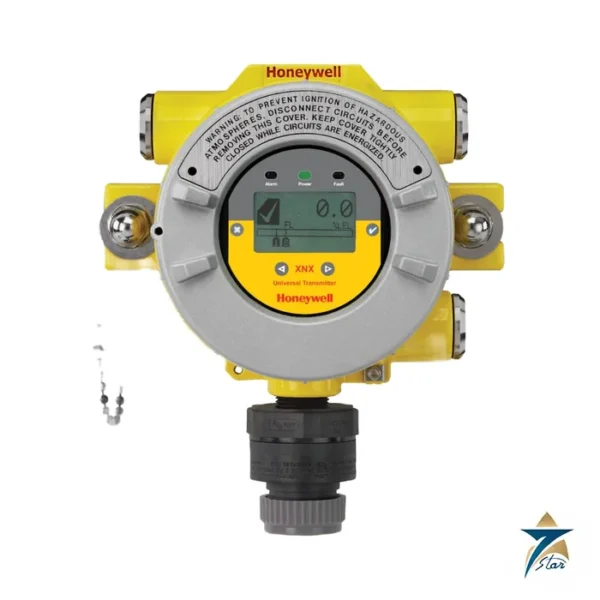
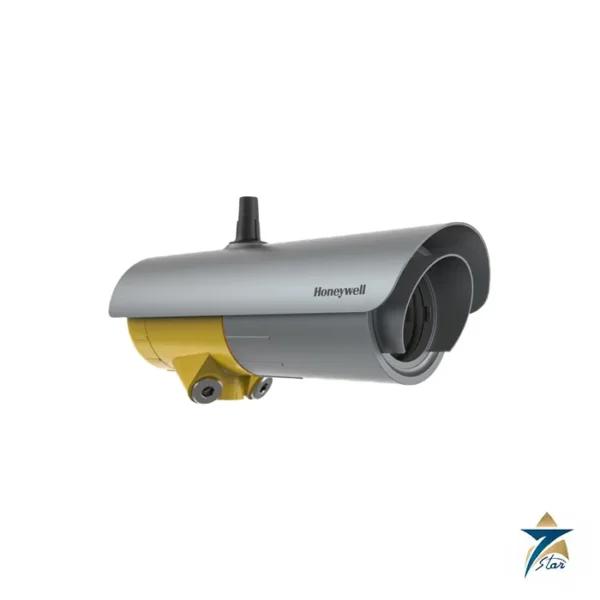
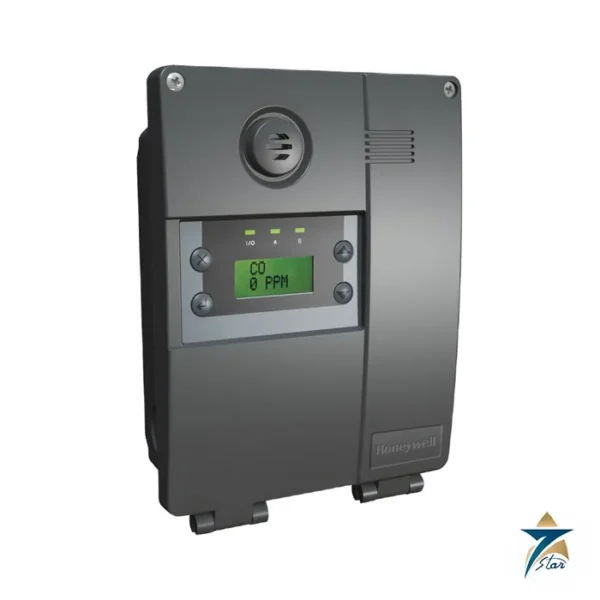
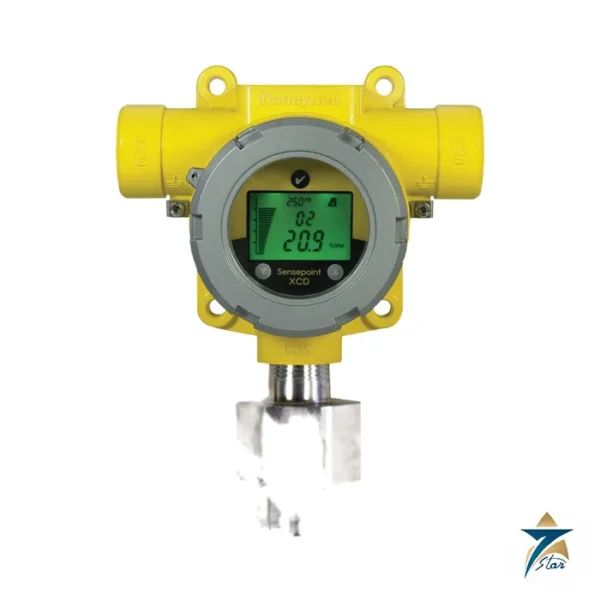
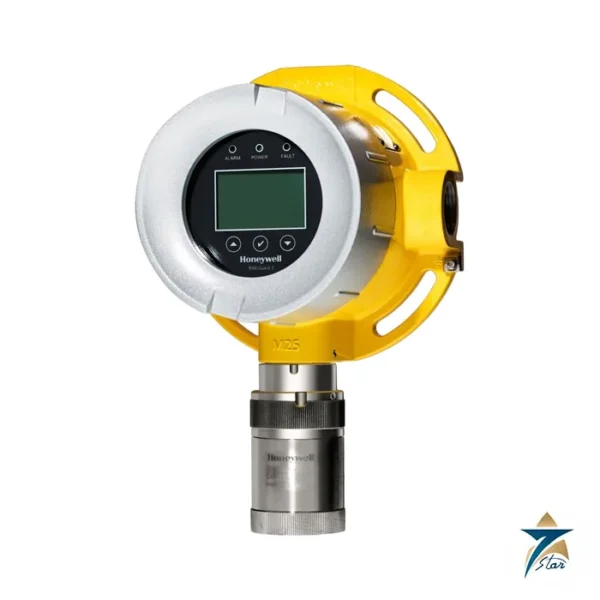
The sensor is wired to a suitable gas controller, a control card or a field transmitter that converts the bridge signal to an analog output. The range depends on the control card, which is why the table lists both 0-20% LEL and 0-100% LEL. Related Honeywell detection products on separate pages include the RAEGuard 3 transmitter, the E3Point and the FS10 flame detector. Always match bridge excitation current and cable length to the controller; the datasheet figure of 0.7 W at 200 mA is the starting point.
Selection and ordering checklist for the Model 705
- Confirm that the application needs a high temperature head, not a standard 20 to 50 °C-class sensor.
- Controller or transmitter that will power the bridge and its measuring range.
- Target gas and calibration gas; the datasheet figures are for methane.
- Hazardous area class and groups required, compared with Class I Div 1 Groups B, C and D.
- Accessories: collecting cone, sample flow housing and weather protection housing exist in the product family.
- Cable type and length suited to a three-wire bridge at high ambient temperature.
- Spare sensors for critical turbine or oven points.
Installation, commissioning and maintenance
Screw the sensor into a 3/4 in NPT entry at the chosen location, positioned according to gas density and the airflow of the enclosure. For a turbine enclosure that means near ventilation intake and outlet paths and areas where fuel leaks could accumulate. Use cable and glands that tolerate the same temperature as the sensor, and keep the wiring length within the controller limits.
Allow the 30-minute warm-up, then zero and span calibrate with test gas. The manufacturer bases its minimum 5% LEL alarm setting on a recommended 3-month calibration period, so build that interval into the plant maintenance schedule. Replace the sensor if span can no longer be achieved; because it is described as a low-cost disposable item, keep a spare on site.
Typical applications in Oman and the GCC
Gas turbine enclosures at power stations and compressor stations are a common fit in Oman and the Gulf, where ambient temperatures are already high and enclosures run hotter still. Drying and curing ovens in printing, packaging and coating lines are another use named by the manufacturer. Dust and humidity at coastal industrial sites argue for a clean, weather-protected installation and regular cone or housing inspection.
Information to send with an RFQ
- Quantity and the controller or transmitter used.
- Gas to be detected and range.
- Maximum ambient temperature at the sensor.
- Hazardous area class and gas group required.
- Accessories needed such as collecting cone or weather protection.
- Delivery location and project timeline.
Documents and quotation
A manufacturer datasheet for the Model 705 is attached on this page and contains the specification table above.
Send the application, controller type and quantity and we will confirm the exact configuration and available documents before quoting. Seven Star LLC is an independent supplier and not the manufacturer.


























Reviews
There are no reviews yet.