- Automation & ControlView all 2,896 products
- Automation Accessories
- AC Drives
- PLC & I/O Cards
- Industrial Communications
- Vibration Monitoring
- Controllers & Data Acquisition
- Isolator & Barrier
- Safety Switches & Guard Locking
- Motor Soft Starters
- CCTV & Security
- Encoders
- Pneumatic Cylinders
- HMI Displays
- Servo Drives
- Industrial Computers
- Machine Vision
- Automation Software
- Robotics
Brand: Yokogawa
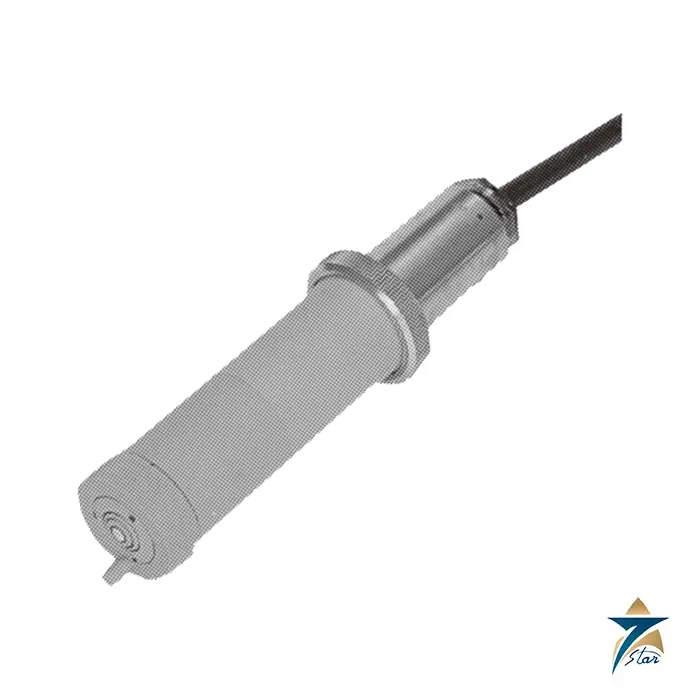
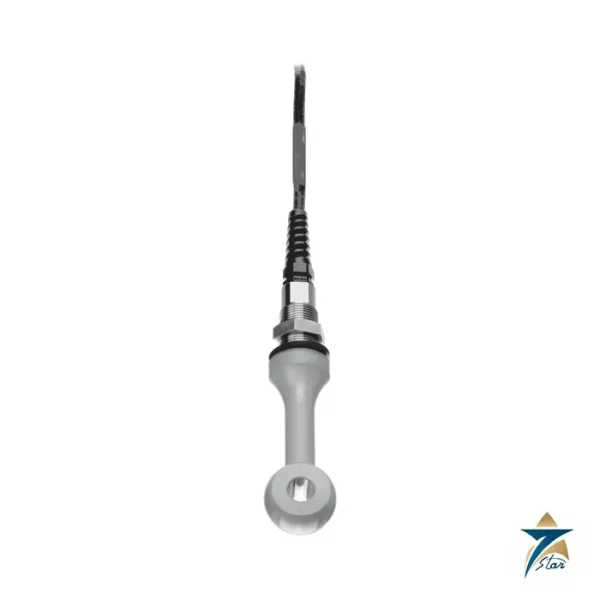
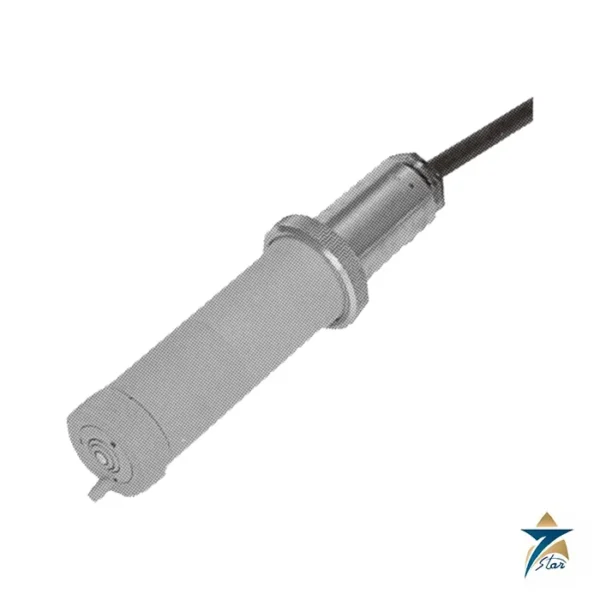
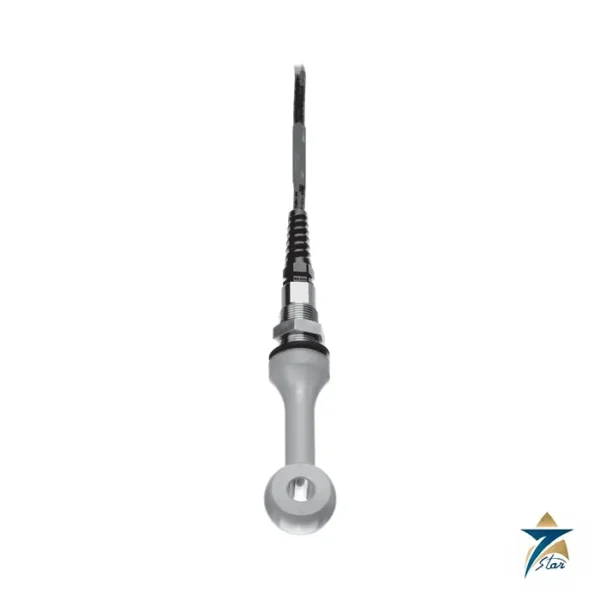
Yokogawa DO30G-NN-50-05-PN DO Sensor, 5 m
Description
Yokogawa DO30G-NN-50-05-PN: the 5 m pin-terminal version
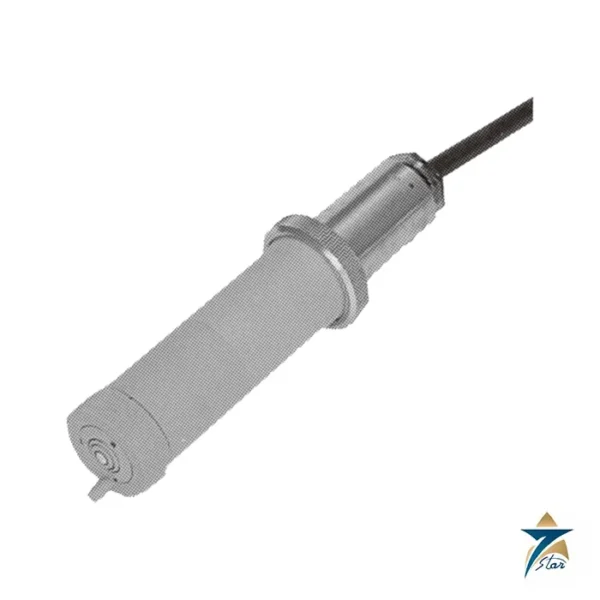
Aeration basins do not forgive a drifting oxygen sensor. Blowers run on the DO signal, and an error of a few tenths of a milligram per litre turns directly into energy cost. Yokogawa DO30G-NN-50-05-PN is a galvanic-cell dissolved oxygen sensor designed for exactly this kind of duty: sewage works, activated sludge effluent treatment, potable water, river monitoring, intake protection and fish farming.
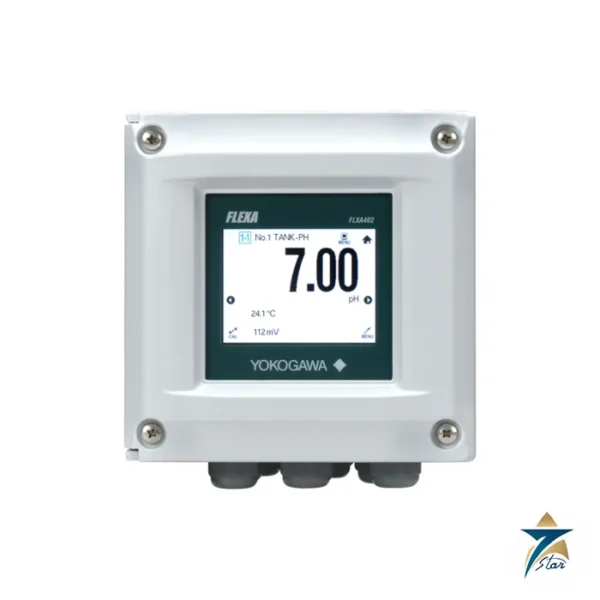
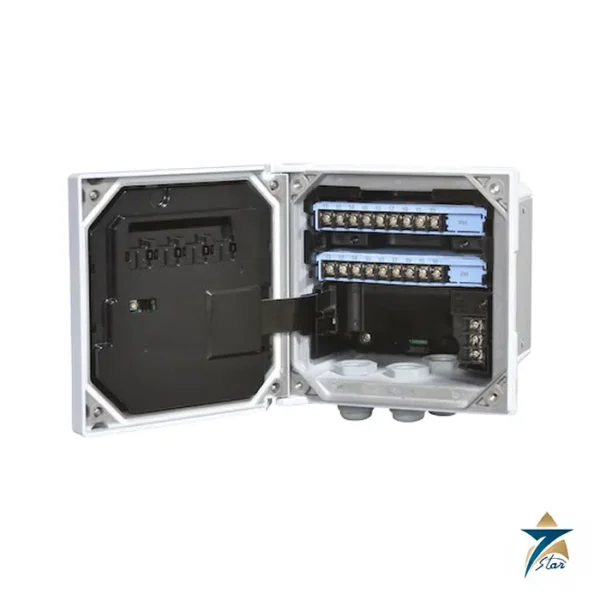
Within the DO30G ordering matrix this part number selects a 5 m cable terminated with pin terminals. Pin terminals are the connection that the manual pairs with the FLXA402 four-wire converter and with the FLXA202 and FLXA21 two-wire analysers. A 5 m lead is the common choice when a floating ball holder sits near a basin edge and the analyser is on a post a few metres away.
Seven Star LLC is an independent supplier serving Oman and the GCC and is not affiliated with the manufacturer.
How the DO30G sensor works
The sensor is a galvanic cell with a special electrolyte that shortens the electrolyte stabilisation time and holds stable readings over long periods. Oxygen diffuses through a 50 micrometre membrane that is thick enough for high tear resistance and for minimal influence from air bubbles. The membrane is carried in a cartridge, so replacement is a hands-on maintenance job rather than a laboratory repair. A temperature sensor is built in for compensation, and both membrane and cable are replaceable.
DO30G-NN-50-05-PN specification table
| Parameter | Value |
|---|---|
| Measuring principle | Galvanic cell dissolved oxygen sensor with replaceable cartridge membrane |
| Measuring range | 0 to 20 mg/L (ppm) |
| Membrane thickness | 50 um |
| Liquid temperature | 0 to 40 C |
| Liquid pressure | 0 to 100 kPa |
| Minimum flow | 20 cm/s or more |
| Temperature compensation | Pt1000 element built in |
| Repeatability | 0.1 mg/L or 3 percent of full scale, whichever is greater |
| Temperature compensation error | Within 3 percent FS for a 5 C change between 0 and 40 C |
| Response time | Within 2 minutes for 90 percent |
| Cable | 5 m, pin terminal end |
| Wetted materials | Rigid PVC, stainless steel, FEP, nitrile rubber, heat-resistant soft PVC, polycarbonate |
| Sensor body dimensions | Diameter 26 mm; head length about 108 mm |
| Weight | Approx. 0.3 kg plus 0.12 kg per metre of cable |
Benefits you notice in operation
- Fast response: the datasheet gives a 90 percent response within 2 minutes including the sensor.
- Long-term stability from the special electrolyte, which also shortens the wait after refilling.
- Thick 50 micrometre membrane with high tear resistance, so floating debris and bubbles disturb it less.
- Replaceable membrane cartridge and cable, so one damaged part does not scrap the whole probe.
- Built-in Pt1000 compensation, so the converter corrects for sample temperature without an extra probe.
- A measuring range of 0 to 20 mg/L, comfortably above saturation at the temperatures found in wastewater and surface water.
System neighbours for DO30G-NN-50-05-PN
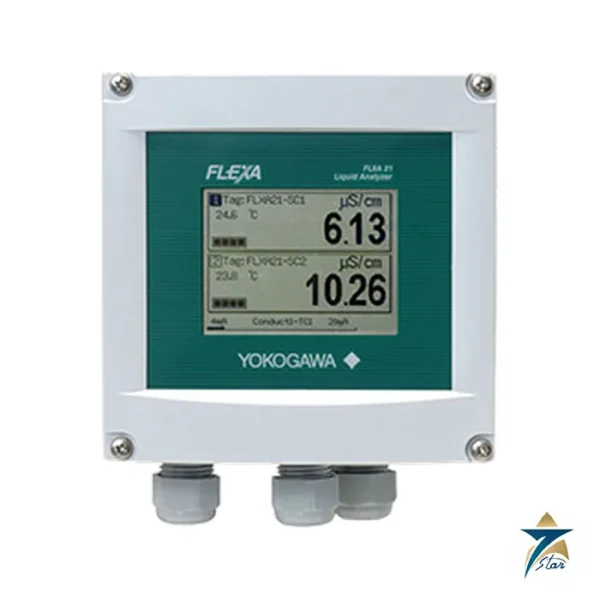
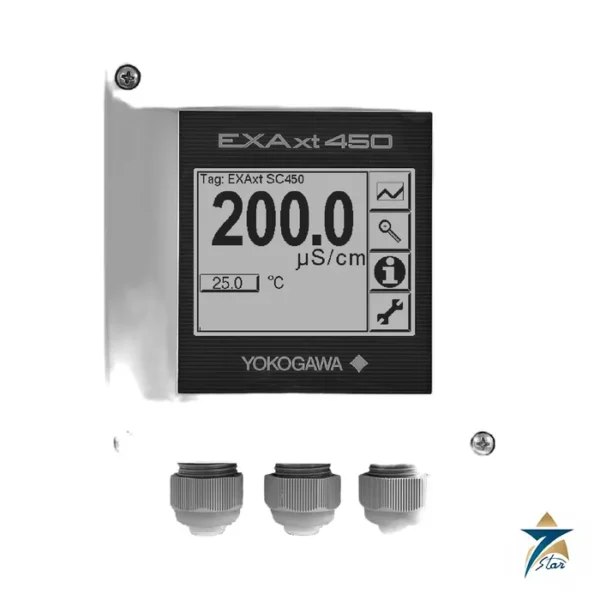
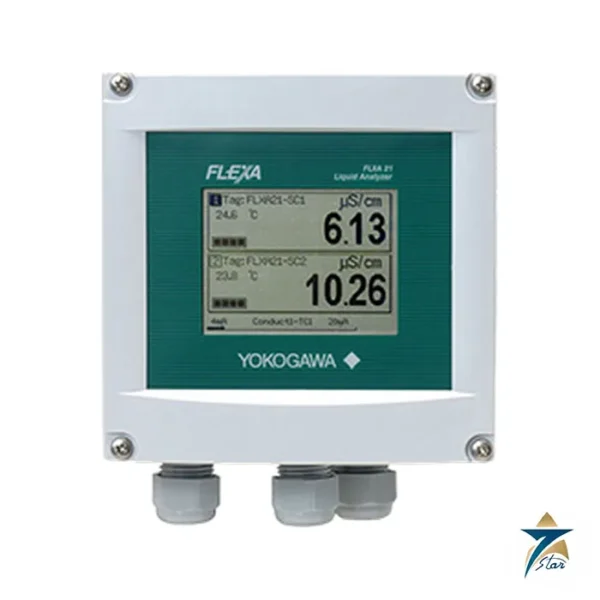
The sensor is part of a measuring chain: a holder (guide pipe PH8HG, floating ball PB350G or PB360G, submersion DOX8HS, suspension HH350G), an optional WTB10 terminal box, and a converter. The datasheet points to FLXA402 for four-wire use and to FLXA202 or FLXA21 for two-wire use. A WTB10-DO3 box takes cable up to 40 m on the converter side with a JIS A15 gland, and is rated for ambient temperatures from -10 to 50 C in a glass-fibre reinforced polycarbonate case. For a loop where the pin-terminal 5 m lead is long enough, no box is needed.
Where the 5 m PN version fits
Use this version when the sensor holder is within about five metres of the analyser, or when a WTB10-DO3 terminal box is placed mid-way. Typical Omani duties include municipal wastewater treatment around Muscat and Salalah, aquaculture ponds, and industrial effluent plants at Rusayl and Sohar where the aeration control relies on a dissolved oxygen reading. In water intake protection the sensor watches for low oxygen events in the incoming source.
How DO30G-NN-50-05-PN differs from other DO30G variants
The sensor part is the same across DO30G codes: range, membrane and temperature limits do not change. What changes is the cable length (3, 5, 10, 15 or 20 m) and the terminal. DO30G-NN-50-05-PN has 5 m and pin terminals. DO30G-NN-50-10-FL has 10 m and M4 ring terminals for FLXA202 and FLXA21. DO30G-NN-50-03-FM has 3 m and M3 ring terminals for FLXA402. Choosing wrongly means rewiring or buying an adaptor, so confirm your converter first.
Installation and commissioning
Mount the sensor in a PB350G or PB360G floating ball holder, the DOX8HS submersion holder, or a guide-pipe or suspension holder, in a location with as little vibration as practical because vibration can damage holders. Fill the cartridge with the supplied electrolyte, fit the membrane, allow the short stabilisation period, then perform the zero check using sodium sulphite solution and the air calibration your analyser requires. Keep the sensor in flowing water at 20 cm/s or more. When you wire DO30G-NN-50-05-PN, connect the pin terminals to the converter terminals in the sequence given in the instruction manual, avoid sharp bends in the 5 m cable, and never lift the sensor by its cable. Record the date of the first membrane fill so later replacement intervals can be compared with the conditions in the basin.
Maintenance
The parts set DOX8A holds three membrane assemblies for the 50 micrometre membrane, 50 mL of electrolyte, a syringe, silver electrode polish, sodium sulphite zero reagent and a beaker. Replace the membrane when readings become slow or noisy, polish the silver electrode as required, and replace the electrolyte at the same time. Our enquiry team can quote these spares alongside the sensor.
Documents and quotation
The datasheet for DO30G-NN-50-05-PN is attached. For an offer, send an RFQ to Seven Star LLC with the part number DO30G-NN-50-05-PN, quantity, the analyser model and your delivery location.
Other Models in the DO30G Range
Seven Star LLC supplies models from the DO30G range in Oman and the GCC. Compare the related models below and request a quote for the one that matches your application.
| Model | Category | |
|---|---|---|
| Yokogawa DO30G-NN-50-05-PN DO Sensor, 5 m | Liquid Analytical Systems | You are viewing this model |
| Yokogawa DO30G-NN-50-10-FL DO Sensor, 10 m | Liquid Analytical Systems | View details |
| Yokogawa DO30G-NN-50-03-FM DO Sensor, 3 m | Liquid Analytical Systems | View details |
Datasheets & Documents
- Datasheet Yokogawa DO30G-NN-50-05-PN DO Sensor, 5 m Datasheet Download
Reviews (0)
How would you rate this product? Cancel reply
About brand
Yokogawa is the Japanese measurement and industrial automation company behind the DPharp EJA and EJX pressure transmitters, CENTUM distributed control systems and ProSafe-RS safety systems. Tamisuke Yokogawa set it up in 1915 as an electric meter research institute in Shibuya, Tokyo. It began selling electric meters in 1917, was incorporated as Yokogawa Electric Works in 1920, and has been Yokogawa Electric Corporation since 1986. In 1975 it released CENTUM, which it describes as the world's first distributed control system.
Seven Star LLC is an independent supplier in Muscat. We list Yokogawa transmitters, flowmeters, analysers, controllers, recorders and CENTUM and ProSafe spare modules, and supply them to oil and gas, power, water and process plants in Oman and the GCC by model code.
Yokogawa at a glance
| Established | 1915, Shibuya, Tokyo, by Tamisuke Yokogawa with Ichiro Yokogawa and Shin Aoki |
|---|---|
| Milestones | Electric meters from 1917; incorporated in 1920; CENTUM DCS in 1975; renamed Yokogawa Electric Corporation in 1986 |
| Headquarters | Tokyo, Japan |
| Product families | Pressure and temperature transmitters, magnetic, vortex and Coriolis flowmeters, liquid and gas analysers, controllers and recorders, CENTUM VP DCS, ProSafe-RS safety systems and STARDOM controllers |
Yokogawa products we list
| Family | Models | Typical use |
|---|---|---|
| Pressure and DP transmitters | EJA110E, EJA430E, EJA530E, EJX110A, EJX530A, EJX910A multivariable | Pressure, level and DP flow measurement in process plants |
| Temperature transmitters | YTA610, YTA710 | RTD and thermocouple signals converted to 4-20 mA, HART or fieldbus |
| Flowmeters | ADMAG AXG, ADMAG AXW, ROTAMASS TI, VY vortex, VF701 | Water and conductive liquids, mass flow of hydrocarbons, steam and gas |
| Analysers | TDLS8000 laser gas analyser, FLXA402, FLXA21 DO, E7042UD zirconia cell, K9471DS cover | Combustion O2, in-situ gas analysis, pH, conductivity and dissolved oxygen |
| Controllers and recorders | UT35A/UT32A, UT32A-D, UT55A/UT52A, UT75A, UP35A/UP32A, UP55A, YS1700, GX10/GX20, GP10/GP20, GM10, µR20000 | Single-loop control, furnace programs and data recording |
| Control and safety systems | CP451-10 processor, ADV161, ADV551, node interface unit, ProSafe-RS, ProSafe-RS Lite, ProSafe-SLS, FCN-500 | Spares and expansions for CENTUM DCS, safety systems and STARDOM |
| Battery packs | S9129FA, S9185FA, S9548FA | Memory backup batteries for DCS and controller modules |
The EJA and EJX transmitters use Yokogawa's DPharp sensor: two silicon resonators whose vibration frequency changes with pressure, so the output is a digital frequency rather than an analogue strain signal. The model code describes the instrument completely. In EJA110E, "110" is a differential pressure transmitter, and the letters after the dash set the span, wetted materials, process connection, electrical output and approvals. When you replace a transmitter, sending the full code from the nameplate avoids a mismatch in range or materials.
Where Yokogawa products are used
In Oman and the GCC, Yokogawa transmitters, analysers and control systems are found in oil and gas production, gas processing and LNG, refineries and petrochemical plants, power and desalination stations, and water treatment. Many plants still run CENTUM CS 3000 and CENTUM VP systems that need spare I/O modules and batteries.
Ordering Yokogawa products: what we need
Send the full model and suffix code from the nameplate (for example EJA110E-JMS5J-912NN/KF22) and the style code. For DCS modules, add the module type and system version. For analysers, send the sensor type, measuring range and process conditions.
Facts checked against Yokogawa's corporate history, October 2026.
Browse Yokogawa products by category: PLC & I/O Cards, Flowmeters, Pressure Instrumentation, Automation Accessories, Temperature Instrumentation.
FAQ
Questions about the Yokogawa DO30G-NN-50-05-PN DO Sensor, 5 m
Answers from our engineering team on installation, compatibility and integration.
01What do the suffixes in DO30G-NN-50-05-PN mean?
NN is a fixed code, 50 is the 50 micrometre membrane, 05 is a 5 m cable and PN is a cable with pin terminals, which suits FLXA402, FLXA202 and FLXA21.
02Which holders accept DO30G-NN-50-05-PN?
The datasheet names the PB350G and PB360G floating ball holders and the DOX8HS submersion holder, and lists the PH8HG guide pipe and HH350G suspension holder in the system diagram.
03Does DO30G-NN-50-05-PN need a terminal box?
Only when the converter is far from the sensor. For pin terminals the matching terminal box is WTB10-DO3, which permits cable runs up to 40 m on the converter side.
04What flow and temperature does DO30G-NN-50-05-PN need?
A flow of at least 20 cm/s at the membrane and a liquid temperature between 0 and 40 C with liquid pressure from 0 to 100 kPa.
05Which wetted materials are used on DO30G-NN-50-05-PN?
The datasheet lists rigid polyvinyl chloride, stainless steel, fluorinated ethylene propylene, nitrile rubber, heat-resistant soft polyvinyl chloride and polycarbonate.


Reviews
There are no reviews yet.