Low-ppb oxygen measurement for power plant water cycles
The Swan AMI Oxytrace measures low levels of oxygen in high-purity water. In power plant water cycles, for example in feedwater, a very low oxygen level is needed to prevent corrosion, and the analyzer is built for that duty. The swan.ch page describes a high-precision analyzer with a proven three-electrode Oxytrace G sensor and lists power, semiconductor, green hydrogen, industrial and nuclear applications.
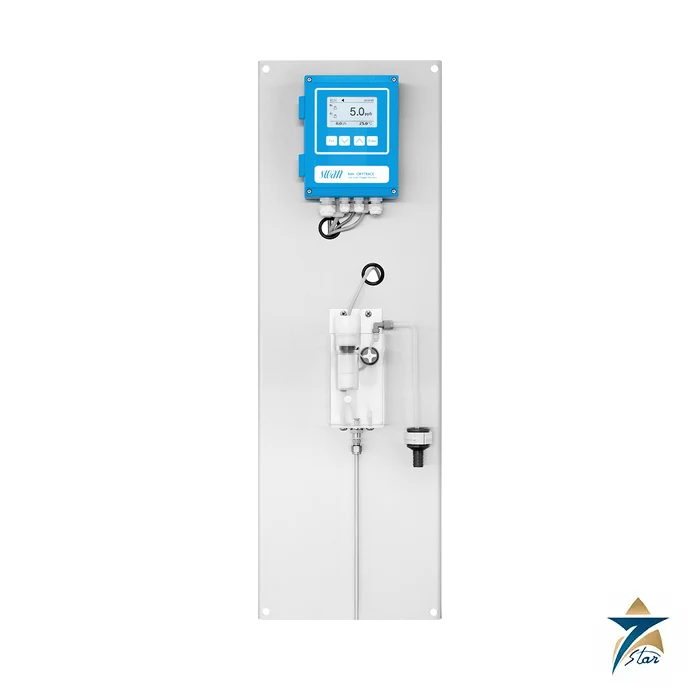
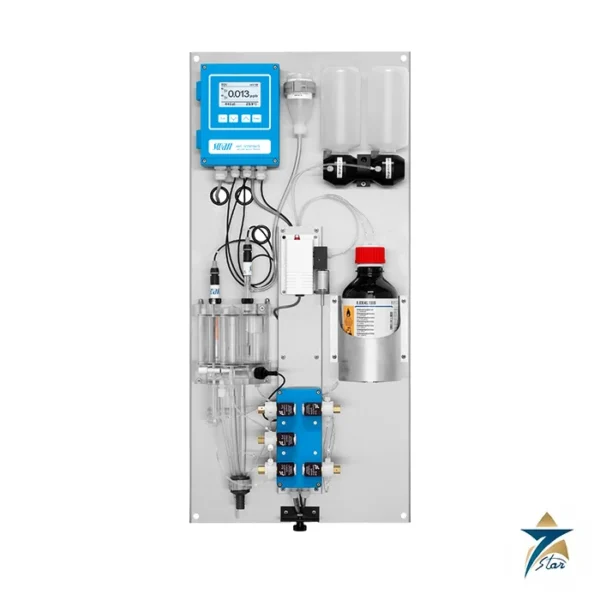
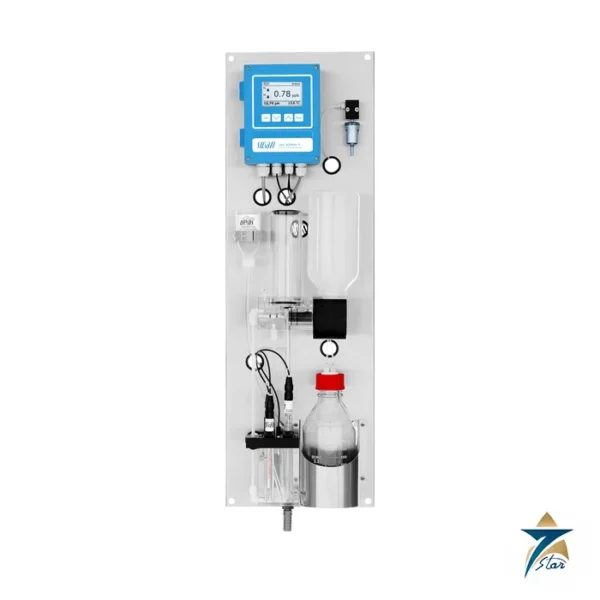
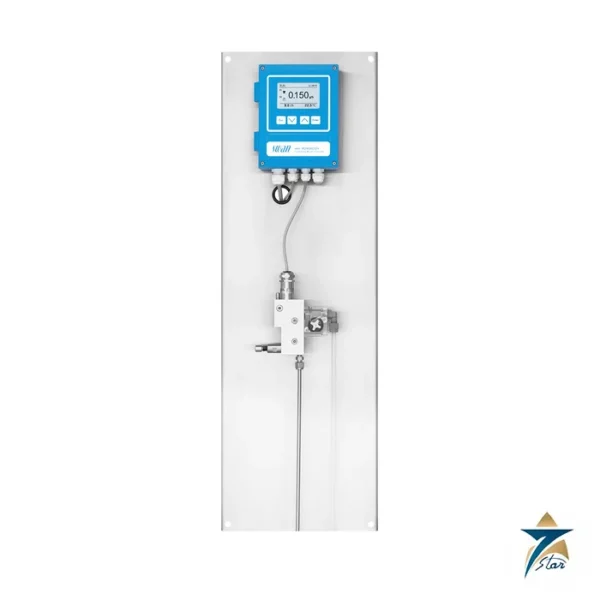
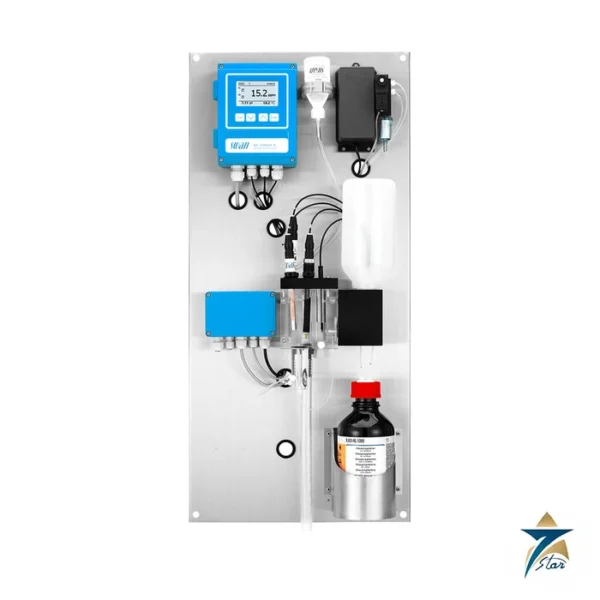
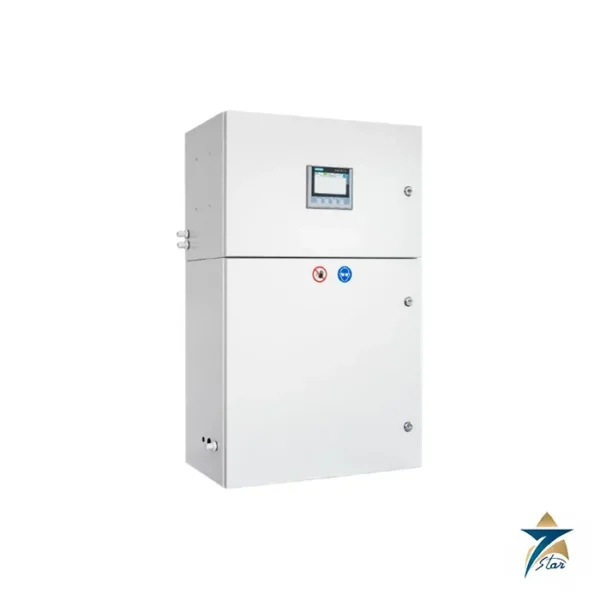
The manual covers two monitors, the AMI Oxytrace and the AMI Oxytrace QED. They are mainly identical, except that the QED includes a Faraday verification. The complete system is mounted on a stainless steel panel with the transmitter, the sensor, a QV-Flow PMMA OTG flow cell, a needle valve and a digital sample flow meter.
Technical specifications
Values are from the Operator’s Manual A-96.250.531 (section 2.2) and the swan.ch product page.
| Parameter |
Specification |
| Measuring range (product page) |
0.01 ppb to 20.0 ppm O2, or 0 to 200% saturation, with Swansensor Oxytrace G at 25 C |
| Accuracy |
+/-1.5% of measured value or +/-0.2 ppb |
| Reproducibility |
+/-1% of measured value or +/-0.15 ppb |
| Temperature measurement |
Up to 60 C, resolution 0.1 C |
| Sample flow and temperature |
8-25 l/h; 15-45 C |
| Sample pressure |
Inlet 0.2 to 1 bar; outlet pressure-free |
| Sample quality |
pH not lower than 4; suspended solids below 10 ppm |
| Connections |
Inlet Swagelok 1/4 in stainless steel tube; outlet 15 x 20 mm (1/2 in) hose nozzle into pressure-free waste |
| Power supply |
100-240 VAC (+/-10%), 50/60 Hz, or 10-36 VDC; maximum 35 VA |
| Transmitter |
Aluminum, IP 66 / NEMA 4X; ambient -10 to +50 C; backlit LCD 75 x 45 mm |
| Outputs |
Two signal outputs 0/4-20 mA (burden 510 Ohm), two relays 1 A at 250 VAC, one alarm relay, one input |
| Panel |
Stainless steel, 280 x 850 x 150 mm, 12.0 kg |
Clark-type sensing and automatic compensation
The sensor has a noble metal cathode, a reference electrode and a guard electrode. Oxygen diffuses through a permeable membrane, is reduced at the cathode and produces a current that is linear with oxygen concentration. The guard electrode sits at the cathode voltage but carries no measurement current, so it consumes oxygen creeping from the electrolyte and shortens the response at low levels.
Temperature compensation to 25 C is automatic using a temperature sensor inside the electrode. The product page lists automatic air pressure compensation so calibration can be done in ambient air, automatic surveillance of the electrolyte for predictive maintenance, and a sensor cap that can run for up to 24 months. Zero verification supports measuring oxygen below 1 ppb.
Faraday verification and ordering notes
On the Oxytrace QED a direct current through two electrodes splits water into oxygen and hydrogen in a controlled amount, which gives a known oxygen increment at a known sample flow. Comparing the sensor response with that increment verifies the whole system, including response time, and detects problems such as loss of electrolyte. The manual calls the Faraday verification an excellent QA/QC tool.
State in the enquiry whether the QED version, AC or DC supply, communication option and consumables (membrane and electrolyte sets) are needed. Keep the sample pressure-free at the outlet and within the 0.2 to 1 bar inlet limit. Swan also lists an AMI-II Oxytrace transmitter range as separate products.
How the Swan AMI Oxytrace works
Oxygen in the sample passes through a membrane and is reduced at the cathode. This produces a small current that grows in step with the oxygen content. A guard electrode takes up oxygen creeping in from the electrolyte, so the reading stays accurate at very low ppb levels. The analyzer corrects the value for temperature.
Where the AMI Oxytrace is used
- Feedwater in power plants
- Condensate monitoring
- Semiconductor water
- Green hydrogen plants
- Nuclear plant water cycles
Selection checklist for the AMI Oxytrace
- Standard or QED monitor
- Measuring range needed
- Sample flow of 8 to 25 l/h
- Sample temperature of 15 to 45 degrees C
- Inlet pressure
- Sample pH
- AC or DC supply
- Outputs and relays
Installation, commissioning and maintenance notes for the AMI Oxytrace
Fix the panel to a wall. Connect the sample line to the Swagelok inlet and lead the outlet to a drain without pressure. Set the flow with the needle valve and read it on the flow meter. Connect the supply and the outputs. Let the sensor settle before the first calibration.
Requesting a quotation for the Swan AMI Oxytrace
Please send the monitor type, the sample details and the outputs needed. Seven Star LLC serves industrial customers in Oman and the GCC and replies with a quotation based on the information provided.
AMI Oxytrace measuring range
The range runs from 0.01 ppb to 20.0 ppm of oxygen.
AMI Oxytrace saturation range
The saturation range is 0 to 200 percent.
AMI Oxytrace accuracy
The accuracy is plus or minus 1.5 percent of the value or plus or minus 0.2 ppb.
AMI Oxytrace reproducibility
The reproducibility is plus or minus 1 percent of the value or 0.15 ppb.
AMI Oxytrace sample pressure
The inlet pressure is 0.2 to 1 bar and the outlet is pressure-free.
AMI Oxytrace sample quality
The pH should not be lower than 4 and the suspended solids should stay below 10 ppm.
AMI Oxytrace power supply
The supply is 100 to 240 VAC or 10 to 36 VDC.
AMI Oxytrace outputs
It has two 0/4-20 mA outputs, two relays, one alarm relay and one input.
AMI Oxytrace transmitter
The aluminum transmitter is rated IP 66 and has a backlit LCD.
AMI Oxytrace panel
The stainless steel panel measures 280 x 850 x 150 mm and weighs 12.0 kg.
AMI Oxytrace QED version
The QED monitor adds a Faraday verification.
Analyzer records for the AMI Oxytrace
Record the calibration date, the membrane change and the readings at each service.
Choosing the right AMI Oxytrace monitor
Choose the QED version when you want the Faraday verification of the sensor.
Documents and quotation
The attached Swan Operator’s Manual A-96.250.531 (firmware V6.20 and higher) and the swan.ch product page are the sources for this page. Seven Star LLC supplies Swan products as an independent supplier in Muscat. Send the oxygen range, supply type and quantity with your enquiry. Related instruments are listed under liquid analytical systems.







Reviews
There are no reviews yet.