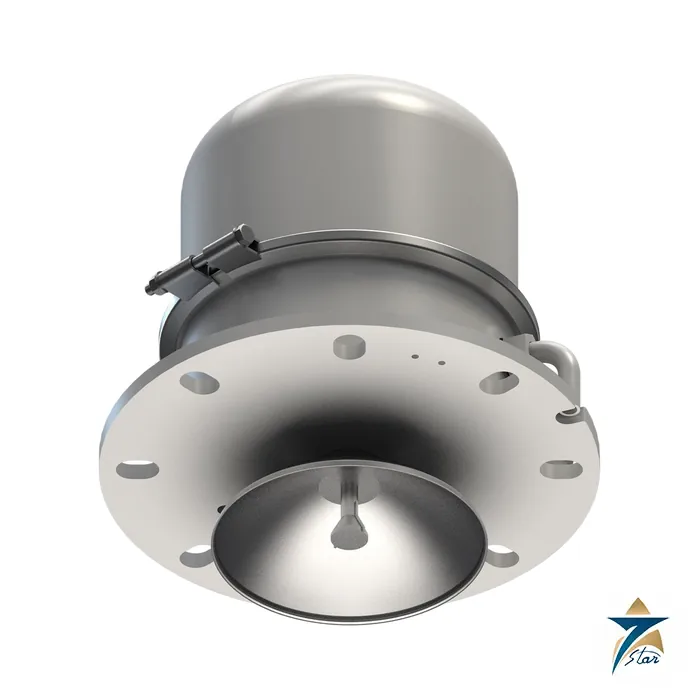
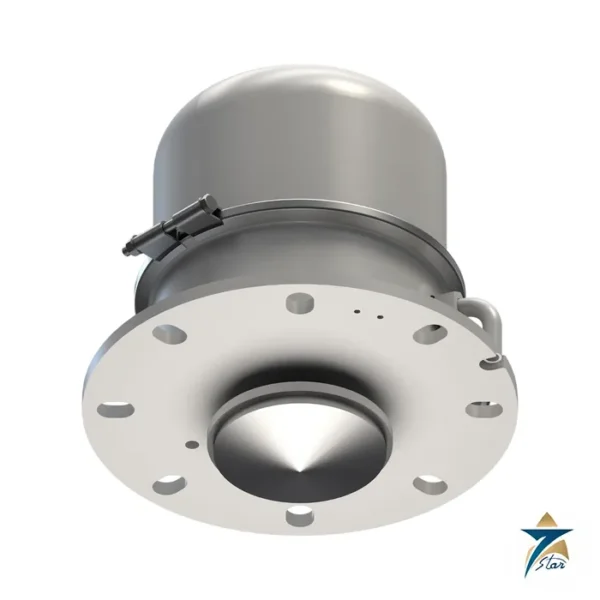
Rosemount TGU 68 Tank Radar Gauge with parabolic antenna for cargo tanks
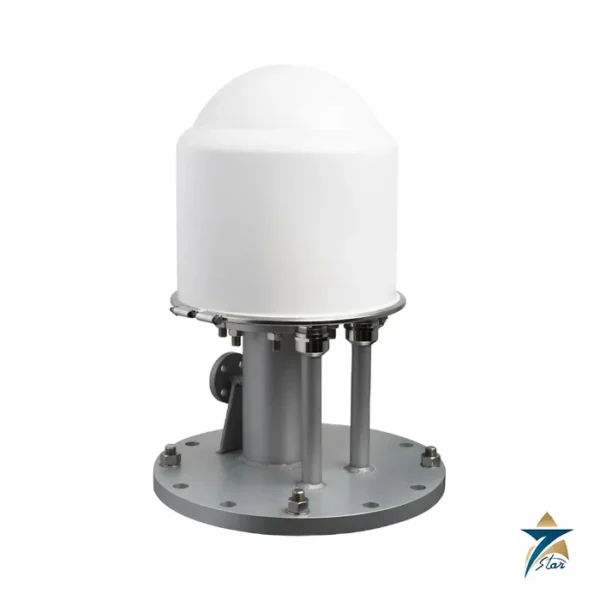
The Rosemount TGU 68 is a non-contacting marine radar level gauge with a parabolic antenna. It is part of the Rosemount Cargo Monitoring System and is meant for tankers and offshore installations with tank heights up to 35 m. It uses 26 GHz FMCW radar, a narrow beam and advanced signal processing to keep reading when tank conditions are difficult, and it is intrinsically safe.
Seven Star LLC supplies the Rosemount TGU 68 in Oman and the GCC as an independent supplier in Muscat. Like the TGU 65, it comes as a C and an S version, so state the version when you request a quote.
TGU 68C and TGU 68S: choosing the version
| Item |
TGU 68C |
TGU 68S |
| Intended use |
Ullage on tankers and marine applications, small to very large tanks; optional hinged heat protection for heated cargoes |
Offshore market, with more options for installation, test and certification |
| Housing flange |
JIS 200A / EN DN200 |
JIS 200A / EN DN200 or ASME B16.5 8 in. |
| Intrinsic safety |
ATEX and IECEx |
ATEX, IECEx and INMETRO |
| Cable glands |
M20, M25, M32 (1-3) |
M20, M25, M32 and special (1-3) |
| Optional items |
Protective hose, bolt kit, gasket |
Same, plus tag plate, calibration certificate, EN 10204 3.1 material traceability |
Rosemount TGU 68 technical specifications
| Parameter |
Specification |
| Manufacturer / part number |
Rosemount (Emerson) / TGU 68 |
| Antenna type |
Parabolic |
| Measuring range |
0 to 35 m |
| Instrument accuracy |
±2 mm (±3σ conformance) |
| FMCW centre frequency |
26 GHz |
| Half-power beam width |
±2° from antenna axis |
| Tank temperature |
-40 to +100 °C; up to +260 °C when mounted on the TGS 6810 hinged heat protection |
| Tank pressure |
-100 to +500 mbar |
| Measuring channels |
1, 2 or 3 per gauge |
| Cable to control room |
Up to three cables, two or three twisted pairs with common shield, about 400 m maximum |
| Microwave output power |
Below 1 mW |
| Weight |
17 kg (35 lb) |
| Materials facing tank / deck |
316L stainless steel, PTFE, fluorosilicone / 316L stainless steel |
| Ingress protection |
IP66/67; ambient -40 to +70 °C (maximum +60 °C on TGS 6810); humidity 0 to 100% |
| Vapor pressure option |
-100 to 900 mbar, ±3 mbar; 316L and Alloy C276 facing the tank |
| Approvals |
Marine: ABS, BV, CCS, DNV-GL, KR, LR, NK, RINA. Intrinsic safety: ATEX II 1G Ex ia IIC T4 Ga, IECEx, INMETRO Ex ia IIC T4 Ga |
How the TGU 68 measures without a still pipe
The parabolic antenna focuses a 26 GHz sweep into a narrow cone of about ±2°, so the beam can pass through a deck socket without touching structures on the tank wall. The echo from the liquid is mixed with the outgoing signal to give a low-frequency signal proportional to distance, and digital processing turns it into a precise level. Nothing but the antenna is in the tank and there are no moving parts.
Compared with the Rosemount TGU 65, which needs a 5 or 6 in. still pipe, the TGU 68 is free-space radar. It suits larger tanks where a pipe is not provided, while the TGU 65 suits narrow tanks and draft measurement. For LNG, the Rosemount TGU 53 with a still pipe is the corresponding product.
Deck socket and heat protection for the TGU 68
The TGU 68 is mounted on an 8 in. deck socket. The datasheet lists the Rosemount TGS 58 Tank Gauge Socket as the standard arrangement, with a service opening so the antenna can be cleaned, in lengths of 350 mm or 500 mm. These sockets are usually yard supplied. For heated cargoes such as bitumen a hinged heat-insulating socket, the TGS 68, is the alternative, which raises the permitted tank temperature to +260 °C but reduces the maximum ambient temperature to +60 °C. Both sockets are described in their own data sheets.
Where the TGU 68 fits in the Rosemount system
Each level channel goes by a digital bus to a Rosemount SCU 51 Supply and Communication Unit, and optional bus links go to TMU 51/53 temperature units and the TGD 51 display. The gauge is prepared for redundant level or independent high-level and overfill alarm channels. Up to three independent measurement channels can sit in one unit, which is more than the TGU 65 offers.
Selection checklist for the TGU 68
- Choose the C or S version and decide whether ASME 8 in. flange or INMETRO certification is required.
- Specify 1, 2 or 3 measuring channels according to the level, redundancy and alarm philosophy.
- Select the deck socket type and length, or the hinged heat protection if the cargo is heated.
- Add the vapor pressure sensor and its test valve if the tank pressure must be read at the gauge.
- Choose glands (M20, M25, M32) to match the cables.
- Confirm certificates, tag plate and class society requirements.
Installation, commissioning and maintenance of the TGU 68
Fit the O-ring, lower the gauge onto the socket flange and bolt it down, then run the cables through the correct glands to the SCU 51. Check the cone of the beam for obstructions such as ladders or heating coils in the tank. During commissioning the tank height and reference are configured in the cargo monitoring software, and the signal quality is checked at several levels.
Maintenance mainly means keeping the antenna clean, which the service opening in the TGS 58 makes easy, and checking cables and glands. The electronics can be replaced with the tank closed. Send us the serial number if you need spares, and we will confirm availability through our supply channels.
Typical applications of the TGU 68 in Oman and the GCC
The gauge is used for cargo and slop tank level on crude, product and chemical tankers, and on offshore storage and production vessels. In the region, it is relevant to shipowners, repair yards and offshore operators who maintain or retrofit cargo monitoring systems. The IP66/67 housing and -40 to +70 °C ambient range suit open decks exposed to heat, salt and humidity.
Information to send with an RFQ for the TGU 68
- Version (TGU 68C or 68S) and channel count
- Tank height, cargo type and temperature
- Socket type (TGS 58 or heat protection) and flange standard
- Intrinsic safety certification and class approval
- Options: vapor pressure sensor, test valve, glands, certificates
- Quantity and delivery location
Documents and quotation
A manufacturer datasheet for the Rosemount TGU 68 is attached on this page, so you can check the model code, ratings and dimensions against your project documents before ordering.
To receive a quotation, send us the part number or the full model code from your nameplate, the quantity, and the delivery location. Seven Star LLC is an independent supplier in Muscat and replies with availability and lead time, and we confirm the details with you before anything is ordered.
Other Models in the Rosemount Marine Tgu Range
Seven Star LLC supplies models from the Rosemount Marine Tgu range in Oman and the GCC. Compare the related models below and request a quote for the one that matches your application.



















Reviews
There are no reviews yet.