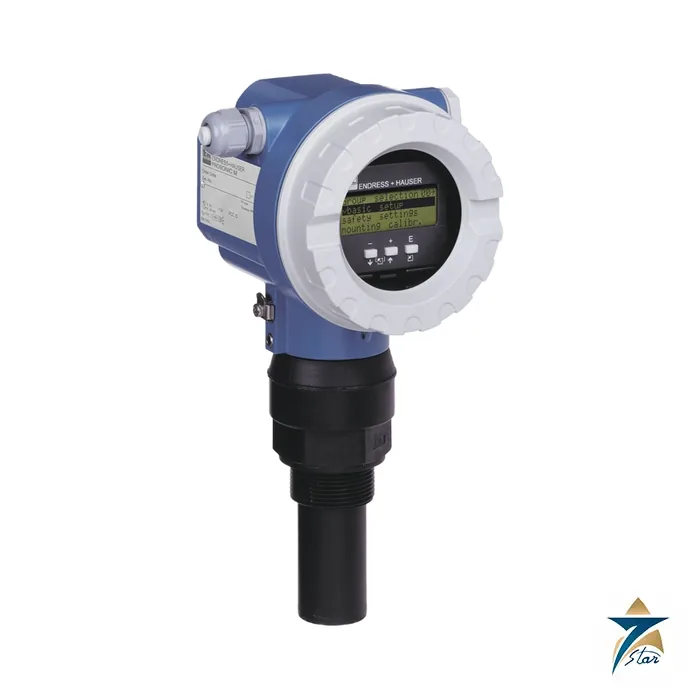
Endress+Hauser FMU40 Prosonic M compact ultrasonic level transmitter
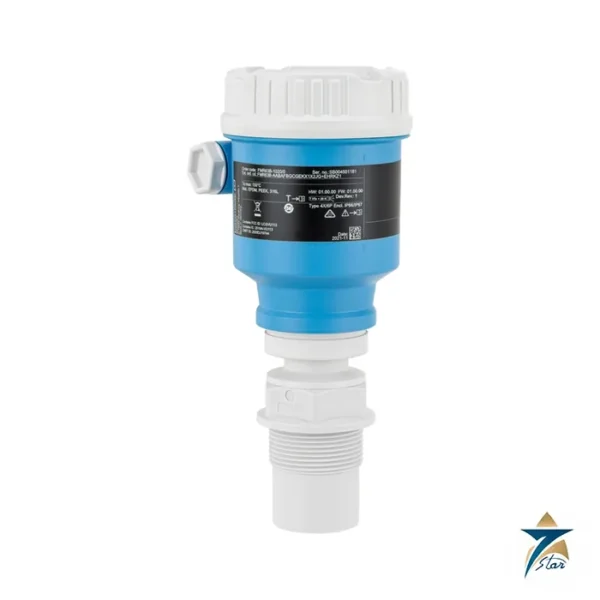
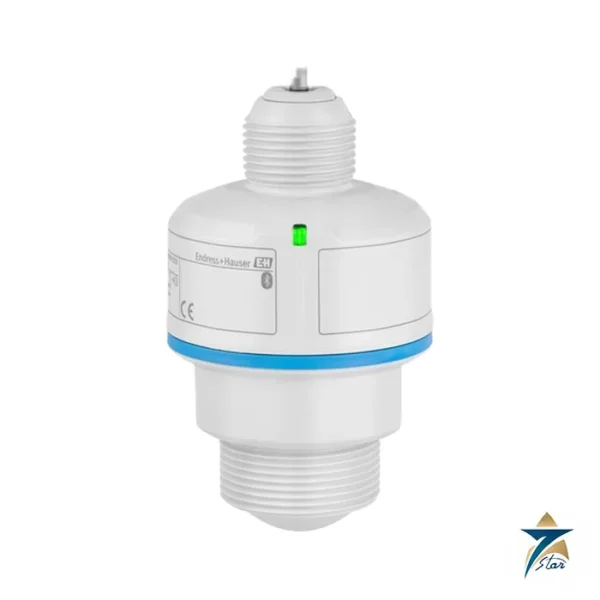
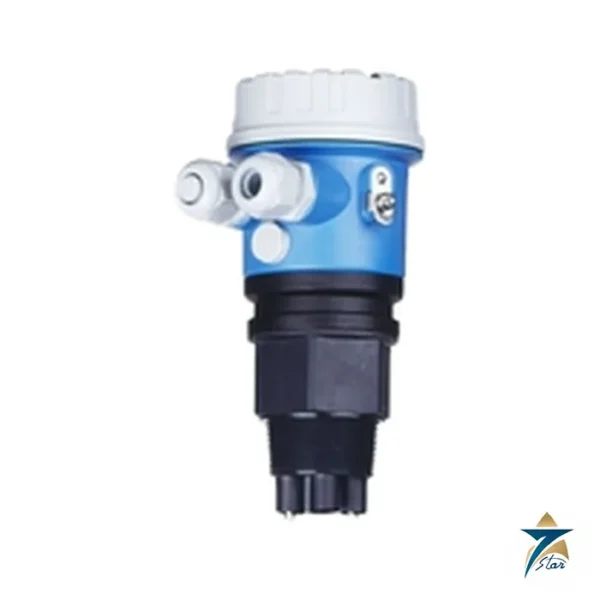
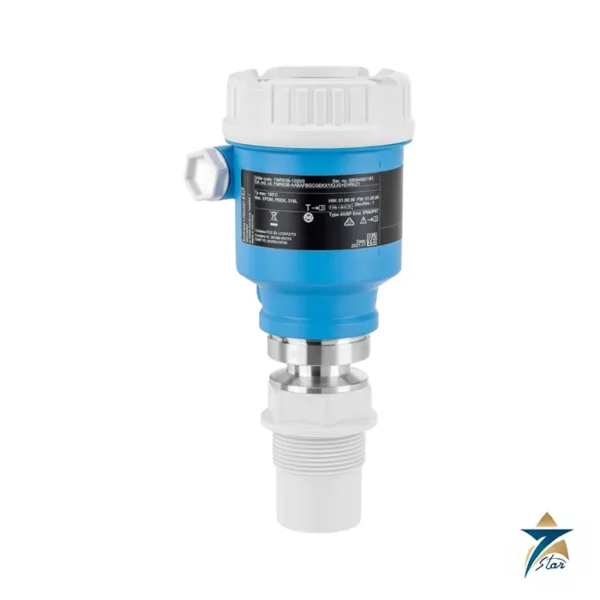
The Endress+Hauser FMU40 is the entry model of the Prosonic M family: a two-wire, loop-powered ultrasonic transmitter that measures the distance to a liquid or bulk-solid surface without touching it and sends level as 4 to 20 mA with HART. The FMU40 reaches 5 m in liquids and 2 m in bulk solids, which makes it a practical choice for small and medium tanks, sumps and short silos. Seven Star LLC, an independent supplier in Muscat, supplies the FMU40 and related level instruments in Oman and the GCC.
Within the Prosonic M range the numbering follows range and connection: FMU40 has a 1 1/2″ thread and the shortest span, FMU41 has a 2″ thread and 8 m, and FMU42 has a flange and 10 m. Choosing the FMU40 is mostly a question of whether 5 m is enough.
FMU40 technical specifications
| Parameter |
Specification |
| Manufacturer / part number |
Endress+Hauser / FMU40 (Prosonic M) |
| Measuring principle |
Ultrasonic, time of flight |
| Maximum range |
Liquids 5 m (16 ft); bulk solids 2 m (6.6 ft) |
| Blocking distance |
0.25 m (0.8 ft) |
| Accuracy |
±2 mm or ±0.2 % of the measured distance, whichever is larger |
| Resolution |
1 mm |
| Operating frequency |
Approx. 70 kHz; beam angle 11 ° |
| Output / communication |
2-wire 4 to 20 mA with HART |
| Process temperature |
-40 °C to 80 °C (-40 °F to 176 °F) |
| Process pressure |
0.7 bar to 3 bar abs (10 psi to 44 psi) |
| Ambient temperature |
-40 °C to 80 °C |
| Process connection |
Thread G 1 1/2 or NPT 1 1/2″ |
| Wetted parts |
PVDF sensor, EPDM seal and O-ring, PC counter nut |
| Housing / protection |
Aluminium F12 or T12; IP66/NEMA 4X and IP68/NEMA 6P |
| Weight |
Approx. 2.5 kg |
| Approvals listed |
ATEX, FM, CSA, IEC, INMETRO, NEPSI |
How the FMU40 measures level
The PVDF sensor sends short ultrasonic pulses toward the surface and listens for the echo. The electronics measure the transit time and divide by two, then multiply by the speed of sound to get the distance D. Level L follows from the empty distance E that you enter: L = E – D. An NTC temperature sensor built into the transducer corrects the sound velocity, so a hot afternoon on a tank roof does not shift the reading.
The FMU40 cannot measure within the 0.25 m blocking distance in front of the sensor, so the full level must stay below that zone. Interference echo suppression (mapping) teaches the unit to ignore welds, ladders and other fixed targets, and the linearization function converts distance to volume, including a horizontal cylindrical tank curve and a table of up to 32 points. Flow over weirs and flumes can also be calculated.
FMU40 range and what limits it
The 5 m figure applies to good conditions. Calm surface, no dust and no foam give the best result; waves take 5 to 10 dB off the signal, strong stirring 10 to 20 dB, and a filling curtain or a large temperature difference between the sensor and surface take further margins. The data sheet adds these attenuation values and reads the real range from a chart, so for demanding tanks the usable range can be well under 5 m. Foam is a case where the manufacturer asks to be contacted.
Operation and diagnostics of the FMU40
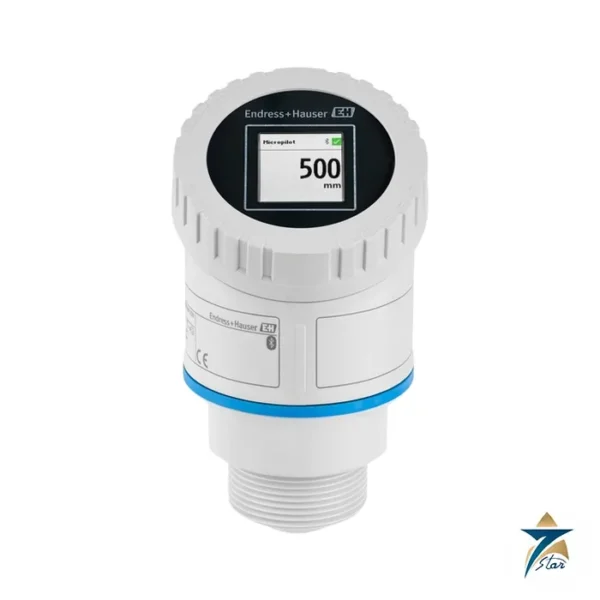
A 4-line plain text display with seven languages guides the user through basic setup, and envelope curves can be viewed on the display to understand why the unit sees what it sees. HART access is possible with a Commubox FXA195 and FieldCare, with Field Xpert, or with a Bluetooth modem. Output damping is adjustable from 0 to 255 s, and the failure mode of the current output can follow NAMUR NE43. A 250 Ω loop resistor is needed for HART if the power supply does not include one.
Where the FMU40 fits: related ultrasonic transmitters
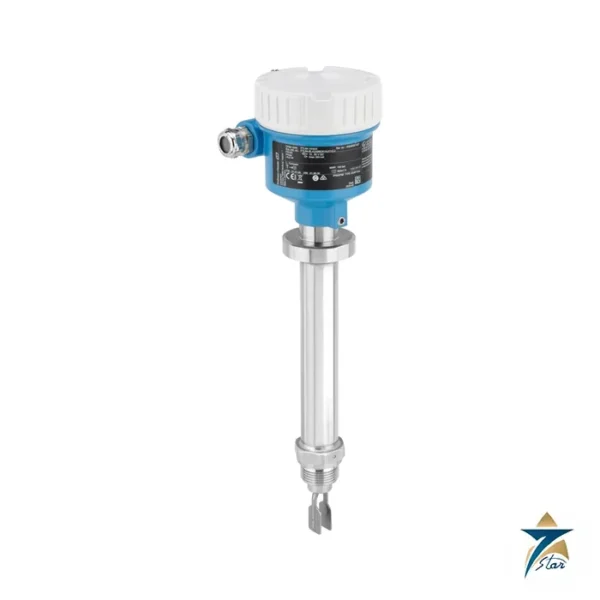
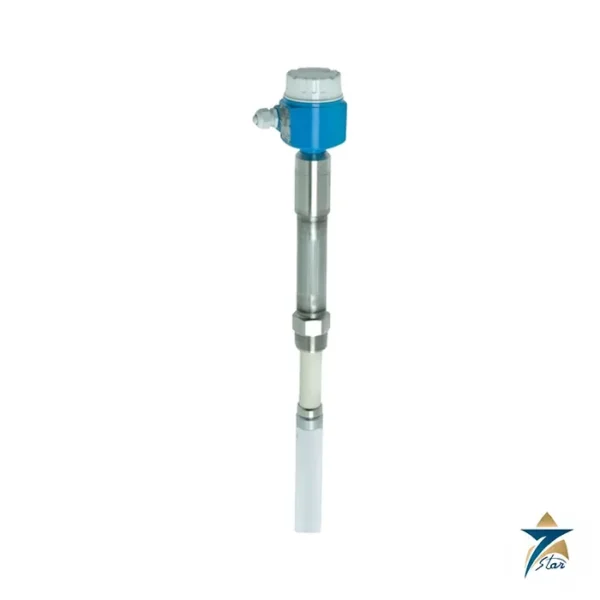
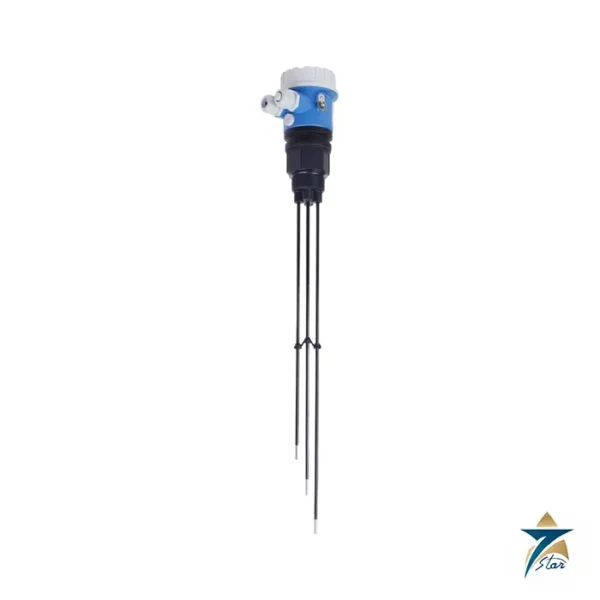
Where the vessel is taller, the FMU41 (8 m liquids, 2″ thread) and the FMU42 (10 m liquids, flange DN80 or DN100) are the next steps in the same family. When several tanks or sensors must be handled at one transmitter, the multi-channel FMU95 is an alternative. For point detection instead of continuous level, conductive probes such as the FTW31 and FTW32 suit conductive liquids. The manufacturer points toward the FMU42 or an FDU9x sensor where higher chemical resistance is required.
FMU40 selection and ordering checklist
- Check the tank height: empty distance must not exceed 5 m, and full level must stay below the 0.25 m blocking distance.
- Define the medium: liquid or bulk solid (solids range is 2 m), vapour and foam conditions.
- Confirm process pressure is inside 0.7 to 3 bar abs and temperature inside -40 to 80 °C.
- Choose a thread, G 1 1/2 or NPT 1 1/2″, and a mounting aid such as a nut, welding boss, bracket or screw-in flange.
- Pick housing and approval according to the hazardous area; the Ex ia and Ex d terminal voltages differ from standard.
- Check chemical compatibility with PVDF and EPDM.
Installing and servicing the FMU40
Mount the sensor perpendicular to the surface, away from the centre of the vessel, and not inside the filling stream. Keep the distance to the wall near one sixth of the vessel diameter, and avoid placing point-level switches, heating coils or baffles inside the beam. Use only one ultrasonic device per vessel, since signals from several devices affect each other. Tighten at the thread boss only, with no more than 20 Nm. In sunlight, add a weather protection cover.
The unit has no moving parts. Maintenance consists of cleaning the membrane when deposits form and re-running mapping after any change to tank internals. Check the display if the temperature is below -20 °C or above 60 °C, because the LCD is limited there.
Typical FMU40 applications in Oman and the GCC
Typical jobs are water and wastewater sumps, chemical day tanks, wash water and drain tanks, and open channels fitted with a weir. In Gulf conditions the strong sun on tank roofs and the humidity argue for the weather cover, the IP66/IP68 sealed housing and careful cable glands. Dust-heavy duties, steam and strong vapour reduce the range, so confirm before choosing the FMU40 for dusty bulk solids.
Prosonic M family comparison
| Item |
FMU40 |
FMU41 |
FMU42 |
| Liquid range |
5 m |
8 m |
10 m |
| Solids range |
2 m |
3.5 m |
5 m |
| Blocking distance |
0.25 m |
0.35 m |
0.4 m |
| Connection |
G/NPT 1 1/2″ |
G/NPT 2″ |
Flange DN80/DN100 |
Information to send with an RFQ for the FMU40
- Part number FMU40, order code from the nameplate if replacing, and quantity.
- Medium, tank height, empty and full distance.
- Process pressure and temperature.
- Thread type and mounting accessory.
- Hazardous-area class and any certificate required.
Documents and quotation
The Technical Information for the FMU40 is attached on this page. Compare it with the order code, because housing, approvals and accessories vary by configuration.
Send the FMU40 part number or the full nameplate order code, the quantity and the delivery location. Seven Star LLC will reply with availability and lead time.



















Reviews
There are no reviews yet.