FTI55 Solicap M rod-probe capacitance level switch for bulk solids
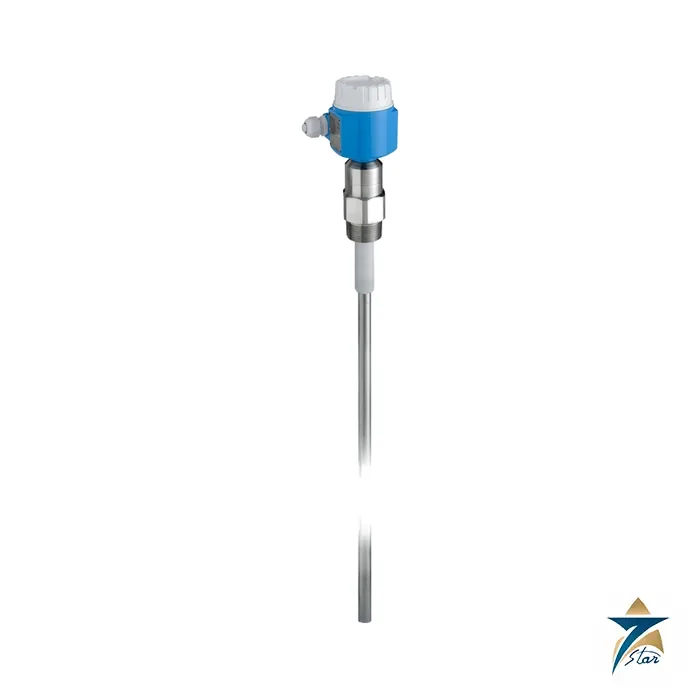
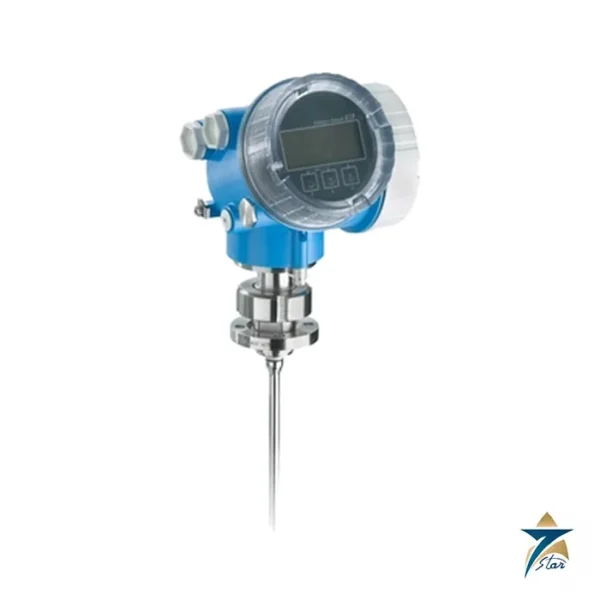
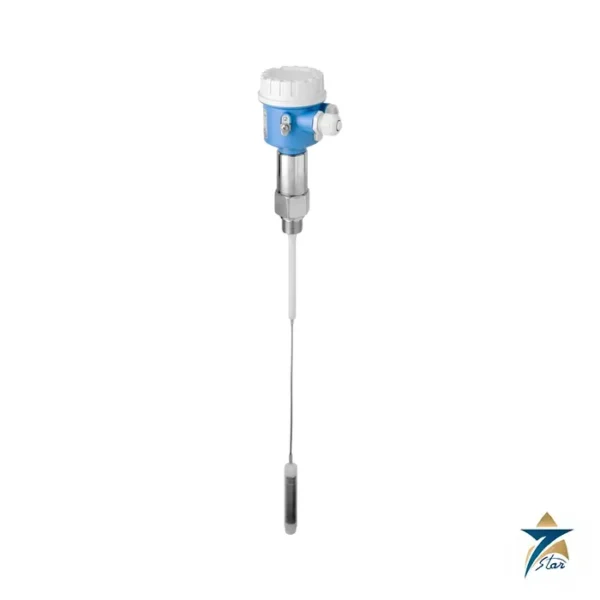
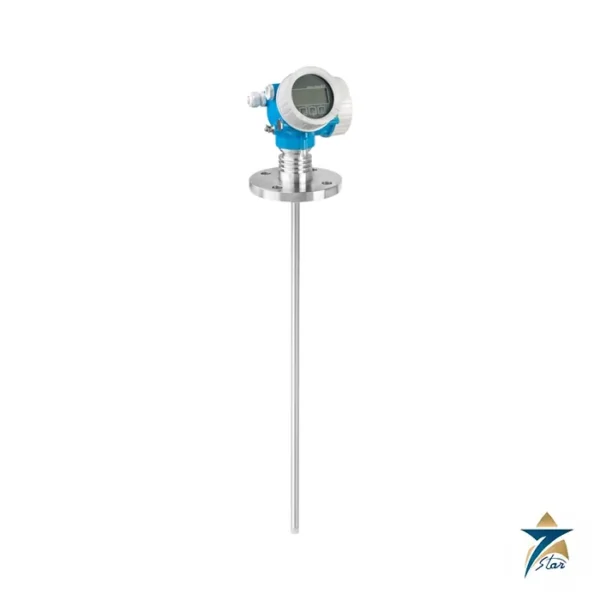
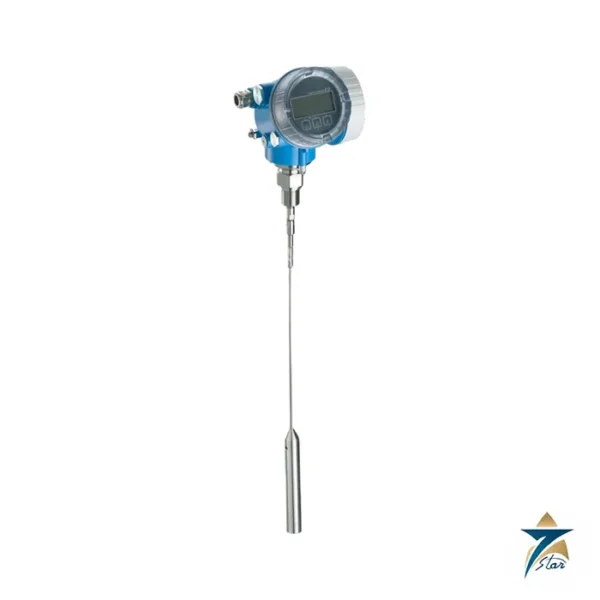
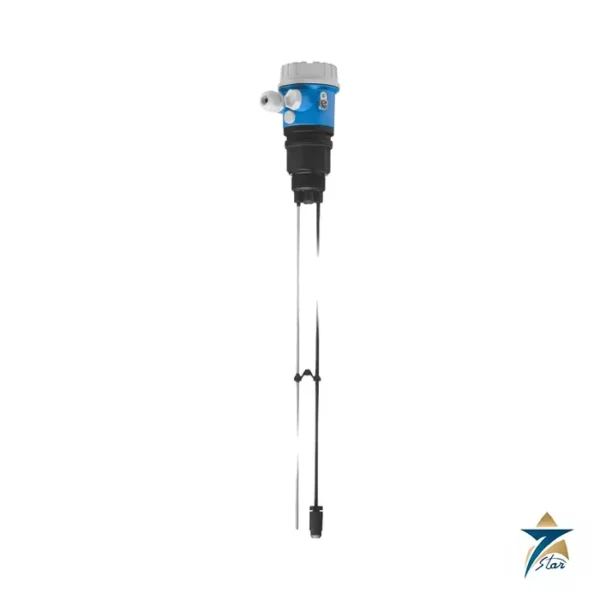
The Endress+Hauser FTI55 is a Solicap M capacitance point level switch for powders, granules and lumpy bulk solids. A rigid rod of up to 4 m projects into a silo or hopper and the switch responds when the material covers it. The FTI55 is designed for hard duty: the datasheet quotes a lateral load capacity of up to 300 Nm on the rod, which is what makes it suited to silos where material avalanches and flows against the probe. Seven Star LLC supplies the FTI55 in Oman and the GCC as an independent supplier in Muscat.
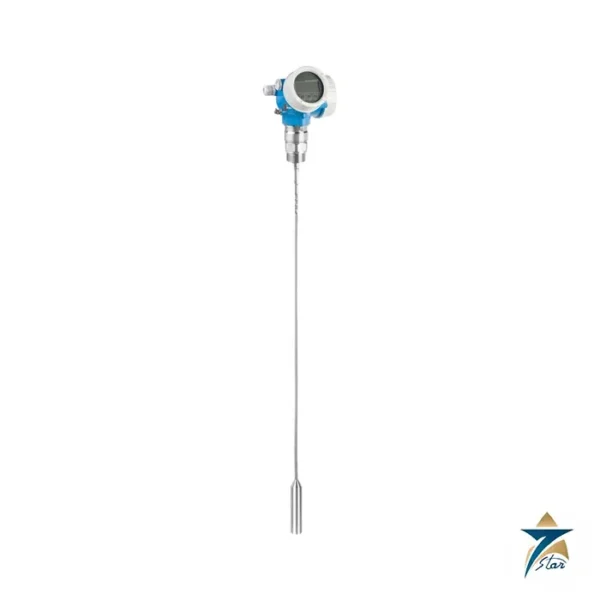
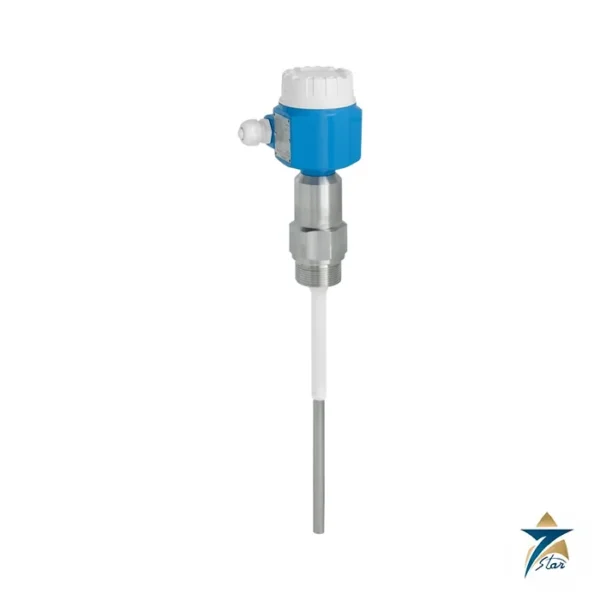
The FTI55 is part of a three-model Solicap range. The FTI55 uses a rod, the FTI56 a long rope for tall silos, and the FTI77 a ceramic-supported probe for temperatures up to 400 °C. The right choice follows from silo height, temperature and the lateral loads expected.
FTI55 technical specifications
| Parameter |
Specification |
| Manufacturer / part number |
Endress+Hauser / FTI55 (Solicap M point level switch, rod probe, bulk solids) |
| Measuring principle |
Capacitive point level detection in bulk solids with εr of 2.5 or more |
| Process temperature |
–50 to +180 °C (–58 to +356 °F); fully insulated probe limited to +80 °C |
| Process pressure |
–1 to 25 bar (–14.5 to 362.5 psi), limited by flange rating and derating curves |
| Ambient temperature (housing) |
–50 to +70 °C; –40 °C minimum for the polyester F16 housing |
| Probe rod |
18 mm diameter (26 mm with insulation); total length 200 to 4,000 mm without inactive length, up to 6,000 mm with it |
| Lateral load capacity |
300 Nm (221 lbf ft) at 20 °C; 200 Nm with active build-up compensation |
| Inactive length |
200 to 2,000 mm optional, for nozzle mounting or condensate |
| Active build-up compensation |
36 mm diameter, 125 mm long section, optional |
| Measuring frequency and span |
500 kHz; ΔC = 5 to 1,600 pF (FEI58: 5 to 500 pF) |
| Switch point uncertainty |
Max. ±0.3 %, repeatability max. ±0.1 % (DIN 61298-2) |
| Wetted materials |
316L rod and fixtures, PPS (partial insulation) or PE with galvanised steel (full insulation), steel process connection option |
| Weight |
About 4 kg for housing and connection, plus 2 kg per metre of 18 mm rod |
| Supply |
Depends on insert: 19–253 V AC, 10–55 V DC PNP, 8/16 mA, PFM, NAMUR |
Measuring principle of the FTI55 in bulk solids
The rod and the grounded silo wall act as the plates of a capacitor. A bulk solid with a dielectric constant of 2.5 or more increases the capacitance when it covers the rod, and the electronic insert switches at the calibrated threshold. For concrete or plastic silos, a metal counter-electrode is needed: the datasheet describes a grounded steel plate at least 300 mm in size for concrete walls and a plate of about 500 mm for plastic walls, and a ground tube serves as counter-electrode in non-conductive containers.
Two construction features matter for dusty materials. An inactive length keeps the sensing section clear of the nozzle, so condensation or residue in a long threaded coupling does not switch the output. Active build-up compensation measures coatings on the rod and removes their effect, which helps with caking products such as cement or flour. For control of a screw conveyor, a rod can be calibrated with separate on and off points (two-point control); partially insulated rods are only used for this with non-conductive solids.
Typical media named in the datasheet include sand, gravel, lime, cement, plaster, grain, flour, dolomite, kaolin, pumice, crushed ore and fodder. A higher dielectric constant allows a longer measuring range: up to 4 m above DK 10, 12 m between 5 and 10, and 20 m between 2 and 5.
Probe variants available for the FTI55
| Version |
Notes |
| Partially insulated rod |
Length of partial insulation 75 mm, max. process temperature 180 °C |
| Fully insulated rod |
PE insulation over galvanised steel, max. process temperature 80 °C |
| Inactive length version |
300 to 6,000 mm total length, for mounting nozzles and ceiling condensate |
| Active build-up compensation |
225 to 4,000 mm total length, lateral load 200 Nm |
Electronic inserts for the FTI55
| Electronic insert |
Role with the FTI55 |
| FEI51 |
Two-wire AC, load in series, thyristor switching, 19–253 V AC, residual current below 3.8 mA |
| FEI52 |
Three-wire DC PNP, 10–55 V DC, up to 350 mA load, short-circuit protected |
| FEI53 |
Three-wire DC signal for a separate Nivotester FTC325 3-WIRE, supply 14.5 V DC |
| FEI54 |
Universal 19–253 V AC or 19–55 V DC, relay output with two floating changeover contacts (DPDT) |
| FEI55 |
Two-wire 8/16 mA signal for a separate switching unit such as RMA42, SIL2 hardware / SIL3 software approval |
| FEI57S |
PFM current-pulse signal for a Nivotester FTC325 PFM, with remote self-test |
| FEI58 |
NAMUR two-wire (IEC 60947-5-6) for a Nivotester FTL325N type switching unit |
Selecting the FTI55: checklist
- Material, particle size and dielectric constant: below 2.5 the capacitance change may be too small.
- Conductivity: conductive materials need fully insulated rods, non-conductive ones can use partial insulation.
- Process temperature at the probe, remembering that fully insulated PE is limited to 80 °C.
- Silo wall material and counter-electrode arrangement.
- Mounting position and nozzle length, which determines inactive length needs.
- Expected lateral load from sliding material, within 300 Nm.
- Output, supply voltage, hazardous-area zone and any SIL requirement; approvals depend on the version.
Installing and maintaining the FTI55
Mount the FTI55 from above or from the side, away from the filling curtain so that incoming product does not hit the rod. Keep at least 500 mm between probes, and do not let the rod touch the metal wall. For side mounting, the datasheet recommends a protective cover above the rod against collapsing mounds, a slight downward angle so that material slides off, and an internally welded coupling when light build-up forms on the wall. Insulate the outside of the silo wall where condensation could form around the nozzle or exceed the housing temperature.
In service, the FTI55 needs little attention. Check the rod for abrasion of the insulation, clear heavy deposits, and confirm the switch point after any change of product. Calibration is done by a push-button at the probe, and a replacement insert can be fitted without full recalibration. Keep a spare insert, a protective cover and surge arresters, which are listed accessories.
Where the FTI55 is used in Oman and the GCC
Bulk solids move through cement plants, aggregate and sand operations, lime and gypsum handling, grain and fodder storage, and mineral processing across Oman and the Gulf. In these plants the FTI55 protects silos from overfilling and from running empty, and signals conveyors and feeders. Abrasive sand and clinker, high ambient heat and fine dust make the robust rod and the sealed IP66/IP67 housing a practical match.
Solicap range: where the FTI55 sits
| Model |
Key point |
| FTI55 |
Rod up to 4 m, 180 °C, 25 bar, lateral load up to 300 Nm |
| FTI56 |
Rope up to about 20 m, 180 °C partially insulated, 120 °C fully insulated |
| FTI77 |
Sword or rope on ceramic support, up to 400 °C, 10 bar |
Information to send with an RFQ for the FTI55
- Bulk material, grain size, dielectric constant and abrasiveness
- Silo diameter and height, wall material and nozzle size
- Switch point position and whether side or top mounting
- Process temperature and pressure
- Probe length, insulation type and inactive length or build-up compensation
- Output type, supply and hazardous-area class
- Quantity and delivery site
Documents and quotation
A datasheet for the FTI55 is attached on this page. It is the Technical Information for the Solicap M FTI55 and includes dimensional drawings, temperature curves and electronic-insert data.
Send the part number FTI55 with your silo details and we will confirm availability and lead time for Oman and the GCC.




















Reviews
There are no reviews yet.