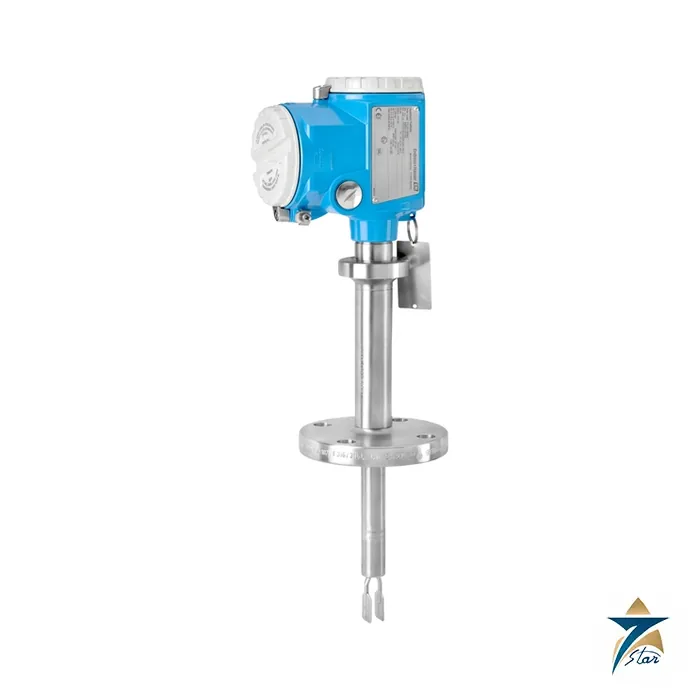
Endress+Hauser FTL81 Liquiphant FailSafe level switch with extension pipe
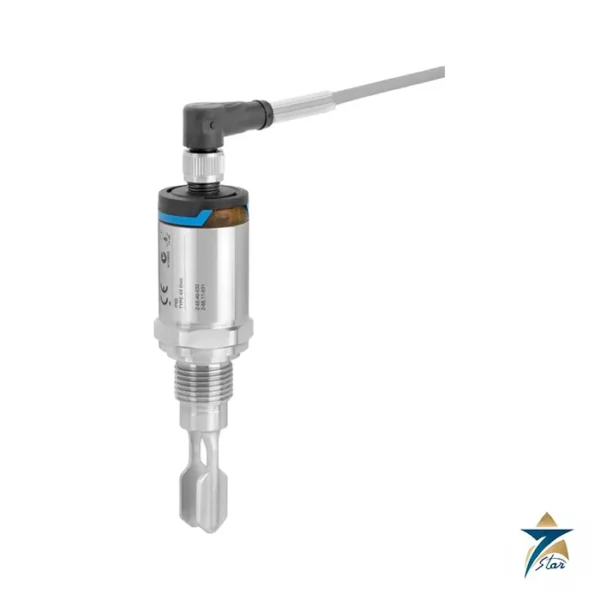
The Endress+Hauser FTL81 is the extension-pipe version of the Liquiphant FailSafe family. It is a vibronic point level switch for MIN and MAX safety functions up to SIL 3 (IEC 61508 and IEC 61511-1), working on a 2-wire 4–20 mA loop with a permanent LIVE signal. The pipe lets the fork reach a precise level inside a tank, even when the nozzle sits on the roof, for overfill protection or dry-run protection. Seven Star LLC supplies the FTL81 in Oman and the GCC as an independent supplier in Muscat.
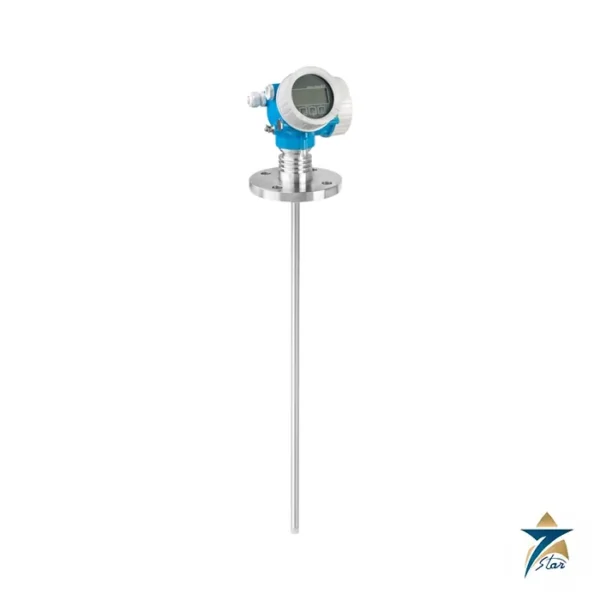
Where the compact FTL80 is limited to a sensor length of 80 mm, the FTL81 offers a short pipe version (115 to 118 mm on G threads) and a variable pipe extension from 148 to 3,000 mm. The process temperature range is –60 to +280 °C, with up to 300 °C for 50 hours cumulative, and pressure is up to 100 bar.
FTL81 technical specifications
| Parameter |
Specification |
| Manufacturer / part number |
Endress+Hauser / FTL81 (Liquiphant FailSafe, extension pipe) |
| Function |
MIN or MAX point level safety switch, up to SIL 3 |
| Process temperature |
–50 to +150 °C, or –60 to +280 °C; liquefied gas –50 to +60 °C |
| Process pressure |
Up to 64 bar or 100 bar, depending on version and flange |
| Sensor length |
Short pipe G ¾ 115 mm, G 1 118 mm, flush-mount G 1 104 mm; pipe extension 148 to 3,000 mm (maximum 3 m) |
| Output and supply |
2-wire 4–20 mA with 0.25 Hz LIVE signal; 12 to 30 V DC, below 660 mW |
| Hysteresis / repeatability |
About 2 mm / 0.1 mm; maximum error ±1 mm |
| Viscosity |
MAX up to 10,000 mPa·s; MIN up to 350 mPa·s; 100 mPa·s in MIN at 230–280 °C |
| Wetted materials |
316L (1.4435) with Alloy C22 option; 318L (1.4462) fork on high-temperature version |
| Weight of extension |
0.9 kg per 1,000 mm; process connection thread 0.2 to 0.33 kg |
| Ambient temperature |
–40 to +70 °C, with optional –50 or –60 °C |
| Mechanical load |
Maximum lateral load of pipe extension 75 Nm |
| Proof test |
Interval up to 12 years, started at the press of a button |
How the FTL81 signals level and faults
A tuning fork is excited at its natural frequency, and covering it with liquid lowers that frequency. The FTL81 translates that state into current: 18.5 mA to 9.0 mA in minimum mode and 13.5 mA to 6.0 mA in maximum mode, with a continuous 0.25 Hz live signal in the OK state. Anything below 3.6 mA is a fault under NAMUR NE43. Because the OK state carries a visible signal, a broken cable, dead electronics or a blocked fork will not look the same as a healthy device, which is what makes the loop suitable for a safety function.
The viscosity limits depend on the safety mode, which is why the safety manual should be read together with the datasheet: maximum detection allows up to 10,000 mPa·s, but minimum detection is limited to 350 mPa·s, and to 100 mPa·s at 230 to 280 °C.
FTL81 compared with the FTL80 and FTL85
The FTL81 shares its electronics, current levels, supply and approvals approach with the FTL80, so the difference is mainly mechanical: the FTL81 has a pipe. The FTL85 is the coated FailSafe model for aggressive liquids, limited to 40 bar and 150 °C. A mixed installation can use all three on the same Nivotester FailSafe FTL825 channels or the same safety PLC cards, as they speak the same 4–20 mA language. For general-purpose duties without the live signal, the FTL51B with pipe extension to 6 m is the usual option.
FTL81 selection and ordering checklist
- Required fork position: distance from the sealing surface to the switch point, including nozzle height and insulation.
- Short pipe or free extension length, up to 3,000 mm; check support needs for long probes and turbulent liquids.
- MIN or MAX function, density combination, viscosity and liquefied gas duty.
- Temperature and pressure class (150 or 280 °C; 64 or 100 bar) and second line of defense.
- Thread (G, NPT, R in ¾ or 1) or flange (EN, ASME, JIS); wetted material 316L or Alloy C22.
- Housing F16, F13, F17, F15, F27 or T13, and cable entry or M12 plug.
- Ex, WHG, marine, CRN and test certificates; marine use with extensions longer than 1,600 mm needs additional support.
Installing and commissioning the FTL81
A probe with a pipe up to about 500 mm can be installed in any orientation; longer probes should be mounted vertically from above. Dynamic loads from agitators or flow require a support, and the lateral load on the pipe must stay under 75 Nm. The flow velocity limit quoted in the datasheet is 5 m/s at 1 mPa·s and 1 g/cm³. Align the fork so that its narrow sides face up and down.
On start-up set the two density switches, select MIN or MAX by connection coding, check the live signal in the evaluator and carry out the function test. Define a proof-test schedule from the safety manual, and keep a spare insert. Inspect the pipe and fork at turnarounds for corrosion and buildup.
FTL81 applications in Oman and the GCC
The FTL81 is a typical high-level shutdown switch on atmospheric storage tanks for diesel, crude and chemicals, where the pipe carries the fork down from a roof nozzle to the alarm level. It also serves as a low-level pump protection on long vertical vessels, hot oil tanks up to 280 °C and liquefied gas vessels.
FTL81 probe length options
| Probe design |
Length |
Use |
| Short pipe, G ¾ |
115 mm to sealing surface |
Short pipe version for shallow reach |
| Short pipe, G 1 |
118 mm (104 mm flush mount) |
Short pipe version, with a flush-mount variant |
| Pipe extension |
148 to 3,000 mm |
Roof-mounted fork at set level |
| Maximum sensor length |
3 m (10 ft) |
Upper limit stated in the datasheet |
Information to send with an RFQ for the FTL81
- Order code or tag data, and any existing Liquiphant being replaced.
- Liquid properties, temperature, pressure, MIN or MAX function and SIL target.
- Exact insertion length needed and nozzle details.
- Thread or flange standard, size and rating, and housing and entry preference.
- Approvals, documents and quantity, with delivery point in Oman or the GCC.
Documents and quotation
A datasheet (Technical Information) for the Endress+Hauser FTL81 is attached on this page. Safety data and proof-test steps are in the separate safety manual.
Send the FTL81 order code, or the probe length and process data from the checklist, and Seven Star LLC will return availability and lead time for Oman and the GCC.
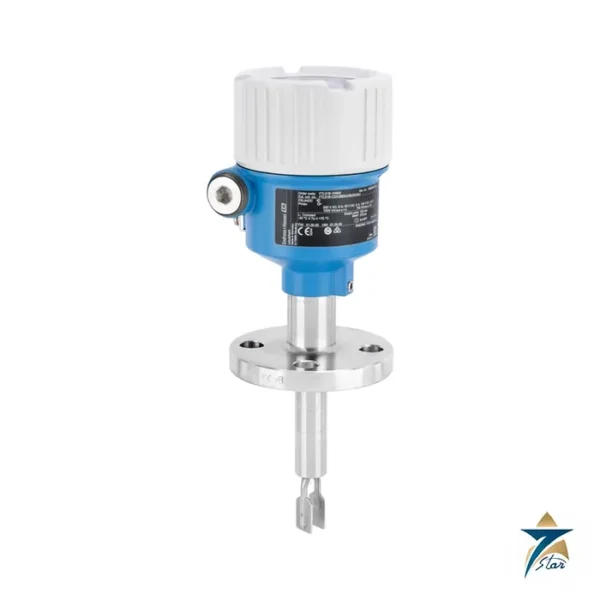
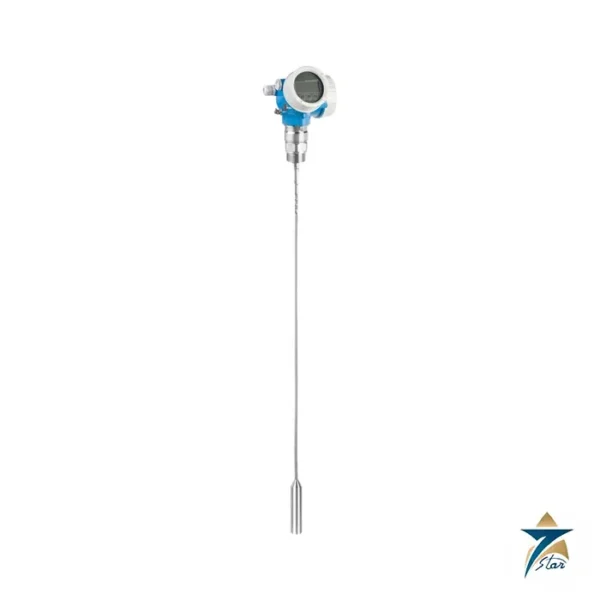
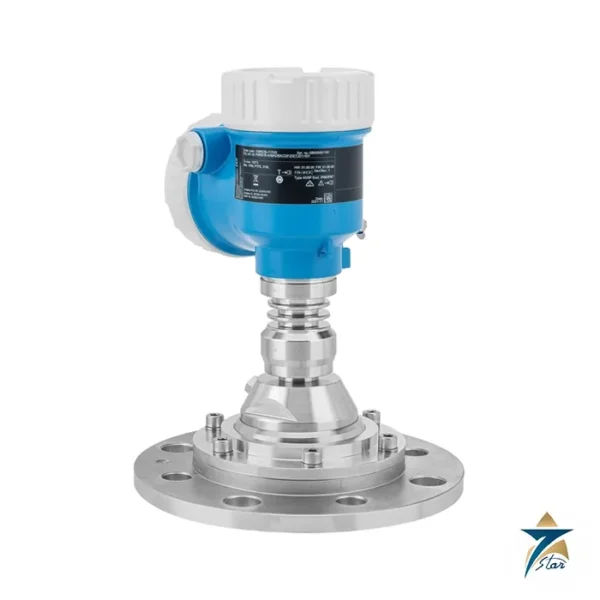
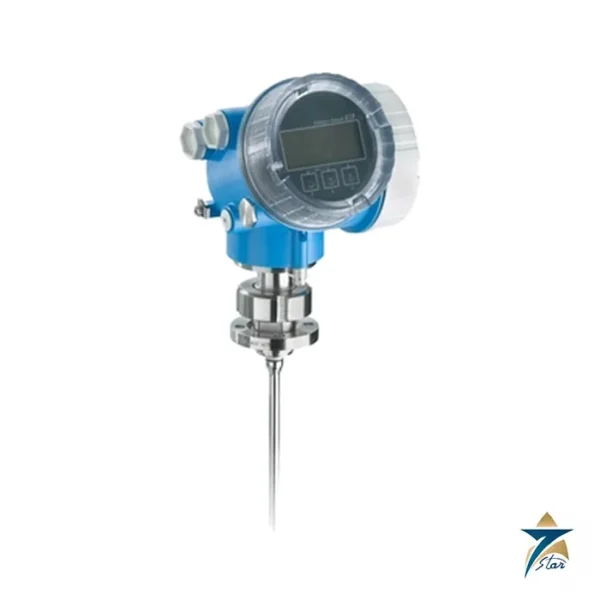
Other Models in the Eh Liquiphant Failsafe Ftl Range
Seven Star LLC supplies models from the Eh Liquiphant Failsafe Ftl range in Oman and the GCC. Compare the related models below and request a quote for the one that matches your application.





















Reviews
There are no reviews yet.